
Part 5-1
“Subhuti, what do you think—is it possible to see me, the Realised One in terms of physical characteristics?” “No, World Honoured One; it is not possible to see you, the Realised One in terms of physical characteristics.”
“Why? Because physical characteristics explained by you, the Realised One are not physical characteristics.”
Commentary:
This passage explains how we can see our true Buddha-nature.
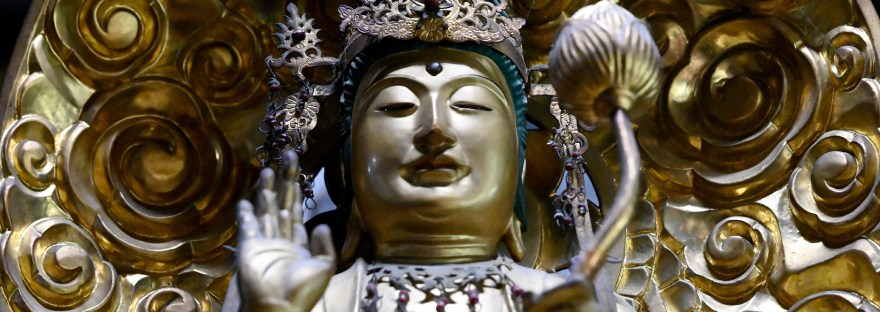
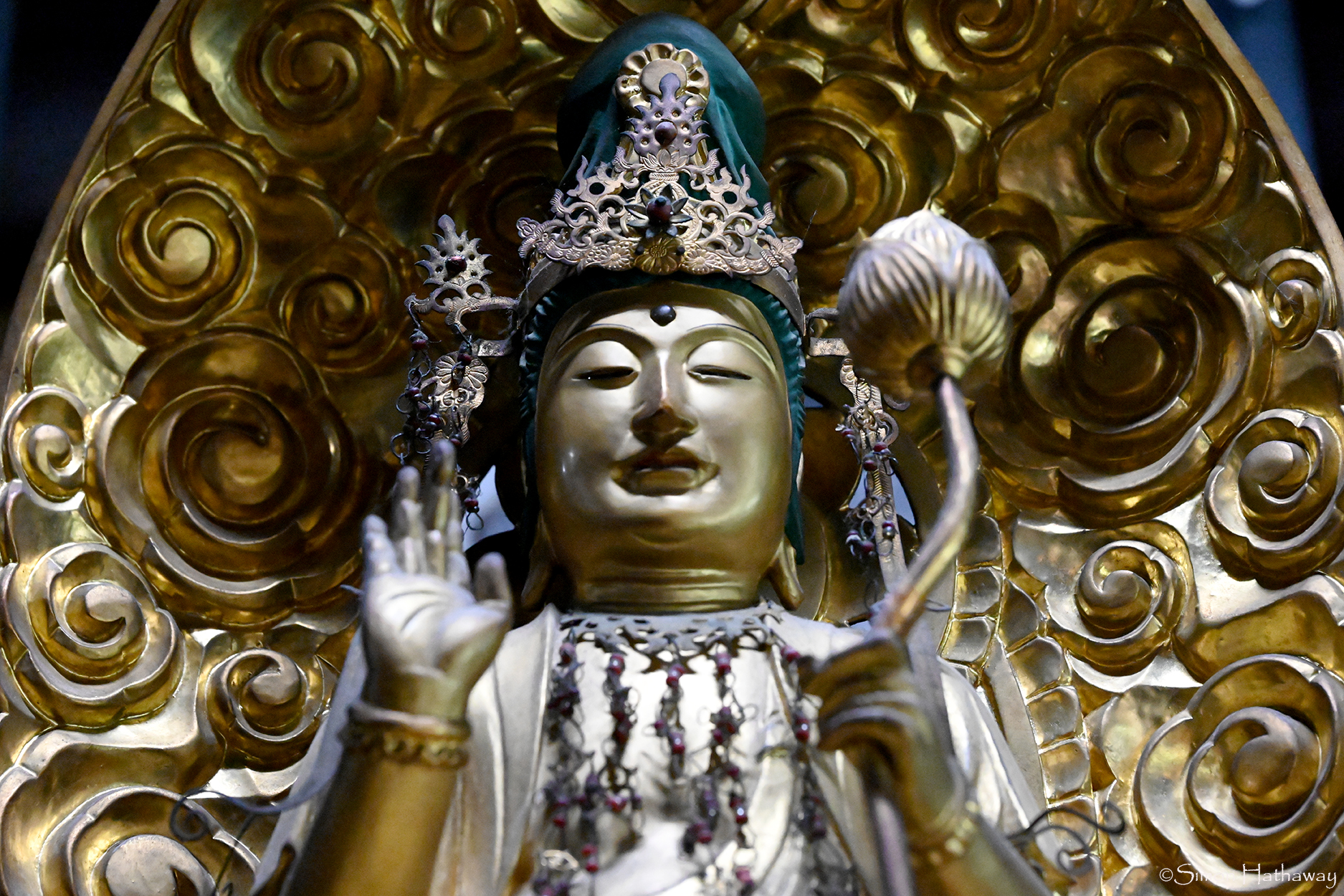
As mentioned earlier, Shakyamuni Buddha taught that those who regard the 32 physical marks and 80 minor characteristics of the Buddha as his true form cannot truly see the Buddha. This is because those physical attributes are not the reality but merely a form of illusion.
Regarding these physical characteristics as the true Buddha is to be deluded by form, images, which goes against the core of the Buddha’s teaching: “If you know that form is not form, you will see the true-Self (Tathagata).” This means that one must not dwell on any form to see the Tathagata(true-Self).
However, not clinging to the form of things does not mean ignoring it.
As taught in the phrase “Form is emptiness, emptiness is form”—meaning that form (material reality) is emptiness (the true-Self, Buddha-nature) and emptiness is form—we should understand that, just as the wind and air are one, where wind is air and air is wind, the physical form of the Buddha is one with the infinite true-Self (Emptiness). Through the Buddha’s physical form, we should be able to see the true-Self.
Just as the wind, regardless of its form, is a function of air and cannot be separated from it, and just as the cessation of wind does not mean the air disappears, our bodies, as forms, arise and cease due to causes and effects as part of Emptiness (the true-Self). Even if the wind stops, its essence, the air, remains; in the same way, though our bodies may disappear, our essence, the true-Self (Emptiness), never vanishes.
When we are deluded by forms and names, we see only the small—the form—and fail to see the great—the true-Self (Emptiness). Seeing only the historical, physical Buddha and not the original Buddha that He spoke of is called an “open secret” or “the true-Self hidden within form,” because we can’t see Him although He is revealing himself before us all the time. The Avatamsaka Sutra admonishes such sentient beings, saying: “Even if one gazes upon the Buddha for hundreds of thousands of kalpas, if they do not rely on the true principle and see the one who saves the world as the Buddha, one clings only to form, adding to the net of foolish doubts, bound by the prison of birth and death, blind and unable to see the Buddha.”
The true form of the Buddha, as taught by the Buddha, is emptiness. This is not only the original form of the Buddha but of all of us. Realising this original form is the enlightenment that is the goal of Buddhism. When we see our existence as a physical body, birth and death are evident. However, when we see our existence as Emptiness (the true-Self), the essence of all things, there is no birth and death. Realising Emptiness is called “liberation from birth and death.”
Disciple: “Why did the historical Buddha say that the Buddha has 32 marks and 80 minor characteristics?”
Master: “One person spoke falsely, but ten thousand people heard it as truth.”
©Boo Ahm
All writing ©Boo Ahm. All images ©Simon Hathaway

 Zen Fools