
Part 6 – 4
“Why? If all these sentient beings’ minds grasped at forms, they would be attached to the image of self, the image of person, the image of sentient being, and the image of soul. Why? It is because even grasping at an image of Dharma would be to be attached to the image of self, the image of person, the image of sentient being, and the image of soul, not to mention that grasping at an image of non-Dharma would be to be attached to the image of self, the image of person, the image of sentient being, and the image of soul. Therefore, you should not grasp at not only the Dharma, but also non-Dharma.
Commentary:
To grasp at images with the mind means failing to see things as they truly are and being deceived by forms and names (words). In the Heart Sutra, this is referred to as “deluded dreams,” and in the Faith in Mind (Xin Xin Ming), it is described as “discriminating” or “picking and choosing.”
As the saying goes, “When a single speck of dust arises, the entire universe arises with it.” Whether it is a good or bad image, when one image arises, all images arise simultaneously. Here, the images of self, person, sentient beings, lifespan, and Dharma are mentioned, but the teaching is that no matter what image arises, countless images arise with it. Thus, we are instructed not to grasp at any image. We should not be deceived even by the image of the Buddha. The Buddha said that those who try to see the Buddha through sound or form—that is, through images—are practising a false path (Dharma) and cannot see the Buddha. In the Avatamsaka Sutra, it is written: “If one sees the Buddha without grasping at any image, that person truly knows the Buddha and can see the true-Self.” Only by not being deceived by the physical form of the Buddha can we see the eternal, true Buddha, which is our own essence. This is why ancient great masters would say, “If you meet the Buddha, kill the Buddha.”
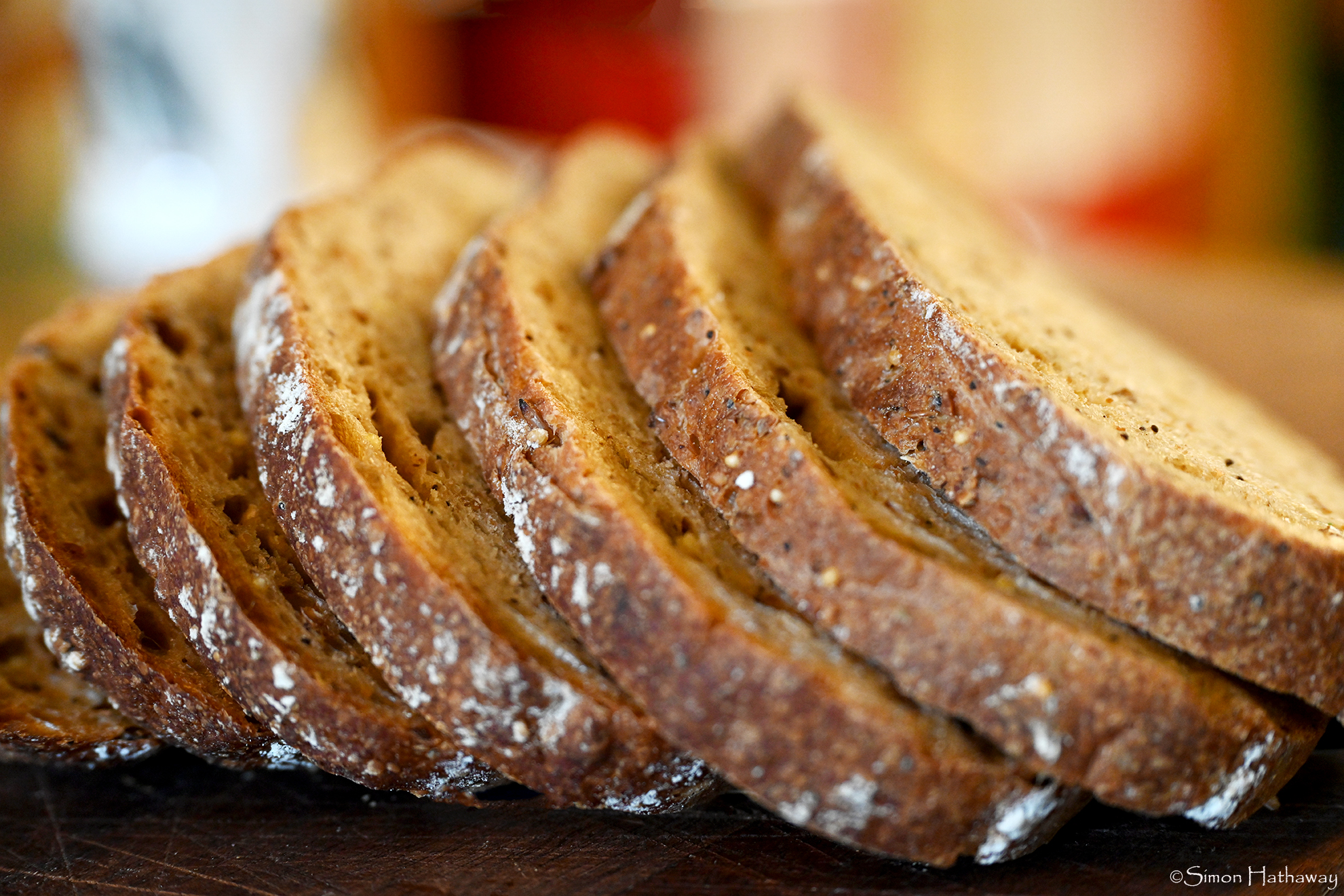
When we do not grasp at images—that is, when we see and hear all things as they truly are, without being deceived by forms or names—everything becomes the Buddha, and there is nothing that is not the Buddha. When we grasp at images while seeing and hearing, everything becomes Mara and illusion. But when we see things as they truly are, everything is enlightenment and the Buddha. Illusion and enlightenment, Mara and the Buddha, are not separate entities but one and the same. To abandon illusions in pursuit of enlightenment is like discarding flour to make bread. Thus, it is said that “illusion is the mother of enlightenment” and “illusion itself is enlightenment.”
When we see everything as it truly is, there is nothing, including ourselves, that is not the Buddha. Wherever I go, the Buddha follows me. But if I am deceived by images and chase after the Buddha, I am not following the Buddha but chasing after an illusion. The Buddha is non-duality, that is, He is everywhere, and there is no place without the Buddha present. To say that the Buddha in one temple is more efficacious than the Buddha in another is to say that there are multiple Buddhas who differ from one another. To say that one should go to a temple to see the Buddha is to suggest that the Buddha is only in the temple and not at home. This implies that the Buddha is not one but many. It follows after this that there is a distinction between places where the Buddha is and is not. Such thinking is not the Buddha’s teaching but being swayed by images, acting in opposition to the Buddha’s teachings while claiming to be His disciple, and in reality, chasing after delusion.
Just as when one image arises, all images arise simultaneously, if we hear or see even a single thing as empty, all things are seen as empty. When great masters say, “This staff transforms into a dragon and swallows the entire universe,” they mean that if this staff is seen as empty, the entire universe is seen as empty.
This text, too, should be read without grasping at the image of a ‘sutra’. Only then can you see the Buddha in every single word.
Disciple: “How should I receive the master’s words without grasping images?”
Master: “The problem is that I am not saying a word, yet you take my saying as words.”
Do not be deceived by the teaching to abandon images,
And do not strive to cast aside images.
To abandon images in pursuit of the true-Self Is like discarding flour to seek bread.
©Boo Ahm
All writing ©Boo Ahm. All images ©Simon Hathaway

 Zen Fools