
Part 9-2
“Subhuti, what do you think—can a saint entertain the thought, ‘I have attained sainthood’?”
Subhuti said, “No, World Honoured One. Why? There is no state called sainthood. World Honoured One, if saints were to entertain the notion, ‘I have attained sainthood,’ that would be fixation on the image of self, the image of person, the image of sentient being, and the image of spirit.”
“World Honoured One, you say I have attained absorption in non-contention better than anyone else, and I am the saint most detached from desire. However, I do not entertain the thought that I am a saint detached from desire.”
Commentary:
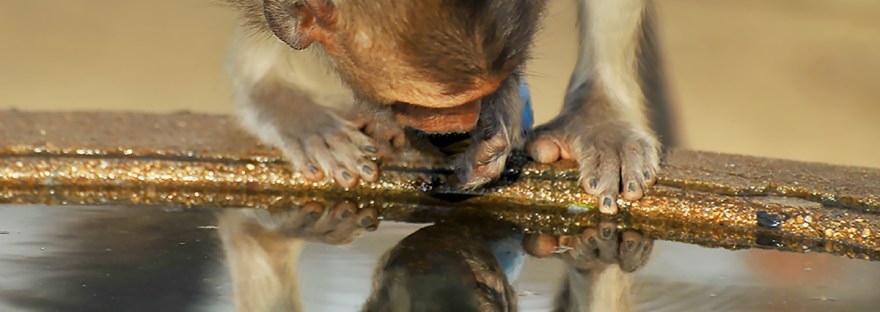
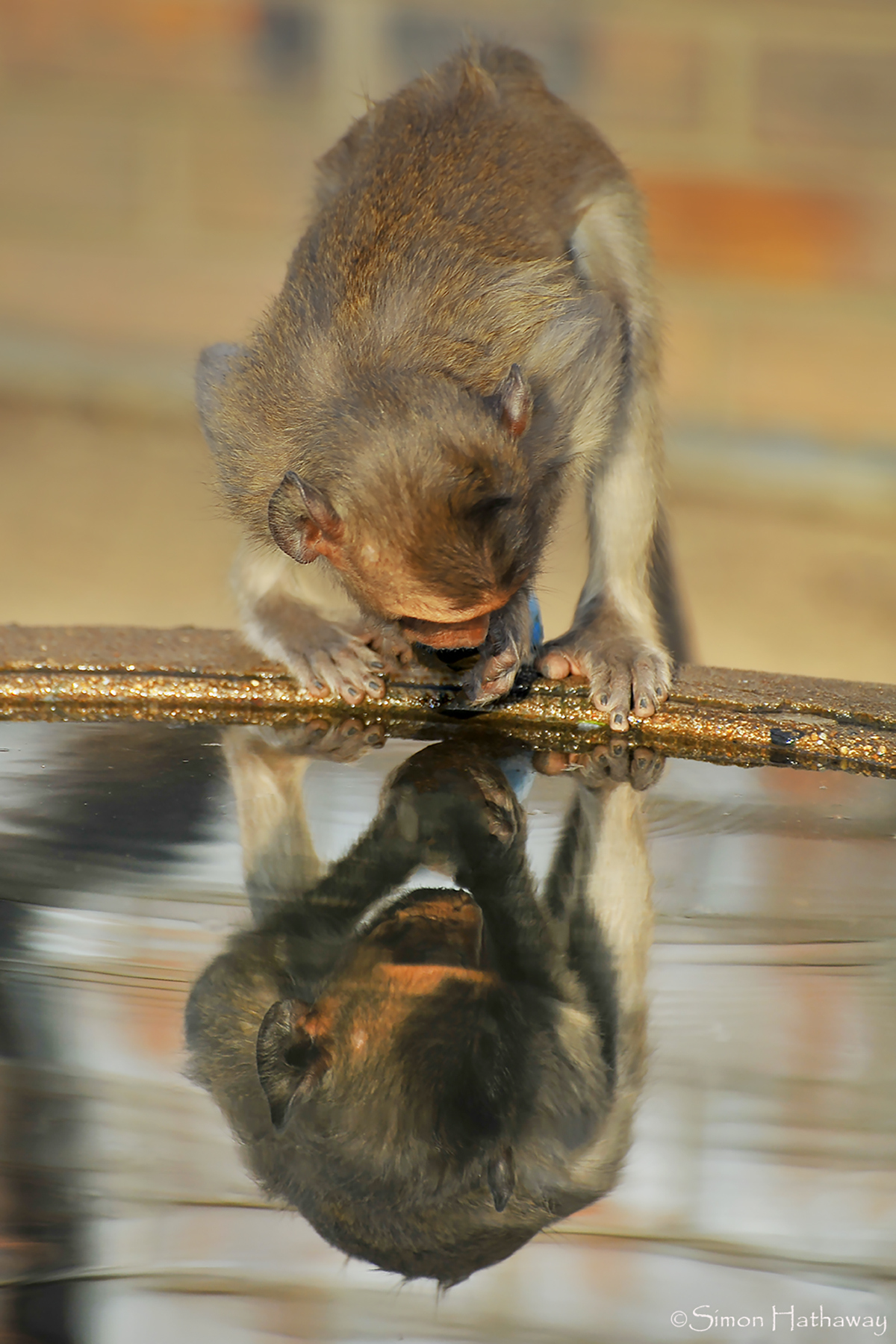
There is a saying: Before practice, it is like a monkey looking into a mirror; after practice, it is like a mirror looking at a monkey. Before practice, we are deceived by words and images, failing to see the truth. We treat illusions as real, trying to gain or discard, approach or avoid them. This is like a monkey mistaking its own reflection for another real monkey.
After practice, one reaches a state where they are no longer swayed by forms. Whether a beautiful or ugly person appears, one does not discriminate. Whether it is a shining gold nugget or a lump of filth, one reflects them equally without attachment or aversion. This is called ‘The Great Perfect Mirror Wisdom’—the mirror simply sees the monkey as it is.
An ‘Arhat’ is one who has transcended forms. A true Arhat does not cling to the label of ‘Arhat’. If one thinks, “I am an Arhat,” he is still trapped in the image of that word. Thus, in the Land of Buddha, there is no ‘Buddha’ who perceives himself as such. Terms like the Buddha, the true-Self. Buddha-nature, Pure Land, or Emptiness are merely ‘names used for expedient means.
If you see this way, then sentient beings, demons, hell, and defilements are also just names. Essentially, there is no difference between the Buddha and a sentient being. Clinging to the word ‘Enlightenment’ or fleeing from ‘illusions’ is an illusion itself. Realising that these are just functions of the true-Self is enlightenment. Therefore, we say, “An illusion is Enlightenment.” Seeing everything as empty leads to the state where all things are one, and no conflict can arise. This is called the ‘Samadhi of Non-conflict’.
Disciple: “What happens if I see the Buddha but do not follow him?”
Master: “The Buddha will follow you.”
Disciple: “Why is that?”
Master: “Buddha is originally one with you. He does not move away when pushed, nor closer when pulled. You can neither follow nor avoid him.”
Disciple: “What if I do not avoid illusions?”
Master: “Then defilement is the Buddha.”
Disciple: “What is the logic behind this?”
Master: “You are originally Buddha, but being deceived by names and forms, your act of following or avoiding is what creates illusions.”
Disciple: “Then, what is Buddha?”
Master: “You are riding the ox while searching for the ox.”
Do not follow the Buddha.
That is the very illusion you seek to avoid.
Do not avoid illusions.
They are the very Buddha you seek to find.
Koan:
Master Yaoshan saw Zun Bunap washing a Buddha statue and asked, “You may wash this one as you wish, but can you wash that one as well?”
Zun Bunap replied, “Please, bring that one to me.”
Yaoshan let the matter rest.
Question 1: What did Yaoshan mean by ‘Can you wash that one?’
Question 2: What did Zun Bunap mean by ‘Please, bring that one to me’?
©Boo Ahm
All writing ©Boo Ahm. All images ©Simon Hathaway

 Zen Fools