
Part 10-5
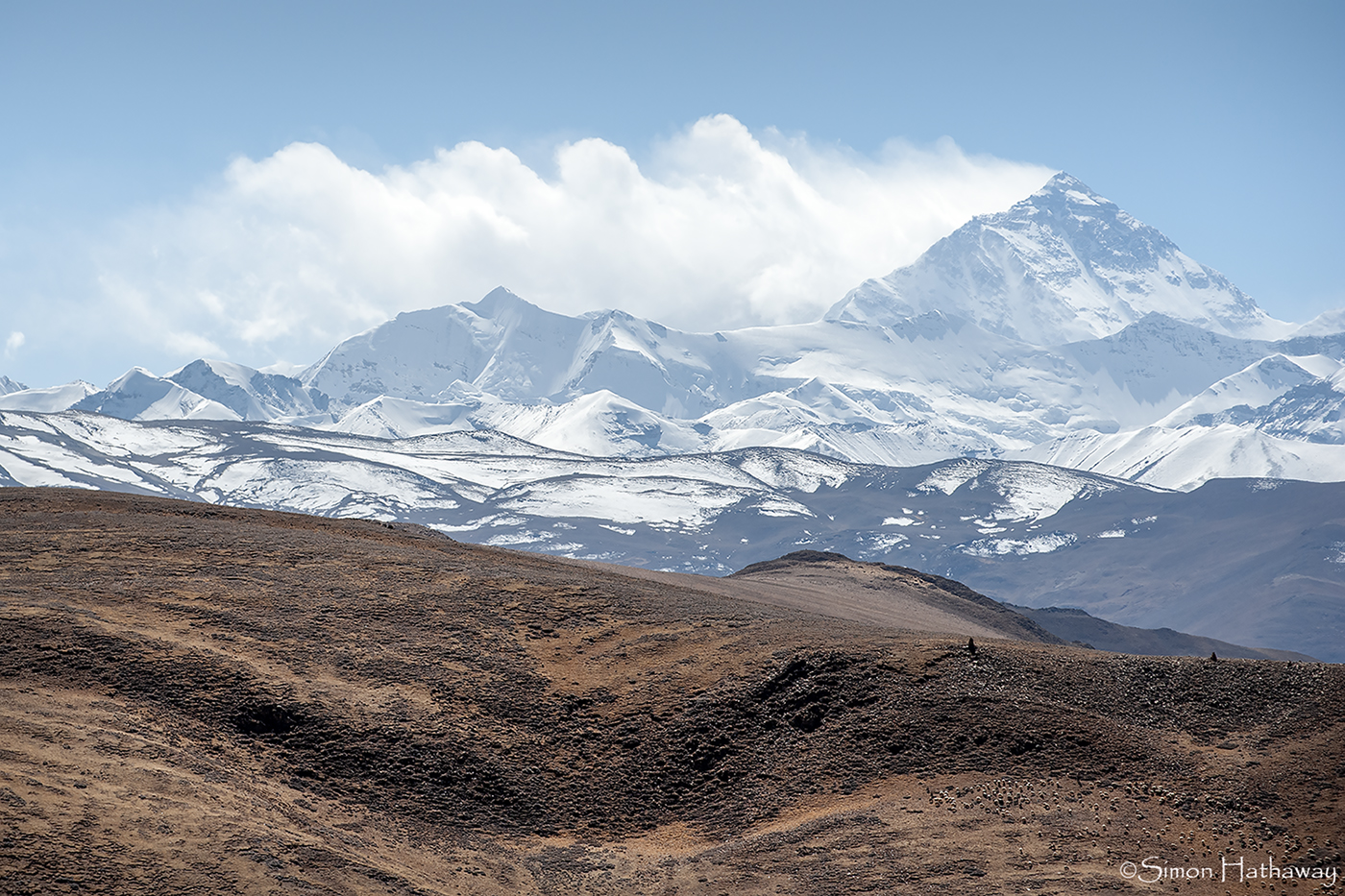
“Subhuti, by way of analogy, if a person’s body is as large as Mount Sumeru, what do you think? Would you say that his body is large?”
Subhuti said, “It is very large, World Honoured One, because the Buddha called that which is not a body the large body.”
Commentary:
In the previous sections 10-3 and 10-4, the Buddha taught to “raise the mind without dwelling on anything.” This section provides a practical example of how to truly listen and see—that is, how to perceive things as they truly are.
In Buddhism, Mount Sumeru represents the highest mountain at the centre of the universe. However, just as the Buddha said in 8-3 that the Buddhadharma is not the Buddhadharma, but is merely named the Buddhadharma, and in 10-2 that adornment is not adornment, but is called adornment, Mount Sumeru is also not Mount Sumeru; it is merely named so. Through the words ‘Mount Sumeru’, the Buddha reveals the eternal and infinite true-Self.
Therefore, when the Buddha asked Subhuti, “Subhuti, if a man had a body as vast as Mount Sumeru, what would you think? Would that body be great?” Subhuti understood the Buddha’s intent and replied, “It would be very great, World-Honoured One. Why? Because the Buddha taught that what is not a body is named a great body.” In other words, the ‘great body’ mentioned by the Buddha is not the physical body we generally recognise, but a way to reveal the eternal and infinite true-Self that is formless.
In 7-2, when the Buddha asked Subhuti, “Does the Buddha have a Dharma to preach?” Subhuti replied, “As I understand the meaning of the Buddha’s teaching, there is no fixed Dharma that the Buddha could have preached.” All the Buddha’s sermons are expedient means used to show sentient beings their own true-Self, Buddha-nature. He was not merely speaking words; he was performing an act of revealing the true-Self. Thus, one must look at the true-Self itself without clinging to the words.
To see and hear everything in this way—not being deceived by words and forms, but recognising them all as the functioning of the true-Self—is what it means to ‘raise the mind without dwelling’.
The true-Self (Emptiness, the Buddha) is nameless and formless, yet it is the essence of all things, including ourselves. The Buddha’s words 2,500 years ago, Subhuti’s answers, every single action, and every single syllable were all the functioning of the true-Self. Even our current act of reading this sutra is the function of the true-Self. Nothing, whether good or bad, exists outside of it. Therefore, although all things have different names, their essence is one and the same. To see things differently according to their names is to see ‘Form’; to strip away the names and see the single essence is to see ‘Emptiness’.
As the ancient masters said, “When one raises the mind without dwelling, words are not words; and if words are not words, every word is the function of the true-Self.” Not being deceived by terms like Mount Sumeru or Great Body and seeing them directly as the functioning of Buddha-nature is the correct way to read the sutras and see the Buddha. If we perceive every shape and sound in our daily lives as the functioning of the true-Self without being deceived by names and appearances—that is, if we see and hear them as they truly are—we encounter the Buddha in every moment. As the Avatamsaka Sutra states, “If one knows everything as a false thing, it is the same as reality and one is not deluded; if one knows that the illusory is originally true, one sees the Buddha and becomes pure.” When we do not abide in the ‘false things’ of sounds and forms, this mundane world becomes the Pure Land.
Disciple: “If our body is not a body but is merely named a body, then what is our true reality?”
Master: “What have you been looking at until now?”
Disciple: “I do not know. Please explain it to me in more detail.”
Master: “Hear it this very instant. But if you try to hear it in detail, you will miss it.”
A gem the size of a baby’s fist is called ‘large’,
But a watermelon the size of an adult’s fist is called ‘small’.
Since Mount Sumeru can enter into a single mustard seed,
Which is truly large, and which is truly small?
The Koan
A monk once asked Master Changsha: “It is said that ‘Once enlightened, karmic obstacles are originally empty; but if one is not enlightened, one must repay one’s old debts. Did the Second Patriarch, Haega, attain enlightenment or not?”
Changsha replied: “Empty.”
Question: What is the meaning of Changsha’s reply, ‘Empty’?
©Boo AhmAll writing ©Boo Ahm. All images ©Simon Hathaway

 Zen Fools