
Part 11-1
“Subhuti, suppose there were as many Ganges Rivers as there are grains of sand in the bed of the Ganges River: would the grains of sand in all those Ganges Rivers be many?”
Subhuti said, “Very many, World Honoured One. The rivers themselves would be countless, let alone their sands.”
Commentary:
In part 8-3, the Buddha said, “Buddha Dharma is not Buddha Dharma, but is merely named Buddha Dharma,” and in 10-5, he taught that ‘What is not a body is named a body as great as Mount Sumeru’. In the same way, even if there are as many Ganges Rivers as there are grains of sand in the Ganges, and the total number of those grains of sand is beyond imagination, we must now realise that the ‘Ganges’ is merely named the Ganges, and ‘sand’ is merely named sand. We must learn to see not only ‘a body as great as Mount Sumeru’, ‘the Ganges’, or ‘sand’, but everything we see and hear as a dream-like illusion—as non-existent as a rabbit horn.
Whether there is one rabbit horn, or ten thousand, there is no difference because they do not exist. This is why ancient Zen masters said, “One is not single, and two are not a pair.” The Avatamsaka Sutra also states, “In the Buddha’s work, there are no numbers.” This means that all things are like dreams imagined by our own minds.
This is why ancient masters often tested their disciples by saying, “You must know the number of hairs on your head,” or “Do you know the number of grains of sand in the Ganges?” This was a warning not to be deceived by words and appearances. If one tries to understand the Buddha’s teachings only through literal words, they will never achieve their goal even with a lifetime of effort. Such people are compared to fools who dive into the ocean to count every grain of sand on the seabed. If we are truly not deceived by words and forms, we should already know the number of grains of sand in the Ganges and the number of leaves on Mount Namsan in Seoul.
Disciple: “How many grains of sand are there in the Ganges River?”
Master: “Exactly the same as your age.”
To fail to see the Great One,
While claiming to see the many small things—
That is precisely what we call ‘Illusion’.
Koan
National Teacher Haechoong was asked by Emperor Sookzong, “What do you wish for after you pass away?”
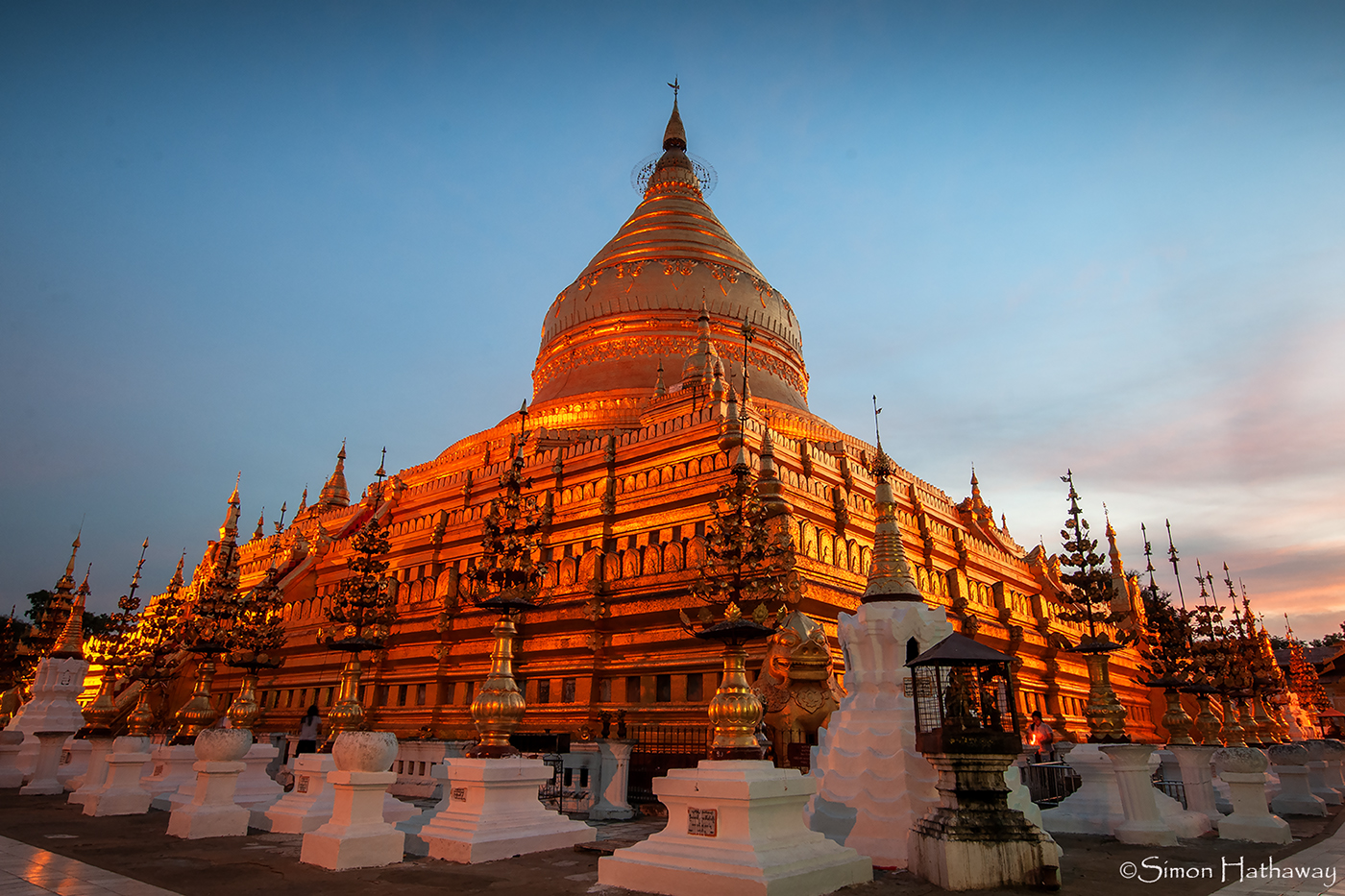
Haechoong replied, “Please build a seamless pagoda for this old monk.” The emperor said, “Please explain to me the design of such a pagoda.” The National Teacher remained silent for a moment and then asked, “Do you understand?”
The emperor replied, “I do not.”
The National Teacher said, “My disciple Tamhun, to whom I have transmitted the Dharma, knows of this matter. Please call him and ask.” After the National Teacher passed away, the emperor summoned Tamhun and asked for the meaning.
He replied, “South of Xiang, North of Tan; within it, there is gold that fills the entire country.”
Question 1: What does the ‘Seamless Pagoda’ mentioned by Haechoong look like?
Question 2: What was the meaning of the National Teacher’s silence followed by “Do you understand?”
Question 3: Why did the Master tell the emperor to ask his disciple Tamhun?
Question 4: What is the meaning of Tamhun’s reply: South of Xiang, North of Tan; within it, there is gold that fills the entire country?
©Boo Ahm
All writing ©Boo Ahm. All images ©Simon Hathaway

 Zen Fools