Uncategorized

Rinzai 21

Rinzai 21

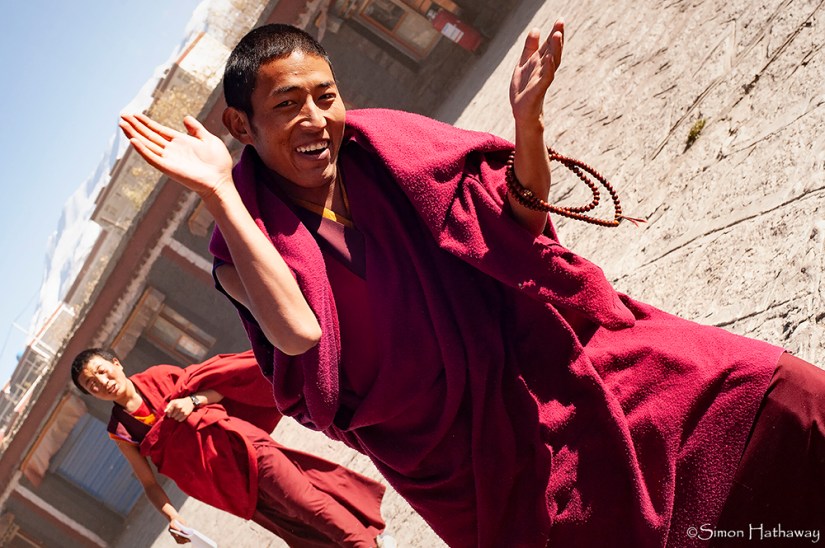
When Rinzai was at the High Seat, a monk asked, “What about the edge of the sword?”
The master cried out, “Dangerous, dangerous!”
The monk hesitated.
The master hit him.

Commentary:
The question ‘What about the edge of the sword?’ asked by the monk is the same as ‘What is the true-Self like?’ since the sword symbolises true-Self, which is also called the sword of wisdom. To answer the monk’s question, the master showed the sword by crying out, “Dangerous, dangerous!” At the same time, by saying, “Dangerous, dangerous!” he implied that the sword can be dangerous when the monk doesn’t recognise it while holding it in his hands, as though a three-year-old child is playing with a sharp knife without realising what it is that he has in his hands. As expected, the monk hesitated and was at a loss for a response since he failed to see the sword Rinzai showed, or missed what the master meant. Then, master Rinzai had the kindness to give him another answer by hitting him. He was so compassionate that he not only showed him the sword but also hit him with it this time. You should know that if you didn’t see the sword, the true-Self, on hearing the master cry out, “Dangerous, dangerous”, you were already cut by the sword.
SRH_8901a_thumb


Student: “What is the sword of wisdom like?”
Master: “Take a close look.”
Student: “I don’t know what you mean. What is it like?”
Master: “Dangerous, dangerous!”
Student: “Why do you say, ‘Dangerous, dangerous’?”
Master: “Because you are wielding the sword now.”

©Boo Ahm

All writing ©Boo Ahm. All images ©Simon Hathaway

#zen #meditation #zenmeditation #enlightened #enlightenment #zenfools #photography
Uncategorized

Q. Isn’t just calming down our minds by sitting silently in an upright posture a good practice?

Q. Isn’t just calming down our minds by sitting silently in an upright posture a good practice?

A. I want to ask you why you practise meditation. If the purpose of your practice is just taking a quiet rest for a while, it is okay, I think. The idea of sitting silently in a quiet place is not a bad idea. It can help to ease your stress that comes from troublesome reality and keep your life peaceful for a while.

However, what I want to point out is that you are not calming down your mind in a strict sense, even though you may think that you are trying to do so and may feel a short-lived peace that sitting silently can bring. Calming down your mind is quite different from just sitting silently in a quiet place. The former is a kind of practice, and the latter is a kind of a break, or a rest. The former aims for a permanent or eternal effect, but the latter only has a temporary effect.

I don’t want to discourage you from trying to calm down your mind but want to encourage you to do it in a more efficient way. In order to compose your mind, your top priority should be to realise what your mind is. How could you calm it down without knowing what it is? You should make every effort, above all, to realise what your mind is. Don’t just sit silently. Ask yourself what your mind is while sitting. Then, you can be said to be practising to calm your mind.

20190401_185116_4x6a_thumb


What is your mind? Your mind, it is said, controls your body, which means your mind is not your body. Then ask yourself what it is that controls your body whenever you do something: eating, walking, speaking, working and so on. In other words, it is the same question as “What are you when your body is not you?” You don’t need any special place, such as a quiet area, to do this. Just keeping the question is a good practice regardless of wherever you are and whatever you do. As you become accustomed to practising it, you can feel your everyday life become more peaceful.

In fact, you don’t have to try to calm down your mind once you realise what it is because it is quietness itself. All the problems and troubles that we are faced with in our life are due to not knowing what our mind is. If you realise what your mind is, you will find that the whole universe is peace itself.

©Boo Ahm

All writing ©Boo Ahm. All images ©Simon Hathaway

#zen #meditation #zenmeditation #enlightened #enlightenment #zenfools #photography
Uncategorized

Zhaozhou Sees Through Two Hermits

Zhaozhou Sees Through Two Hermits

Zhaozhou called on a hermit and said, “Are you there? Are you there?”
The hermit held up his fist.
Zhaozhou said, “The water is too shallow here. It’s not a place to anchor a vessel.”
Then he went away.
Later Zhaozhou called on another hermit and said, “Are you there? Are you there?” The hermit held up his fist.
Zhaozhou said, “You have the power to give and take away, to kill and to give life.” He bowed and went away.

_SRH4578a_thumb


Student: “Why did Zhaozhou give praise and pay homage to the latter hermit while talking down to the former even though both of them made the same response to his question?”
Master: “He just changed his clothes according to the weather.”

Commentary:
It looks long in a long thing and short in a short thing.

©Boo Ahm

All writing ©Boo Ahm. All images ©Simon Hathaway

#zen #meditation #zenmeditation #enlightened #enlightenment #zenfools #photography

Uncategorized

Rinzai 20

Rinzai 20

A monk stepped forward and said, “I can.”
The master took up his stick and handed it to him.
The monk hesitated to take hold of it.
Then the master hit him.

Commentary:
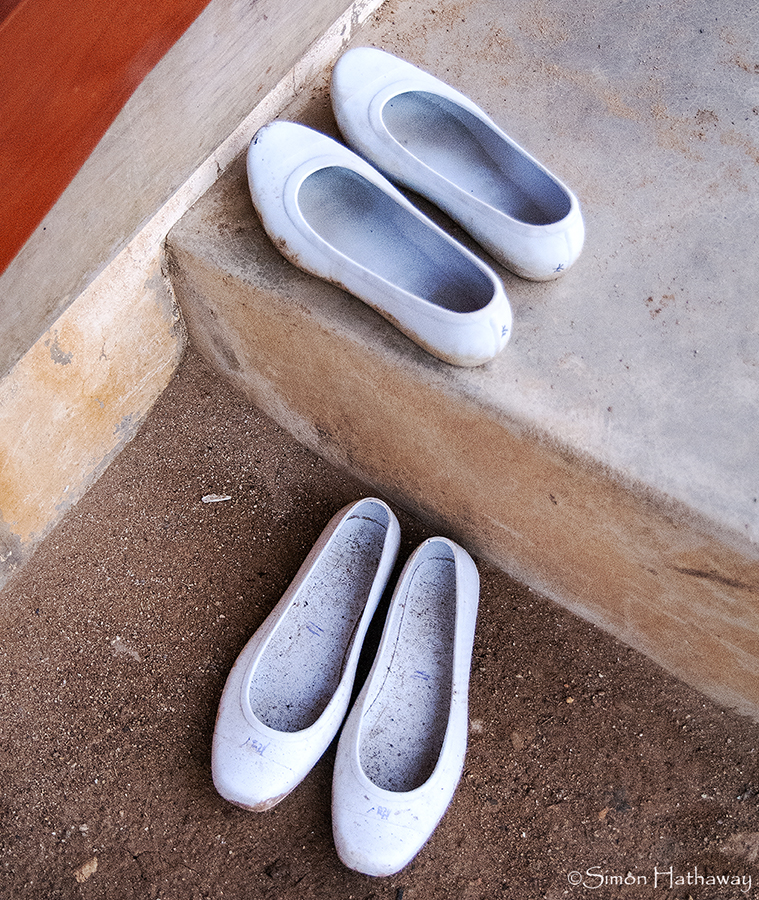
Then, a monk stepped forward and said, “I can.” However, as he couldn’t see through what Rinzai meant when he handed his stick to him, he, just hesitating to take hold of it, failed to make an appropriate response and revealed his fault. Seeing him hesitating, Rinzai hit him. What would you have done if you had been in the monk’s shoes when the master handed his stick to him? Why do you think the master hit the monk? If you think that the master hit him, you are also missing the target. The master gave him both a punishment and a teaching at the same time. You should know that the master threw the monk a rope to escape from the pit where he was struggling.

SRH_7226a_thumb


Student: “How would you have responded if the sick had been handed to you?”
Master: “I’d have taken it and broken it into two pieces.”
Student: “What is the rope the master threw?”
Master: “Hold it.”

©Boo Ahm

All writing ©Boo Ahm. All images ©Simon Hathaway

#zen #meditation #zenmeditation #enlightened #enlightenment #zenfools #photography

Uncategorized

Q. How does Emptiness look and feel different from things?

Q. How does Emptiness look and feel different from things?

A. There is no difference at all. The Heart Sutra says that Emptiness is forms and forms are not different from Emptiness. Forms here means things. In short, both are never different from each other. So, to see things is to see Emptiness. In other words, to see your wife or husband is to see Emptiness and to behold the flowers in your garden and cars in the street is to behold Emptiness. All you see and hear is Emptiness. Things are to Emptiness as winds are to air. All winds are air and there is no wind that is not air. Trying to see Emptiness whilst forsaking things is trying to feel air while forsaking winds.

017_8499a_thumb


Whether a thing is a form or Emptiness is determined by your view, just as whether a breeze is a wind or air is determined by how you see it. You are free to see a breeze as a wind, or as air. However, when you see the breeze as a wind, it has birth and death, or start and end. But, when you see a breeze as air, it has no start and no end because it was air before becoming a breeze and it will still be air after ceasing to be a breeze.

Likewise, when you see yourself as a man, you have birth and death, but when seeing yourself as Emptiness, you have no birth and no death. For that reason, enlightenment is said to be a way to escape the bondage of birth and death.

©Boo Ahm

All writing ©Boo Ahm. All images ©Simon Hathaway

#zen #meditation #zenmeditation #enlightened #enlightenment #zenfools #photography
Uncategorized

Zhaozhou’s “Losing the Mind in Confusion”

Zhaozhou’s “Losing the Mind in Confusion”

Zhaozhou said to the assembly, “‘If you have even a bit of discrimination, you lose your mind in confusion.’ Do you have anything to say about this?”
A monastic hit Zhaozhou’s attendant and said, “Why don’t you answer the master?”
Zhaozhou left and went back to the abbot’s room. Later the attendant asked Zhaozhou for guidance and said, “Did that monastic who struck me have understanding, or did he not?”
Zhaozhou said, “The one who sits sees the one who stands; the one who stands sees the one who sits.”

Student: “What did Zhaozhou mean by his answer to the attendant’s question?”
Master: “He meant that the one who is hit sees the one who hits; the one who hits sees the one who is hit.”
Student: “I am still lost.”
Master: “A questioner sees the answerer and the answerer sees the questioner.”
Student: “I am still lost.”
Master: “You still see me.”

_SRH8011a_thumb

Commentary:
The answer Master shows has neither questioner nor answerer, but the student sees only the answerer.

©Boo Ahm

All writing ©Boo Ahm. All images ©Simon Hathaway

#zen #meditation #zenmeditation #enlightened #enlightenment #zenfools #photography
Uncategorized

Rinzai 19

Rinzai 19

The master then said: “Monks, those who seek the Dharma should not shirk losing body and life. As for me, I spent twenty years with my late master Obaku. Three times I asked him about the essence of Buddhism, and three times he kindly beat me. It was as if he had caressed me with a branch of fragrant sage. Now I feel like being beaten again; who can give me a beating?”

Commentary:
‘Those who seek the Dharma should not shirk losing body and life’ doesn’t mean that we ought to think lightly of body and life but means that we should realise that they are empty. The reason why the master mentioned body and life is that they are the stickiest illusions for us to remove. So, enlightenment is likened to great death, which implies that all illusions die. Great death is identified with eternal life.

It is a well-known historical fact that Rinzai asked his master Obaku about the essence of Buddhism three times and that Obaku hit Rinzai whenever he asked him. The key point here is why master Obaku hit Rinzai when he asked him such an important question, instead of answering him. Thinking that he beat him is missing what he intended to show. We ought to know that he presented a perfect answer to his question by revealing Buddha in person. In fact, even Rinzai himself, disappointed with Obaku’s response, had decided to leave Obaku for another master because he didn’t grasp the meaning of the master’s beating at that time. Only after his enlightenment did he realise that his master, Obaku’s beatings had been a very compassionate teaching and that he had revealed the true-Self. So, when he said here, “I feel like being beaten again; who can give me a beating?”, he meant, “I’d like to see any of you revealing the true-Self as clearly just as my master Obaku did. Who can do it?”

Student: “How would you have responded to the master’s question?”
Master: “Why do you covet others’ food while vomiting yours?”

©Boo Ahm

All writing ©Boo Ahm. All images ©Simon Hathaway

#zen #meditation #zenmeditation #enlightened #enlightenment #zenfools #photography
Uncategorized

Q. If you could only choose one way, kindness or Buddhism, which would you choose?

Q. If you could only choose one way, kindness or Buddhism, which would you choose?

A. This sounds like a koan, a tricky Zen question but is a very simple question to answer if you know the essence of Buddhism because whichever you may choose, you will make the same answer. Choosing one is not different from choosing the other because both of them contain each other as non-duality, Oneness.

Kindness in Buddhism means compassion, which is the function of the true-Self, non-duality that is the core of Buddhism. In fact, kindness and Buddhism are inseparable from each other because they are one. Kindness is to Buddhism as winds are to air.

©Boo Ahm

All writing ©Boo Ahm. All images ©Simon Hathaway

#zen #meditation #zenmeditation #enlightened #enlightenment #zenfools #photography
Uncategorized

Master Langye’s “Original Purity”

Master Langye’s “Original Purity”

A monastic asked Zen master Langye, “Purity is originally all embracing. How is it that mountains, rivers, and the great earth suddenly appear?” Langye said, “Purity is originally all embracing. How is it that mountains, rivers, and the great earth suddenly appear?”

Student: “Why did the master repeat his student’s question when he was asked instead of answering his question by his student?”
Master: “Purity is originally all embracing. How does this question suddenly appear?”

Commentary:
The illusion of Purity blocks you from seeing the Purity before your eyes.

©Boo Ahm

All writing ©Boo Ahm. All images ©Simon Hathaway

#zen #meditation #zenmeditation #enlightened #enlightenment #zenfools #photography
Uncategorized

Rinzai 18

Rinzai 18

Again, a monk asked, “What is the essence of Buddhism?”
The master raised his fly-whisk again.
The monk gave a Katsu.
The master also gave a Katsu.
The monk hesitated.
The master hit him with the fly-whisk.

The master answered the monk’s question ‘What is the essence of Buddhism?’ by revealing the true-Self through raising his fly-whisk. The monk responded to the master’s answer by giving a Katsu, which meant, “I know that what you mean is not different from just this Katsu.” Then, the master, dubious of the ripeness of his practice, gave a Katsu to check his practice once more. The monk, failing to make an instant answer to the second test, was at a loss for the right words. Master hit him both as a punishment for failing to make a suitable answer and as an answer to his own Katsu.

If you had been in the monk’s shoes, how would you have responded in the situation? A true practitioner should put himself in the monk’s shoes and ask himself how he would have reacted if he had been the monk.

Student: “What would you have done if you had been the monk when the master raised his fly-whisk?”
Master: “I would have snatched it away from him.”
Student: “How would you have responded to the master’s Katsu?”
Master: “I would have given it back to him.”
Student: “What reaction would you have made to the master’s hit with his fly-whisk?”
Master: “I would have said, ‘I should have broken it’.”

©Boo Ahm

All writing ©Boo Ahm. All images ©Simon Hathaway

#zen #meditation #zenmeditation #enlightened #enlightenment #zenfools #photography