Uncategorized

Q. I was born and raised Catholic and although I’m not practising, I will always believe in Jesus. However, since I started meditating and learning about Buddhism I find it to be more comforting than Catholicism. I find this confusing. What should I do?

Q. I was born and raised Catholic and although I’m not practising, I will always believe in Jesus. However, since I started meditating and learning about Buddhism I find it to be more comforting than Catholicism. I find this confusing. What should I do?

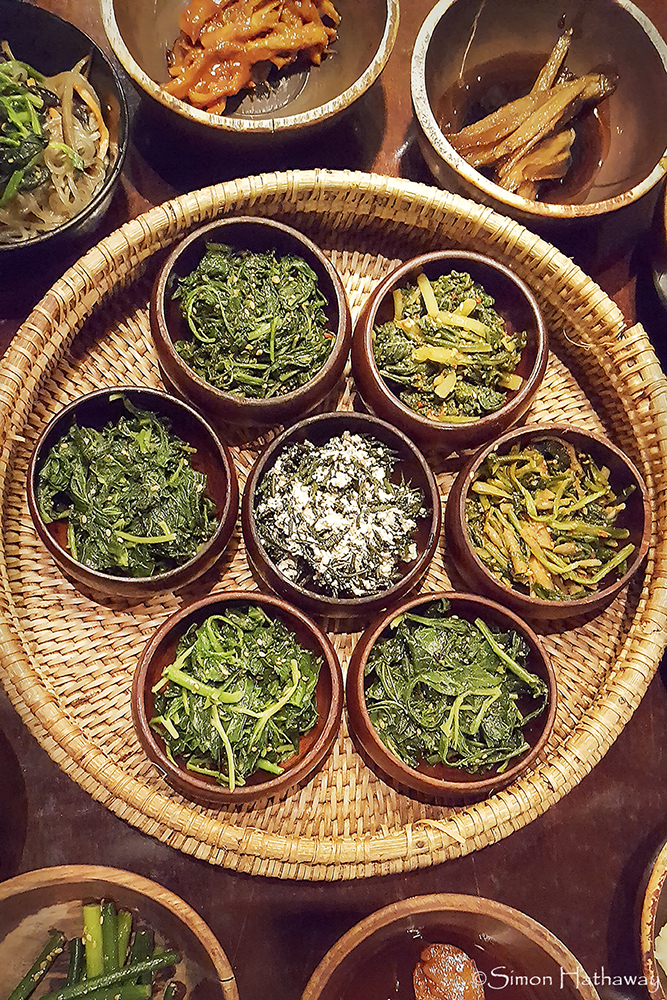
A. The confusion you are facing now results from not knowing what religion is. Religion is not an end but a means. In other words, your life is not lived for the sake of Catholicism, but Catholicism is just a means you chose in order to make your life happy. If a Westerner feels more comforted and healthier when eating Korean food than when having Western food, should he find it confusing? Should he feel guilty about eating Korean food instead of Western food? He never lives for the sake of eating Western food but eats Western food as a means to live a healthy life. Whatever religion you may choose, religion is only a means to attain happiness, just as food is simply a means to keep your body healthy, no matter which country’s food you may choose to eat.
20180607_190708a_thumb


You don’t have to be converted to Buddhism, if you like the mood of Catholicism, just as you need not change your nationality for the purpose of eating Korean food. Learn and practise what you like, where you like, in your own favourite way.

©Boo Ahm

All writing ©Boo Ahm. All images ©Simon Hathaway

#zen #meditation #zenmeditation #enlightened #enlightenment #zenfools http://ow.ly/i/I4u8E
Uncategorized

Jinhua’s Ancient Mirror

Jinhua’s Ancient Mirror

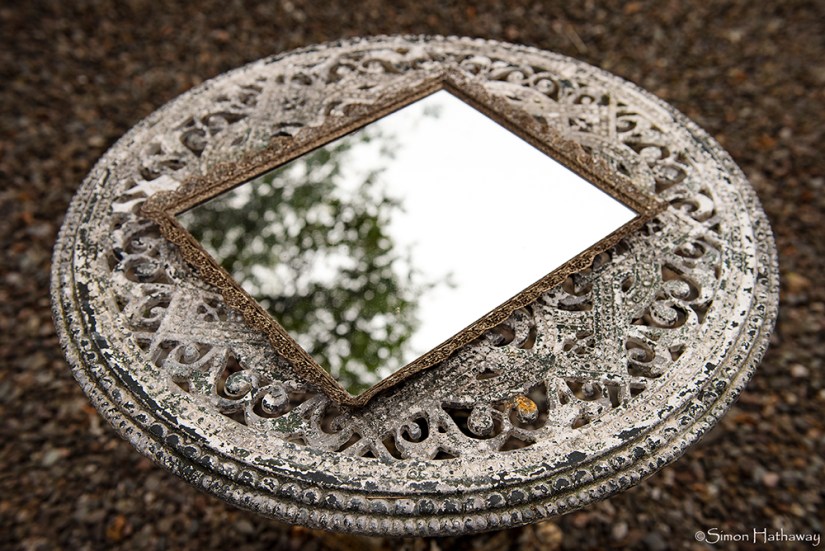
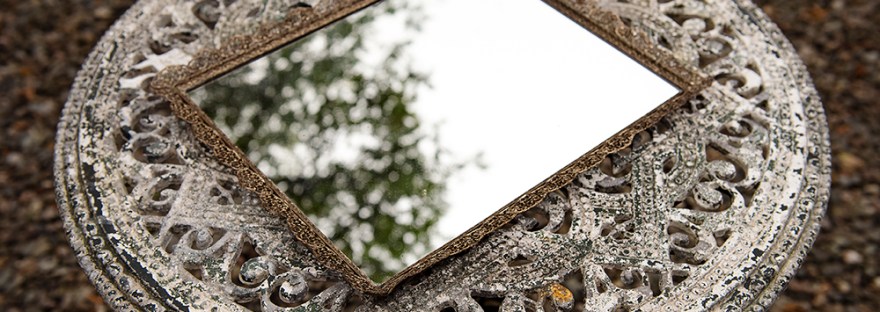
A monastic asked Jinhua, “How is it when the ancient mirror is not yet polished?”
Jinhua said, “An ancient mirror.”
The monastic said, “How is it after it is polished?”
Jinhua said, “An ancient mirror.”

018_8151a_thumb


Student: “Why did Jinhua say the same answer to two different questions?”
Master: “Because your mirror is not yet polished.”

Commentary:
It is not because the ancient mirror is not yet polished but because you have an eye disease that the ancient mirror doesn’t seem to be polished.

©Boo Ahm

All writing ©Boo Ahm. All images ©Simon Hathaway

#zen #meditation #zenmeditation #enlightened #enlightenment #zenfools http://ow.ly/i/I2Kyf

Uncategorized

Hsin Shin Ming: “52. When such dualities cease to exist, even Oneness itself cannot exist.”

Hsin Shin Ming: “52. When such dualities cease to exist, even Oneness itself cannot exist.”

This scripture means that in order to describe the true-Self, even though we call it Oneness for convenience’ sake, Oneness is also an incorrect expression. One is used to compare with other numbers such as two, three and four. When there is only One and nothing else, it is not One any longer just as red is not red any more when all there is, is red.

So, ancient masters would say, “You are wrong even if you only open your mouth to describe the true-Self.” In summary, the scripture means that the true-Self is so perfect that it is beyond description. That’s why Buddha kept silent when someone asked him what the true-Self was.

©Boo Ahm

All writing ©Boo Ahm. All images ©Simon Hathaway

#zen #meditation #zenmeditation #enlightened #enlightenment #zenfools http://ow.ly/i/I6376

Uncategorized

Q. Is there ‘No Self’ in Buddhism?

Q. Is there ‘No Self’ in Buddhism?

A. ‘No self’, or ‘No I’, is a frequently mentioned expression that is the of the core of Buddhism. It is also one of the many phrases that are most commonly misunderstood or misinterpreted. What, or who, is it that asks this question and is reading this writing if there is ‘No I’ or ‘No Self’?

The ultimate goal of Buddhism is to attain enlightenment, which means to realise the truth that everything is empty. When we realise that everything is empty, we simultaneously realise that everything is Oneness as Emptiness.
This means that I belong to Oneness, that is, I am part of Oneness. When I am Oneness, there is nothing or nobody else except me, Oneness. Then, it is said that there is no ‘I’, or no ‘Self’, because there is nothing or nobody to distinguish me from, just as the colour red is not red any more when all there is, is red.

SRH_5217a_thumb


Therefore, ‘No self’, or ‘No I’, means not that there is no ‘I’ at all, but that you are all there is and all there is, is you. Then you can see your neighbours as yourself.

©Boo Ahm

All writing ©Boo Ahm. All images ©Simon Hathaway

#zen #meditation #zenmeditation #enlightened #enlightenment #zenfools http://ow.ly/i/I4rUK

Uncategorized

Guizong Holds Up a Fist

Guizong Holds Up a Fist

Once Guizong was asked by Governor Libo, “I am not asking about the Three Vehicles and the Twelve Divisions of Sutras. But what is the meaning of Bodhidharma’s coming from India?”
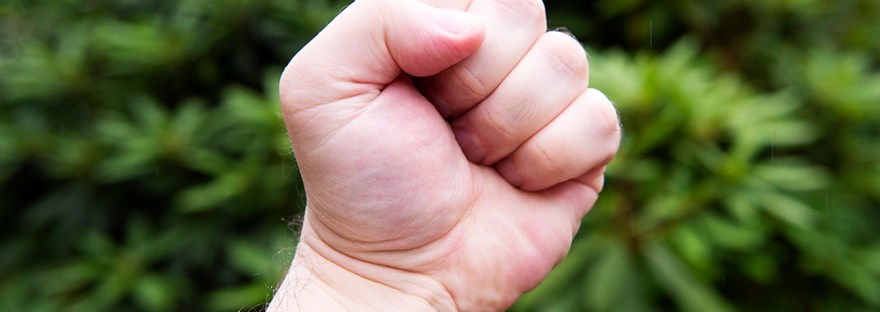
Guizong held up his fist and said, “Do you understand?”
Libo said, “No, I don’t.”
Guizong said, “You have studied extensively, yet you don’t know what a fist is!”
Libo said, “Truly, I don’t understand it.”
Guizong said, “If you meet a true person, you are fulfilled in the Way. If you do not meet a true person, you spread worldly truth.”

Student: “Why did Guizong hold up his fist when asked the meaning of Bodhidharma’s coming from India by Libo?”
Master: “He gave a very kind answer to Libo.”
Student: “Guizong told Libo that if Libo met a true person, he would be fulfilled in the Way. Who is the true person?”
Master: “Can you lift your fist?”
Student: “Of course, I can.”
Master: “That’s it.”
Student: “I don’t understand what you mean.”
Master: “That’s it.”
Student: “What do you mean by ‘That’s it’?”
Master: “That’s it.”

Commentary:
If you are not deluded by illusions, every single word from your mouth is the Way and there is no action that is not the Way.

©Boo Ahm

All writing ©Boo Ahm. All images ©Simon Hathaway

#zen #meditation #zenmeditation #enlightened #enlightenment #zenfools http://ow.ly/i/I0Wzg

Uncategorized

Hsin Shin Ming: “51. Consider the movement in stillness and the stillness in movement, both movement and stillness disappear.”

Hsin Shin Ming: “51. Consider the movement in stillness and the stillness in movement, both movement and stillness disappear.”

Here movement stands for illusions, and stillness means Emptiness. ‘Consider the movement in stillness’ means to realise that illusions are in Emptiness and Emptiness is in illusions. ‘Both movement and stillness disappear’ means that both the illusion of ‘illusion’ and the illusion of ‘Emptiness’ disappear. So, this scripture says that if we realise that illusions are not separate from but are one with Emptiness, both the illusion of ‘Emptiness’ and the illusion of ‘illusion’ will disappear.

File32561a_thumb


To cling to Emptiness and to struggle to avoid illusions is to make yet another error of being deluded by the illusions of ‘Emptiness’ and ‘illusion’. When we realise that illusions and Emptiness are not separate from each other but are one, the one is neither an illusion nor Emptiness. Then, there is neither an illusion nor Emptiness. This means that both movement and stillness disappear. In summary, realising that illusions and Emptiness are one means that they disappear; this is enlightenment.

©Boo Ahm

All writing ©Boo Ahm. All images ©Simon Hathaway

#zen #meditation #zenmeditation #enlightened #enlightenment #zenfools http://ow.ly/i/HYIv2

Uncategorized

Q. What can be said about what is within all the impermanent changing forms?

Q. What can be said about what is within all the impermanent changing forms?

A. All the impermanent changing forms are to what is within them as all winds are to air. All the impermanent changing forms are from and based on what is within them, just as all winds are from and based on air. The impermanent changing forms are compared to the storehouse of the jewel. What is within them is called Emptiness, Buddha or Oneness in Buddhism and God or Jesus in Christianity, which is compared to the jewel. The purpose of Zen meditation is to realise what the jewel is and to become able to see all the impermanent changing forms and what is within them simultaneously. To become like this is known in Buddhism as attaining enlightenment and in Christianity as attaining eternal life.

File31725b_thumb


©Boo Ahm

All writing ©Boo Ahm. All images ©Simon Hathaway

#zen #meditation #zenmeditation #enlightened #enlightenment #zenfools http://ow.ly/i/HNGQ7

Uncategorized

Yaoshan’s “This Buddha, That Buddha.”

Yaoshan’s “This Buddha, That Buddha.”

Monastic Zun was at the assembly of Yaoshan and was the head altar attendant. While he was bathing Buddha images on Buddha’s birthday, Yaoshan asked him, “Have you bathed this one or have you bathed that one?” Zun said, “Please hand that one to me.”
Yaoshan stopped.

DSC_8498a_thumb


Student: “What is the difference between this Buddha and that Buddha?”
Master: “You see this Buddha and not that Buddha.”
Student: “What did Zun mean when he said, ‘Please hand that one to me’?”
Master: “He meant to show this Buddha.”

Commentary:
This Buddha is the appearance of that Buddha, and that Buddha is that of this Buddha.

©Boo Ahm

All writing ©Boo Ahm. All images ©Simon Hathaway

#zen #meditation #zenmeditation #enlightened #enlightenment #zenfools http://ow.ly/i/HKOXy

Uncategorized

Hsin Hsin Ming: “50. Do away with the cause and there is nothing to compare it with.”

Hsin Hsin Ming: “50. Do away with the cause and there is nothing to compare it with.”

‘There is nothing to compare it with’ means that there is no effect to follow the cause. The world of form where we are living is the world of cause and effect. All suffering we have is the result of causation. This scripture tells us to do away with the cause in order to escape from the suffering that is the effect of cause.

How should we remove the cause? How can we, first and foremost, recognise the cause? In fact, it is impossible to distinguish and separate cause from effect, since everything is both the effect of its cause and the cause for another effect at the same time. If we interpret this scripture literally, we should do away with all the things that we see and hear, irrespective of whether they are living things or non-living things.

SRH_5733a_thumb_insta


How can we do that? The secret is to realise that everything is empty. When we see everything as empty, the cause is empty. When the cause is empty, the effect that comes as a result of the cause is also naturally empty. So, the Heart Sutra says that all sentient beings should escape from all suffering by realising that everything is empty.

Therefore, I recommend that people who practise Zen meditation should have a new definition of cause and effect. The cause of everything, good or bad, is making discriminations. So, to do away with the cause is to realise that everything is empty, that is, to stop discriminating.

Student: “What is cause and effect?”
Master: “Your discrimination is the cause and being deluded by it is the effect.”

©Boo Ahm

All writing ©Boo Ahm. All images ©Simon Hathaway

#zen #meditation #zenmeditation #enlightened #enlightenment #zenfools http://ow.ly/i/HJN2i

Uncategorized

Q. If everything that can be described in words is an illusion, including emptiness, my trying to see things as empty is to add another illusion to the rest of them. Then, am I an illusion trying to understand illusions by making more illusions?

Q. If everything that can be described in words is an illusion, including emptiness, my trying to see things as empty is to add another illusion to the rest of them. Then, am I an illusion trying to understand illusions by making more illusions?

A. Yes, you are also an illusion unless you realise that you are emptiness itself. Everything is emptiness when you are enlightened, just as everything is an illusion when you are not enlightened. Whatever good things you may say or do, they are all just illusions until you get enlightened. When you are not enlightened, even emptiness is an illusion as well.

2705-2018-064461626469525718a_thumb

When you are enlightened, there is only emptiness and nothing else since it is non-Duality. In emptiness there is no one who tries to see things as empty and nothing to see as empty. This is why emptiness is also referred to as non-I. As long as there are things that you try to see as empty, and you yourself who tries to see them as empty, you and all things that you see and hear are illusions.

Student: “What is Emptiness?”
Master: “All illusions.”

©Boo Ahm

All writing ©Boo Ahm. All images ©Simon Hathaway

#zen #meditation #zenmeditation #enlightened #enlightenment #zenfools http://ow.ly/i/HKW75