Master Hyunsa said, “If you fall in with a person who is blind, deaf and dumb, how would you treat him? If we can’t treat such a person properly, we can’t say that the Buddha’s teaching is divine.” Then, Jijang, one of his students said, “I can see, hear and speak. How would you treat me?” The master burst out laughing.
“Subhuti, the Realised One speaks as if there were an ‘I’, but it doesn’t mean that ‘I’ exists, yet ordinary people think that there is ‘I’. Subhuti, the Realised One says ordinary people are not ordinary people, they are just called ordinary people.”
Commentary:
Here the Buddha emphasizes again that everything is empty. He means that although he uses the words ‘I’ and ‘ordinary people’ in order to preach the Dharma, he says these words not because they actually exist but only as an expedient means to reveal the true-Self. For example, when the Buddha says, “I want to lead ordinary people to enlightenment”, he doesn’t mean that there are ‘I’, ‘ordinary people’ and ‘enlightenment’. This is why the Buddha says, “The Realised One says ordinary people are not ordinary people, they are just called ordinary people.”
Student: “If ordinary people are not ordinary people, are they the Buddha?”
Master: “The Buddha is not the Buddha, but just called the Buddha.”
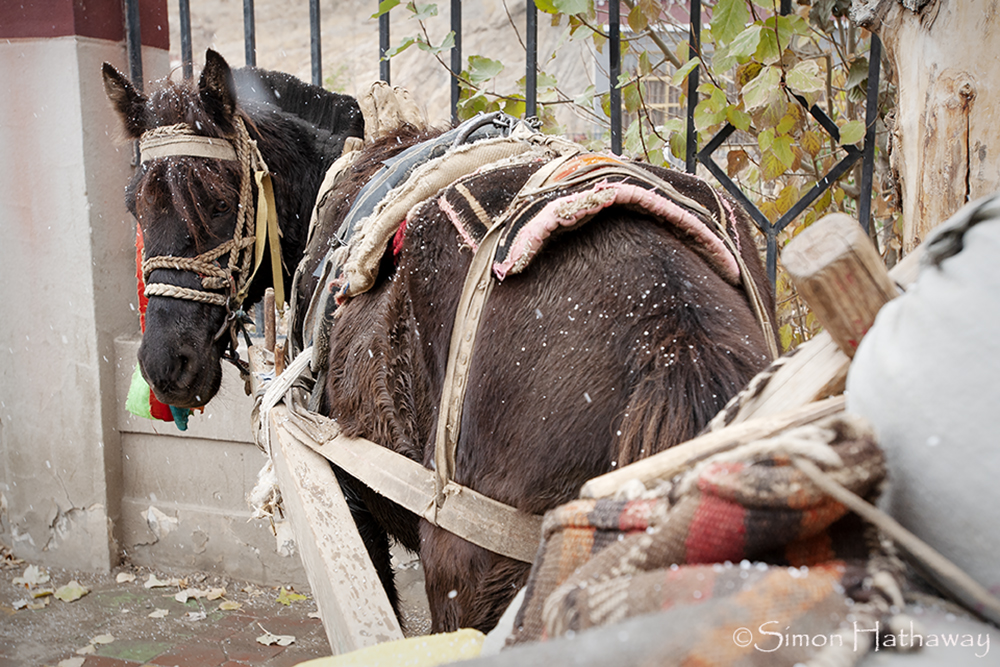
A monastic asked Master Young-woon, “What is the crux of Buddhism?” The master answered, “A donkey’s work not being finished yet, a horse’s work has already come.” The monastic, not grasping its meaning, asked for more teaching. The master said, “Although the splendid energy moves every night, meeting the spirit is rare.”
Student: “What is the splendid energy?”
Master: “It is the function of the spirit.”
Commentary:
Don’t leave your house whose garden is full of flowers in bloom, in search of spring.
“What do you think, Subhuti? You should not say that the Realised One entertains this thought: ‘I should save sentient beings’. Subhuti, do not think this. Why? There really are no sentient beings the Realised One saves. If there were sentient beings the Realised One saves, then the Realised One would have image of self, image of person, image of sentient being, and image of liver of life.”
Commentary:
Although the Buddha gave himself to saving sentient beings, he never thought that he saved any sentient beings, because if he had had that kind of idea, it would have meant that he was still not freed from being deluded by images.
It is not an exaggeration to say that the crux of Buddhism is to save all sentient beings. Saving all sentient beings means freeing oneself from being deluded by images and words.
Student: “If there were not sentient beings to save, why did the Buddha preach this Sutra?”
Master: “Because we are deluded by what doesn’t exist.”
A. This doesn’t mean that we should discard rancour just like throwing away rubbish. It is impossible to treat rancour in that way, even though we may wish to. There is a saying ‘Everything is the Buddha’ in Buddhism.
According to this, rancour is the Buddha as well. ‘Discarding it’ here doesn’t mean to discard rancour just like throwing away rubbish but means to see rancour as the function of the Buddha.
A monastic asked Master Young-woon, “What is the crux of Buddhism?” The master answered, “A donkey’s work not being finished yet, a horse’s work has already come.” The monastic, not grasping its meaning, asked for more teaching. The master said, “Although the splendid energy moves every night, meeting the spirit is rare.”
Student: “What is the difference between a donkey’s work and a horse’s work?”
Master: “The former can’t be finished but the latter is already done.”
Commentary:
One who tries to find gold by breaking gold is one who mistakes gold for stone.
“Subhuti, if someone took heaps of jewels as big as Mt. Sumeru in a billion worlds and gave them away in charity, the blessing would not compare to a hundredth part, a hundredth trillionth part, or indeed any calculable or imaginable part of the blessing of accepting, holding, reading, reciting, and explaining to others even so much as this Sutra, or a four-line verse of this Sutra.”
Commentary:
As we have seen, in the proceeding parts the Buddha repeated the scriptures four times that emphasized the importance of accepting, holding, reading, reciting, and explaining a four-line verse of this Sutra to others. In fact, it is not an exaggeration to say that the purpose of this Sutra is to enable people to do it, because being able to do it signifies enlightenment, the final goal of all Buddhists.
The reason why the blessing of accepting, holding, reading, reciting, and explaining to others this Sutra, or a four-line verse of this Sutra is incomparably larger than that of taking heaps of jewels as big as Mt. Sumeru in a billion worlds and giving them away in charity is that the former is to become one with the true-Self and the latter is still no better than being deluded by illusions.
What we ought to bear in mind is that accepting, holding, reading, reciting, and explaining a four-line verse of this Sutra implies not only accepting, holding, reading, reciting, and explaining a four-line verse in the text we are reading now but also seeing and hearing every single thing around us, or every single sound that reaches our ears as it is, without being deluded by images and words.
Student: “Why is a four-line verse more valuable than heaps of jewels as big as Mt. Sumeru?”
Master: “Because he who can hold, read and explain a four-line verse knows that there is no difference between heaps of jewels as big as Mt. Sumeru and a mustard seed.”
One day one of Joshu’s students bade farewell to Joshu. Joshu said to him, “Where are you going?” The student answered, “I am going to search for the Buddha.” Joshu said, “Don’t stay where the Buddha is, and go quickly through the place where the Buddha is not. If you happen to meet a person one thousand miles away, don’t respond to him wrongly.”
Hearing this, the student said, “I will not leave then.” Joshu said, “Pick willow flowers. Pick willow flowers.”
Student: “Then, where should we go if we shouldn’t stay where the Buddha is, and should go quickly through the place where the Buddha is not?”
Master: “Joshu showed it to you.”
Commentary:
How impolite and foolish it is of you to shake off the Buddha’s hug and to go to seek him!









 Zen Fools