A. As this scripture says, we can do it by not being shaped by this world and by being changed by a new way of thinking. ‘Not being changed by this world’ implies that we are not deluded by illusions of the world. ‘Being changed within by a new way of thinking’ means that we see everything as it is, which is referred to as attaining the eye of wisdom, or enlightenment in Buddhism.
When we can see everything just as it is without being deluded by illusions of the world, we can realise that we are oneness with God, that is, we are God himself and the other way around. Then, we can decide what God wants for us because what we want for God is on other than what God wants for us.
Joshu’s was once asked by a monastic, “I have just entered the monastery for the first time. Please teach me, Master.” Joshu said, “Have you eaten the morning meal?” The monastic said, “Yes, I have.” Joshu said, “Then wash your bowls.” The monastic immediately had realisation.
Student: “Washing one’s bowl after a meal is not exceptional. How could the monastic attain enlightenment from such ordinary words?”
Master: “Realising the ordinary is enlightenment.”
Student: “What is an ordinary thing?”
Master: “What is special?”
Commentary:
Enlightenment is not special but one’s foolishness makes it special.
Then even if the Bodhisattvas who have completed the ten stages look for the traces of this follower of the Way, they cannot find them. Therefore, all the Devas rejoice, the spirits of the earth support his feet, and of all the Buddhas of the ten directions, none hold back with their praise. And how does this come to be so? Because this follower of the Way who now is listening to the Dharma talk now leaves no trace of his activities.
Commentary:
Leaving no trace at all means not being deluded by any illusions through the realisation that everything is empty, which implies enlightenment.
Once upon a time there was a monastic who was lost in Zen practice. He practised so diligently that heavenly maidens were so impressed by him that they served him heavenly food. However, after he visited a master, they couldn’t serve him heavenly food any more since they couldn’t find him any longer. This is a metaphor that shows how thoroughly practitioners should cease leaving traces behind.
Leaving no trace behind to the extent that the Bodhisattvas who have completed the ten stages cannot find the trace implies to be enlightened. Then, you are oneness with everything you see and hear, and you are eternity itself, perfection itself and happiness itself. You are oneness with all the Devas, the spirits of the earth, and of all the Buddhas of the ten directions. You can work them as you please instead of being worked by them. ‘Because this follower of the Way who now is listening to the Dharma talk now leaves no trace of his activities’ means that each of the students who were listening to his Dharma talk was none other than the Buddha itself. You who are reading this are also none other than the Buddha itself.
Student: “Why couldn’t the heavenly maidens serve the monastic heavenly food any more after he saw the master?”
Master: “He ceased practising after he saw the master.”
A. God loves not only us but also the various parasitic life forms because they were created by God in the same way as we were. Why do you think that only humans are entitled to inhabit the earth? Numerous creatures, both visible and invisible, which we think are causing us excruciating pain and suffering have no intention to harm people. The creatures that we think are beneficial to human beings have no intention to help people either. They merely pursue their survival and happiness in their own ways. They are neither beneficial nor harmful in essence.
We judge them to be beneficial or harmful by our interests and prejudices. Who gave us the privilege of determining whether or not they are worth keeping alive or devastating their habitats as we please just for the sake of human beings? It seems that, judging from a fair and just perspective, no other creature in the world is as cruel and harmful to us as human beings are.
Zen master Yantou was once asked by a monastic, “What can I do when the three worlds all arise together?” Yantou said, “Sit still.” The monastic said, “I don’t understand what you mean, Master.” Yantou said, “Bring Mount Lu here and I will tell you.”
Student: “What did Yantou mean by ‘Sit still’?”
Master: “He taught the monastic how to avoid the three worlds.”
Student: “What did he mean by ‘Bring Mount Lu here and I will tell you’?”
Master: “He showed the old shelter in which to avoid the three worlds.”
Commentary:
What arises later is not stronger than what is already there.
Even though one lives on a lonely mountain peak, eats a single meal a day in the morning, meditates without lying down for twenty-four hours a day, he is only a Karma-producing man. Even though one gives away as alms all that he has: his head, eyes, marrow, brain; his home, wife and children; elephants and horses — the seven precious things, all such actions cause only suffering to body and heart, and contrary to expectation bring about troublesome causation again. Far better it is to have nothing further to seek, to be simple and plain.
Commentary:
The core of Zen meditation, or enlightenment is to cease being attached to things by seeing everything as empty. No matter how hard you may practise, it is empty in essence. Practising whilst being attached to the image and idea of practising hard is not so much practising as making karma. In the same way, whatever precious things you may offer as alms, they are not true alms that help to release you from the yoke of karma but just a cause of new karma if you cling to the image and idea of the alms you offered. Trying to attain enlightenment by accumulating things such as good practice and alms is heading for the west with a mind to go to the east. It is not different from trying to build a castle by piling up shadows. That’s why ancient masters would say that doing a good thing is not as good as doing nothing.
Student: “It is said that enlightenment is attained as the result of having accumulated a lot of practice and alms in previous lives. You also advise us to practise hard. Why does Rinzai say that this is not as good as doing nothing?”
Master: “Because that is the right way to accumulate practice and alms.”
A. If you struggle with vengeful thoughts during meditation, your meditation is not going well. Such an illusion as the idea of revenge could not penetrate your mind if your meditation was going well. You should be free from such illusions at least during your meditation if it were going well.
Let me tell you two ways to cope with the thoughts of revenge plaguing you; one is to replace such thoughts with a koan, Zen question as soon as they come to you and the other is to trace them back to the root from which they come instead of struggling to remove or stop them. When you feel such bad memories in the same way that you remember your dreams from the previous night, your healing is complete.
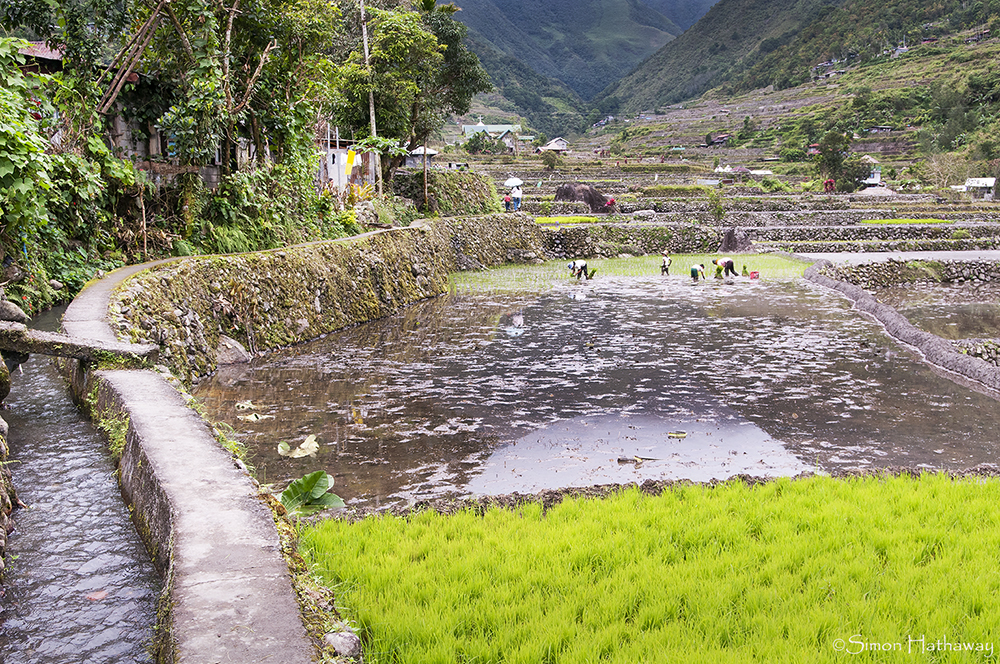
Yangshan was asked by Guishan, “Where have you been?” Yangshan said, “In the midst of the rice fields.” Guishan said, “How many people were there in the rice fields?” Yangshan held his hoe in folded hands and kept standing. Guishan said, “Nowadays there are many people weeding here in South Mountain.” Yangshan walked away, dragging the hoe.
Student: “Why did Guishan say, ‘There are many people weeding in South Mountain’ although Yangshan didn’t mention any number?”
Master: “Because Yangshan showed the weeding people to Guishan so that he might count them in person.”
Commentary:
How many fingers do you have when two is not a pair and one is not single?
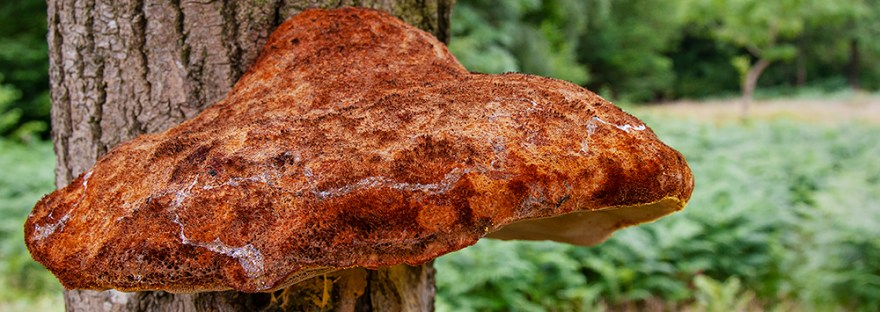
And why is this so? One who, entering the Way, doesn’t master its principle will return to the flesh and has to pay back the alms received by the faithful. The story ‘When the respected man reached the age of eighty-one, the tree no longer bore mushrooms’ is a good example.
Commentary:
‘One who, entering the Way, doesn’t master its principle will return to the flesh and has to pay back the alms received by the faithful’ implies that when a monastic fails to attain enlightenment, he cannot escape from the yoke of causation or reincarnation. However, this is true of not only monastics but also everyone else. The story of the tree that bore mushrooms presents an example of being trapped in the yoke of causation.
Once upon a time there was a respected rich man in India who was Buddhist. He had a tree that continued to bear mushrooms immediately after they were harvested. One day he asked a master named Ganadeba, “I have a tree in my garden that continues to bear delicious mushrooms in no time after we pick them. What is the cause of it?” The master said, “A long time ago before your birth, your ancestor allowed a monk to stay in his house and served him for many years. The monastic just received the alms in vain from your ancestor without attaining enlightenment. He becomes mushrooms in order to repay the alms he received in his previous life. The tree will cease to produce mushrooms when you become 81 years old.” The tree stopped yielding mushrooms when the man turned 81 years old just as the master predicted.
A. The Buddha is not so foolish that he is deceived by your cunning calculation. The Buddha’s foolishness is wiser than your wisdom. Nirvana is not subject to worldly bargaining. Nor is it what can be obtained by the calculation of secular interests.
Whatever you may say about the Buddha, whatever you may think of the Buddha, and however you may accept His teaching, don’t delude yourself into thinking of intellectual understanding as accepting his teaching just because the Buddha never says that you are wrong. It is not because he is less wise than you but because you cannot hear him that he remains speechless. It was not because ancient masters were not as wise as you are that they expended so much time accepting the teaching.








 Zen Fools