A monastic bid farewell to Guizong. Guizong said to him, “Where are you going?” The monastic said, “I am going to many places to study the five-flavour Zen.” Guizong said, “There is one-flavour Zen in my place.” The monastic said, “What is your one-flavour Zen?” Guizong hit him.
Student: “What is the difference between the five-flavour Zen and one-flavour Zen?”
Master: “The five-flavour Zen is from one-flavour Zen.”
Venerable ones, I cannot these days cease from using a lot of words, and come out preaching many inept things due to unavoidable circumstances, but do not let yourselves be deceived! As I see it, there are not really this many principles. If you want to use it, just use it; and if you do not want to use it, then rest. It is said that the Six Paramitas and the Ten Thousand Practices are the Buddha-Dharma. I say they are but methods for spiritual adornment and for building the Buddha’s work; they are not the Buddha-Dharma. And furthermore, observing the rules of Buddhist ceremony strictly and conducting them carefully enough to carry a bowl full of oil without spilling a drop, you cannot help but fall into debt if you don’t make the eye clear. The day will come when you must repay your debt.
Commentary:
Rinzai means that he knows the true-Self is unexplainable with words, but that he uses a lot of words as expedients for the sake of convenience. We should see what he points to without being deluded by his words. The true-Self you are looking for is everywhere and so you should be free to use it anytime if you want to. However, whatever great things such as the Six Paramitas and the Ten Thousand Practices you may do and no matter how strictly you may observe the rules of Buddhist ceremony, they have nothing to do with attaining enlightenment. They rather become your karma, causation, and you will be doomed to repay it someday.
A. The true-Self is often compared to an ox, and finding the ox is enlightenment. We have lost the ox, the essence of our being, for such a long time that it has become as uncontrollable as a wild ox. We are sometimes kicked, butted and once in a while trampled by it since it is out of our control because we cannot see it, although it is always with us. The pain of the injuries from the kicks, butting and trampling of the ox is referred to as suffering in Buddhism. To find the lost ox and control it as we please is to make our lives happy.
Shilou was once asked by a monastic, “I don’t know the original nature yet. Master, please show me by skilful means.” Shilou said, “I have no ears to hear you.” The monastic said, “I know I have shortcomings.” Shilou said, “This old monastic has faults too.” The monastic said, “What are your faults?” Shilou said, “My fault lies in your shortcomings.” The monastic bowed. Shilou hit him.
Student: “What are their shortcomings?”
Master: “They are your shortcomings.”
Student: “What is my shortcoming?”
Master: “Taking their shortcomings for shortcomings is your shortcoming.”
Commentary:
See and hear things as non-things and you will see the Buddha.
One monk asked, “What is the meaning of Bodhidharma’s coming from the West?” The master said, “Had he had any meaning, he could not even have liberated himself.” The monk asked, “If he had no meaning, how could the Second Patriarch attain the Dharma?” The master said, “To attain is not to attain.” The monk asked, “If it is not to attain, then what is the meaning of not attaining?” The master said, “It is because you are running about seeking everywhere and cannot put your heart at rest that the patriarchs say, ‘How lamentable it is for a man with his head on his shoulders to look for his head!’ If on hearing this you return your own light to yourself, don’t look anywhere else for it, and come to have no work to do at that moment by realising that your body and your mind do not differ from the patriarchs and the Buddha, that is called attaining the Dharma.
Commentary:
To attain enlightenment means to realise that everything is empty. The Emptiness is called by many other names such as the true-Self and the Buddha. So, enlightenment is said to be seeing the true-Self. When everything is empty, not only Bodhidharma, the Second Patriarch and the Dharma but the Buddha is also empty. Master Rinzai who gave this talk is empty, and even we who are reading this writing are empty as well. We are not different from one another but all the same as emptiness. There is no Dharma or enlightenment to attain and no one to attain the Dharma. This is why Rinzai said that there is no meaning.
Everything we see and hear is not real but consists of imaginary figures created by our minds. To teach this, the Buddha said in the Diamond Sutra, “If you see everything as a dream, you will see the true-Self.” Many ancient masters would compare all things to the horns of a rabbit, or the hairs of a turtle so that they might explain that things are not substantive but imaginary. This is why Rinzai said that to attain is not to attain. Our trying to see the true-Self while we are the true-Self itself is no better than a man with his head on his shoulders looking for his head. The moment we realise that everything is empty, we feel that there is no work to do, nothing to gain or lose. Therefore, the enlightened man is often referred to as a man of leisure.
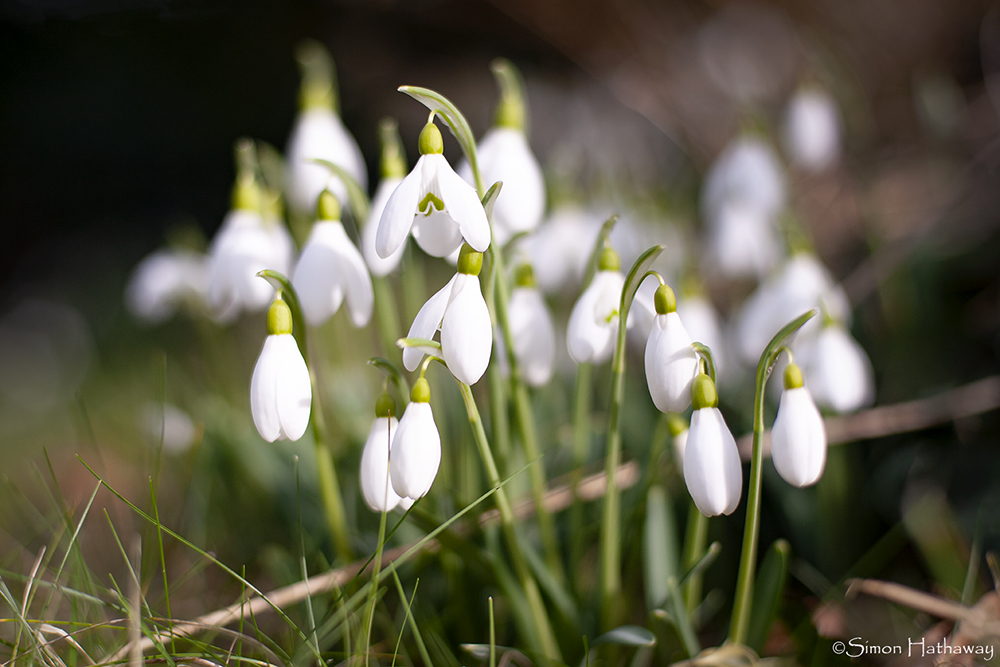
Once upon a time a man wanted to see spring so much that he wandered around looking for it all day. He came back disappointed and frustrated since he couldn’t find spring despite all his efforts. A wise man of his neighbourhood, feeling sorry for him, offered to help him to see spring and told him to come to his house. He thought that the wise man was so rich that he had spring in his house, so he went to visit him expecting to see a large mansion. When he reached the house, he was very disappointed to find the house so small and humble. The wise man welcomed him with kindness and invited him into his garden, where he picked a flower from the flowerbed and said, “Spring is here. Take this.”
Spring is to the flower as the true-Self is to all things we see and hear.
Don’t say you cannot see the true-Self. Your eyes are flooded with it.
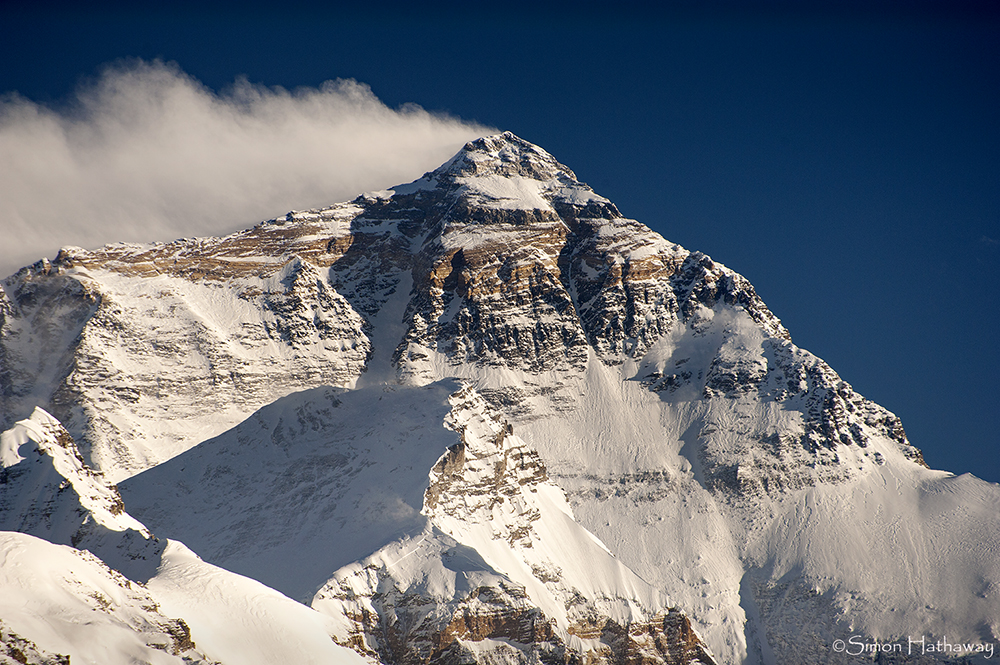
Dongshan asked a visiting monastic, “Where have you been?” The monastic said, “I have visited a mountain.” Dongshan said, “Did you get to the top of the mountain?” The monastic said, “Yes, I did.” Dongshan said, “Was there anyone on top of the mountain?” The monastic said, “There was no one there.” Dongshan said, “You did not get to the top of the mountain.” The monastic said, “If I hadn’t, how would I know that there was no one there?” Dongshan said, “Reverend, why don’t you stay here for a while?” The monastic said, “It’s not that I mind staying. It’s just that there is someone in India who may not approve it.” Dongshan said, “I have my suspicions about this fellow.”
Student: “Why did someone in India not approve the monastic’s staying?”
Master: “In order to save his life.”
Commentary:
If you move even a step or stay anywhere, you will be trapped by death.
As I see it nowadays, I do not differ from the patriarchs and Buddha. One who attains enlightenment at the first phrase will be a teacher of patriarchs and Buddhas; one who attains enlightenment at the second phrase will teach men and the heavenly world; and one who attains enlightenment at the third phrase cannot even save himself.
Commentary:
The first phrase is one of the expressions frequently used to indicate the true-Self in Zen. It looks so tricky that people are very likely to be fooled into trying in vain to distinguish it from the second phrase and the third phrase. To explain this literally, the first phrase means a phrase beyond words. Attaining enlightenment at the first phrase means attaining enlightenment before hearing a phrase. Attaining enlightenment at the second phrase means following words and attaining intellectual understanding after hearing a phrase. Attaining enlightenment at the third phrase means following words and attaining incorrect intellectual understanding after hearing a phrase. The final goal of Zen meditation is to attain enlightenment at the first phrase.
The point here is that there are no specific words for each phrase. Whatever word or whatever phrase you may hear, if you can grasp it as the function of the true-Self without being deluded by words, it is the first phrase. Any words, any sounds, and even rude names can be the first phrase if you can hear them as they really are. On the contrary, even sweet and plausible words and phrases are no better than the second and the third phrase if you just follow the literal meaning of them, which is to be deluded by words. This is why ancient masters would say that all the Sutras are just Mara’s talks if we follow words. Rinzai’s words ‘one who attains enlightenment at the second phrase will teach men and the heavenly world; and one who attains enlightenment at the third phrase cannot even save himself’ can be the first phrase, or the second and third phrases depending on how you accept them.
Student: “What is the first phrase?”
Master: “Before a word is spoken.”
Student: “What is the second phrase?”
Master: “It was already spoken.”
Student: “What is the third phrase?”
Master: “It is what the first phrase plus the second phrase is.”
A. You seem to have such an idea since you misunderstand the term ‘emptiness’, frequently used in Zen meditation, to mean nihilism. In fact, this is far from being correct. Zen meditation never tells people to avoid, or escape from reality but to see through it, or see it as just it is and therefore make wise decisions. Zen meditation teaches people how to lead their lives instead of being led by them.
Zen meditation helps people to realise that they are not the slaves of imaginary absolute beings such as Buddha, or Bodhisattvas but rather the master of them. It helps you to realise that you are happiness itself, eternity itself and perfection itself and that the world where you are living is the very Pure Land. It helps you to see and hear all the beauty that you have not been able to recognise so far, and to realise that your life is worth living much more than you think. Zen meditation encourages you to live a positive life rather than remain as a passive onlooker.
Dongshan asked a visiting monastic, “Where have you been?” The monastic said, “I have visited a mountain.” Dongshan said, “Did you get to the top of the mountain?” The monastic said, “Yes, I did.” Dongshan said, “Was there anyone on top of the mountain?” The monastic said, “There was no one there.” Dongshan said, “You did not get to the top of the mountain.” The monastic said, “If I hadn’t, how would I know that there was no one there?” Dongshan said, “Reverend, why don’t you stay here for a while?” The monastic said, “It’s not that I mind staying. It’s just that there is someone in India who may not approve it.” Dongshan said, “I have my suspicions about this fellow.”
Student: “Who was someone in India who might not approve the monastic’s staying?”
Master: “He is here now, too.”
Student: “Why isn’t he seen?”
Master: “You are to blame.”
Commentary:
It is not because he hides himself but because we don’t recognise him that we don’t see him.













 Zen Fools