A master, pointing to the tea table in the room, said to his assistant monk, “Bring the tea table.” The monk brought it to him as he was told to. The master told him to put it back where it had been, and he put it back. Then, the master asked him, “What is there on the other side of the table?” and the monk replied, “Nothing is there.” The master asked again, “What is there on this side of the table?” and the monk answered, “Nothing is there.”
Student: “What is there on either side of the table?”
Master: “Table.”
Commentary:
Seeing the edgeless table is to see the true-Self.
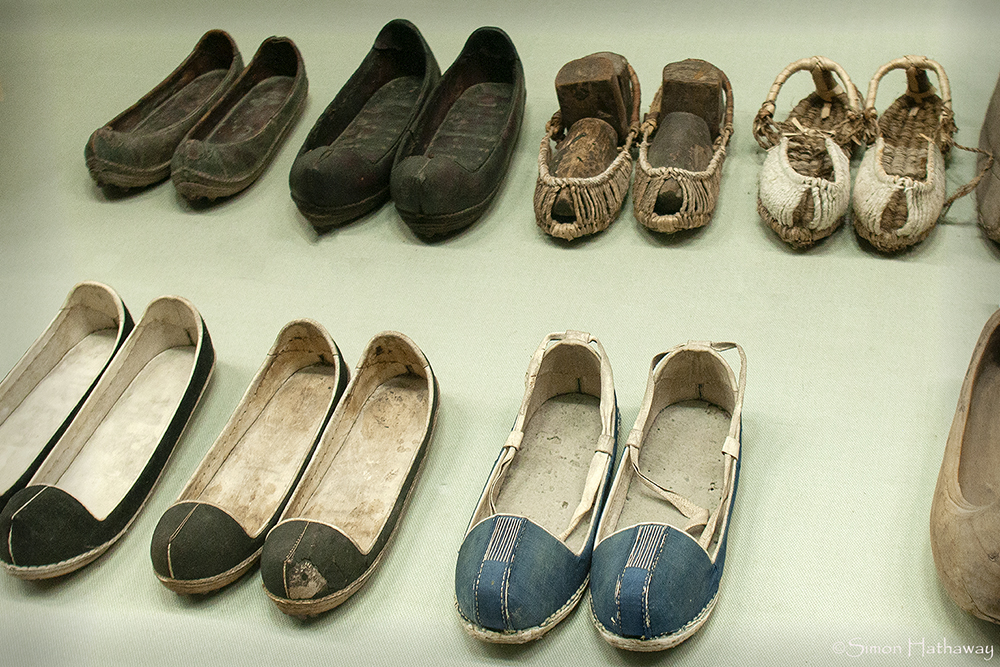
Followers of the Way, the true-Self is very difficult to realise, and the Buddha-Dharma is profound. But it is easy once you have understood it. Day by day I expound only this, but students do not grasp my meaning while walking on it tens of thousands of times. Students don’t realise this that is formless and shines clearly by itself, but cling to names and phrases and try to find the meaning of them. Until they are over fifty years old, they run about carrying their corpses. How would the day come about when they can get money for their worn-out straw sandals when they wander about carrying their belongings and bundles all around the world?
Commentary:
‘Students do not grasp my meaning while walking on it tens of thousands of times’ means that we don’t recognise the true-Self that is formless and shines clearly before us all the time that Rinzai points to, whilst we tread on, sit on and face it every day, because we cling to the names and words he uses for the purpose of showing us the true-Self. The names and words are to the true-Self as disposable dishes are to food. It is because we pay attention only to the shapes and colours of the disposable dishes without eating the food in them that we don’t get enlightened.
‘They run about carrying their corpses’ means that although the true-Self is always with us and we cannot escape from it even for a moment, we wander about in vain looking for it. ‘Wander about carrying their belongings and bundles all around the world’ means trying to figure out the true-Self through their knowledge. This is to follow the names and words here and there, that is, to be deluded by words. ‘How would the day come when they can get money for their worn-out straw sandals?’ implies that enlightenment, the fruit of effort, try as we may, never comes if we pursue it through knowledge.
A. Above all, the ‘spiritual awakening’ you say you have experienced is not enlightenment but just a new experience that occasionally happens to practitioners and induces them into mistaking it for enlightenment. You should not cling to the idea that you are aware of your past lives because they are all just illusions.
However nice and wonderful your past lives may be, they cannot be as important as your present life. No matter how much you may be aware of your past lives, it is not as good as seeing your present life as it is. Even the present, the Buddha said, is just an illusion. He advised us not to be deluded by illusions by saying that we can see the true-Self only when we can see our current lives as illusions, as if seeing dreams. When you can see your current life as it is, the questions you have now will work themselves out.
Once a master, pointing to a stone, said to one of his disciples, “Do you see this?” The disciple said, “Yes, I do.” The master asked him the same question three times repeatedly and the disciple made the same answer ‘Yes’. Then the master said, “Why don’t you know it even though you and I see it together at the same time?”
Student: “Why doesn’t the disciple know it even though they see it together?”
Master: “Because he doesn’t see what the master sees.”
Again, a student wearing a pillory around his neck and shackles around his ankles presents himself before the teacher. The teacher then puts another set of pillory and shackles on him. The student is overjoyed. Neither the one nor the other are capable of discernment. This is called “a guest sees a guest.” Venerable ones, I have just cited these examples so that you can know the straight from the crooked by discerning Maras and heresy.
Commentary:
This part shows what happens when a master and a student don’t see through each other, that is, when both are unenlightened. ‘Wearing a pillory around his neck and shackles around his ankles’ implies to have a lot of plausible words and knowledge about enlightenment. A master’s role is to remove such illusions from people and set them free from them. However, the teacher, thinking that the more knowledge one has, the closer one comes to enlightenment, makes matters worse by adding more knowledge to the student’s knowledge. This is to add more illusions to already established illusions. The student, unaware that the master’s words are another obstacle that prevents him from realising the true-Self, is as happy with the master’s words as a child would be with a box of sweets and attaches to it.
A. To realise what happiness is does. Nothing and no one can bring lasting happiness to you because you are in fact happiness itself. The reason why we cannot enjoy lasting happiness is not that it is far out of our reach but that we don’t recognise it although we are happiness itself because we cannot see things as they are.
We should realise that happiness is not what can be brought from outside, but it is just to realise that we are happiness itself. The purpose of Buddhism or Zen meditation is to lead people to realise that they themselves are happiness by helping them to see everything as it is.
Once a master delivered a dharma talk at a special Buddhist service where his mother was present. On the high seat the master stripped himself of all his clothes, becoming completely naked. All the attendees, including his mother, were embarrassed and left the place in a hurry. Then, the master said to his mother who was leaving, “When I was young, you hugged and kissed me all the time. Why are you avoiding me now even though I am still the same son that you loved?”
Student: “Why did the master take off all his clothes?”
Or a student brings forward a phenomenon of purity before a master. The master, discerning it as just a phenomenon, grabs it and throws it into a pit. The student exclaims: “What a great teacher.” The teacher responds: “Bah! You don’t know bad from good.” The student then bows. This is called “a host sees a host.”
Commentary:
This paragraph shows how a master and a student see through each other. ‘A student brings forward a phenomenon of purity’ implies that a student reveals the true-Self with a tricky comment or a clever question that entices the master to follow the words. ‘Grabs it and throws it into a pit’ means that the master, sensing his intention, responds by revealing the true-Self with suitable words or an action that befits the situation. Then, the student, aware that he has already been seen through by the master, responds with words or an action that shows his admiration for the master’s enlightenment. Then, the master makes a comment like ‘Bah! You don’t know bad from good’ to check whether or not the student has grasped his intention. The student responds with suitable words or an action such as bowing, which implies, “I know what you mean. What I am showing you now is no other than what you mean”. When a master and a student see through each other like this, this is referred to as “a host sees a host”.
A. This reference doesn’t mean that we should not love the world but that we should love the world more than we do now. If we, following the literal interpretation, should forsake our loved ones in order to love the Father, this contrasts strikingly with another Biblical scripture ‘Mark 12:31 Love your neighbour as you love yourself’.
To rephrase this scripture, it says ‘Don’t be attached to the world or anything that belongs to the world. If you are attached to the world, you will not recognise that it is the Father’. For example, when you see your spouse, if you cling to the idea that he or she is just your husband or your wife as a person, you cannot recognise that he or she is part of the Father. In other words, when you can see the world whilst being detached from the stereotypical perspective, you can realise that he or she is more than your spouse as a person, that is, part of the Father. Then, even if your spouse sometimes behaves short of your expectation, you are not disappointed or upset because his or her misbehaviour is not misbehaviour. If you see and hear the world in this way, when you see a flower or a tree, you can see more than a flower or a tree and come to love it more than you do now. In short, John 2:15 means that we should not see the world just as a world to exploit but see the world as the Father and treat it as such.
One day a master, seeing a monastic who was engaged in managing the temple, said, “How are you getting along these days?” The monastic answered, “I am as busy as a bee.” Then, the master said, “You should know that there is one who is not busy at all with you all the time.”
Student: “Who is the one that is not busy?”
Master: “He was not born from a woman.”
Student: “Where is he?”
Master: “Where is he?”
Student: “I asked where he is. Why do you ask me back where he is instead of answering my question?”
Master: “Why don’t you understand my answer while you answer my question perfectly?”
Commentary:
You are looking for an ox while riding it. Stop looking for the ox you are looking for and bring forth the ox you are riding.


















 Zen Fools