Zen

Rinzai 125

Followers of the Way from everywhere, why don’t you come out without depending on anything? I only want to discuss the Dharma with you. You see, for ten or fifteen years I have not found one single man. All are like hobgoblins clinging to herbage or leaves and wild fox sprites that stick to clods of dung and are lost in sucking it. Blind old rascals who unduly squander alms given them by the faithful, and who declare loudly: “I have left home!” That is how they see it.

Commentary:

‘Why don’t you come out without depending on anything?’ means ‘why don’t you express the true-Self without depending on illusions, words?’ In ‘I only want to discuss the Dharma with you’, the Dharma means the true-Self that cannot be discussed depending on any words because it is the state beyond words. ‘Hobgoblins clinging to herbage or leaves’ symbolise those who are deluded by illusions since they cannot see things as they are. ‘Wild fox sprites that stick to clods of dung and are lost in sucking it’ indicates the practitioners who, treasuring the Sutras, or masters’ words, cling to their superficial meaning without grasping what the words point to. For example, there are people who read the Diamond Sutra hundreds of times, or even memorise it. However, no matter how many times we may read a Sutra, and no matter how many Sutras we may read, it is far from enlightenment. Even memorising all the Sutras is not different from being deluded by illusions if we fail to grasp the core of the Buddha’s teaching. That’s why ancient masters would say that all the Sutras were Maras’ talks. ‘I have left home’ means ‘I am a monk’.

©Boo Ahm

All writing ©Boo Ahm. All images ©Simon Hathaway

#zen #meditation #zenmeditation #enlightened #enlightenment #zenfools #photography

Zen

Q. How can we stop worrying about things? Worrying does not resolve anything but I cannot help it.

A. When you say that you want to stop worrying about things, do you happen to know who is worrying about what? The Buddha said that our sufferings are from our being deluded by illusions. We are drowning in the ocean of suffering since we cannot see things as they are.

Try to see yourself as you really are and the things worrying you as they really are. If you can see either the essence of your being, or that of the things that you worry about, your worries will disappear by themselves and you will realise that you are the solution itself and happiness itself.

©Boo Ahm

All writing ©Boo Ahm. All images ©Simon Hathaway

#zen #meditation #zenmeditation #enlightened #enlightenment #zenfools #photography

Zen

The Buddha scolded Manjushri

When the Buddha was about to pass away, Manjushri entreated Him to show the Dharma again. The Buddha scolded, “Manjushri, not a word have I said for forty-nine years of my stay in this world. You ask me to show the Dharma again. Have I ever revealed the Dharma?”

Student: “The Buddha is said to have been so compassionate that he never failed to give kind and detailed answers to all questions according to each questioner’s capacity to digest his answer. Why did the Buddha scold Manjushri rather than give him a kind answer?”

Master: “The Buddha made a suitable answer according to the questioner’s capacity.”

Commentary:

Whether the Buddha made a suitable answer, or scolded, depends on your capacity.

©Boo Ahm

All writing ©Boo Ahm. All images ©Simon Hathaway

#zen #meditation #zenmeditation #enlightened #enlightenment #zenfools #photography
Zen

Rinzai 124

Of those followers of the Way who come to me from everywhere to learn the Way, there is none who does not depend on things. Whatever they bring before me, I beat it down at once. If it is in the hands, I beat it in the hands; if it comes from the mouth, I beat it there; if through the eyes, I beat it in the eyes. Up until now there has not been one who could stand alone. All fall into the traps of the old masters. I have no Dharma to give to men. I only cure diseases and undo knots.

Commentary:

‘There is none who does not depend on things’ and ‘there has not been one who could stand alone’ mean that there is none who is not deluded by illusions, that is, there is none who can truly see things as they are. ‘Whatever they bring before me, I beat it down at once’ implies that whatever question they bring to Rinzai, he, seeing through it, immediately makes a correct response. ‘If it is in the hands, I beat it in the hands; if it comes from the mouth, I beat it there; if through the eyes, I beat it in the eyes’ implies that he can cope with any question freely; if they ask the question with hands, he responds by using his hands, if they ask the question with mouth, he answers with his mouth and so on. ‘All fall into the traps of the old masters’ means that all, fooled by words, are struggling to understand old masters’ talks, or koans through knowledge. ‘I have no Dharma to give to men. I only cure diseases and undo knots’ means that Dharma can be neither given nor taken away since everything, including us, is all part of it. Rinzai’s job is to cure us of the eye disease which prevents us from seeing things as they are and to set us free from illusions, or karmas.

©Boo Ahm

All writing ©Boo Ahm. All images ©Simon Hathaway

#zen #meditation #zenmeditation #enlightened #enlightenment #zenfools #photography
Zen

Q. Although I have everything that a normal person could desire, I am still not happy. I always have the feeling that all this is very transient and as a result I’m in perpetual anxiety. What can I do?

A. In fact, the historical Buddha had the same challenge about 2,500 years ago as you do now. Although he, as a prince, had everything that a normal person could enjoy, he couldn’t be free from the question ‘How can I escape from birth, ageing, illness and death?’. The truth that he realised as a result of practising hard for six years was that all the suffering we undergo results from our failing to see things as they are.

The reason why you feel that all you have is transient and are in perpetual anxiety is that you can see nothing but transient things. This means that you are deluded by illusions. You can surmount the anxiety that you say you are in by seeing beyond what is transient when seeing things. Seeing beyond what is transient is no other than seeing everything as it is. 

©Boo Ahm

All writing ©Boo Ahm. All images ©Simon Hathaway

#zen #meditation #zenmeditation #enlightened #enlightenment #zenfools #photography

Zen

The Buddha’s ‘What is it?’

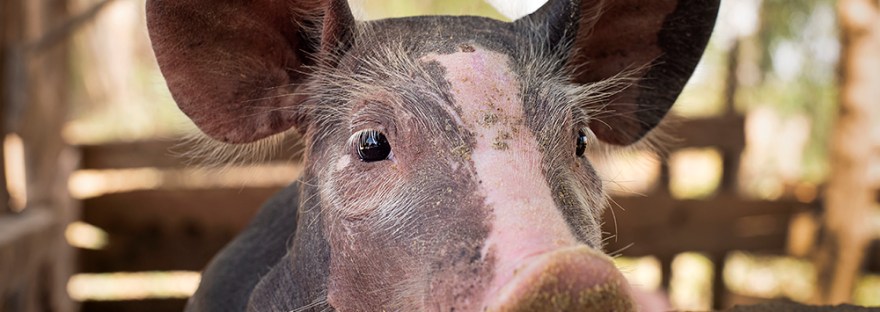
One day the Buddha saw two people carrying a pig on their backs and asked them, “What is it?” They said, “Don’t you, the Buddha with all wisdom, know a pig?” Then, the Buddha said, “That’s why I ask.”

Student: “Why did the Buddha ask such a nonsense question of the people?”

Master: “Don’t mistake compassion for foolishness.”

Commentary:

A one-million-dollar cheque is no more than a piece of paper to three-year-old children.

©Boo Ahm

All writing ©Boo Ahm. All images ©Simon Hathaway

#zen #meditation #zenmeditation #enlightened #enlightenment #zenfools #photography

Zen

Rinzai 123

Followers of the Way, if you wish to see this Dharma clearly, do not let yourselves be deceived. Whether you turn to the outside or to the inside, whatever you encounter, kill it. If you meet the Buddha, kill the Buddha; if you meet the patriarchs, kill the patriarchs; if you meet Arhats, kill Arhats; if you meet your parents, kill your parents; if you meet your relatives, kill your relatives; then for the first time you will see clearly. And if you do not depend on things, there is deliverance, there is freedom!

Commentary:

The Dharma is in fact not the Dharma, not the Buddha since it is formless and nameless. The Dharma and the Buddha are just names attached to it for the sake of convenience. So, ‘if you wish to see this Dharma clearly, do not let yourselves be deceived’ means that if we are to see the true-Self, the Buddha, we should not be deceived by illusions such as the Buddha, the patriarch, Arhat and the like. 

‘If you meet your parents, kill your parents; if you meet your relatives, kill your relatives’ implies not that we should shun them, or leave the house to be away from them but that if we see our parents and relatives without attaching any labels to them, we can realise clearly that they are more than just parents and relatives, that is, they are the Buddha we are looking for. ‘If you do not depend on things, there is deliverance’ means that if we don’t depend on illusions, that is, if we are not deluded by illusions, that is the Pure Land, the Dharma itself.

Student: “If the Dharma is formless and nameless, what is the Dharma?”

Master: “What is not?”

©Boo Ahm

All writing ©Boo Ahm. All images ©Simon Hathaway

#zen #meditation #zenmeditation #enlightened #enlightenment #zenfools #photography
Zen

Q. Can we get blessing by praying to the Buddha?

A. If you can offer true prayer to the Buddha, you will be sure to get more than blessing. The condition of offering true prayer to the Buddha is to see and hear him in person. Praying to him without knowing who he is no better than idolatry that is a kind of primitive religion. Praying to the Buddha, only after ascertaining his being by seeing and hearing him in person, is worth calling true prayer.

Paradoxically, the moment you see the Buddha in person, that is, as soon as you fulfil the condition for offering true prayer, the necessity for prayer will disappear since this is the moment of your realising that you are none other than the Buddha you have been looking for. Then, you are said to have gained the universe, much greater than any blessing, for nothing. The best prayer is to see the Buddha in person.

©Boo Ahm

All writing ©Boo Ahm. All images ©Simon Hathaway

#zen #meditation #zenmeditation #enlightened #enlightenment #zenfools #photography

Zen

Dongsan’s ‘The Way’

Master Dongsan said, “The Way becomes one with a man and a man becomes one with the Way. Do you want to know the meaning of this? One gets aged and the other doesn’t.”

Student: “Which is the one that doesn’t get aged?”

Master: “The one who is shadowless.”

Commentary:

The one who gets aged is from the one who doesn’t.

©Boo Ahm

All writing ©Boo Ahm. All images ©Simon Hathaway

#zen #meditation #zenmeditation #enlightened #enlightenment #zenfools #photography
Zen

Rinzai 122

Followers of the Way, the leaver-of-home must study the Way. I myself was formerly interested in the Hinayana and diligently studied the Sutras and Treatises. Then I realised that they were only drugs suitable for appeasing the ills of the world, only relative theories. At one stroke I threw them away, set myself to learn the Way, started Zen training and met great teachers. Only then did my eye of the Way begin to see clearly, and I was able to understand all the old masters and to know the false from the true. Man born of woman does not naturally know this. But after long and painful practise, one morning it is realised in one’s own body.

Commentary:

This part shows that Master Rinzai was once interested in seeking enlightenment through studying the Sutras and Treatises. After realising that such a method, just leading him to accumulate superficial understanding and knowledge of enlightenment, is far from leading to enlightenment, Rinzai started Zen practice and received good teachings from great masters. Through such processes he attained enlightenment, the eye of the Way and could both understand the old masters and distinguish Emptiness from forms, that is, the Buddha from illusions. ‘Man born of woman does not naturally know this’ means that man born of woman, the unenlightened man who is still subject to life and death, cannot know the Way, the Buddha. So, ancient masters would say that we should know the man who was not born of woman, the true-Self. ‘One morning it is realised in one’s own body’ implies that we encounter enlightenment all of a sudden, at an unexpected moment.

Student: “Who is the man who was not born of woman?”

Master: “He is standing naked before you.”

©Boo Ahm

All writing ©Boo Ahm. All images ©Simon Hathaway

#zen #meditation #zenmeditation #enlightened #enlightenment #zenfools #photography