One day Zen master Yangshan joined his teacher Guishan in ploughing the rice field. Yangshan said, “Master, this place is low. How can I level it with the higher place?” Guishan said, “Water is level, so why not use water and make the entire field level?” Yangshan said, “Water is not necessary. Master, high places are level as high and low places are level as low.” Guishan approved.
Student: “What did Yangshan mean by ‘high places are level as high and low places are level as low’?”
Master: “He knew how to make long rabbit horns and short ones the same size.”
Followers of the Way, when from everywhere students come to inquire, host and guest are clearly distinguished. A phrase is uttered to test the teacher he has before him. For example, the student devises a weighty sentence and then facing the corner of the teacher’s mouth, shouts out: “Do you know that or not?” If the teacher recognises it as a trap, he grabs it, throws it into a pit and buries it there.
The student then reverts to normal and asks for the teacher’s instruction. The teacher still doesn’t approve his words, and the student says: “What superior wisdom, what a truly great teacher.” The teacher just says: “You really do not know what is good and bad.”
Commentary:
This part shows how masters treat monastics who come to them for teaching. ‘When from everywhere students come to inquire, host and guest are clearly distinguished’ implies that Rinzai himself clearly knows what the students’ problems are, no matter where they are from and no matter what questions they have.
And he also can distinguish a good teacher from a poor one and a good student from a poor one by seeing them exchange words. For example, when a student raises the question ‘Do you know that or not?’ to a teacher, if the teacher, seeing through the student’s intention, responds with correct words that can be both an answer and a question at the same time, the student, at a loss for a suitable answer, usually says, “Forgive me my rudeness. Please, give me a teaching.” Then, the teacher makes a sarcastic remark about the student’s apologetic words in order to check his practice. The student, conceding once more that he cannot outsmart the teacher, admires him, “What superior wisdom, what a truly great teacher.” The teacher, then, gives him a final teaching by saying, “You really do not know what is good and bad”, which means ‘Why don’t you recognise my teaching while I keep giving you my teaching? You still can’t tell illusions from the true-Self.”
A. If we rephrase ‘not being judgmental’, it means to see and hear everything without attaching any names to it. As soon as you put a name, an imaginary line, on anything, numerous judgments come along with it from out of thin air. In fact, such judgements are also all imaginary lines since they are created based on names, imaginary lines. For example, upon your naming something a table, countless judgments such as antique, modern, expensive, cheap, wooden, steel, plastic, big, small and so on will follow it. Judgments thrive on names and judgments themselves feed new judgments. In other words, illusions thrive on illusions and they feed each other. That is why ancient masters would say that all the universe is from an illusion.
If you can stop being judgmental, that is, if you can see or hear even a single thing without attaching any name to it, you can realise the ultimate truth named the Buddha or the true-Self in Buddhism and God in Christianity.
The illusions arise from the mind. If there were no mind, where then would the illusions that tie you be? Do not tire yourselves in vain by making up discriminations and attaching yourselves to them, and you will find the Way in no time. If you chase wildly around, trying to get from others through learning, even after three kalpas you will only end up in returning to birth and death. It is not as good as just sitting with your legs crossed on the meditation cushion with nothing further to seek.
Commentary:
When it is said that everything is from the mind, many people are confused into being attached to the illusion of the mind. That is why Master Rinzai said that there is no mind. In ‘everything is from the mind’, the mind implies Emptiness. So, everything from the mind is also empty. Without knowing what reaches your eyes and ears is all Emptiness, attaching names to it according to your perspective and clinging to the names is no other than being deluded by illusions. Seeing everything, your acts of naming things and all names included, just as the functions of Emptiness is finding the Way, the true-Self, which is referred to as enlightenment. In this state of Emptiness there is nothing to acquire by learning and no one to learn or learn from. That is why Rinzai said, “Do not tire yourselves in vain by making up discriminations and attaching yourselves to them, and you will find the Way in no time.” You should remember that the realisation of the true-Self, enlightenment cannot be acquired from others in the way we get knowledge through learning step by step but happens in no time just like awakening from your dream. So, Master Rinzai said, “If you chase wildly around, trying to get from others through learning, even after three kalpas you will only end up in returning to birth and death.”
A. Who says that there is something more beyond this? There is nothing else other than this. The problem is that we don’t see and hear this well enough. In other words, we see and hear just half of all this. The other half is said to be hidden since we cannot see and hear it. We can see and hear the other half by seeing and hearing everything just as it is. The purpose of Zen meditation is to see and hear this as it is.
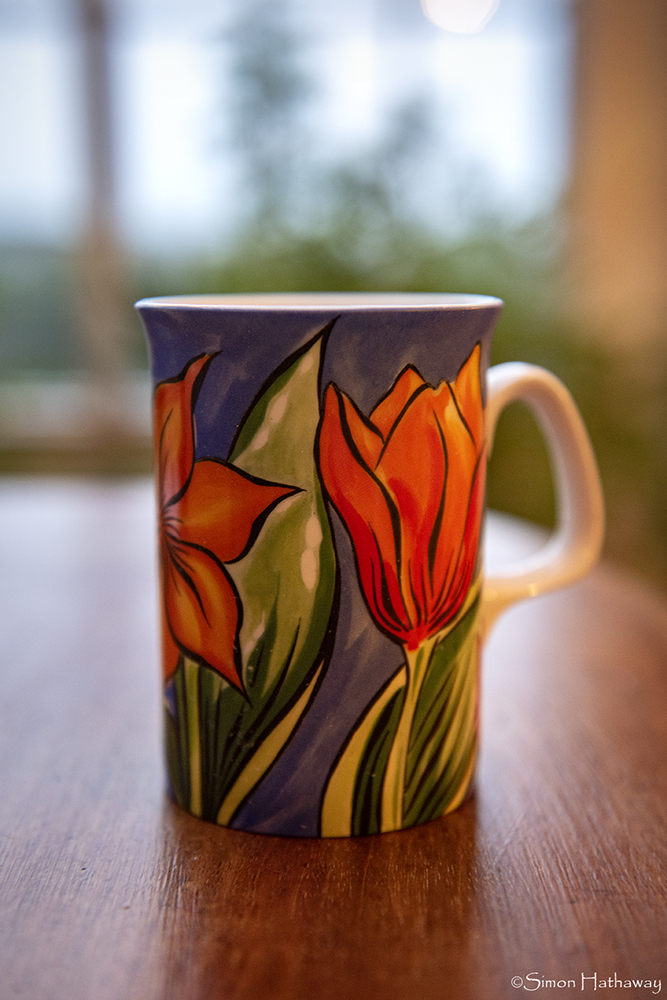
Student: “Sir, I see a cup on the table. What is it that I cannot see about the cup?”
Master Joshu said, “The true-Self was before the universe came into being. The true-Self never collapses when the universe does.” Then, a monastic asked, “What is the true-Self?” Joshu answered, “Our bodies.” The monastic said, “They are also things that collapse with time. What is the true-Self?” Joshu said, “Our bodies.”
Student: “Why did Joshu say that our bodies which collapse are the true-Self that never collapses?”
Master: “Because although he showed what never collapses, you make it collapse.”
Followers of the Way, the one right here before your eyes and listening to the Dharma talk is he who enters fire without being burnt, goes into water without being drowned, and plays about in the three deepest hells, as if in a garden; he enters the world of hungry ghosts and dumb animals without being molested by them. Why is this so? Because there is nothing he dislikes. If you love the sacred and dislike the worldly, you will go on floating and sinking in the ocean of birth and death.
Commentary:
‘The one here before your eyes and listening to the Dharma’ means ‘The true-Self is everywhere and there is no place without it. You cannot cease to see it even for a moment even though you close your eyes, and it is listening to my Dharma talk with you at this moment’. The reason why the true-Self is neither burnt in fire nor drowned in water is that fire and water are just the functions of the true-Self. The essence of everything, including the deepest hells and the world of hungry ghosts, is the true-Self. Things such as the hungry ghosts and hells are all just illusions, the products of the result of your failing to see the true-Self as it is. Whatever things may happen, when you see them as they are, they are not different from the true-Self. Thus, clinging to the sacred and avoiding the worldly, you are still deluded by the illusions of the sacred and the worldly without knowing that both are just one in essence as the true-Self.
A. Don’t classify any situation into positive or negative. Positive is to negative as right is to left. Nothing is either right or left unless you discriminate. What is right to you can be left to someone else and what is right another can be left to you. Whether a thing is right or left is not intrinsic but determined by your view.
In the same way, a situation that seems to be negative to you can be positive to someone else and vice versa, which means that every incident and every situation is neutral in essence unless you think of it as positive, or negative. You should remember that it is not the incidents and situations that draw you into negativity but you that draw incidents and situations into negativity.
“For we fix our attention not on things that are seen, but on things that are unseen. What can be seen lasts only for a time, but what cannot be seen lasts forever.”
Student: “What cannot be seen?”
Master: “It has no beginning and no end.”
Student: “How can I see it?”
Master: “Don’t be deceived by what can be seen.”
Commentary:
What cannot be seen is hidden in what can be seen.









 Zen Fools