A. In Zen meditation enlightenment is more often than not compared to a big death, which means ‘the death of all illusions’. To say that a person has achieved a big death implies that he has attained enlightenment. So, ‘Only after you die can you see what you want to see’ implies that you can see what you want to see, or the truth, only after you stop being deluded by illusions.
Don’t be confused into believing that you can see the truth, or go to the Pure Land, only after your physical death. You cannot see the truth unless you see it whilst alive nor can you enter the Pure Land unless you enter it while you are alive. Remember what reaches your eyes and ears now is the truth itself and where you are standing at this moment is the Pure Land.
But all the Devas, Immortals, Asuras, and the Great Demons have supernatural powers. Should they be Buddha?
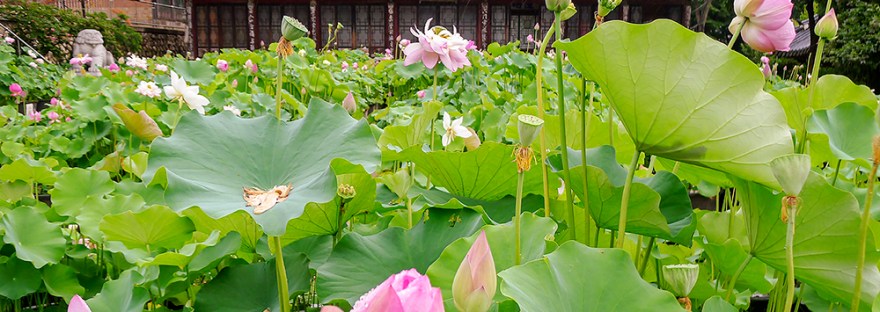
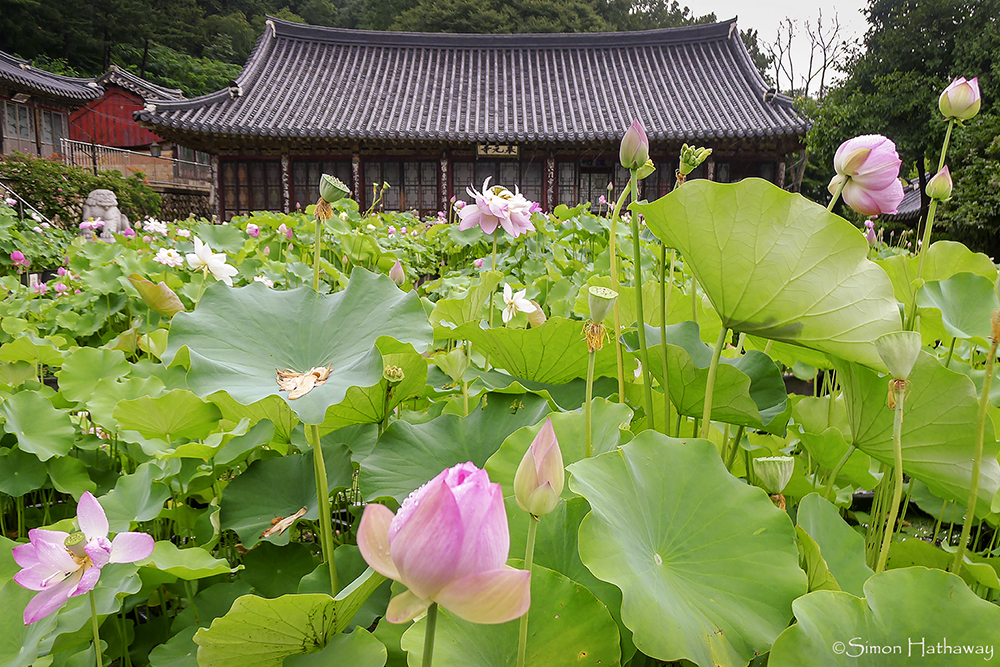
Followers of the Way, do not be deceived. The Asura, beaten in his war against the Deva king Shakra, made his 84,000 troops hide in the hollow stem of a lotus. But that does not constitute holiness.
Commentary:
Rinzai in this paragraph warns that we should not be deluded by the illusions of supernatural powers. All the Devas, Immortals, Asuras, and the Great Demons are said to have their own supernatural powers in their own ways. However, all the supernatural powers they have are nothing weighed against the six supernatural powers that the Buddha had because theirs are nothing but illusions. That is why the Asura, beaten in his war against the Deva king Shakra, made his 84,000 troops hide in the hollow stem of a lotus.
What matters here is that no matter how many supernatural powers the Buddha had, they are nothing to do with you if have not achieved the six supernatural powers, that is, the ability to see everything as it is, in person. Even the six supernatural powers of the Buddha, not to mention the supernatural powers of the Devas, Immortals, Asuras, and the Great Demons, are no better than illusions unless you have your own six supernatural powers to recognise them. That is why I argue that the Buddha is not the Buddha but an illusion until you become enlightened.
A. The divine light means the true-Self, Emptiness in Buddhism. The Heart Sutra says, ‘Emptiness is forms and forms are Emptiness’, which can be rephrased as ‘The divine light is things and things are the divine light.’ In fact, it is what we can see, not only during meditation, but also at any time. We cannot stop seeing and hearing the divine light even for a moment, since seeing and hearing things is seeing and hearing the divine light.
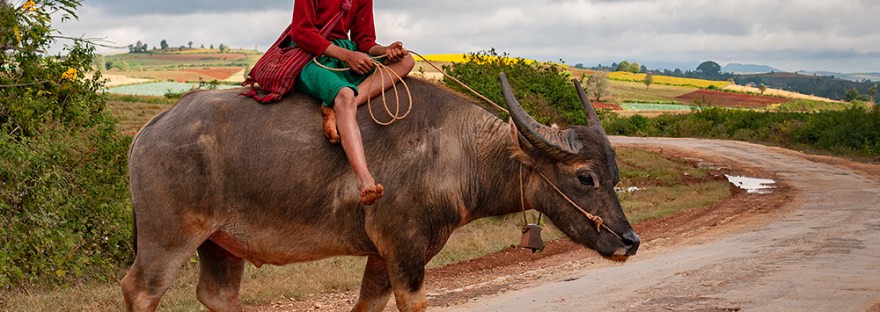
The problem is that we cannot recognise it because we are deluded by illusions, words. This is why ancient masters would say that the divine light is hidden in everything, or that things are the stores of the divine light. What matters more is that we are also the divine light itself, which is why we are said to be looking for an ox while riding on it.
The reason why the term ‘light’ is used is that enlightenment feels as if the light were switched on in a room which has been deserted and dark for a long time, and from that moment we can see what we couldn’t see before.
A. A monk asked Master Joshu, “Does the spruce in the garden have the true-Self?” Joshu said, “Yes, it does.” The monk said, “When does it attain enlightenment?” Joshu said, “It does when the sky collapses.” The monk asked, “When does the sky collapse?” Joshu answered, “It does when the spruce attains enlightenment.”
Student: “According to these words, the two things happen at the same time. When do they happen?”
Master: “They did just a moment ago.”
Student: “Why didn’t I see them happen?”
Master: “You are to blame.”
Commentary:
Even the Buddha is not enlightened unless you are enlightened.
You say the Buddha has the six supernatural powers and that they are miraculous.
Commentary:
It is a popular belief that we cannot be like the Buddha even if we attain enlightenment since we, as human beings, cannot achieve the six supernatural powers that he had. This incorrect idea is from the misunderstanding of the six supernatural powers; the ability to see anything regardless of distance, the ability to hear any sound regardless of distance, the ability to go anywhere in no time, the ability to know all people’s minds, the ability to know all people’s previous lives and the ability to be free from all illusions.
The most common misunderstandings regarding the six supernatural powers are as follows. One who obtains the ability to see anything can see anything that is happening in any far corner of the world if he wants. One who has the ability to hear any sound can hear anything that is happening in any far corner of the world if he listens. One who has the ability to go anywhere can reach any place in the world in no time. One who achieves the ability to know all people’s minds can read any person’s mind in the world at any time; for example he can know what the president of the United States is thinking about at this moment. And finally, one who has the ability to see people’s previous lives can know what a person’s previous life was like; how many previous lives he lived, or whether he was a man or an animal.
In fact, the six supernatural powers are employed to describe what perfect enlightenment is like. Masters illustrated enlightenment with the six supernatural powers. When we attain enlightenment, that is, when are not deluded by illusions, or when we can see everything as empty, we realise that everything is one as Emptiness and that we are also part of Oneness. When there is nothing but Oneness, whatever you hear, whatever you see, it is just Oneness, nothing else. This is to see and hear everything. When there is nothing but Oneness as Emptiness, wherever you may go, no matter how far you may go, there is no difference whatsoever between going and not going. In the Avatamsaka Sutra a Bodhisattva says, “I can see all the Buddhas all around the universe at any time if it is my will. However, I don’t go to them nor do they come to me.” When there is just Oneness as Emptiness, there is no past, no present, and no future because they are only illusions. Then, there cannot be any previous lives. In short, to know that there are no previous lives is the ability to know people’s previous lives. To know that all people’s minds are also Oneness as Emptiness is the ability to know all people’s minds. In the Diamond Sutra the Buddha said to his disciples, “I know all sentient beings’ minds because I know that their minds are not minds.”
To conclude, the six supernatural powers, appearing to be multiple, are no other than the ability to see everything just as it is, that is, to see everything as empty, which is available to anybody who tries to achieve it.
A. Your saying that you find yourself seeking something else that you don’t know explains well the way we live our lives. Why do you think we are looking for something we don’t know? It is because we cannot see things as they are. Only when we can see things as they are can we see and know what we are struggling to attain.
The historical Buddha discovered that we cannot enjoy happiness although we are happiness itself only because we cannot recognise it, since we cannot see things as they are. We should remember that we cannot enjoy happiness not because it is hidden, or far away from us, but because we cannot recognise it even though we are surrounded by it. What you need now is your ability to see and recognise what you want rather than seeking something diligently.
Zhaozhou asked Nanquan, “What is the Way?” Nanquan said, “Ordinary mind is the Way.” Zhaozhou said, “Shall I try to direct myself towards it?” Nanquan said, “If you try to direct yourself towards it, you will move away from it.”
Student: “Why do we move away from Ordinary Mind if we direct ourselves towards it?”
Master: “If you knew Ordinary Mind, you would not ask me the question. If you don’t know it, how can you direct yourself towards it, not knowing where it is?”
Student: “What shall I do then?”
Master: “Direct yourself towards me and I will direct it towards Ordinary Mind.”
Rinzai said that the historical Buddha said, “The Buddha revealed himself as a physical body only for adaptation to the sentiments of the world, and, fearing that otherwise men might fall into thinking that the Buddha is gone forever with his physical body dying, He mentioned the thirty-two marks and eighty characteristics by producing fake names as expedient means. Temporarily the thirty-two marks and eighty characteristics are spoken of. In themselves, they are empty sounds. The physical body is not the body of realisation; no- form is the true shape.”
Commentary:
All the words used to describe and explain the true-Self are just expedient means for leading sentient beings to enlightenment. The thirty-two marks and eighty characteristics are not exceptional. Let us suppose that a three-year child brings a piece of paper and asks you what it is and that you, answering, “Paper,” draw a two-winged boy on it. The thirty-two marks and eighty characteristics are like the two-winged boy you drew on the paper, which was drawn by you for the purpose of showing, or demonstrating what paper is. You didn’t mean that the picture of the two-winged boy is paper. In fact, you can not only draw many other things, such as a flower and a lion, but also write various words on the paper. This is why there are a variety of names representing the true-Self. Ancient masters would even say that all names of things are the names of the Buddha.
A. There are some practitioners who go through similar phenomena to yours; some people have unusual experiences such as seeing terrible things and hearing strange sounds, whereas others have very wonderful and fantastic experiences during meditation. No matter how wonderful a voice you may hear, or how holy a scene you may see you should not be attracted by them. No matter how horrible a voice, or a figure may sound or appear, you should neither try to control nor be scared of them.
Just leave them alone and don’t be concerned with them. Instead, focus all your attention on your question and all the illusions will disappear by themselves. Ancient masters would say that even if one hundred Buddhas appear, we should not be attracted by them.












 Zen Fools