
zen

Guishan Laughs Twice

Shushan went to see Guishan and said, “Master, I heard that you had said, ‘Words are like wisteria vines coiled around a tree.’ When the tree falls down and the wisteria dies, where do the words go?”

Guishan burst into laughter. Shushan said, “I came four thousand miles, peddling cloths to get here. How can you fool around with me?” Guishan called the attendant monastic and said to him, “Bring some money and reimburse this elder monastic.” Later Guishan said, “In the future a one-eyed dragon will reveal the point for you.”

Shushan went to see Mingzhao and told this story. Mingzhao said, “Guishan should have said, ‘Head is right, tail is right.’ You did not meet someone who understood you.” Shushan said, “When the tree falls down and the wisteria dies, where do the words go?” Mingzhao said, “Guishan laughs again.”

Upon hearing this, Shushan had realisation. Then he said, “Guishan hid a sword in his laughter.”    

Student: “Why did Guishan burst into laughter when he was questioned by Shushan?”

Master: “Because your tree still didn’t fall down.”

Student: “Why did Shushan say, ‘Guishan hid a sword in his laughter’?”

Master: “Because Shushan’s tree fell down but your tree didn’t fall down.”

Commentary:

This is a secret not because it is hidden but because you can’t recognise it.

©Boo Ahm

All writing ©Boo Ahm. All images ©Simon Hathaway #zen #meditation #zenmeditation #enlightened #enlightenment #zenfools #photography

zen

Rinzai 106

What are you seeking in the realm of changing dependence? The Three Vehicles and the Twelve Divisions of the Teachings, all are just old paper to mop up mess. The Buddha is an illusory phantom. The patriarchs are old monks. You yourselves, are you not born of a mother? If you seek the Buddha, you will be caught by the Buddha-Mara; if you seek the patriarchs, you will be bound by the patriarch-Mara. Whatever you are seeking, all becomes suffering. It is better to have nothing further to seek.

Commentary:

‘The realm of changing dependence’ means the realm of illusions which are forms and imaginary labels, or words. This realm implies the worldly realm where we sentient beings reside. Enlightenment is escaping from or living beyond the realm of illusion. We should not fall into the trap of chasing after forms, or words whilst seeking to be freed from them. Words and forms, however holy and plausible they may appear, are just illusions, no more than that. So, seeking the Buddha and the patriarchs, following the illusions of them, is no other than being caught by the Buddha-Mara and the patriarch-Mara. No matter how awful Mara may appear, we should not avoid him, and no matter how holy the Buddha may appear, we should not follow him, because both of them are just illusions. Struggling to avoid the former, or seek the latter is the source of our suffering.

Student: “What should we do when the Buddha or Mara approaches us?”

Master: “See them as if they are your shadows.” 

©Boo Ahm

All writing ©Boo Ahm. All images ©Simon Hathaway

#zen #meditation #zenmeditation #enlightened #enlightenment #zenfools #photography
zen

Q. Can I kill flies that are a nuisance inside my house?

A. You seem to be disquieted by the precept ‘Don’t kill any living thing’. If this is the case, should you then eat food such as meat, fish, bread, etc? As long as you eat such things, you cannot be free from the responsibility for having a lot of living things, both visible and invisible, killed. Even vegetarians cannot avoid this responsibility since countless microbes inhabiting vegetables are victimised. All living things, including human beings, are supposed to survive by consuming other living things. Even the Buddha couldn’t avoid this rule during his life.

What matters here is not whether you should kill the flies or not, but whether you can see everything, including the flies, you yourself who has the intention to kill them, and also your action of killing them as empty or not.

©Boo Ahm

All writing ©Boo Ahm. All images ©Simon Hathaway

#zen #meditation #zenmeditation #enlightened #enlightenment #zenfools #photography

zen

Xuansha’s ‘One Bright Pearl’

Zen master Shibei of Xuansha was once asked by a monastic, “You said that the entire world of the ten directions is one bright pearl. How can I understand the meaning of this?”

Xuansha said, “The entire world of the ten directions is one bright pearl. Why is it necessary to understand the meaning of this?”

On the following day Xuansha said to the monastic, “The entire world of the ten directions is one bright pearl. How do you understand the meaning of this?”  The monastic replied, “The entire world of the ten directions is one bright pearl. Why is it necessary to understand the meaning of this?”  Xuansha said, “Now I know that you are living inside the cave of demons on the black mountain.”

Student: “Why was the monastic wrong when he gave the same answer that the master had said?”

Master: “Because the monastic didn’t copy the master’s words exactly.”

Commentary:

Don’t mistake the sweet taste of sugar-coated medicine for the essence of the medicine itself.

©Boo Ahm

All writing ©Boo Ahm. All images ©Simon Hathaway

#zen #meditation #zenmeditation #enlightened #enlightenment #zenfools #photography

zen

Rinzai 105

If you take these empty names as being real, you make a big mistake. For although they exist, they belong in the realm of dependent change and are like robes to put on and off. There is the robe of Bodhi, of Nirvana, of deliverance, of the Trinity, of objective wisdom, of Bodhisattvas and of Buddha.

Commentary:

All names are just imaginary labels we have attached, for the sake of convenience, to whatever reaches our eyes and ears. ‘They belong in the realm of dependent change and are like robes to put on and off’ means that all names do not exist on their own but are created by us. Such names are dependent on our decisions, and so they are compared to robes that are put on and taken off, or changed and even discarded as we please. There are a lot of names that sound attractive and plausible such as Nirvana, Bodhisattvas, Buddha and so forth. We should not be dazzled by such names, aware that they, however wonderful they may sound, are not the essence of the true-Self just as the clothing a man is wearing is not the essence of him.

©Boo Ahm

All writing ©Boo Ahm. All images ©Simon Hathaway

#zen #meditation #zenmeditation #enlightened #enlightenment #zenfools #photography
zen

Q. If Zen opposes dualistic thinking, does that mean that good and evil don’t exist? Can we do anything we like?

A. ‘Zen opposes dualistic thinking’ is a popular phrase in Zen meditation, which, if interpreted literally, can be highly likely to be misleading. How would it be possible to sustain our lives and our societies without dualistic thinking?

Zen doesn’t forbid us from having dualistic thoughts but discourages us from being attached to them through the realisation that everything, in essence, is neutral and that our dualistic thoughts are not immutable truth but just empty imaginary lines. This is referred to as wise dualistic thinking, or wise preference. An ancient master said to his students who were planting vegetables, “You are allowed to plant as many vegetables as you want, but you should not let them take root.”

Student: “How can I keep them from taking root?”

Master: “Plant them where there is neither day nor night.”

©Boo Ahm

All writing ©Boo Ahm. All images ©Simon Hathaway

#zen #meditation #zenmeditation #enlightened #enlightenment #zenfools #photography
zen

A Lump of Rock

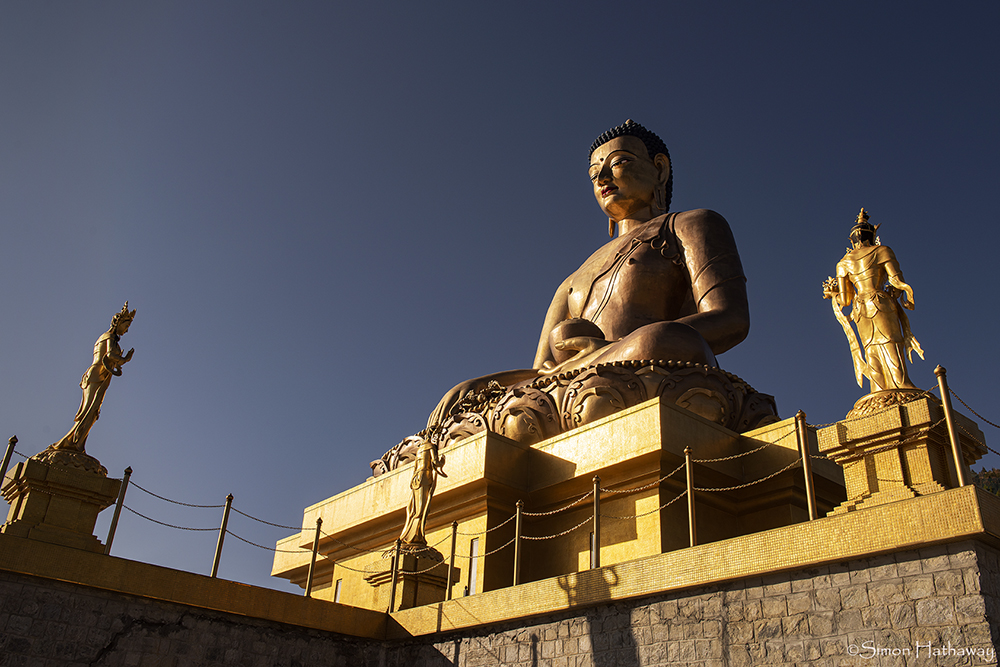
A layman asked Master Namjun, “There is a lump of rock in my house. It sometimes sits and sometimes lies. I am going to sculpt Buddha out of it. Will it be possible?” Master answered, “Possible.” The layman asked again, “Will it be impossible?” Master answered, “Impossible.”

Student: “I also have a lump of rock in my house. How can I make Buddha out of it?”

Master: “Even if you break your chisel and hammer whilst sculpting, you cannot leave even the slightest scratch on it.”

Commentary:

You will damage the Buddha the moment you touch a chisel to it.

©Boo Ahm

All writing ©Boo Ahm. All images ©Simon Hathaway #zen #meditation #zenmeditation #enlightened #enlightenment #zenfools #photography

zen

Rinzai 104

One asked, “What is the attitude of the heart which does not change from moment to moment?”

The master said, “From the moment you set yourself to ask this question, there is already the difference, and your essential nature and your action become separate. Followers of the Way, do not be deceived. In and out of the world there is not a thing that has a self-nature, nor a nature that is productive of a self. All is but empty names, and the very letters of these names are also empty.”

Commentary:

‘From the moment you set yourself to ask this question, there is already the difference, and your essential nature and your action become separate’ means that there is nothing that is not your essential nature, the true-Self: Not only you who is asking this question but also this question itself that you are asking is the true-Self. Asking this question is no better than asking where your mouth is, which implies that you don’t know that this question is the action of your mouth.

‘In and out of the world there is not a thing that has a self-nature, nor a nature that is productive of a self’ means that there is nothing that has its innate nature and that all the natures of  things are just given to them by human beings. For example, no tree says, “I am a tree.” No stone says, “I am stone, and I am hard.” A tree is a tree because we named it a tree. Stone is stone since we attached the label ‘stone’ to it, and it is hard only because we granted such a label to it. All the names are just imaginary lines that can be changed depending upon the situation, not immutable truth.

©Boo Ahm

All writing ©Boo Ahm. All images ©Simon Hathaway

zen

Q. You said that ‘everything was originally in Nirvana as part of it before our discrimination.’ How do you know this?

A. No one can know it clearly until he experiences it in person, just as you cannot know clearly the taste of kimchi, traditional Korean food, no matter how well it is explained until you try it in person. You cannot help but fail to grasp Nirvana if you try to understand it through words because using words is no other than discrimination.

Then, you might raise a question, ‘What is the use of all the Sutras, Dharma talks delivered by the Buddha?’ It was because the Buddha was concerned about this that the Buddha said on his deathbed, “Not a word have I said.” You should know that the Buddha said what cannot be done and did what cannot be said. This is why ancient masters said that we should see beyond what reaches our eyes and hear beyond what reaches our ears.

©Boo Ahm

All writing ©Boo Ahm. All images ©Simon Hathaway

#zen #meditation #zenmeditation #enlightened #enlightenment #zenfools #photography

zen

Caoshan’s Bell Sound

Hearing the sound of a bell, Caoshan said, “Ouch! Ouch!”

A monastic said, “Master, what is it?”

Caoshan said, “It struck my mind.”

Student: “What did Caoshan mean by, ‘It struck my mind’?”

Master: “It struck your mind as well.”

Student: “Then, why don’t I feel pain as Caoshan did?”

Master: “That’s why you are a patient.”

Commentary:

Patients who suffer from phantom pain without distinguishing it from true pain are sentient beings.

©Boo Ahm

All writing ©Boo Ahm. All images ©Simon Hathaway

#zen #meditation #zenmeditation #enlightened #enlightenment #zenfools #photography