Zen

Rinzai 82

If one comes to ask me how to become the Buddha, I respond to him with a state of purity. If one asks me what Bodhisattvas are, I respond to him accordingly with a state of compassion. If one asks me about Bodhi (Enlightenment), I respond by showing a state of pure mystery. And if one questions me on Nirvana, I show a corresponding state of quiet calm.

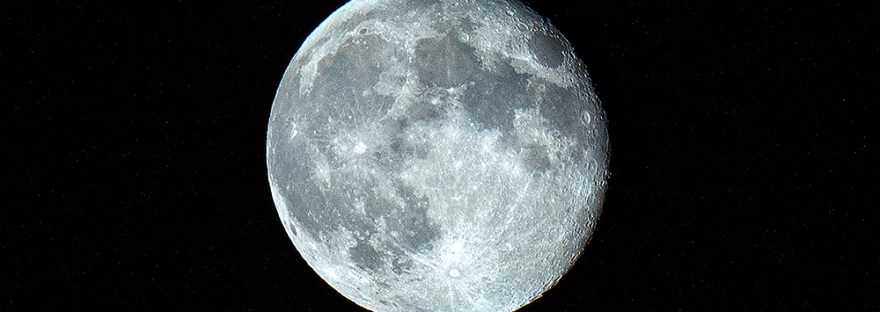
States (or circumstances) are manifestations; they are the differentiation into the ten thousand things; but there is only one who is always the same man, who does not differ at all. That is why the true-Self appears to be different in response to circumstances, just as the moon is reflected in different places.

Commentary:

You might wonder what Master Rinzai meant by his responses to the four respective questions, but his answers to the questions were truly clear. The problem is whether listeners, or readers can grasp his answers. The four questions may seem to be different from each other, but they are, in fact, the same question, one question: What is the true-Self? or What is Emptiness? Whatever he says, or whatever he does can be perfect answers to the questions. So, when he said, “If one comes to ask me how to become the Buddha, I respond to him with a state of purity,” we should be able to see that Rinzai was revealing the Buddha by saying, “I respond to him a state of purity.” In the same way, he showed Bodhisattvas to us by saying, “I respond to him accordingly with a state of compassion.” The other two questions should also be understood like this.

‘There is only one who is always the same man, who does not differ at all’ means that there is nothing else but the true-Self, Emptiness. Although it appears to be different depending on the situation, just like seen in four answers above, its essence never changes at all. This is just as if the moon were reflected in different places. When reflected in a lake, it looks larger than when it is reflected in a glass of water, and the shape of the moon reflected in calm water is quite different from that of the moon reflected in turbulent water. No matter how the shape of the reflected moon may appear, the moon itself is the same all the time without any change.

Student: “What is Bodhi?”

Master: “Take a close look.”

Student: “What is Nirvana?”

Master: “Why don’t you come in now?”

Student: “Why am I still lost?”

Master: “Because you are being deluded by the reflections of the moon without seeing the moon.”

©Boo Ahm

All writing ©Boo Ahm. All images ©Simon Hathaway

#zen #meditation #zenmeditation #enlightened #enlightenment #zenfools #photography

Zen

Q. What does Buddhism say about ‘the meaning of life’?

A. What Buddhism says is that everything is empty, which means that life is empty as well. To say that everything is empty, however, never means that everything is void and useless, but means that everything, in essence, is perfection itself and neutrality itself. That everything is perfection itself means that your life is essentially perfect no matter how it may appear superficially.

That everything is neutrality itself implies that the meaning of your life is not granted by god, or others but is of your own making. In conclusion, the meaning of life in Buddhism is that our lives may look different from each other, but they are in essence all equal since they are all perfect.

©Boo Ahm

All writing ©Boo Ahm. All images ©Simon Hathaway

#zen #meditation #zenmeditation #enlightened #enlightenment #zenfools #photography
Zen

Baizhang’s “No Means of Livelihood”

Baizhang was asked by Yunyan, “Master, you work on details all day.  Who are you doing it for?”

Baizhang said, “There may be someone who requires it.”

Yunyan said, “Why don’t you let that person take care of it?”

Baizhang said, “Because that person may not have the means of making a livelihood.”

Student: “Who is the person that doesn’t have the means of making a livelihood?”

Master: “The Buddha and all Bodhisattvas are also his servants?”

Commentary:

A king never harvests crops nor cooks food in person.

©Boo Ahm

All writing ©Boo Ahm. All images ©Simon Hathaway

#zen #meditation #zenmeditation #enlightened #enlightenment #zenfools #photography

Zen

Rinzai 81

As for me, if anyone comes with a question, I know him to the bottom, whether he be monk or layman. Whatever position he may come with, all are only words and names, dreams and phantoms. The aim of the profound teachings of all the Buddhas is rather to see the man who can ride all circumstances. The state of Buddha cannot say of itself “I am a Buddha-state.” It is rather the independent man of the Way who avails himself of all states.

Commentary:

All masters can see through anyone who comes with a question, a koan. In other words, they know why he cannot solve the question because he struggles with words, names, dreams and phantoms. Struggling with words, names, dreams and phantoms is compared to tripping over shadows, or lines drawn on the ground,  ‘The man who can ride all circumstances’, from a Biblical perspective, symbolises the man who can walk on water, who is not deluded by illusions; words, names, dreams and phantoms. In brief, the man of the Way who, having realised that all different states are the functions of the Buddha, can make good use of them, for others as well as himself, is none other than the Buddha.

Student: “How can I ride all circumstances?”

Master: “All circumstances are empty.”

©Boo Ahm

All writing ©Boo Ahm. All images ©Simon Hathaway

#zen #meditation #zenmeditation #enlightened #enlightenment #zenfools #photography

Zen

Q. If a person knows 30,000 words, does this mean that a clump of brain cells knows these words?

A. When a person has 30,000 words input in his computer, can we say that the memory chip of the computer knows these words? If a person knows 30,000 words, this means that he remembers 30,000 imaginary labels that are the symbols of promises amongst and within certain groups of people.

He can be said to have a great ability to accumulate and store the imaginary labels well in his clump of brain cells, which is a kind of storehouse for the labels, and to retrieve them whenever he wants. What matters here is what it is that stores, retrieves and uses the imaginary labels. That is what we Zen practitioners try to know.

©Boo Ahm

All writing ©Boo Ahm. All images ©Simon Hathaway

#zen #meditation #zenmeditation #enlightened #enlightenment #zenfools #photography

Zen

Jinfeng Holds Up a Pillow

One day Jinfeng held up a pillow and said, “People call this a pillow. I say it is not a pillow.”

A monastic said, “Master, what do you call it?”

Jinfeng held up the pillow.

The monastic said, “If so, I will practise accordingly.”

Jinfeng said, “What do you call it?”

The monastic said, “A pillow.”

Jinfeng said, “You have fallen into my pit.”

Student: “How would you have responded if you had been in the monastic’s shoes?”

Master: “I would have snatched the pillow from the master and hit him with it.”

Student: “Why did the master say that the monastic had fallen into his pit?”

Master: “Because you have fallen into his pit.”

Commentary:

He who is addicted to staying in a pit is prone to forget his situation.

©Boo Ahm

All writing ©Boo Ahm. All images ©Simon Hathaway

#zen #meditation #zenmeditation #enlightened #enlightenment #zenfools #photography

Zen

Rinzai 80

There are people who select one single phrase which is half hidden, and half revealed, and from that doubt is born. So, they search heaven and earth, run around asking others and keep themselves busily occupied. But the man who has nothing further to seek does not pass his days arguing about ruler and robber, this and that, is and is not, form and essence, and other vain propositions.

Commentary:

‘One single phrase which is half hidden, and half revealed’ means a koan, Zen question, which is often explained as being half hidden and half revealed, since we cannot grasp what it means by accepting it just as it superficially seems and sounds, that is, by interpreting it literally. That is why those who try to understand the one single phrase by following words and forms cannot do so, even though they ‘search heaven and earth, run around asking others and keep themselves busily occupied’. They should grasp that which is beyond what their eyes and ears meet. ‘The man who has nothing further to seek’ implies the true-Self that we are looking for. We should remember that the true-Self we are anxious to see is always with us and at leisure all the time, even when we are busy searching heaven and earth, running around asking others.

Student: “Who is the man who has nothing further to seek?”

Master: “He is with you now but not asking me.”

©Boo Ahm

All writing ©Boo Ahm. All images ©Simon Hathaway

#zen #meditation #zenmeditation #enlightened #enlightenment #zenfools #photography
Zen

I have a bitter feeling, resentment against my parents.

Your resentment against your parents is not towards them but towards yourself. It results from the idea that your current unsatisfactory situation is due to your parents. You are blaming your parents for what you are. If you attribute what you are to your parents, why don’t you think instead that your current situation is less poor, or less disadvantageous than it could otherwise have been thanks to your parents?

Buddhist teaching is that everything is neutral and that whether it is advantageous or disadvantageous depends on how you see it. In other words, what is more important than whatever situation you are in now, is how you accept it. It is up to you whether you will keep detesting them or not.

©Boo Ahm

All writing ©Boo Ahm. All images ©Simon Hathaway

#zen #meditation #zenmeditation #enlightened #enlightenment #zenfools #photography

Zen

Yangshan Chanting the Sutras

One day when Yangshan was a novice, he was reciting a Sutra. Shaozhou said, “Yangshan, your chanting sounds like weeping.” Yangshan replied, “This is how I do it, Master. I wonder how you would do it.” Shaozhou just looked around. Yangshan said, “If you chant like that, how is it different from weeping?” Shaozhou was silenced and walked away.

Student: “Why did Shaozhou just look around when he was asked how he would chant the Sutra?”

Master: “He showed how to chant the Sutra.”

Commentary:

Reciting what is not written in the Sutra is true chanting.

©Boo Ahm

All writing ©Boo Ahm. All images ©Simon Hathaway

#zen #meditation #zenmeditation #enlightened #enlightenment #zenfools #photography

Zen

Rinzai 79

The master addressed his monks, “What students of the Way need is to have self-reliance. Do not search for anything outside, for all is idle dust, and you cannot discern the false from the true. Even if there are patriarchs and Buddhas, these are only the traces in the Teachings.”

Commentary:

Students of the way, practitioners who seek enlightenment should have firm belief that enlightenment is within, not without their minds. If we try to find it outside, we come to follow forms and sounds, which are all illusions because we cannot distinguish the false, illusions from the true, the true-Self. We should not be attached even to patriarchs and Buddhas, which is also to be deluded by illusions because they are no better than kinds of expedient in the Buddhist Teachings. That is why ancient masters would warn their students, “Even if hundreds of Buddhas and Bodhisattvas appear, you should never be tempted to follow them.”

Student: “If hundreds of Buddhas are not the true-Self, what is the true-Self?”

Master: “The Buddha.”

Student: “What do you mean? You said that the Buddha is not the true-Self.”

Master: “I mean that not the Buddha, but the Buddha is the true-Self.”

©Boo Ahm

All writing ©Boo Ahm. All images ©Simon Hathaway

#zen #meditation #zenmeditation #enlightened #enlightenment #zenfools #photography