Uncategorized

Shigong’s Emptiness

Shigong’s Emptiness

Master Shigong asked Zhigong, a former abbot, “Do you know how to grasp emptiness?”
Zhigong said, “Yes, I know how to grasp emptiness.”
Shigong said, “How do you grasp it?”
Zhigong grasped at the air with his hand.
Shigong said, “You don’t know how to grasp emptiness.”
Zhigong responded, “How do you grasp it, elder brother?”
Shigong poked his finger in Zhigong’s nostril and yanked his nose.
Zhigong grunted in pain and said, “It hurts! You are pulling off my nose.”
Shigong said, “This is how to grasp it.”
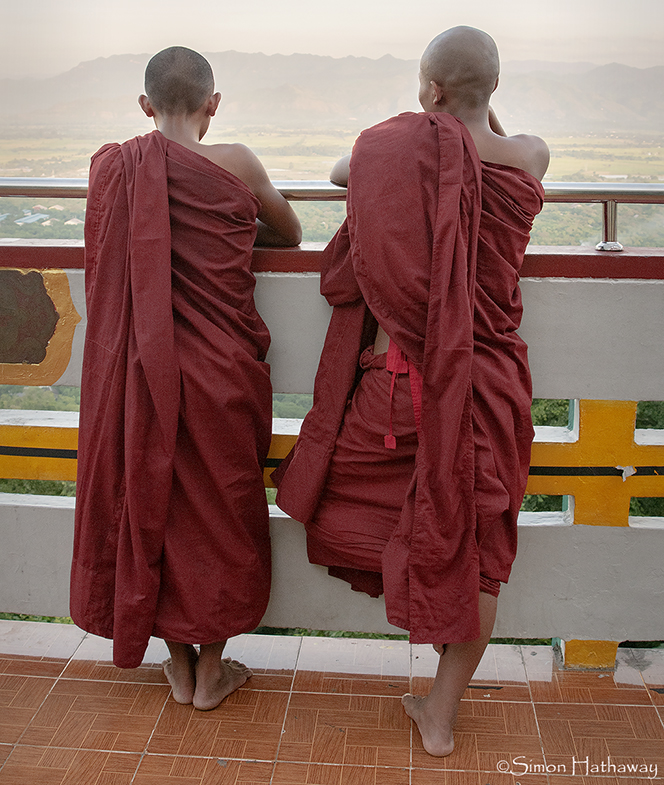
Student: “How can you grasp emptiness?”
Master: “I can’t let go of it.”
Student: “How can you grasp forms?”
Master: “I can’t let go of it, either?”

Commentary:
When one thing is empty, all other things are empty.
When one thing is not empty, all other things are forms.

©Boo Ahm

All writing ©Boo Ahm. All images ©Simon Hathaway

#zen #meditation #zenmeditation #enlightened #enlightenment #zenfools #photography http://ow.ly/i/JIXxK


Uncategorized

Hsin Shin Ming: “64. The true-Self is neither existing nor non-existing but always everywhere before your eyes.”

Hsin Shin Ming: “64. The true-Self is neither existing nor non-existing but always everywhere before your eyes.”

The true-Self is Emptiness. ‘Neither existing nor non-existing’ means freedom from illusions because ‘existing’ and ‘non-existing’ are both illusions. These are expressions that are used to distinguish the presence of something from the absence of it, or to describe the difference between a space which is occupied by something and a space which is not, just like ‘A bed is existing in the bed room, but non-existing in the kitchen’.

Therefore, when there is only the true-Self, Emptiness and there is no space that is not the true-Self, the true-Self is not the true-Self anymore and there can’t be expressions such as existing and non-existing. In this state, we can’t stop seeing it even for a moment even though we close our eyes just as the scripture says, ‘The true-Self is always everywhere before your eyes’. So, ancient masters would say, “You are wrong once you open your mouth to describe the true-Self.”

Student: “How can I see the true-Self?”
Master: “You cannot avoid seeing it.”
Student: “How can I see it with my eyes closed? When I close my eyes, nothing but darkness is seen.”
Master: “That is the very way the true-Self is.”

©Boo Ahm

All writing ©Boo Ahm. All images ©Simon Hathaway

#zen #meditation #zenmeditation #enlightened #enlightenment #zenfools #photography http://ow.ly/i/JIV3m

Uncategorized

May I request whatever I want?

May I request whatever I want?

In the Bible, John 15:7 it says, “If you remain in me and my words remain in you, then you will ask for anything you wish, and you shall have it.”

You may request whatever you want on the condition that you remain in Jesus and His words remain in you. In other words, prior to requesting what you want, you should know how to remain in Jesus and how to make His words remain in you.

Jesus here refers to Emptiness, non-Duality just as Buddha means Emptiness in Buddhism. So, ‘You remain in Jesus and His words remain in you’ means that you are enlightened, or you become one with Emptiness. This implies to realise that everything, including you, is Emptiness itself. When everything is Emptiness itself and you are Emptiness itself, you are one with all other things as Emptiness. Then, there is nothing that is not you, and you can have anything you wish.

©Boo Ahm

All writing ©Boo Ahm. All images ©Simon Hathaway

#zen #meditation #zenmeditation #enlightened #enlightenment #zenfools #photography http://ow.ly/i/JIAR7

Uncategorized

Caoshan’s “Love between Parent and Child

Caoshan’s “Love between Parent and Child”

Caoshan was once asked by a monastic, “A child went back to her parent. Why didn’t the parent pay attention to her?”
Caoshan said, “It is quite natural just like that.”
The monastic said, “Then where is the love between parent and child?”
Caoshan said, “The love between parent and child.”
The monastic said, “What is the love between parent and child?”
Caoshan said, “It cannot be split apart, even when hit with an axe.”

Student: “Why doesn’t the parent pay attention to the child when she comes back to the parent?”
Master: “Because the child has never left the parent’s breast even though the child thinks he has come back.”
Student: “Why can’t the love between parent and child be split apart even with an axe?”
Master: “Because the axe is also the love.”

Commentary:
The love between the parent and the child can’t be split apart even with an axe any more than winds and air can with a wind.

©Boo Ahm

All writing ©Boo Ahm. All images ©Simon Hathaway

#zen #meditation #zenmeditation #enlightened #enlightenment #zenfools #photography http://ow.ly/i/JIvl9

Uncategorized

Hsin Shin Ming: “63. The Truth is neither short nor long, one instant is ten thousand years.”

Hsin Shin Ming: “63. The Truth is neither short nor long, one instant is ten thousand years.”

The truth means Emptiness. ‘One instant is ten thousand years’ means that one instant is not different from ten thousand years in the way that both of them are empty and are illusions. All illusions are essentially the same as Emptiness even though they look different from one another; big and small, or short and long. So, another interpretation says, “One thought is ten thousand years.” instead of “One instant is ten thousand years.” This means that such a long time as ten thousand years is also only an illusion just as an instant is also an illusion. In summary, this scripture means that the truth is beyond time and space because time and space are also illusions.

SRH_7589a_thumb_insta


Student: “How long have you stayed here on this mountain?”
Master: “I am not concerned about the passing of winter or summer.”

©Boo Ahm

All writing ©Boo Ahm. All images ©Simon Hathaway

#zen #meditation #zenmeditation #enlightened #enlightenment #zenfools #photography http://ow.ly/i/JHhvb

Uncategorized

Q. Is there or is there not such a thing as absolute truth?

Q. Is there or is there not such a thing as absolute truth?

As mentioned over and over so far, the purpose of Zen meditation is to realise that everything is empty. When everything is empty, there is only Emptiness, which is called the true-Self, Oneness, or Buddha in Buddhism and God in Christianity. Emptiness is the very absolute truth. Buddhism is a religion that helps people to realise what the absolute truth is and that we are the absolute truth itself. My answer to your answer is “Yes, there is. You are the very absolute truth itself.”

018_9108a_thumb


Student: “Why am I not eternal although I am the absolute truth?”
Master: “A man, no matter how much money he has in his bank account, is not rich unless he recognises the fact.”

©Boo Ahm

All writing ©Boo Ahm. All images ©Simon Hathaway

#zen #meditation #zenmeditation #enlightened #enlightenment #zenfools #photography #truth #emptiness #empty #oneness #trueself http://ow.ly/i/JEo4W

Uncategorized

Mazu’s “Meaning of the Ancestor’s Coming from India”

Mazu’s “Meaning of the Ancestor’s Coming from India”

A monastic asked Mazu, “Aside from the four propositions and a hundred negations, please tell me the meaning of Bodhidharma’s coming from India.”
Mazu said, “I am tired today. I cannot answer your question. Go and ask Citang.”
The monastic asked the same question of Citang.
Citang said, “Why don’t you ask the master?”
The monastic said, “The master has sent me to you.”
Citang said, “I have a headache today, I cannot answer your question. Go and ask Senior Hai.”
The monastic asked the same question of Hai.
Hai said, “Having come to this point, I don’t understand it.”
The monastic went back to Mazu and told him the story.
Mazu said, “Citang’s head is white. Hai’s head is black.”

SRH_8881a_thumb


Student: “Why did Mazu send the monastic to his student Citang instead of answering his question?”
Master: “Because he had a lot of compassion for his student.”
Student: “Why did his two students make a fool of the monastic?”
Master: “They didn’t fool him but loved him as much as Mazu did, but the monastic made a fool of himself.”
Student: “I don’t understand what the compassion was which they showed to the monastic?”
Master: “I have no less compassion for you than they did for the monastic.”

Commentary:
A master who has good students is praised for his good teaching although he makes a fool of them.
A master who has poor students is blamed for making a fool of them although he gives them good teaching.

©Boo Ahm

All writing ©Boo Ahm. All images ©Simon Hathaway

#zen #meditation #zenmeditation #enlightened #enlightenment #zenfools #photography http://ow.ly/i/JC0oQ

Uncategorized

Hsin Shin Ming: “62. The wise of all times and places have personally entered this truth.”

Hsin Shin Ming: “62. The wise of all times and places have personally entered this truth.”

The wise means the enlightened, and this truth means Emptiness. ‘Entered this truth’ means to realise this truth. The term ‘entered’ was employed in order to emphasise that we should become one with the truth instead of taking it as knowledge. This scripture means that those who have realised Emptiness are referred to as the wise. This truth is called the Buddha in Buddhism and God in Christianity. People who have realised this truth are said to enjoy Nirvana in Buddhism, or the Kingdom of Heaven in Christianity.

Then, how can we enter this truth? Ancient masters would say, “You become as far as ten thousand miles away from the truth if you move even a single step.” When Jesus’s disciples said to him, “When will the Kingdom come?”, Jesus said, “It will not come by waiting for it. It will not be a matter of saying ‘here it is’ or ‘there it is’. Rather, the Kingdom of the father is spread out upon the earth, and men do not see it.”

Student: “How can I enter the truth?”
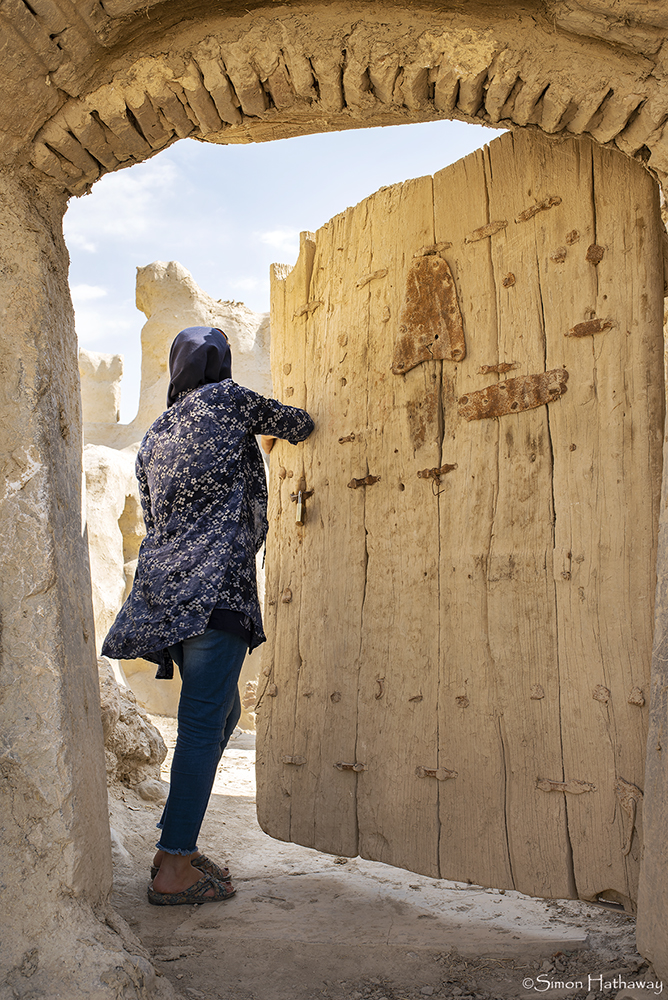
Master: “Come in now.”
Student: “I can’t. How?”
Master: “Pass through the gate.”
Student: “Where is the gate?”
Master: “Just come in.”

©Boo Ahm

All writing ©Boo Ahm. All images ©Simon Hathaway

#zen #meditation #zenmeditation #enlightened #enlightenment #zenfools #photography http://ow.ly/i/IJGuX

Uncategorized

Finger pointing to the moon

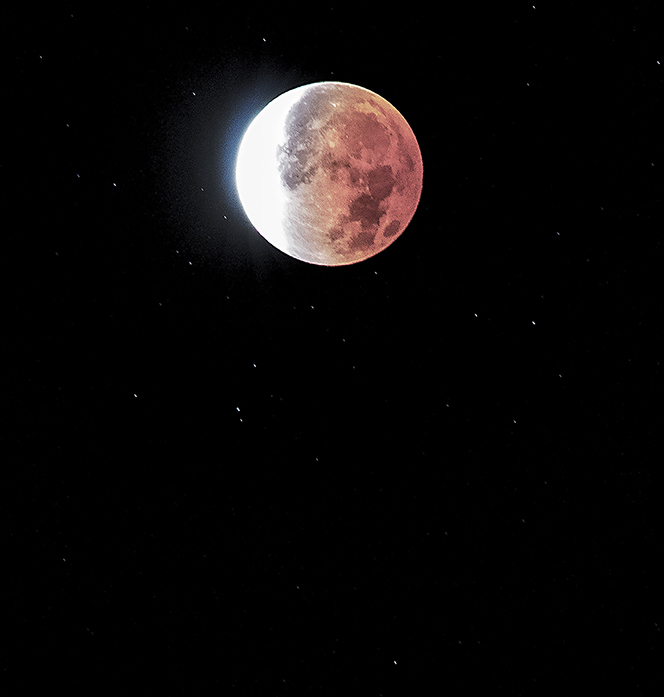
In Zen, people often use the phrase “finger pointing to the moon.” It is my impression that this has become a meaningless cliché. Does anyone understand what this really means? What is this “moon” that the finger is pointing to?

This is one of the most important phrases in Zen meditation. You should not take it as a meaningless cliché. To be able to clearly distinguish ‘finger’ from ‘the moon’ is enlightenment. The moon means the true-Self, Buddha or Emptiness that is the ultimate goal which we Zen practitioners should pursue. ‘Finger pointing’ refers to all actions of teaching including speaking and acting, or language and action. This means that when words are used to express the true-Self, we pay our attention not to the true-Self but only to the words themselves that are pointing to the true-Self. Words are only a kind of vessel in which to put contents, not the contents themselves.

For example, when a master was asked what the true-Self was, he answered, “A piece of cake.”. ‘A piece of cake’ is just a finger pointing to the true-Self. This is like raising your hand in order to have your attendance known to your teacher when your teacher calls the register in class.
The purpose of raising your hand is not to show what your hand is like but to get your attendance, your existence in the classroom known. Saying ‘a piece of cake’ is like raising your hand. If you understand this writing only as knowledge, you are also looking at the finger instead of the moon.

Student: “What is the moon?”
Master: “Moon.”
Student: “What is a pointing finger?”
Master: “Moon.”

©Boo Ahm

All writing ©Boo Ahm. All images ©Simon Hathaway

#zen #meditation #zenmeditation #enlightened #enlightenment #zenfools #photography http://ow.ly/i/II5JZ

Uncategorized

Qinglin’s “Dead Snake on the Path”

Qinglin’s “Dead Snake on the Path”
Zen master Qinglin was once asked by a monastic, “What happens if I take a shortcut on the path?”
Qinglin said, “A dead snake lies in the great road. I warn you, don’t step on its head.”
The monastic said, “What happens if I step on its head?”
Qinglin said, “You will lose your life.”
The monastic said, “What happens if I don’t step on it?”
Qinglin said, “There is no way to go around it.”
The monastic said, “What happens at such a time?”
Qinglin said, “You miss it.”
The monastic said, “Where shall I go?”
Qinglin said, “The grass is deep. There is no place to look for it.”
The monastic said, “Master, you too should be careful.”
Qinglin clapped his hands and said, “This is all poisonous.”

Student: “What is a shortcut on the path?”
Master: “You are on it.”
Student: “What is a dead snake?”
Master: “Why don’t you step on it on the spot?”

Commentary:
A shortcut is rather a thorny thicket, and a beautiful road with flowers on both sides is rather a barrier.

©Boo Ahm

All writing ©Boo Ahm. All images ©Simon Hathaway

#zen #meditation #zenmeditation #enlightened #enlightenment #zenfools #photography http://ow.ly/i/IGAWy