Uncategorized

Hsin Shin Ming: “28. One emptiness is two facets and contains all the universe.”

Hsin Shin Ming: “28. One emptiness is two facets and contains all the universe.”

‘One emptiness is two facets’ means that Emptiness is forms, or things, as the Heart Sutra says, and ‘contains all the universe’ means that there is nothing that doesn’t belong to Emptiness. All things are how Emptiness is. All things are to Emptiness as all kinds of wind are to air. No matter how many different types of wind there are, they are one as air. In other words, however many different forms there are, all of them are one as Emptiness. Our problem is that we don’t know the truth that everything is one as the Emptiness just as every wind is one as air.

SRH_7936a_thumb_insta


Student: “What happens to us when we die if we all belong to Emptiness?”
Master: “Though a wind dies, air is still there.”

©Boo Ahm

All writing ©Boo Ahm. All images ©Simon Hathaway

#zen #meditation #zenfools http://ow.ly/i/DU4nL

Uncategorized

Q. Sometimes I find it hard to put aside time to meditate. Is it okay to meditate on a train while commuting to and from work? It is hard to keep a correct posture on those seats.

Q. Sometimes I find it hard to put aside time to meditate. Is it okay to meditate on a train while commuting to and from work? It is hard to keep a correct posture on those seats.

A. Any time and any place can be a good time and a good place for Zen meditation even though you can’t put aside time for it. Your commuting time and commuting train are a good example. Your idea appears to come from your misunderstanding of Zen meditation. Zen practice is not to train your physical body but to concentrate your attention to your question. The essence of Zen meditation is not to sit upright but to keep questioning.

018_7231a_thumb


You are told to sit upright in order to focus on your question, not for the sake of sitting itself. It is true that sitting upright on the floor without leaning against anything is the most recommended, but this is not a fixed rule. There is no fixed correct posture for Zen practice. Any posture; sitting upright on the floor or in a sofa or on a chair, sitting leaning against something or not, is okay if you can focus on your question. I’d like to invite you to lean against something in order to reduce the burden your spine takes if you are aged or have some problem with your back because sitting upright is the most burdening posture to our backbone.

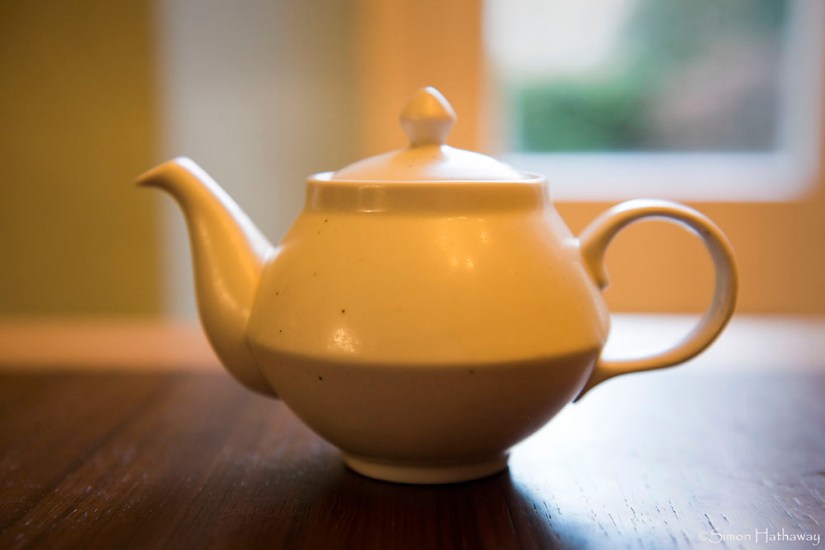
The key point of Zen practice is not whether you can keep a good posture or not, but whether you can keep your question or not. However good your posture is, sitting itself is not Zen practice if you don’t keep your question. If you ask yourself what makes your body walk while taking a walk, then it is walking meditation. Questioning what makes you have tea during tea time is tea meditation. So, you always have time and place for practising Zen meditation. Don’t say that you have no time for Zen practice.

©Boo Ahm

All writing ©Boo Ahm. All images ©Simon Hathaway

#zen #meditation #zenfools http://ow.ly/i/DOb0g

Uncategorized

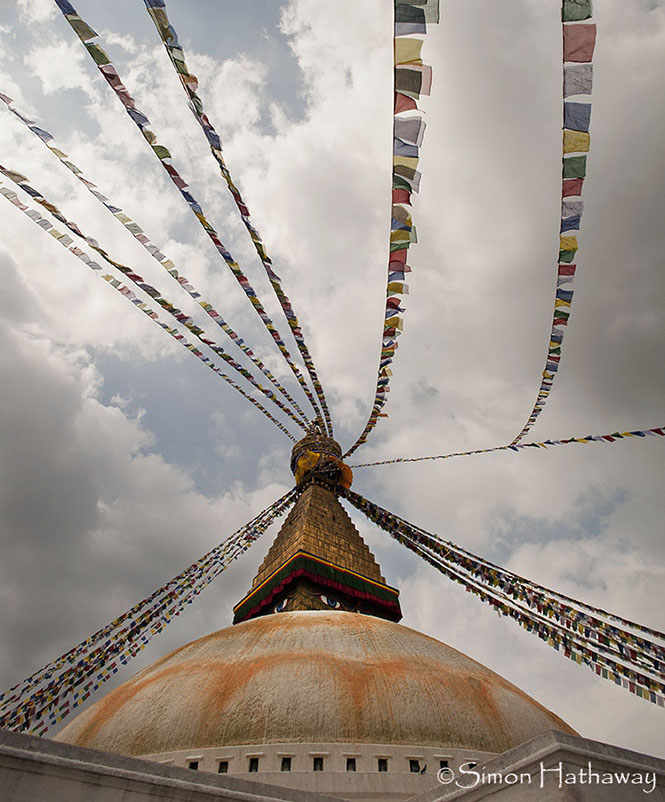
Xuansha’s Seamless Stūpa

Xuansha’s Seamless Stūpa

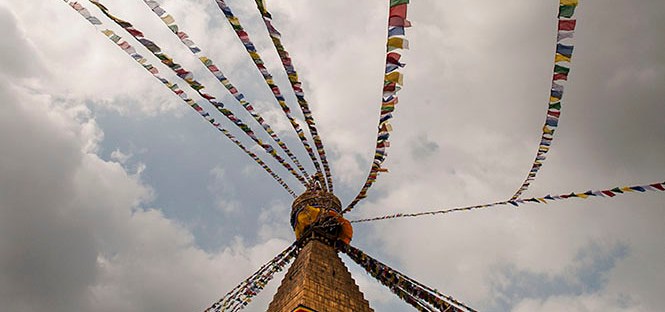
When Xuansha travelled with Xuefeng, Xuefeng pointed at the ground in front of him and said, “This piece of field may be suited for building a seamless stupa.” Xuansha said, “How high should it be?” Xuefeng looked up and down. Xuansha said, “It’s just that you have not even dreamed of the Buddha’s affirmation of the attainment of Buddhahood on Vulture Peak.” Xuefeng said, “How would you say it?” Xuansha said, “Seven or eight feet.”

SRH_5326a2_thumb_instagram


Student: “Why did Xuansha deny Xuefeng’s answer and say, ‘Seven or eight feet’?”
Master: “Don’t make seams on the seamless Stupa.”

Commentary:
The water from one well tastes the same.
One kilometre is one thousand meters.

©Boo Ahm

All writing ©Boo Ahm. All images ©Simon Hathaway

#zen #meditation #zenfools http://ow.ly/i/DM0qG

Uncategorized

Hsin Shin Ming: “27. If you are to know the essence of these seeming two facets, see them as one Emptiness.”

Hsin Shin Ming: “27. If you are to know the essence of these seeming two facets, see them as one Emptiness.”

‘These seeming two facets’ means forms or things. ‘See them as one Emptiness’ means to realise that everything is empty. When everything is empty, all things are one as Emptiness. That is why the scripture has ‘one’ before Emptiness. Actually, ‘one Emptiness’ means just Emptiness, and from time to time Emptiness is referred to as Oneness or non-Duality. In other words, to see things as empty is to know the essence of all things since the essence of forms is emptiness as the Heart Sutra says, “Forms are Emptiness and Emptiness is forms”

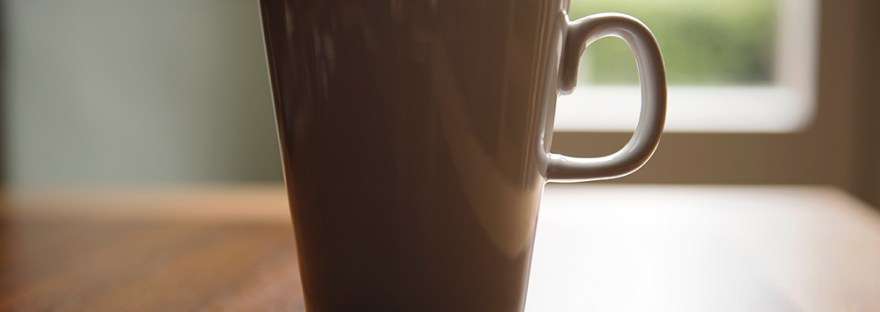
Then, why do these seem to be two facets? The reason why these seeming two facets appear to be dual is not that they are separate but that you have divided one Emptiness into many by putting imaginary lines, labels on it. For example, when you put the label ‘cup’ on a thing, you divide one Emptiness into two; a cup and what is not a cup. In this way you divide one Emptiness into too many forms by drawing countless imaginary lines.
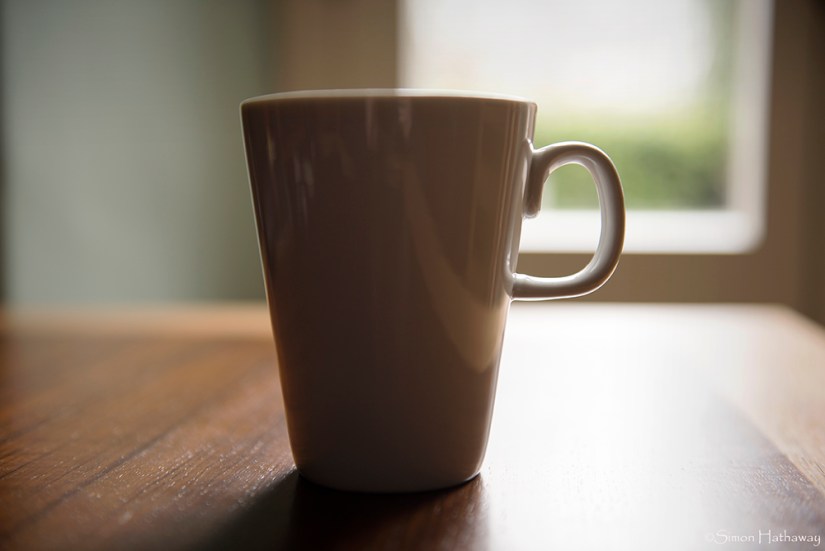
How can we see two facets as one Emptiness? Seeing all things without any imaginary lines is seeing things as one Emptiness. If you can see a cup before you without any imaginary lines attached to it such as ‘cup’, ‘white’, ‘round’, ‘hard’, ‘small’, and so on, that is to see it as one Emptiness.

Student: “Is this cup a form or emptiness?”
Master: “It is a form as long as you call it a cup.”
Student: “What is it like when it is Emptiness?”
Master: “When you see this cup as Emptiness, you can’t see me, not to mention asking me this question, because not only this cup but all the universe including you and me also becomes one as Emptiness.”

©Boo Ahm

All writing ©Boo Ahm. All images ©Simon Hathaway

#zen #meditation #zenfools http://ow.ly/i/DHy0v

Uncategorized

Q. Is it okay to neglect hard work and taking care of my family so that I can concentrate on my practice?

Q. Is it okay to neglect hard work and taking care of my family so that I can concentrate on my practice?

A. No, it’s wrong. Don’t separate practice from daily life. Working hard and taking good care of your family is not different from practising well. Don’t think that Zen meditation is to try to attain something special that is not from our daily life. Practising Zen is trying to see your family members as they are, and enlightenment is to realise how holy and perfect they are as oneness with you.

You should think of them as your masters or comrades who help you to practise well. When they seem to cause an inhospitable atmosphere for your practice, you should think that they are checking how deep your practice is or how well you are practising. When you are upset, trying to see the root of your anger or where it comes from is Zen practice. Whatever the situation is like, a dead body doesn’t care; not angry and not happy. What is it that makes your body get angry or happy?

©Boo Ahm

All writing ©Boo Ahm. All images ©Simon Hathaway

#zen #meditation #zenfools http://ow.ly/i/DDzrr

Uncategorized

Zhaozhou Recites the Canon

Zhaozhou Recites the Canon

Zhaozhou was once given a donation by an elderly woman who requested that he recite the Great Canon. Zhaozhou got down from his seat on the meditation platform, walked around the platform once, and said to the woman’s messenger, “I have finished reciting the Great Canon.” The messenger told the woman about this. She said, “I asked him to recite the entire canon. How come the master recited only half of the Canon?”

Student: “Why did Zhaozhou walk around the platform once instead of reciting the Great Canon when he was asked to recite it?”
Master: “He did it perfectly.”
Student: “Then, why did the elderly woman say that he had recited only half of the Canon?”
Master: “She admired him.”

Commentary:
Reciting the copy of the Great Canon one hundred times is not as good as taking a glance at the original Great Canon.”

©Boo Ahm

All writing ©Boo Ahm. All images ©Simon Hathaway

#zen #meditation #zenfools http://ow.ly/i/DzoaX

Uncategorized

Hsin Shin Ming: “26. The host vanishes along with guests and guests disappear along with the host. The host is a host because there is a guest and a guest is a guest because there is a host.”

Hsin Shin Ming: “26. The host vanishes along with guests and guests disappear along with the host. The host is a host because there is a guest and a guest is a guest because there is a host.”

‘The host’ means the discriminating subject and ‘guests’ means discriminated objects. In other words, the former is ‘I’ and the latter is everything and everybody that ‘I’ see and hear other than ‘I’. The host is to guests as the right is to the left. There couldn’t be a host without a guest just as there couldn’t be the right without the left. When one vanishes, the other disappears automatically along with it in the same way as the right is not the right any longer when the left vanishes, and the left is not the left any longer when the right vanishes. This is just like there is the right because there is the left and vice versa.

An ancient master used to say to his students, “You should make yourselves oneness with all mountains and rivers if you are to get enlightened.” One of his students asked, “How can I make myself oneness with all mountains and rivers?” The master answered, “Kill yourself.”

Student: “How can I kill myself?”
Master: “See yourself as you are.”
Student: “What is everything like when the host vanishes along with guests?”
Master: “I am wrong if I answer your question.”

©Boo Ahm

All writing ©Boo Ahm. All images ©Simon Hathaway

#zen #meditation #zenfools http://ow.ly/i/DuGjF

Uncategorized

Q. If a wandering mind is an unhappy mind then do the dreams we have when we sleep make us unhappy?

Q. If a wandering mind is an unhappy mind then do the dreams we have when we sleep make us unhappy?

A. Your unhappy mind when you are awake, not always, but sometimes can turn into your unhappy dreams during your sleep because both your unhappy mind during the day time and your dreams are the actions of your one mind. That is why people with trauma suffer from nightmares during their sleep. This is a good example which shows that we are deluded by illusions. Your dreams, whether good or bad, are just illusions. Leave them alone. If you feel flattered or discouraged by them, it means that you are deluded by them one more time. If you practise Zen meditation hard, you can get mental strength to realise the fact that you are dreaming when you dream and therefore control your dreams.

©Boo Ahm

All writing ©Boo Ahm. All images ©Simon Hathaway

#zen #meditation #zenfools http://ow.ly/i/DqosM

Uncategorized

Un-mon’s Dried dung

Un-mon’s Dried dung

A monk asked Un-mon,”What is Buddha?” Un-mon answered him, “Dried dung.”

Student: “Why on earth did the master say such dirty words as ‘Dried dung’ out of so many words?”
Master: “Because you heard it as such.”

Commentary:
If you say that Un-mon said, ‘Dried dung’, not only will you lose your face but also humiliate your master.”

©Boo Ahm
All writing ©Boo Ahm. All images ©Simon Hathaway
#zen #meditation #zenfools http://ow.ly/i/Dmp25

Uncategorized

Hsin Shin Ming: “25. When things are no longer faulty, it is as if there were no things. When no discrimination comes into being, there is nothing to be called mind.”

Hsin Shin Ming: “25. When things are no longer faulty, it is as if there were no things. When no discrimination comes into being, there is nothing to be called mind.”

‘Things are no longer faulty’ means to see everything as empty. ‘When things are no longer faulty’ means ‘when you see things as empty’. To see emptiness as forms, or things, is to divide oneness as emptiness into many, by drawing imaginary lines or making labels, which is to make things appear. Conversely, to see things as emptiness is to make many into oneness as emptiness, by erasing imaginary lines or labels, which is to make things disappear. So, when you see things as empty, it is as if there were nothing. In other words, when you see things as empty, things are not things but emptiness. If things are not things, what is faulty?

‘Mind’ in the end of the scripture means the true-Self. When no discrimination comes into being, there is nothing but emptiness. In the situation in which there is only oneness, non-duality as emptiness, there is nothing to be called mind and no one to name the situation mind. We refer to the emptiness as the true-Self for the sake of convenience.

Student: “How is everything when things are not faulty?”
Master: “You are answering your question.”

©Boo Ahm

All writing ©Boo Ahm. All images ©Simon Hathaway

#zen #meditation #zenfools http://ow.ly/i/DhJ8b