Uncategorized

Hsin Shin Ming: “8. Indeed, it is due to our choosing to accept or reject that our minds are disturbed.”

Hsin Shin Ming: “8. Indeed, it is due to our choosing to accept or reject that our minds are disturbed.”

Choosing to accept or reject means being attached, which results from not being able to see things as they are. That is known as being deluded by illusions, which happens when we can’t see things as they are.

We choose to accept what seems appealing and reject what appears to be ugly or unpleasant. However, things rarely happen as we wish. We often fail to attain what we choose to accept and must accept what we choose to reject. From time to time, what we accept turns out to be what we want to reject, and what is worse is that sometimes we can’t avoid what we want to reject as we wish.
That is as if we, mistaking a piece of broken glass as diamond, strive to attain it. We feel disappointed when we fail to get it, and we may have our hands hurt while trying to grasp it, or while playing with it, when we succeed in achieving it. When it later turns out to be a piece of glass, we, feeling deeply regretful for what we have paid for it, become frustrated and even feel betrayed.

When we can see things as they are, such things never happen, because we are aware that everything is empty when we can see things clearly, just as they are.

So, to rephrase the main scripture, it is due to our inability to see things as they are, or see things as empty that our minds are disturbed.

Student: “How could we avoid choosing to accept and reject?
Master: “What matters is not accepting and rejecting but not knowing who accepts and rejects what. If you know that both you and what you accept, or reject are empty, your choosing doesn’t matter.”

©Boo Ahm
All writing ©Boo Ahm. All images ©Simon Hathaway http://ow.ly/i/ARFVv

Uncategorized

Guishan’s “Do Not Betray Others”

Guishan’s “Do Not Betray Others”

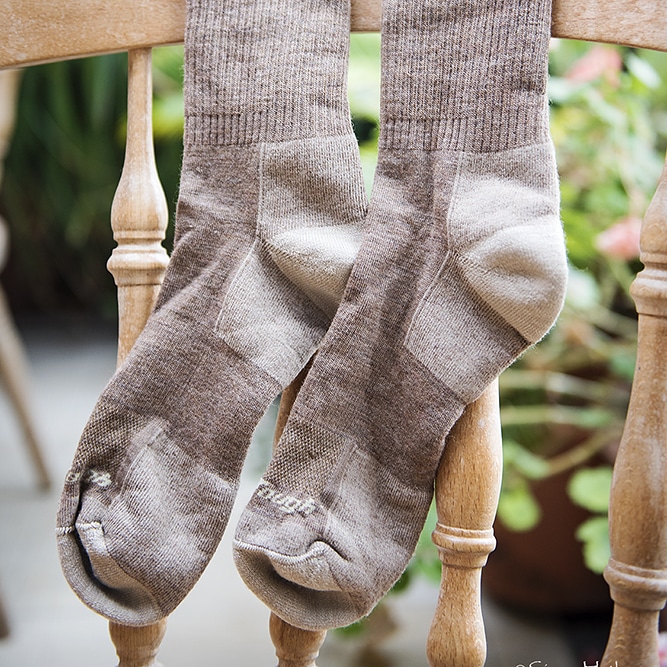
One day Guishan pointed at a pair of straw sandals and said to Yangshan, “All hours of the day, we receive people’s support. Don’t betray them.” Yangshan said, “Long ago in Sudatta’s garden, the Buddha expounded just this.” Guishan said, “That’s not enough. Say more.” Yangshan said, “When it is cold, to wear socks for others is not prohibited.”

Student: “Why did Yangshan say, ‘When it is cold, to wear socks for others is not prohibited’?”
Master: “Because he knew why and how not to betray people who supported him.”
Student: “May I wear socks for others, too?”
Master: “No, you must not.”
Student: “Why not, Sir?”
Master: “For whom have you worn socks so far?”
Student: “For myself.”
Master: “What is yourself that you have worn socks for so far?”
Student: “I don’t know.”
Master: “How could you wear socks for others while not knowing yourself?”

Commentary:
You are allowed to wear socks for others only when you know who feels warm when you wear socks.

©Boo Ahm
All writing ©Boo Ahm. All images ©Simon Hathaway http://ow.ly/i/ANlOO

Uncategorized

Hsin Shin Ming: “7. The Way is perfect, like vast space where nothing is lacking, and nothing is in excess.”

Hsin Shin Ming: “7. The Way is perfect, like vast space where nothing is lacking, and nothing is in excess.”

The Way means the true-Self, emptiness. When everything is empty, there is nothing that doesn’t belong to emptiness. In order for emptiness, the Way, to be lacking or in excess, there must be something else that can be a standard with which to evaluate or compare it. When there is nothing that doesn’t belong to the Way, emptiness, there is nothing else but emptiness. Then, there is no standard with which to evaluate, or rate emptiness or anything else to compare with emptiness. In fact, the phrase ‘like vast space’ is not an exact description of the Way because there is nothing like it, since there is nothing else but it. So, the word ‘perfect’ is not true of the Way because there is nothing imperfect with which to compare it. And so, ancient masters used to say, “The moment that you open your mouth to describe the Way, you are already wrong.”

Student: “How perfect is the Way?”
Master: “You have already profaned it.”

©Boo Ahm
All writing ©Boo Ahm. All images ©Simon Hathaway http://ow.ly/i/AJCiy

Uncategorized

Hsin Shin Ming: “6. When the deep meaning is not understood, you try in vain to keep your mind silent.”

Hsin Shin Ming: “6. When the deep meaning is not understood, you try in vain to keep your mind silent.”

The deep meaning here implies that everything is empty. ‘You try in vain to keep your mind silent’ means that you can never succeed in keeping your mind silent however hard you may try. So, this scripture says, “When you don’t understand that everything is empty, you can never keep your mind silent.”

In order to understand the deep meaning, you should be able to see everything as it is. So, we can interpret the scripture as ‘If you are to keep your mind silent, you should see everything as it is prior to trying in vain to keep your mind silent’. In other words, this means that you should try to see your mind as it is before struggling to keep it silent. When you can’t see things as they are, you can’t see your mind as it is. This means that you don’t know what your mind is. Trying to keep your mind silent without knowing what it is like trying in vain to grasp the reflection of the moon in a pond.

When you can see things as they are, you come to realise that everything is empty. When everything is empty, not only your mind but what disturbs your mind is also empty. When everything is empty, everything is oneness as emptiness. When everything is oneness as emptiness, your mind is not your mind, and what disturbs your mind is not the things that disturb your mind any more. They are oneness as emptiness. Likewise, silence and noisiness are neither different nor separate from each other but one as emptiness. Then, whatever you do, wherever you are, your mind is silent all the time.

Student: “How can I keep my mind silent?”
Master: “What is your mind?”
Student: “I am not sure what it is.”
Master: “How can you hope to keep your mind silent without knowing what it is? Your problem is not that your mind is noisy but simply that you don’t know what it is.”

©Boo Ahm
All writing ©Boo Ahm. All images ©Simon Hathaway http://ow.ly/i/AFP1h

Uncategorized

Dongshan’s “Dharma Bodies”

Dongshan’s “Dharma Bodies”

Dongshan Liangjie was once asked by a monastic, “Among the three buddha bodies, which one expounds the dharma?” Dongshan said, “I am always intimate with this.” Later a monastic asked Caoshan, “Dongshan said, ‘I am always intimate with this.’ What does it mean?” Caoshan said, “If you need a head, chop my head off and take it with you.” Also, a monastic asked Xuefeng about this. Xuefeng suddenly hit the monastic with his staff and said, “I have also been to Dongshan.”
Student: ” What did Dongshan mean by saying, ‘I am always intimate with this’?”
Master: “He showed which one expounded the dharma.”

DSC_9969a_thumb


Student: “Why did Caoshan say, ‘If you need a head, chop my head off and take it with you’?”
Master: “He repeated Dongshan’s answer.”
Student: “Why did Xuefeng suddenly hit the monastic with his staff and say, ‘I have also been to Dongshan’?”
Master: “He showed what Dongshan is.”

Commentary:
Whatever clothing you may wear, you are you.
Whatever cup you may use, the water from the same well tastes the same.

©Boo Ahm
All writing ©Boo Ahm. All images ©Simon Hathaway http://ow.ly/i/ABvTp

Uncategorized

Hsin Shin Ming: “5. The struggle of what one likes and what one dislikes is the disease of the mind.”

Hsin Shin Ming: “5. The struggle of what one likes and what one dislikes is the disease of the mind.”

The core meaning of this scripture is the disease of the mind. The disease of the mind is sometimes compared with an eye disease because it symbolises our inability to see things as they are. In other words, the struggle of like and dislike results from being unable to see things as they are.

The struggle of what one likes and what one dislikes means the struggle that comes when we can’t have or are deprived of what we like, or when we must be with someone or something that we dislike. This is all due to the disease of the mind that prevents us from seeing things as they are. When cured of the disease of mind, we can see things as they are. When we see things as they are, we come to realise that everything is empty. So, when we can see everything as it is, that is, as empty, the struggle of what we like and what we dislike will disappear by itself without any effort to remove it by force.

DSC_7920a_thumb


However, if we did not have likes and dislikes, how monotonous life would be! We should know that the cause of struggle is not what we like and what we dislike but our being unable to see them as they are. Once we can see them as they are, they are a blessing because they enrich our life and make it exciting.

An enemy becomes a friend once you come to know him.

©Boo Ahm
All writing ©Boo Ahm. All images ©Simon Hathaway http://ow.ly/i/AxNwP

Uncategorized

Hsin Shin Ming: “4. If you wish to see the truth, then hold no option for or against.”

Hsin Shin Ming: “4. If you wish to see the truth, then hold no option for or against.”

‘See the truth’ here means to see the true-Self or attain enlightenment. This phrase is very prone to be misunderstood as conditional: If we can hold no option for or against anything, then we can see the truth.

In fact, it is impossible to hold no option until we realise that everything is empty. To realise that everything is empty is to see the truth because the true-Self means emptiness. In other words, only when we see the truth do we automatically come to have no option. Holding no option is to seeing the truth as breathing is to being alive. You might say, “If you wish to be alive, you should breathe.” However, how could we breathe if we are not alive? Holding no option is the evidence of seeing the truth just as breathing is the evidence of being alive.

SRH_7230a_thumb


Another thing we ought not to misunderstand is that this scripture doesn’t mean that we should have no option for or against in our reality, but means that we may have clear options for or against. However, we should not be swayed or deluded by them, knowing that they are empty. Therefore, you should try to see things as they are prior to trying not to hold no option for or against.

Student: “How can I see the truth?”
Master: “How couldn’t you see it? I don’t know how not to see it.”
Student: “How can I have no option for or against?”
Master: “Don’t try to avoid it. It is the action of the truth you are looking for.”

©Boo Ahm
All writing ©Boo Ahm. All images ©Simon Hathaway

Uncategorized

Master Langye’s “Original Purity”

Master Langye’s “Original Purity”

A monastic asked Zen master Huijue of Langye, “Purity is originally all embracing. How is it that mountains, rivers, and the great earth suddenly appear?” Langye said, “Purity is originally all embracing. How is it that mountains, rivers, and the great earth suddenly appear?”

Student: “Why did the master repeat his student’s question when he was asked instead of answering it?”
Master: “Don’t think of his kind and considerate answer as repeating the question.”

Commentary:
When Purity is all embracing, there is nothing that is not Purity.
When there is nothing that is not Purity, both Langye himself and what he said are all part of Purity.

©Boo Ahm
All writing ©Boo Ahm. All images ©Simon Hathaway http://ow.ly/i/Ap3d1

Uncategorized

Hsin Shin Ming: “3. Make the smallest distinction, however, and you are as far apart from the truth as heaven is from earth.”

Hsin Shin Ming: “3. Make the smallest distinction, however, and you are as far apart from the truth as heaven is from earth.”

‘Make distinction’ means to discriminate, which is to be ignorant of the fact that everything is empty. In other words, this means believing that all the labels which are our imaginary lines attached to things are real. Then, the imaginary lines are called illusions, and we are said to be deluded by illusions. ‘The truth’ means emptiness, the true-Self. Making the smallest distinction means thinking that there can be something, even if it is the smallest thing, that is not empty. So, this scripture can be rephrased as ‘If you think that something, however small it may be, is not empty, you are as far apart from realising the true-Self, emptiness, as heaven is from earth.

When you think that there is even a single tiny thing that is not empty, the tiny thing becomes the seed of all illusions, which will make the world of illusions in no time. For example, when a wooden table is not empty but real, everything, including the carpenter who made it and all the things used to make the table is also not empty but real. When the carpenter is real, his parents, his wife and his children are all real as well. Likewise, when all the things used to make the table are real, all other things and people that are related to them are also real. Seen in this way, everything becomes real in the end. So, if you make the smallest distinction, this is why you are as far apart from realising the truth as heaven is from earth.

You might wonder how it is possible for us to live our life without making the smallest distinctions. When you have realised that everything is empty, that is, when you are enlightened, your distinction or discrimination is called the action of the true-Self, whereas it is called distinction or discrimination when you are not enlightened. Once you are enlightened, whatever distinctions you may make, they are not illusions any longer since you are already aware that all of them are empty and so are not deluded by them. Therefore, making no distinction doesn’t mean not making any distinction but means making distinction without being deluded by illusions while knowing that everything is empty.

Student: “How is it when we don’t make the smallest distinction?”
Master: “Even if you make distinctions as different as heaven is from earth, you are not in the least apart from the truth.”

©Boo Ahm
All writing ©Boo Ahm. All images ©Simon Hathaway http://ow.ly/i/AkaBE

Uncategorized

Hsin Shin Ming: “2. When love and hate are both absent, the true-Self becomes clear and undisguised.”

Hsin Shin Ming: “2. When love and hate are both absent, the true-Self becomes clear and undisguised.”

When we read this scripture, we might be faced with two questions ‘How can we make love and hate both absent?’ and ‘Should we not love anyone and anything including our spouse, our parents, our children, our friends and the beauty of nature?’. Should we have no feelings like stone and wood? Even the Bible says that we should love our neighbours as ourselves.

How can we make love and hate both absent?

‘When love and hate are both absent’ means ‘when we realise that love and hate are both empty’. Then, how can we realise that love and hate are empty? It is possible only when we make no discriminations and can see everything as it is. So, the scripture means that when we make no discriminations, the true-Self is clear and undisguised.

Should we not love anyone and anything?

This doesn’t mean that we should not love and hate anyone and anything, but that we should know who loves and hates whom when we love and hate.

017_2450a_thumb


In fact, our problem is not that we love and hate someone or something, but that we don’t know the subject and the object of our love, or hate, because we can’t see things as they are. For example, we don’t know what we are when our bodies are not us. In the same way, we don’t know what our beloved spouses are when their bodies are not them. This means that we really don’t know who loves whom, even though we think that we love our spouses. So, I sometimes jokingly say, “Don’t let your spouse sleep with someone you don’t know.”

When we can see everything as it is, we can clearly know what we are when our bodies are not us and feel oneness, as emptiness, with the ones we love. When we feel oneness with our beloved, we can have unconditional pure love. This is to love our neighbours as ourselves. When we see ourselves and our beloved as emptiness, we can love without attachment. To love someone as oneself without attachment is compassion.

Student: “How can I make love and hate absent?”
Master: “Love truly.”
Student: “How can I love truly?”
Master: “Know clearly who loves whom.”

©Boo Ahm
All writing ©Boo Ahm. All images ©Simon Hathaway http://ow.ly/i/AgXv3