Uncategorized

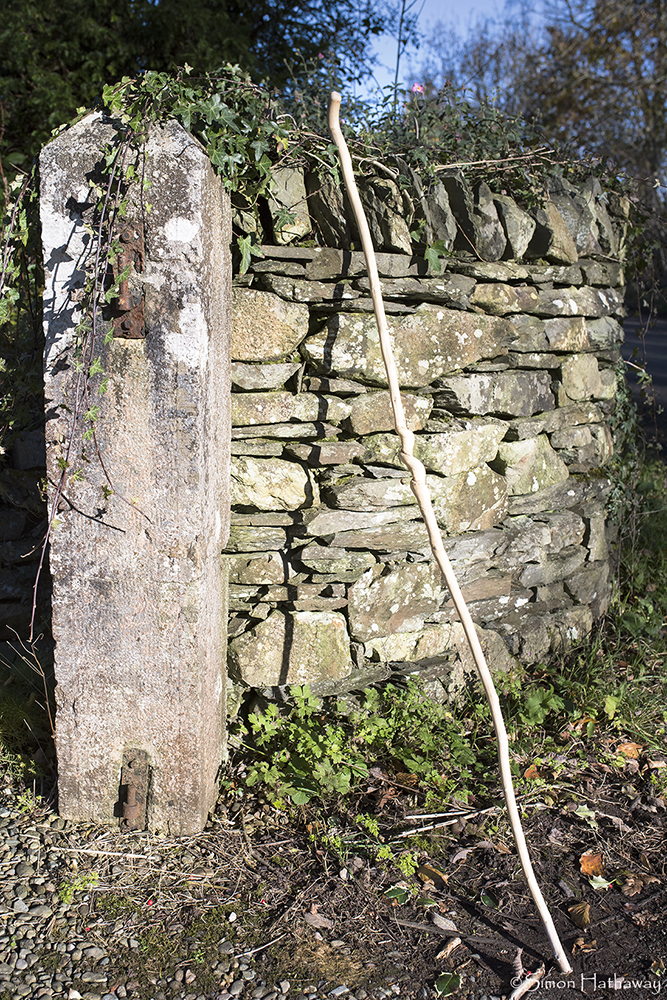
Master Basho’s staff

Master Basho’s staff

Master Basho said to his disciples, “If you have a staff, I will give one to you. If you have no staff, I will take it away from you!”

017_5721a_thumb


Student: “What did Master Basho mean?”
Master: “He showed off his staff.”
Student: “What is it like?”
Master: “A staff.”

Commentary:
A staff!
You can’t own it, nor can you give it away.

©Boo Ahm
All writing ©Boo Ahm. All images ©Simon Hathaway http://ow.ly/i/AcmeJ

Uncategorized

The Hsin Shin Ming: “1. The Great Way is not difficult. It is to have no preference.”

The Hsin Shin Ming: “1. The Great Way is not difficult. It is to have no preference.”

This first scripture that expresses the core of Buddhism and enlightenment is critical enough to be said to represent the whole contents of this book, the Hsin Shin Ming. An ancient master would say that the first scripture is the core of this book and the rest are details to rephrase this first scripture.

‘The Great Way’ means enlightenment or the true-Self. ‘The Great Way is not difficult’ means that enlightenment is not difficult to attain or that the true-Self is not difficult to see. This scripture means that enlightenment is not difficult to attain, because it is just to have no preference.

According to this scripture, having no preference is attaining enlightenment, that is, we can attain enlightenment or see the true-Self if we have no preference. How can we have no preference then? Is it possible to maintain our life without having preference?

What would you do, for example, if you are asked to respond without preference to the question ‘which do you like better, beer or urine?’? Would you say that either one is fine because making a choice of beer is having preference? Would you say that you would make no choice in order to have no preference? To stick to having no preference is not true ‘having no preference’ but another ‘having preference’, because you prefer ‘having no preference’ over ‘having preference’.
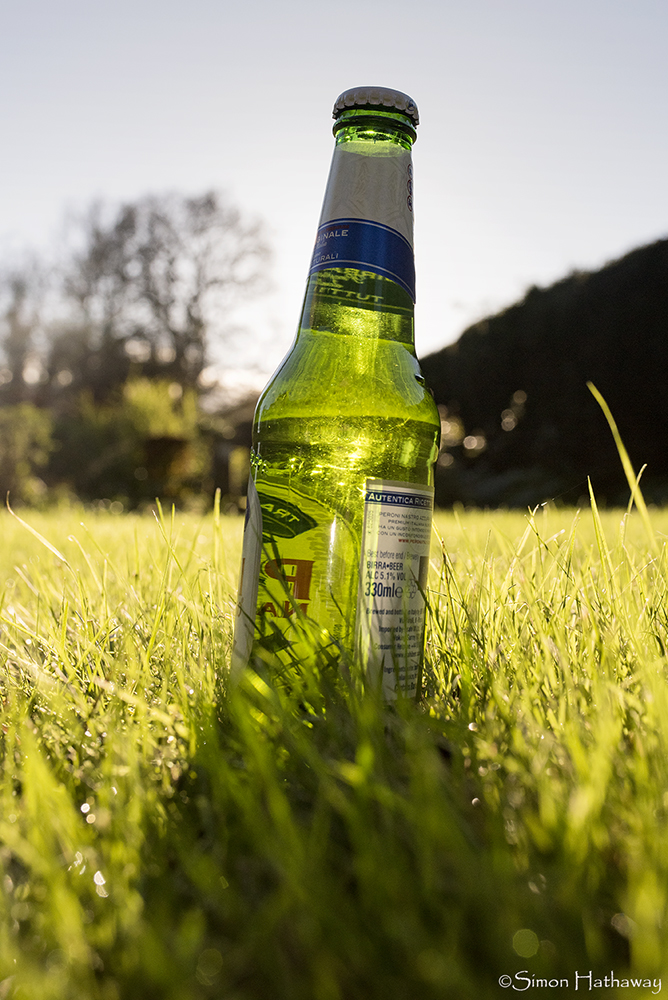
017_5710a_thumb


To have no preference, we, above all, should be able to see things as they are and realise that everything is empty in essence. When everything is empty, everything is equal and non-dual as emptiness, however different things may look. When realising the truth, we become aware that there is neither superiority nor inferiority because ‘big’ and ‘small’ and ‘good’ and ‘bad’ are all equal with each other when everything is empty. Furthermore, even preference and non-preference are not different from each other because they are also empty. Besides, when everything is empty, not only the object to prefer but the subject that prefers the object is also empty. Realising that everything including object and subject is non-dual as emptiness is attaining enlightenment, and seeing everything as empty is seeing the true-Self.

Once you have realised that everything is empty, having a great preference for one thing over the other never matters because you know that not only one thing and the other, but also our preference and the result of it are empty.

Therefore, having no preference in this scripture doesn’t mean having no preference at all in our reality but rather being free to have preference without being caught or deluded by illusions, through realising that everything is empty. Then, whatever preference you may have, you are not more worried than necessary about whether your preference is right or wrong, and have no frustration about your preference especially even if it leads to an unexpected result that falls short of your anticipation because you know that everything is empty and equal in essence.

Student: “How can I have no preference?”
Master: “You don’t have to try to have no preference once you realise that it is empty.”

©Boo Ahm
All writing ©Boo Ahm. All images ©Simon Hathaway http://ow.ly/i/A7so9

Uncategorized

Which of the two is real?

Which of the two is real?

Once, Zhuang Zhou dreamed he was a butterfly, a butterfly flitting and fluttering about, happy with himself and doing as he pleased. He didn’t know that he was Zhuang Zhou. Suddenly he woke up and there he was, solid and unmistakeably Zhuang Zhou. But he didn’t know if he was Zhuang Zhou who had dreamt he was a butterfly, or a butterfly dreaming that he was Zhuang Zhou. Between Zhuang Zhou and the butterfly there must be some distinction!

Student: “Which of the two is real?”
Master: “You are a father to your children, a child to your parents and a friend to your friends. You are a boss wearing a suit in your company but can be a student wearing a swimming suit to a swimming coach in a swimming pool. Which of them is the real ‘you’?

Which is real, you who were sleeping in your bed a few hours ago, or you who are listening to me now? During your sleep, you lived for a short period of time thinking of yourself as a butterfly, and you live now thinking of yourself as a human being. Which is your real life, and which is your false life? Can you say that the time you spent dreaming of being a butterfly, was not your life?

What matters is to know clearly who or what distinguishes a butterfly from a human being, reality from dream and you of today from you of yesterday. It is neither a butterfly nor Zhuang Zhou. A butterfly and Zhuang Zhou as a human being are all labels attached to him just as a father, a child, a friend and a boss are to you. All the labels, however nice or terrible they may be, are just imaginary and not real. Thinking that the labels are real is said to be dreaming, or being deluded by illusions.

What is left when all the labels are removed? It has no name but controls your body to do whatever it does, such as distinguishing a butterfly from a human being. You should know what it is because it is the essence of your being. It is eternal and never changes although some labels are removed from it, and some new ones are attached to it according to circumstances.”

©Boo Ahm
All writing ©Boo Ahm. All images ©Simon Hathaway http://ow.ly/i/A1AKE

Uncategorized

Q. Why did Tokusan burn his commentaries on the Sutras?

Q. Why did Tokusan burn his commentaries on the Sutras?

A. One-night Tokusan went to Ryutan to ask for his teaching. After Tokusan’s many questions, Ryutan said to Tokusan, “It is late. Why don’t you retire?” So Tokusan bowed, lifted the screen and was ready to go out, observing, “It is very dark outside.” Ryutan lit a candle and offered it to Tokusan. Just as Tokusan received it, Ryutan blew it out. At that moment the mind of Tokusan was opened. “What have you realised?” asked Ryutan to Tokusan, who replied, “From now on I will not doubt what all old masters said.”

The next day Ryutan ascended the rostrum and declared to the monks, “Among you there is one monk whose teeth are like the sword tree, his mouth is like the blood bowl. Strike him with a stick, he won’t turn his head to look at you. Some day he will climb the highest peaks and carry out my teaching there.”

On that day, in front of the lecture hall, Tokusan burned to ashes his commentaries on the Sutras and declared, “In comparison to this awareness, all the most profound teachings are like a single hair in vast space. However deep the complicated knowledge of the world, compared to this enlightenment it is like one drop of water in the ocean.” Then he left the monastery.

Student: “When Tokusan was asked what he had realised by Ryutan, he said to Ryutan, ‘From now on I will not doubt what all old masters said’. What did he mean by this?”
Master: “He showed his own Sutra to Ryutan.”
Student: “Tokusan said that he would not doubt what all old masters had said. Why did Tokusan burn his commentaries on the Sutras even though the commentaries were also what masters had said?”
Master: “He was showing what he had realised, after realising at long last what masters had said.”

Commentary:
Don’t blame Tokusan for having burnt his commentaries on the Sutras.
He was showing off his own Sutra which he had found after losing it for a long time.
Don’t think that the Sutras are what Buddha said.
He said that he had said nothing.

©Boo Ahm
All writing ©Boo Ahm. All images ©Simon Hathaway http://ow.ly/i/zYhCr

Uncategorized

Q. What is God like?

Q. What is God like?

A. Let’s take for example a few of the descriptions of God in the Bible; Genesis 1:27 So God created human beings, making them to be like himself. Numbers 14:21 God filled the world with his creation, and his presence and glory continue to inhabit the whole earth. Psalm 139 “Do not I fill heaven and earth?” the Lord declares. John 1:1 In the beginning the Word already existed; the Word was with God and the Word was God. Deuteronomy 30:14 The Word is very near you, in your mouth and in your heart, that you may do it.

As mentioned above by the Bible, He is always with us all the time. According to Genesis 1:27, God is like human beings, according to Numbers 14:21, His presence and glory continue to inhabit the whole earth, and Psalm 139 says that God fills heaven and earth. What is more, Deuteronomy 30:14 says that God is in your mouth and in your heart. These mean that there is nothing that is not God in the whole universe and that all movements of all things are just the actions of God. What you see and hear are all what God is and the way He is. How couldn’t you see it even for a moment? Even your reading this writing is also the action of God.

Student: “What is God like?”
Master: “You are already showing Him to me.”

©Boo Ahm
All writing ©Boo Ahm. All images ©Simon Hathaway http://ow.ly/i/zUB9N

Uncategorized

Q. What happens to our soul after we die?

Q. What happens to our soul after we die?

A. What will happen tomorrow, next week, next month and next year? There is no one who can answer this question because there is no one who has ever lived even tomorrow not to mention next year.

However, we always make plans not only for tomorrow but also even for decades to come. Why do we get ready for the future despite not knowing what it will be like or what will happen in the future? It is because we believe in cause and effect instinctively. Throughout all our life and history, we have seen, experienced and learned that everything we see and hear is the product of causation. In other words, we have realised that what we are is the effect of how we lived yesterday and how we live today is the cause of what we will be tomorrow.

017_5615a_thumb


There is no effect without cause and no cause without effect, and cause and effect has never stopped and will continue forever. This means that how we live today will determine what we will be like tomorrow. For example, we will feel hungry tomorrow morning if we skip dinner this evening, and if we don’t put aside enough money when we are young, we won’t be well off after retirement.

Then, likewise, we can be sure that how we live our present life is the cause of what will happen after death even though we really don’t know exactly what it will be like, because cause and effect is endless.

The purpose of Zen meditation is to help people to enjoy the law of causation instead of struggling against it by realising the essence of it.

Student: “What will you be after death, Sir?”
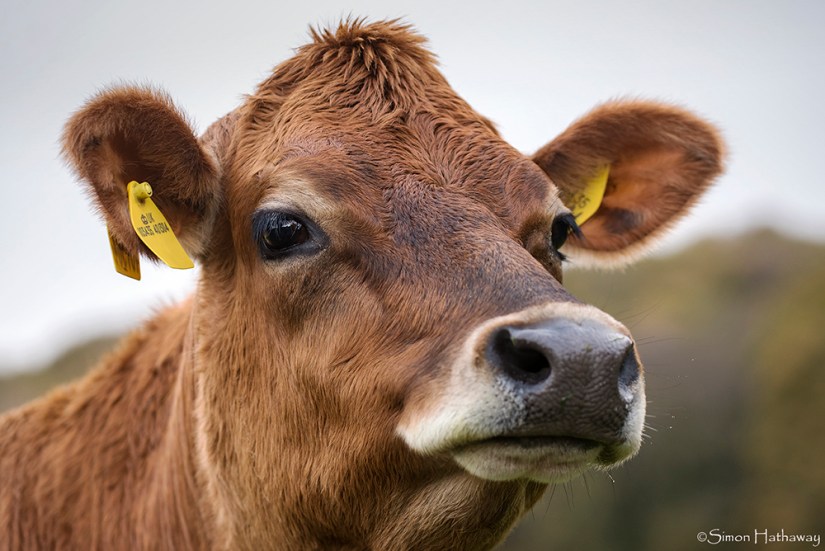
Master: “A cow.”
Student: “You are an enlightened master. Why do you think you will become a cow?”
Master: “Because there is nothing else.”

©Boo Ahm
All writing ©Boo Ahm. All images ©Simon Hathaway http://ow.ly/i/zQPWO

Uncategorized

Go and wash your bowl

Go and wash your bowl

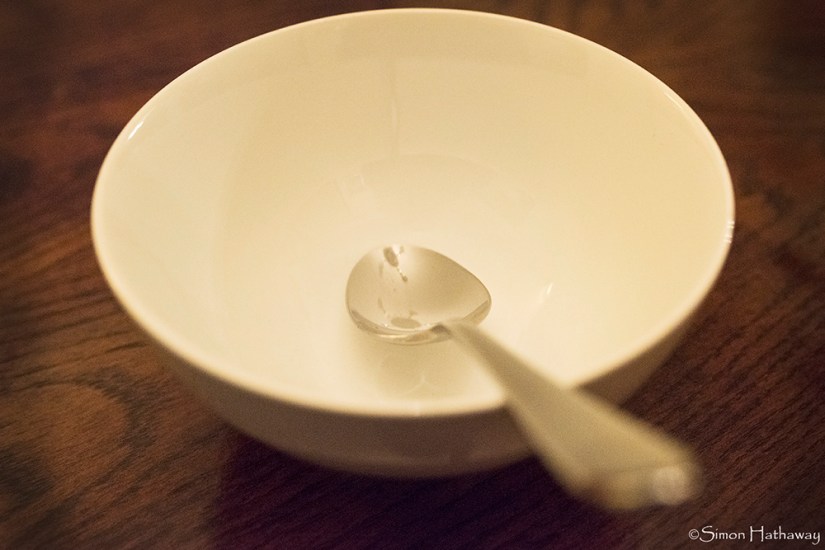
A monk told Joshu, “I have just entered this monastery. I beg you to teach me.” Joshu asked, “Have you eaten your rice porridge?” The monk replied, “I have.” “Then,” said Joshu, “Go and wash your bowl.”
At that moment the monk was enlightened.

Student: “What did Joshu mean by ‘Go and wash your bowl’?”
Master: “Ask me again.”
Student: “What did he mean by ‘Go and wash your bowl’?”
Master: “You are not aware of the answer because you are looking for the meaning.”

Commentary:
How many times have we been asked ‘Have you eaten lunch?’?
How many times have we been told ‘Go and wash your bowl’?
How many times have we asked the same question to the people around us?
How many times have we told the same thing to our children?
There is nothing else other than what you say and do.
There is nothing else other than what you see and hear.

©Boo Ahm
All writing ©Boo Ahm. All images ©Simon Hathaway http://ow.ly/i/zMAQf

Uncategorized

Q. How may we see things as they are when we can only ever see things as they appear to be?

Q. How may we see things as they are when we can only ever see things as they appear to be?

A. Don’t think that we see things as they appear to be, but know that we see things in our own way with our own angle of view. In other words, not that we see them as they appear to be, but that they appear to be as we see them.

A good example of our seeing things in our own way is that we have a lot of conflicting views about the same things in our life. We often dislike what others like and like what others don’t like. What is worse, once in a while our views are so conflicting as to cause real conflicts between individuals or nations. All of this happens not because things deceive us but because we deceive ourselves.

017_9687a_thumb


In order to see things as they are, you need to see yourself as you are prior to trying to see things as they are because you can see everything as it is only when you can see yourself as you are. Ask yourself what you are when your body is not you whenever you can.

©Boo Ahm
All writing ©Boo Ahm. All images ©Simon Hathaway http://ow.ly/i/zdgoi

Uncategorized

Q. In the Bible, John 1:14, it says that “The Word became flesh and made His dwelling among us. We have seen His glory, the glory of the one and only Son from the Father, full of grace and truth.” What does this mean?

Q. In the Bible, John 1:14, it says that “The Word became flesh and made His dwelling among us. We have seen His glory, the glory of the one and only Son from the Father, full of grace and truth.” What does this mean?

A. The ‘Word’ here means emptiness or oneness, and ‘Us’ means forms. The ‘Word’, the ‘Father’ and only ‘Son’ are different names of emptiness that refer to Buddha or the true Self. ‘The Word became flesh and made His dwelling among us’ means that Emptiness became form, that is, One became many. ‘We have seen his glory, the glory of the one and only Son from the Father, full of grace and truth’ means that all we have seen are forms from Emptiness, or Oneness.

017_5256a_thumb


Student: “If all forms are from the Word, where is the Word from?”
Master: “All forms.”

©Boo Ahm
All writing ©Boo Ahm. All images ©Simon Hathaway http://ow.ly/i/z9dvF