Uncategorized

Q. All words point to the true-Self, but which word is the absolute word that points to the true-Self?

Q. All words point to the true-Self, but which word is the absolute word that points to the true-Self?

A. When all words point to the true-Self, there is no word that doesn’t point to it. Every word is the absolute word that points to it. Even the dirty words people use in calling each other names while fighting or abusing others, are pointing to it. Each of the words you used to ask this question is also pointing to it. Every single word I am using to answer your question at this moment is pointing to it as well.

Furthermore, according to the Sutras, there is nothing that is not the true-Self, which means that not only all words but also all actions point to it. The truth is that all words and actions are the functions of the true-Self. So, the expression ‘All words reveal the true-Self’, I think, is more suitable than the expression ‘All words point to the true-Self’.

What matters most is whether we realise it or not. Once we have realised it, our lives themselves become the Sutras since all the words and actions used in our lives are dharma talks that point to it.

Student: “What is the absolute word that points to the true-Self?”
Master: “You already said it.”

©Boo Ahm

All writing ©Boo Ahm. All images ©Simon Hathaway

#zen #meditation #zenmeditation #enlightened #enlightenment #zenfools #photography

Uncategorized

Shoushan’s Stick

Shoushan’s Stick

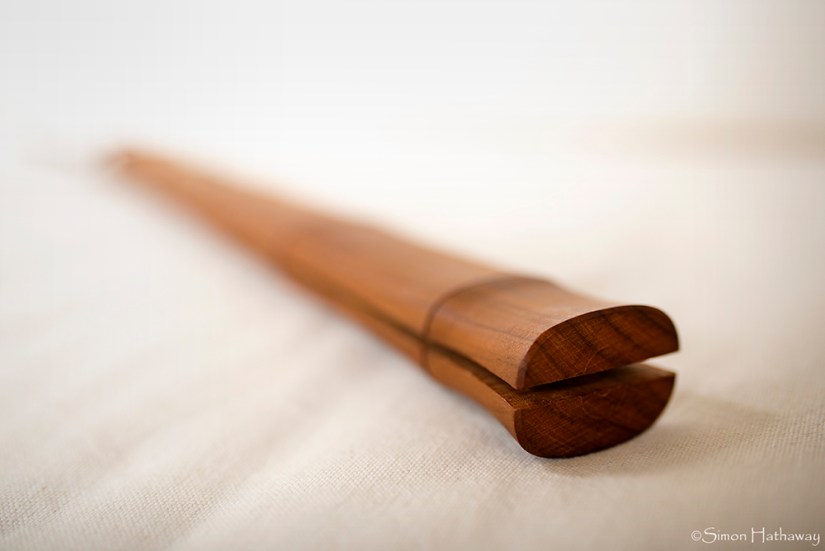
Shoushan Xingnian held up a bamboo stick and said to the assembly, “If you call it a stick, you defile it. If you don’t call it a stick, you miss it. What do you call it?”
Shexian Guixing, who heard him, had great realisation. He went close to Shoushan, snatched away the stick, and broke it in two. He threw the pieces down on the ground and said, “What is this?”

019_3326a_thumb


Student: “Why did Shexian Guixing break the stick and throw the pieces down on the ground?”
Master: “He showed what cannot be broken.”
Student: “What is that which can’t be broken?”
Master: “He broke the stick and threw the pieces down on the ground.”

Commentary:
It is in order to show what can’t be said that masters say.
It is in order to show what can’t be broken that masters break.

©Boo Ahm

All writing ©Boo Ahm. All images ©Simon Hathaway

#zen #meditation #zenmeditation #enlightened #enlightenment #zenfools #photography

Uncategorized

Rinzai 16

Rinzai 16

To all his monks, he continued, “If you wish to understand my phrase of guest and host, ask the head monks of the two halls,” and came down from the seat.

Commentary:
His comment ‘If you wish to understand my phrase of guest and host, ask the head monks of the two halls’ is known as one of the most difficult koans, which is highly liable to be misinterpreted as Rinzai encouraging his students to ask the head monks directly instead of realising that he was answering the question in person. This is an additional answer which he showed to his monks while thinking that they couldn’t grasp his first answer. This answer is like a sword whose blade is so sharp that it is invisible and we can’t even feel it cutting us. This implies that Rinzai’s answer is so subtle and tricky that we are very likely to be deluded into discriminating by it. The fact is that the master showed guest and host to all his student monks one more time.

_SRH3915a_thumb


Student: “Who is guest and who is host?”
Master: “Guest is host and host is guest.”

©Boo Ahm

All writing ©Boo Ahm. All images ©Simon Hathaway

#zen #meditation #zenmeditation #enlightened #enlightenment #zenfools #photography

Uncategorized

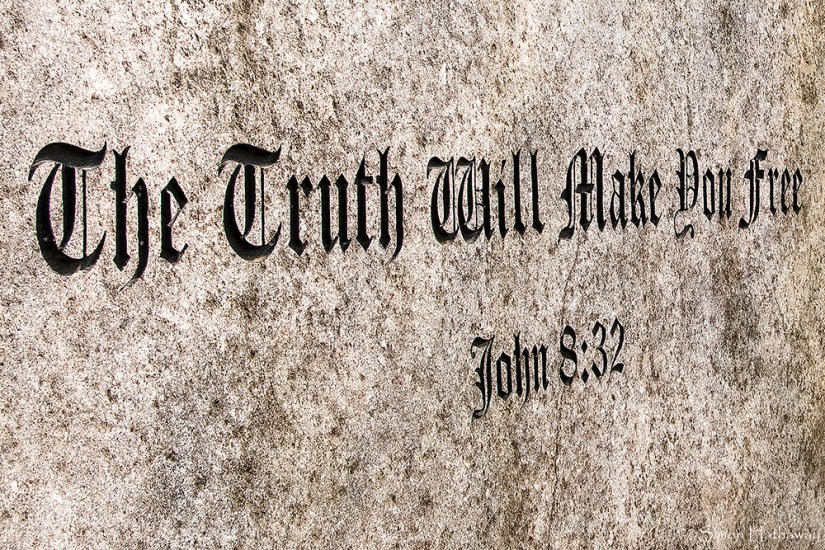
What does the Biblical phrase ‘The truth will set you free’ mean?

What does the Biblical phrase ‘The truth will set you free’ mean?

The truth is that everything is empty, that is, everything is one as Emptiness. What matters here is how we can be set free by the truth.

Saying, “The truth will set you free” is like saying “This food will save you from hunger”. This doesn’t mean that this food itself saves us from famine but means that only when we make the food one with us through a process of eating and digesting it can we be set free from hunger. Likewise, it is not the truth itself that makes us free. It is only after we make the truth one with us through the process of enlightenment that we can be set free.

Realising the truth that everything is empty means realising that all yokes binding us are empty. To realise that all yokes are empty is no other than to set us free from all yokes, including the yoke of life and death that binds us most firmly. However, if we, not realising the truth, only cling to the words, it will become yet another yoke that binds us.

The life free from all yokes is referred to as the Kingdom of Heaven in Christianity and the Pure Land, Buddha’s Land in Buddhism.

_SRH9222a_thumb


Student: “How shall I accept the truth mentioned in the Bible?”
Master: “It is not the truth until you’ve realised it, just as the best medicine is not medicine until you are cured after taking it.”

©Boo Ahm

All writing ©Boo Ahm. All images ©Simon Hathaway

#zen #meditation #zenmeditation #enlightened #enlightenment #zenfools #photography

Uncategorized

Guishan’s “You Have to Find Out for Yourself”

Guishan’s “You Have to Find Out for Yourself”

Guishan was once asked by Commander Lu in the monastics’ hall, “Among these advanced monastics, who are meal servers and who are meditators?”
Guishan said, “There are no meal servers and no meditators.”
Lu said, “Then what are they doing here?”
Guishan said, “Officer, you will have to find that out for yourself.”

Student: “What did they do if they neither served meals nor meditated?”
Master: “They did what you do now.”
Student: “I am asking you questions now. How could they do what I am doing now when they couldn’t ask you like this?”
Master: “You don’t know what they did because you don’t know what you are doing now.”

Commentary:
A drop of seawater is enough to know that seawater is salty.

©Boo Ahm

All writing ©Boo Ahm. All images ©Simon Hathaway

#zen #meditation #zenmeditation #enlightened #enlightenment #zenfools #photography

Uncategorized

Rinzai 15

Rinzai 15

The head monks of the two halls happened to meet. At the same time each gave a Katsu. That day, a monk asked the master, “Were guest and host clear?” The master replied, “Guest and host were clearly distinguished.”

Commentary:
When the monk asked if guest and host had been clear between the two head monks who had shouted a Katsu at each other at the same time, he, deluded by words ‘host and guest’, wanted to want to know who was enlightened and who was not, or who asked and who answered. However, when the master replied, “Guest and host were clearly distinguished”, he meant that forms and Emptiness were clearly distinguished. His answer indicated that he could see the situation in both ways clearly as forms and as Emptiness and that he revealed guest and host in person at the same time. When hearing or reading this, we should be able to distinguish host and guest clearly. What matters here is whether we can grasp what is beyond what meets our eyes and ears when we see and hear.

Student: “Which is guest, and which is host when one shouts a Katsu earlier than the other?”
Master: “Guest and host always arrive together.”

©Boo Ahm

All writing ©Boo Ahm. All images ©Simon Hathaway

#zen #meditation #zenmeditation #enlightened #enlightenment #zenfools #photography

Uncategorized

Q. Should I go to temple in order to become Buddhist?

Q. Should I go to temple in order to become a Buddhist?

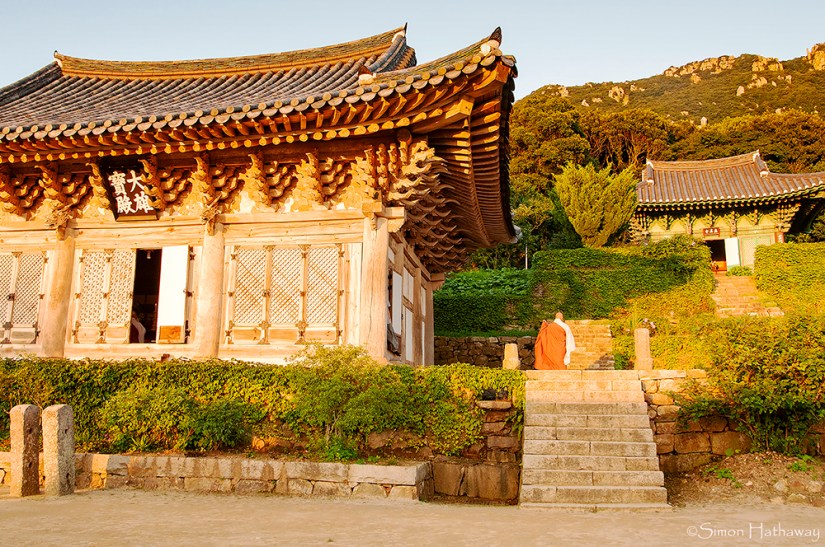
A. Anyone who tries to attain enlightenment through Buddha’s teaching is Buddhist regardless of whether he goes to temple or not. Those who go to temple for any purpose other than enlightenment, the core of Buddhism, can’t be said to be a Buddhist, however often they may go to temple. It is not whether you go to temple or not, but whether you try to get enlightened through Buddha’s teaching that determines whether you are Buddhist or not.

If you try to attain enlightenment through Buddha’s teaching, where you are staying now is on other than a temple. If a temple doesn’t deliver Buddha’s teaching, it is not a temple anymore, no matter how many monks and no matter how big a congregation it may have. Buddhists make a place into a temple for the sake of convenience. A place never makes people Buddhist.

©Boo Ahm

All writing ©Boo Ahm. All images ©Simon Hathaway

#zen #meditation #zenmeditation #enlightened #enlightenment #zenfools #photography

Uncategorized

Dongshan’s “Going Beyond Buddha”

Dongshan’s “Going Beyond Buddha”

Zen master Dongshan Liangjie of Mount Dong said to the assembly, “Experience going beyond Buddha and say a word.”
A monastic asked him, “What is saying a word?”
Dongshan said, “When you say a word, you don’t hear it.”
The monastic said, “Do you hear it?”
Dongshan said, “When I am not speaking, I hear it.”

019_3343a_thumb

Student: “Why don’t we hear it when we say a word?”
Master: “Because it is beyond words.”
Student: “Can you hear it now?”
Master: “I couldn’t answer your question if I heard it now?”

Commentary:
When you are lost in just the wrapping, you lose the sight of its contents.

©Boo Ahm

All writing ©Boo Ahm. All images ©Simon Hathaway

#zen #meditation #zenmeditation #enlightened #enlightenment #zenfools #photography

Uncategorized

Rinzai 14

Rinzai 14

Again, a monk asked, “What is the essence of Buddhism?”
The master gave a Katsu.
The monk bowed.
The master said, “Tell me, was it a good Katsu or not?” The monk said: “The petty thief had a whacking defeat!” The master said, “Where then was the fault?”
The monk said, “It is not permitted to do it a second time.” The master gave a Katsu.

Commentary:
This is a beautiful dialogue, which is highly difficult to understand. When the monk asked, “What is the essence of Buddhism?”, Master Rinzai answered his question by giving a Katsu. The monk responded to the Katsu, the master’s answer by offering a bow. Rinzai, in order to see if the monk really knew what the Katsu implied, asked him another question, ‘Was it a good Katsu or not?’. This was a question luring the monk into falling a pit of discrimination. However, the monk was wise enough to see through what Rinzai meant, so he responded to Rinzai’s question not only politely but also wonderfully by saying, “The petty thief had a whacking defeat!”.
In the Zen community an enlightened man is referred to as a thief since he got the whole universe for nothing without being noticed. The monk lowered himself by calling himself a petty thief and admitting his defeat. However, this seemingly humble answer, you should know, implies a lot more than seen superficially. By calling himself a thief, the monk said that he was enlightened. And admitting his defeat doesn’t mean that he couldn’t grasp Rinzai’s intention, but means, “I know that even opening my mouth is the wrong to answer your question. So, I know that answering you like this is also my fault.”
Then, Master Rinzai, for the sake of reconfirmation, posed another question as sharp as a razor blade ‘Where was the fault?’, which means, “What was your fault if you admit your defeat?” However, the monk returned, ‘It is not permitted to do it a second time’ very courteously without embarrassment. This was an answer that was no less sharp than Rinzai’s question, which means, “I’ve already committed an error by opening my mouth to reveal the true-Self for courtesy’s sake, whilst aware that it was not right. If I made the same error again, I would disgrace you as well as myself.” Hearing this, Rinzai approved of the monk’s answer.

When you read this, you should put yourself in the monk’s shoes and ask yourself how you would answer if you were asked the same question.

Student: “What would you have said if you had been asked, ‘Was it a good Katsu or not?’?”
Master: “I would have said, ‘Are you good or not?’.”

©Boo Ahm

All writing ©Boo Ahm. All images ©Simon Hathaway

#zen #meditation #zenmeditation #enlightened #enlightenment #zenfools #photography

Uncategorized

Q. What does ‘being captured by patriarchs’ words’ mean?

Q. What does ‘being captured by patriarchs’ words’ mean?

A. This means to interpret patriarchs’ words just literally without grasping what is beyond the words. In this sense, it can be said that we are captured by the Bible and the Sutras as well as patriarchs’ words. This is often compared to looking at the finger instead of looking at the moon which the finger is pointing to. This is actually the main reason why few people attain enlightenment even though so many people read or study the Sutras and the Bible. That is why Buddha on his deathbed said, “Not a word have I said” for fear that people should be captured by his words, and why ancient masters would say, “You should look upon Buddha’s and patriarchs’ words as your enemy.”

Student: “If we should look upon Buddha’s and patriarchs’ words as our enemy, why should we read their books, or listen to masters’ dharma talks?”
Master: “Oh! How poor! You are captured by my words.”

©Boo Ahm

All writing ©Boo Ahm. All images ©Simon Hathaway

#zen #meditation #zenmeditation #enlightened #enlightenment #zenfools #photography