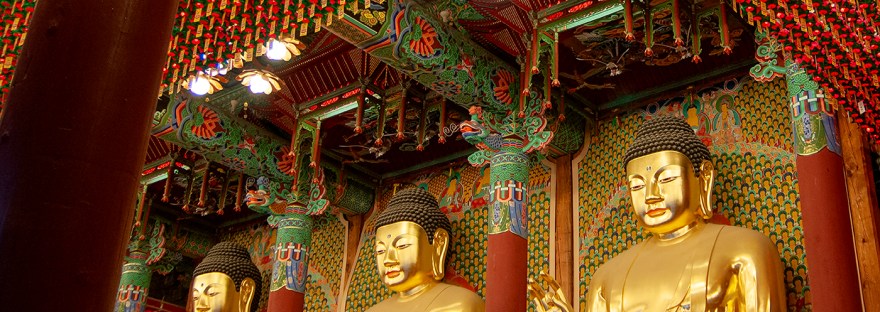
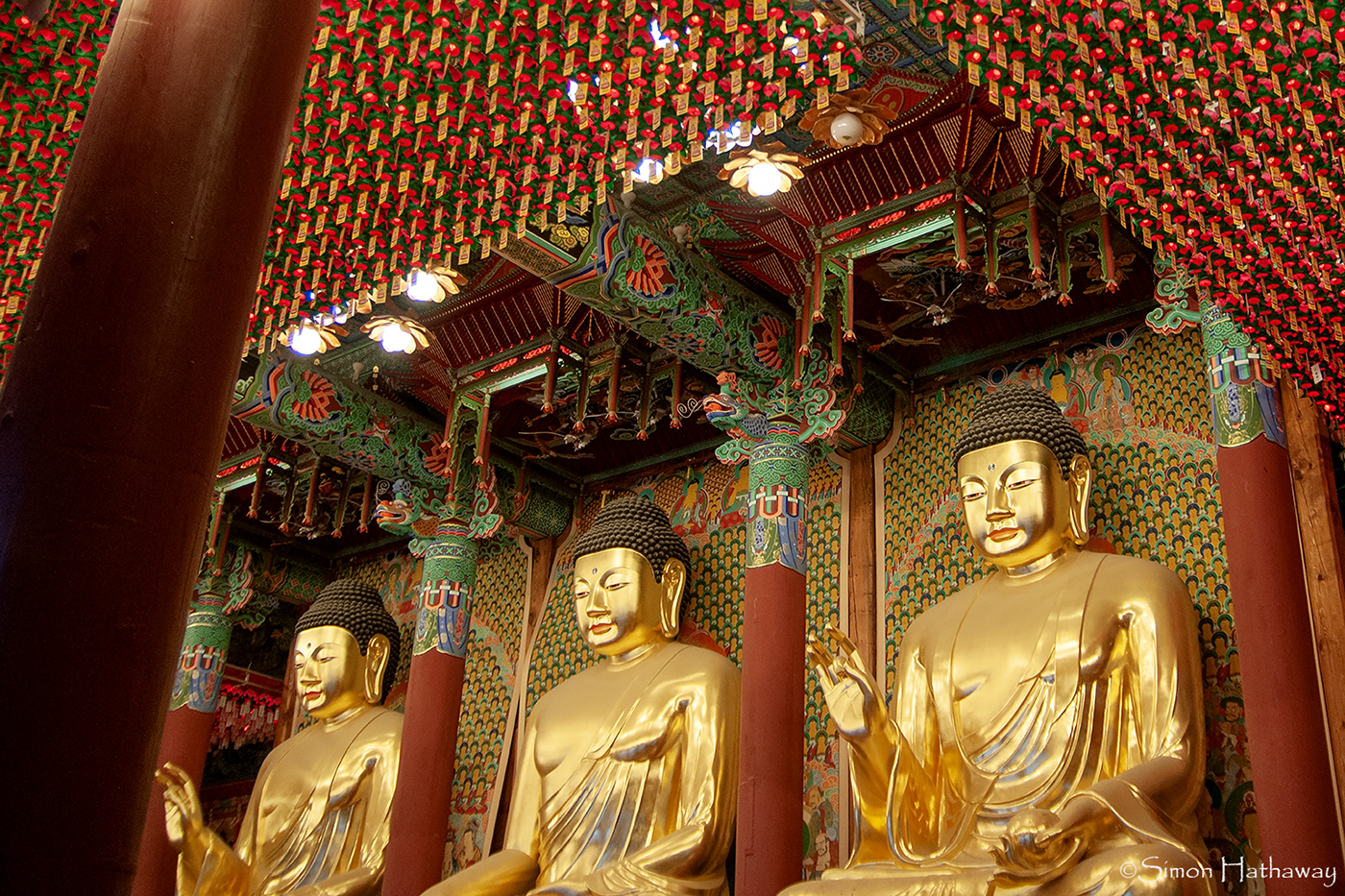
The three Buddhas implies the body-Buddha, the form-Buddha and the function-Buddha.
They are not separate from one another but one. According to the Buddha’s teaching that everything is the Buddha and that there is nothing that is not the Buddha, you are also the Buddha that consists of the three Buddhas.
The form-Buddha implies your physical body, and the function-Buddha implies all the functions of your physical body; move, hear, see, speak and so on. The body-Buddha means the whole universe that the former two Buddhas belong to and exist and function based on. The former two Buddhas can neither exist nor function at all without the body-Buddha. In other words, the former two Buddhas are to the body-Buddha as a rolling wave is to the ocean. The purpose of Buddhism, Zen practice is to realise the body-Buddha.
Zen master Huangbo asked his teacher, Baizhang, “How can we explain the teaching that has been handed down?” Baizhang remained seated in silence. Huangbo said, “If so, what will people in the future receive?”
Baizhang said, “They will say that you are a true person.” He then returned to the abbot’s room.
Student: “What did Baizhang mean by ‘They will say that you are a true person’?”
Master: “He showed what people want to receive.”
Commentary:
To receive nothing is to be foolish, and to receive even a tiny thing is calamity.
“They (Bodhisattvas) should raise the mind without dwelling on anything.”
Commentary:
This phrase is the core of the Diamond Sutra. Not dwelling means not choosing, not being deceived by words and forms, and seeing things as they truly are. It means living your life without being trapped by appearances.
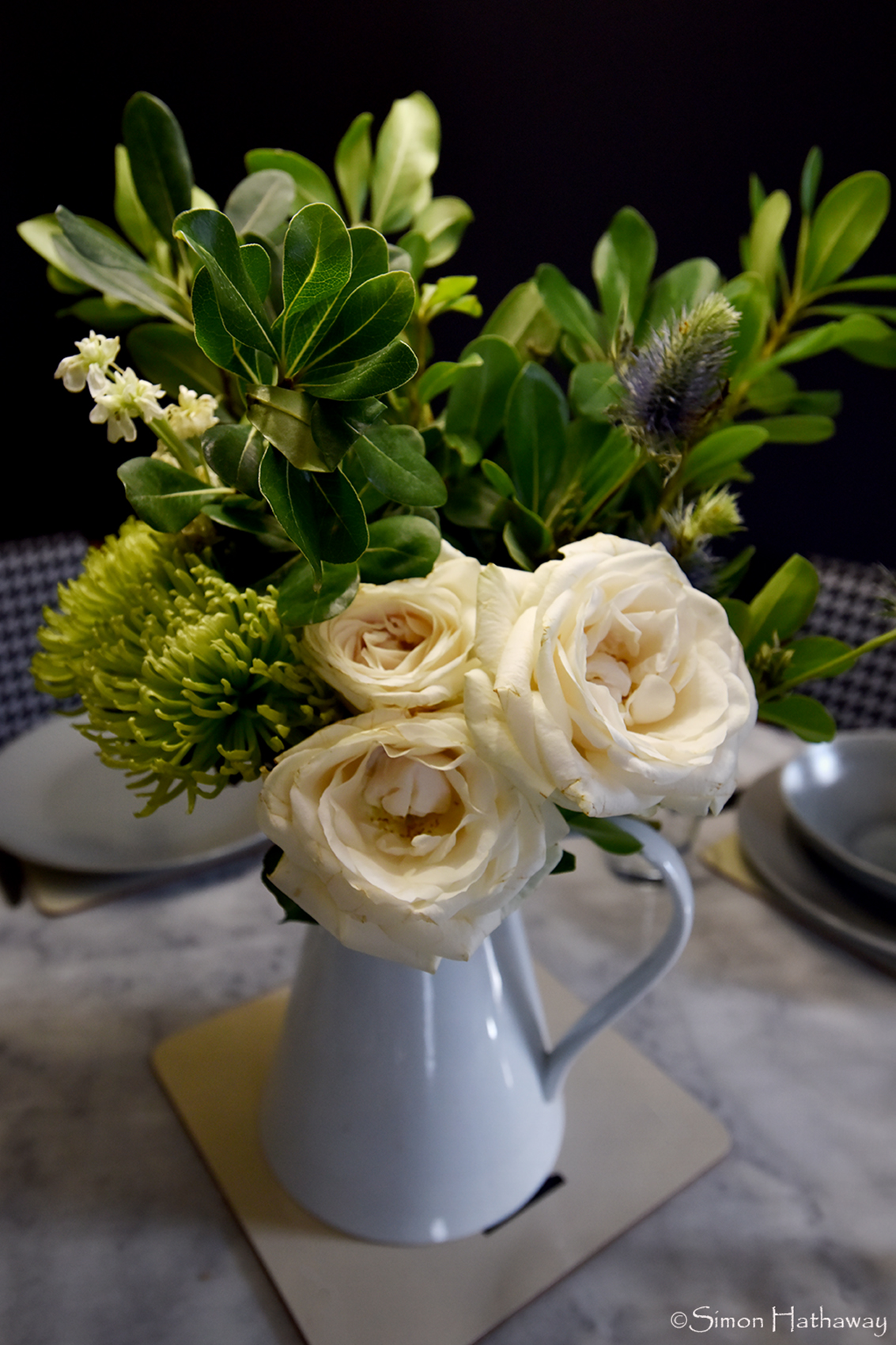
For instance, a rose is called a rose not because it claims to be one, but because we assume so and give it that name. The identity of everything in this world is assigned by human thought. Mt. Everest is high only because we think of it as Mt. Everest and perceive it as high. Everything exists because of our thoughts and imagination. If everything exists through our imagination, then just as our dream is our imagination while sleeping, our waking reality is also our imagination, the function of our mind. This is why Buddha said, “If you see all things as a dream, you will see the true-Self.”
To ‘Have a mind without dwelling on anything’ in the Diamond Sutra is expressed as ‘To see nothing is true seeing; thus one can see all things. But if there is a seeing, this is not seeing at all,’ in The Avatamsaka Sutra. This means when you look at a rose, you should not see it as a fixed reality, but as an illusion created by your mind—a part of the infinite true-Self, just as a wave is part of the ocean. Ancient masters said, “Though the eyes are full, nothing should be seen.”
The Avatamsaka Sutra has another expression:
If you know all things are not real,
you are not deluded by them.
If you know the illusory is originally the truth,
you will see the Buddha.
This means seeing that form is Emptiness. When you see that form is the function of emptiness, you are seeing the Buddha in form. Then, everything you see and hear becomes the Buddha. In short, ‘Dwell on nothing’ means to live freely, no longer bound by imaginary ropes like ropes made of turtle hair.
Disciple: “How can I give rise to the mind without dwelling on anything?”
Master: “Do not dwell.”
Disciple: “How is it when one does not dwell?”
Master: “Stone Woman gives birth to a baby.”
Disciple: “Why do you say such nonsensical things?”
Master: “Because you are dwelling on my words.”
Dwelling and not dwelling
Are both forms of dwelling.
Only when you discard both ends
Will you reach your home.
Koan:
A monk asked Master Jun-ji, “Who is a great practitioner?”
The Master replied, “One who wears a pillory around the neck and is shackled in handcuffs.”
The monk then asked, “Who is a person that creates great karma?”
The Master replied, “One who practises Zen and enters meditative Samadhi.”
Question 1: What is the meaning of wearing a pillory and handcuffs?
Question 2: Why is practising Zen and entering Samadhi called ‘creating great karma’?
Most people think that they know what their minds are. However, the truth is that they don’t, and that is the cause of all suffering they undergo. All things and events that our lives consist of are just images created by the mind and are not real, that is, they are just the functions of the mind.
When we are aware of this fact, we can enjoy our lives just as if we were watching a movie. This is why ancient masters would say that we should not be fooled by the play of the mind by clarifying the mind, which means realising what the mind is.
Zen master Huangbo asked his teacher, Baizhang, “How can we explain the teaching that has been handed down?” Baizhang remained seated in silence. Huangbo said, “If so, what will people in the future receive?”
Baizhang said, “They will say that you are a true person.” He then returned to the abbot’s room.
Student: “Why did Baizhang remain seated in silence?”
Master: “He demonstrated how to explain in person.”
“For this reason, Subhuti, all Bodhisattvas should have a mind that is pure and clear like this, and should not have a mind that dwells on forms; they should not have a mind that dwells on sound, scent, flavour and touch, or Dharma.”
Commentary:
A pure mind is not one that thinks only of holy, good, or clean things. Rather, it is a mind that is not deceived by words or forms, seeing everything as it truly is. It is a non-dwelling mind and a non-choosing mind. A Bodhisattva is not separate from the Buddha; a Bodhisattva is the very function of the Buddha. We are all essentially Bodhisattvas, but because we cling to forms, we are deluded by illusions and call ourselves sentient beings. To be a Bodhisattva, one must give rise to this pure mind.
To give rise to a pure mind means to see form, sound, smell, taste, touch, and mental objects as empty. It means seeing and hearing everything as the function of Buddha-nature. As the Avatamsaka Sutra says, “Sentient beings cannot see the Buddha because they do not see reality as it is; they are shaken by appearances,” we wander looking for the Pure Land while standing right in the middle of it.
The Sutra also says, “If one sees the Buddha and has no attachment in the heart, this person knows the Buddha and can see the true-Self.” For one with a pure mind, all discrimination falls away. They know there is no Buddha outside of themselves. Even if they see a physical Buddha, they regard it as a mental image and do not cling to it; only then do they see the true, formless Buddha.
There is a saying: A pure practitioner does not enter Nirvana. This is because a pure practitioner sees that they are not two with Nirvana. They are already Nirvana itself, so there is no other Nirvana to enter.
Monk: “How can I enter Nirvana?”
Master: “Go to a place where not a single blade of grass grows.”
Monk: “How do I get there?”
Master: “If you move even a single step, you are already in a field of grass.”
A pure mind knows that
Sight, sound, smell, taste, touch, and thought
Are all the functions of Buddha-nature.
If the mind is pure,
One will surely see the Tathagata within the form.
Koan:
The famous poet Bai Juyi asked Master Jogwa, “What is the great meaning of the Buddhadharma?”
The Master replied, “Commit no evil; do all that is good.”
Bai Juyi scoffed, “Even a three-year-old child could say that!”
Master Jogwa replied, “A three-year-old child may be able to say it, but even an eighty-year-old man finds it difficult to practise.”
Question 1: Why did the Master mean by such a simple answer?
Question 2: What is the meaning of the second reply?
North, south, east and west are essential notions in our lives to such an extent that we cannot do without them. However, how did they come into existence? Did the universe divide itself and declare the four directions? In fact, the universe itself is the universe not because it thinks that it is the universe but because we named it as such.
All things we know have their names, and by the names we can distinguish them from each other. But none of them produced their own names on their own independently. All the names were created by our imagination, which is the way a thing comes into existence. In other words, all the world is the fruit of imagination.
When Sukdu visited Master Hangsa, Hangsa asked him, “Where are you from?” Sukdu said, “I am from Jogae.” Hangsa, raising a cup, said, “Is there a thing like this in Jogae?” Sukdu answered, “Not only does it not exist in Jogae, but it doesn’t exist in India.” Hangsa said, “Have you been to India?” Sukdu responded, “If I had been there, it would exist.” Hangsa said, “That is not yet it. Speak again.” Sukdu said, “You must not leave it all to me. You, too, should say half a word.” Hangsa said, “I don’t mind speaking to you, but I fear that in the future there will be no one who understands.”
Student: “What did Hangsa mean by ‘I don’t mind speaking to you, but I fear that in the future there will be no one who understands’?”
Master: “Do you understand what Hangsa said?”
Student: “He refused to say because he feared that there would be no one who understood in the future.”
Master: “I can understand why he refused to say when I see you.”
Commentary:
Don’t turn a deaf ear to the ceaseless dharma talk that the Buddha delivers.
“Subhuti, what do you think? Do Bodhisattvas adorn the Buddha-land?” “No, World Honoured One, because adorning the Buddha-land is not adornment, but it is just called adornment.”
Commentary:
We often think of the Buddha Land (Pure Land) as a place where Buddha resides, separate from the Buddha himself or from this mundane world. However, the Buddha-Land is simply another name for Emptiness, the true-Self, or Oneness. As the Heart Sutra says, it is neither stained nor pure, neither increasing nor decreasing. It is a state of perfection that remains untainted by defilements and cannot be made any purer by nirvana. It requires no further adornment because it is already complete. Just as everything is Buddha, every place is the Buddha-Land; there is no place that is not.
In the Vimalakirti Sutra, when Sariputra wondered why the land seemed impure, Buddha said, “Sariputra, it is the fault of sentient beings that they cannot see the majestic purity of the Buddha land; it is not the fault of the Buddha. My land is pure, but you simply do not see it.” We are living in the Buddha Land right now, but we are deceived by forms and words, mistaking it for a world of suffering, birth, old age, sickness, and death. To view this perfect, untouchable land as dirty is what it means to defile the Buddha Land. This is why, when a monk asked how to adorn the Buddha Land, his master replied, “Don’t think of adorning it; just don’t defile it.”
True adornment means seeing things as they truly are. It is realising that illusions and enlightenment are not two, and that Buddha and sentient beings are not two. This very world we live in is the Buddha Land. If you can see things clearly, wherever you are is the Pure Land. If you are deceived by appearances, the Pure Land appears as a world of defilement. Thus, adorning the Buddha-Land is not actually adorning it; it is merely called adornment. The true adornment of the Buddha-Land is realising that your own home and workplace are the Pure Land itself.
Disciple: “How do I adorn the Buddha Land?”
Master: “Do not even lift a finger.”
Disciple: “Why?”
Master: “To adorn it is to defile it.”
Disciple: “Then just how pure and perfect is it?”
Master: “The words ‘pure’ and ‘perfect’ are themselves stains upon it.”
Forget about adorning the Buddha-Land.
If you were to clean your own house,
Where would you begin?
To the one who knows the answer to this,
I shall permit the adornment of the Buddha-Land.
Koan:
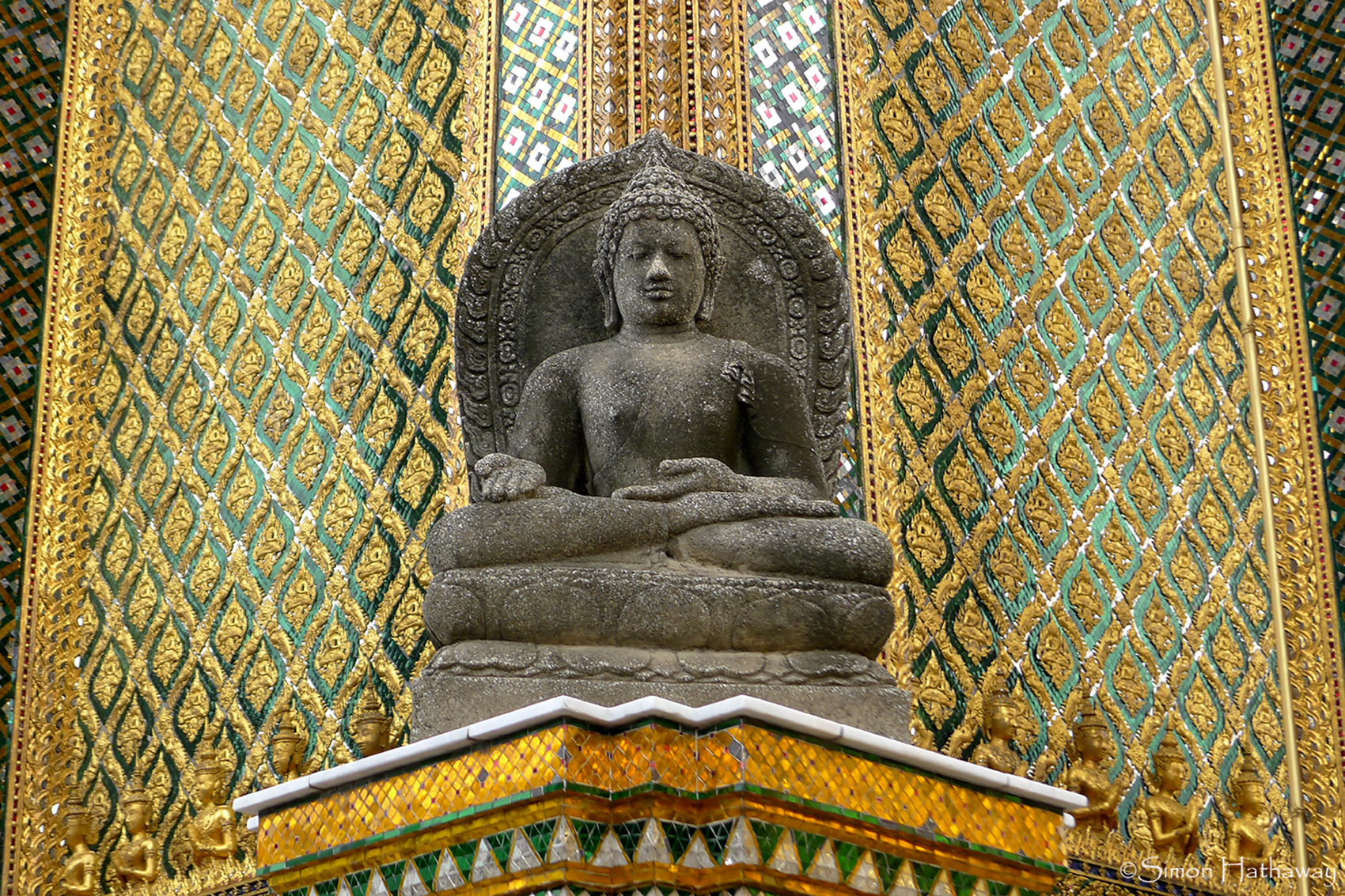
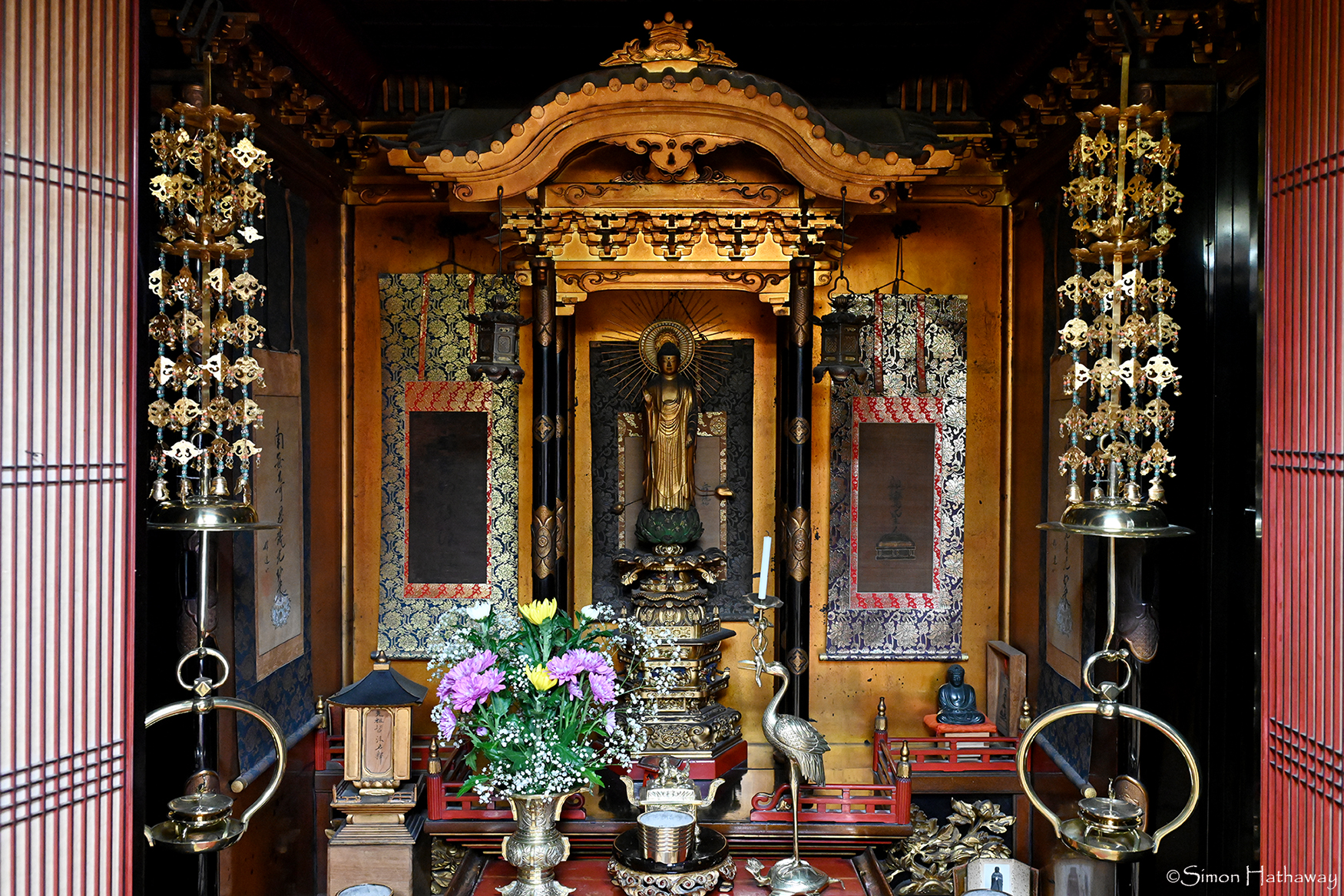
Master Joshu preached to the assembly: A gold Buddha cannot pass through a furnace; a wooden Buddha cannot pass through fire; a mud Buddha cannot pass through water. The True Buddha sits within the house.
Question: What is the “True Buddha” sitting inside the house?
That is the characteristic of a dream. During your dream everything is as vivid as reality, so you don’t realise that you are dreaming. This is why we are troubled with nightmares.
Who would have such a hard time if we knew that nightmares are just dreams? Only when you awaken from dreaming can you realise that you were dreaming and that your dream was not as vivid as reality.





 Zen Fools