A. It means that getting literal and intellectual understanding about the true-Self is easy, but that seeing and realising it directly in person through the physical body is difficult.
This is a critical teaching that we should not mistake intellectual understanding for enlightenment.
No matter how plausible and logical intellectual understanding may be, it is no better than being deluded by illusions unless we can see the true-Self.
Ancient masters would say that this is like serving a thief as one’s father.
They also warned that we should not lose true ease by getting what is easy. They meant that we shouldn’t make the mistake of losing true ease, enlightenment by striving for intellectual understanding which is easy to get.
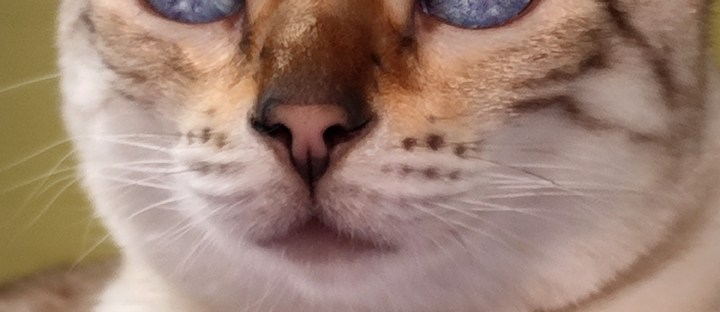
One day seeing his students quarrelling about the ownership of a cat, Namjun, holding the cat in one hand and a sword in the other, said, “If you can say, I’ll leave this cat alive, but I’ll cut it if you can’t say.” No one said, and he cut the cat into two. When he told the story to Joshu later, Joshu took off one of his shoes, put it on his head and went out of the room. Seeing it, Namjun said, “If you had been there, the cat could have been saved.”
Student: “Why did Joshu put a shoe on his head?”
Master: “To show the cat.”
Student: “What is it like?”
Master: “Its head is the same as its tail.”
Commentary:
Although the cat is running around the temple, no one can see it.
“Subhuti, do not say that the Realised One entertains this thought: ‘There are dharma talks that I preached.’ Do not entertain this thought. Why? If anybody says the Realised One preached any dharma talks, he is slandering the Buddha, because he cannot understand what I say.
Commentary:
The true-Self is the state that is perfectly free from discrimination, which never admits of even a single word. This is why the Buddha said in the Lotus Sutra, “The true-Self is impossible to show and explain because it is beyond forms, languages and words, and so sentient beings cannot recognise it. Only Bodhisattvas with firm faith can appreciate it.”
This means that although he used a lot of words by the act of speaking in regard to the true-Self, which people think of as dharma talks, he didn’t mean to explain it with words but meant to reveal its function through the act of speaking the words.
Therefore, if someone, deluded by the words, says that the Buddha delivered Dharma talks, it is because he doesn’t understand what the Buddha preached. Such an act is speaking ill of the Buddha.
Student: “If there are no dharma talks preached by the Buddha, what are all the Sutras known in the world?”
Master: “The Sutra is another name of the Buddha.”
No matter how many Buddhas you have seen and served, you have seen and served only the illusions of them unless you’ve realised that you are the Buddha.
One day seeing his students quarrelling about the ownership of a cat, Namjun, holding the cat in one hand and a sword in the other, said, “If you can say, I’ll leave this cat alive, but I’ll cut it if you can’t say.” No one said, and he cut the cat into two. When he told the story to Joshu later, Joshu took off one of his shoes, put it on his head and went out of the room. Seeing it, Namjun said, “If you had been then, the cat could have been saved.”
Student: “Why did Joshu put a shoe on his head?”
Master: “In order to revive the cat.”
Student: “How is it possible to revive a dead cat?”
Master: “Why do you kill it again?”
Commentary:
Although one kills a cat, and the other revives it, it is originally neither alive nor dead.
“Subhuti, what do you think—can the Buddha be seen by his perfect physical body?” “No, World Honoured One. The Realised One is not to be seen by his perfect physical body. Why? The perfect physical body mentioned by the Realised One is not a perfect physical body, but it is called a perfect physical body.”
Commentary:
The Buddha means Emptiness that is formless, boundless, nameless and changeless. In other words, the Buddha is eternity itself and perfection itself.
This is why he cannot be seen by his physical body that has birth and death, a certain form, and changes.
The reason why Buddha mentioned the perfect physical body is not to describe His physical body but to reveal the true-Self through the act of saying ‘perfect physical body’. This is why Subhuti said, “The perfect physical body mentioned by the Realised One is not a perfect physical body, but it is just called a perfect physical body.” So, if we, deluded by His words, try to see the Buddha by his perfect physical body, we cannot see Him.
However, we cannot avoid seeing him even at this moment if we are not deluded by words.
Student: “If the Buddha can’t be seen by his physical body, how can we see Him?”
A. The purpose of all other religions as well as Buddhism, I think, is to make people free from challenges, or obstacles.
The Buddhist way to be free from them is not to appeal to a certain almighty being for removing them, or taking us away us from them. From the Buddhist perspective, challenges and obstacles don’t exist on their own initiative but are illusions that are the products resulting from our failure to see things as they are. So, Buddhism is a religion that enables people to be free from being deluded by challenges and obstacles through teaching them to see everything as it is.
One day seeing his students quarrelling about the ownership of a cat, Namjun, holding the cat in one hand and a sword in the other, said, “If you can say, I’ll leave this cat alive, but I’ll cut it if you can’t say.” No one said, and he cut the cat into two. When he told the story to Joshu later, Joshu took off one of his shoes, put it on his head and went out of the room. Seeing it, Namjun said, “If you had been then, the cat could have been saved.”
Student: “Why was Namjun so cruel as to cut a living cat when he ought to have had compassion as a Buddhist?”
Master: “Because you mistake medicine for poison.”
Commentary:
Those who are punished for the sin they didn’t commit are sentient beings.
“Subhuti, what do you think—if someone were to fill the universe with seven kinds of precious stone to use for giving in charity, would this person gain many blessings because of this?” “Yes, World Honoured One. This person would gain very many blessings because of this.” “Subhuti, if blessings had substance, the Realised One would not say that many blessings are gained. Because blessings are non-existent, therefore the Realised One says many blessings are gained.”
Commentary:
The key point here is what the blessings that the Buddha meant are. Blessings that sentient beings think have substance and are existent have forms and beginning and end. They are just illusions like a rabbit-horn.
However, the true blessing the Buddha meant is to realise that we are one with the true-Self, the Buddha. The true-Self has no substance and is neither existent nor non-existent, and it is formless and boundless. It means that it is perfect, limitless and eternal.
Even if someone were to fill the universe with seven kinds of precious stone to use for giving in charity, he can’t gain as much blessing as the Buddha meant if he can’t see all the precious stone he offers as the true-Self. Only when he can feel one, as the true-Self, with what he offers can he enjoy the limitless and eternal blessing that the Buddha meant. This is why the Buddha says that many blessings are gained.
Being able to see the true-Self at this moment in each word spoken by the Buddha is truly to gain blessing.
Student: “If blessings are non-existent, how can we gain them?”
Master: “They are spread before your eyes and even in your hands.”















 Zen Fools