Zen

The Diamond Sutra (5)

When mealtime came one day, the Buddha put on his robe, picked up his rice bowl, and went to the city of Sravasti to beg for alms. As he begged, he visited each home within the city in turn.

Commentary:

The story of the Buddha’s going to beg for alms is as common and ordinary as that of sentient beings going shopping and preparing meals. This implies that the Buddha’s teaching is not in somewhere very special but in the common and ordinary actions of our everyday life.

In part 29 of this Sutra the Buddha said to his disciples, “Subhuti, if anyone says the true-Self comes or goes, sits or reclines, this person does not understand the principle I expound. Why? The true-Self neither comes from anywhere nor goes anywhere; that is why it is called the true-Self.” This means that we should be able to discern the true-Self that doesn’t either come, or go, or sit in the common and ordinary behaviours of the Buddha. There is a dialogue between the Buddha and Ananda, one of his disciples that shows how we should interpret these scriptures.

When it was close to the time for begging for alms one day, the Buddha said to Ananda, “When you go begging for alms, you should follow the manner of the Past Seven Buddhas.” Ananda said, “What is the manner of the Past Seven Buddhas?” The Buddha said, “Ananda!” Ananda responded, “Yes, Master.” The Buddha said, “Go begging.”

Through this short conversation, the Buddha not only tried to show the true-Self to Ananda but also told him not to stop trying to recognise the true-Self even during the begging of alms.

In fact, we should be able to recognise the true-Self not merely in the Buddha’s behaviours but also in ours and our neighbours’ since everything and everyone has the same true-Self. That is no other than seeing and hearing thus, that is, to see and hear everything as it is. Trying to see and hear things in this way is practice.

Q: “What did the Buddha mean by ‘go begging’?”

A: “When a rich one tells his child to go begging, his intention is not in begging.”

Q: “What is his intention?”

A: “To teach his child how to manage the wealth he is going to leave him.”

Q: “What is the wealth?”

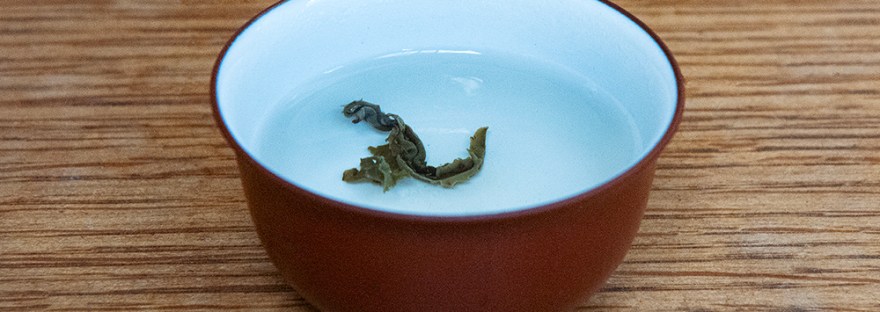
A: “Bring me a cup of tea.”

©Boo Ahm

All writing ©Boo Ahm. All images ©Simon Hathaway

Zen

Q. Can Zen meditation be beneficial in our lives only after we attain enlightenment, the final goal?

A. Absolutely not. Although the aim of Zen meditation is enlightenment, it doesn’t mean that it is not beneficial to our lives until we attain enlightenment.

Zen meditation would be meaningless to most people if it did nothing to enhance the happiness of our lives until we attain enlightenment.

Steady and correct practice will lead you to new experience you have never had and enable you to see and hear what you couldn’t see and hear before. The riper your practice becomes the more beautiful your surroundings will appear to be, along with which you will find your life more stable and happier.

©Boo Ahm

All writing ©Boo Ahm. All images ©Simon Hathaway

Zen

Buban’s Escape from Forms and Sounds (2)

When a monk asked Master Buban, “How can I escape from forms and sounds?” Buban said to his students, “If you understand this monk’s question, you can escape from forms and sounds easily.”

Student: “How should I understand the monk’s question?

Master: “Escape from his question.”

Commentary:

There can be no words when there are no forms and no sounds.

©Boo Ahm

All writing ©Boo Ahm. All images ©Simon Hathaway
Zen

The Diamond Sutra (4)

Thus did I hear. One time, the Buddha was staying in Jeta Grove in Sravasti, residing with 1,250 great monks. 

Commentary:

As mentioned previously, ‘hear thus’ means hearing things as they are. Let me give you a little more detailed explanation regarding ‘seeing and hearing things as they are’.

Let’s suppose I, handing you a cup of something, say to you, “You drink it as it is.” How should you drink it in order to perform my words exactly?

Of course, you should drink it without adding anything like sugar or salt, or subtracting anything from it. In the same way, when I tell you to see and hear things as they are, I mean that you should see and hear them without attaching any words, imaginary labels, including names, that describe them and define their identities, to them, because they are not innate, not intrinsic but artificial, extrinsic. A flower, for example, was not a flower until we called it a flower. It has never said, “I am a flower. Call me flower.” It has never mentioned its colour and its size, but we attached imaginary labels such as flower, red, yellow, pink, large, small and so on as we pleased.

When you hear thus, that is, when you see and hear everything as it is without being deluded by forms and words, there is no distinction whatsoever among things and all things become nameless one. This is referred to as Oneness, the true-Self, or Emptiness. In this state there is nothing but Oneness, the true-Self, and everything that reaches your eyes and ears is no more than the function of the true-Self. Then, you can feel the true-Self from each word in reading the sentence ‘One time, the Buddha was staying in Jeta Grove in Sravasti, residing with 1,250 great monks’. This is to see the Buddha face to face instead of merely reading the story of the historical Buddha. This is to read the Sutra truly instead of merely picking up black beans on white paper.

Don’t forsake the Buddha before you by following the Buddha in Jeta Grove in Sravasti 2,500 years ago.

Q: “What is the Buddha before me?”

A: “Answering is degrading myself as well as you.”

©Boo Ahm

All writing ©Boo Ahm. All images ©Simon Hathaway

Zen

Q. Are Emptiness and form two sides like those of a coin?

A. It is true that Emptiness and form are compared to two sides of a coin. But it doesn’t mean that it has two sides that look different from each other like the front and the back of a coin. Two sides here means rather those of your perspective. Whether a thing is Emptiness or form doesn’t depend on its own decision but on your perspective. The purpose of Buddhism is to help people who are addicted to seeing things only in one way to see them in both ways at the same time.

Student: “What happens when we see things in both ways?”

Master: “Eternity is seen in a moment.”

©Boo Ahm

All writing ©Boo Ahm. All images ©Simon Hathaway

Zen

Baofu’s ‘The Buddha’s Expression’ (2)

Changqing once said, “I would rather say that arhats have three types of poison than say that the Buddha has two kinds of expression.  It is not that the Buddha has no expression. It is just that he does not have two kinds of expression.”

Baofu asked, “What is the Buddha’s expression?”

Changqing asked, “How can a deaf person hear it?”

Baofu said, “I knew you were speaking on a secondary level.”

Changqing said, “Then what is the Buddha’s expression?”

Baofu said, “Have a cup of tea.”

Student: “Why are there so many various kinds of expressions by the Buddha in the Sutras?”

Master: “Because you read and hear the expressions that were not spoken by the Buddha.”

Student: “What is the Buddha’s expression?”

Master: “What have you heard so far?”

Commentary:

Anyone can say the Buddha’s expression, but no one can write it down.

©Boo Ahm

All writing ©Boo Ahm. All images ©Simon Hathaway
Zen

The Diamond Sutra (3)

Thus did I hear. One time, the Buddha was staying in Jeta Grove in Sravasti, residing with 1,250 great monks.

Commentary:

‘Hear’ here means to hear things as they are, or to hear things as empty. Put simply, this is to hear things without attaching any words to them, which is referred to as hearing without hearing, or hearing without being deluded by words. Hearing in this way is hearing the Buddha. When you can hear everything in this way, you can hear the Buddha anywhere, anytime and can’t stop hearing the Buddha even for a second. Then, you, it is said, have reached the Pure Land. Once you have reached there, you cannot escape from it.

Q: “How is it when we hear thus?”

A: “I can’t avoid answering your question?”

Q: “Why can’t you avoid answering my question?”

A: “Because no one can deceive you.”

©Boo Ahm

All writing ©Boo Ahm. All images ©Simon Hathaway

Zen

Q. For my whole life, I have been searching for my ‘true destiny’ and trying hard to find what I’m meant to do in this life. How can I find out what this is?

A. I wonder how you have been searching for what you are trying so hard to find. To know the destiny of someone or something, it is a prerequisite to know the essence of him or it, I think. I’d like to invite you to start with a search for the essence of your being.

At the moment you seem to be looking for the destiny of what you don’t know. How could you expect to realise your destiny while not knowing what you are? When you realise the essence of your being, the answer to your question will show itself clearly to you.

©Boo Ahm

All writing ©Boo Ahm. All images ©Simon Hathaway

Zen

A master stripped himself naked (2)

Once a master delivered a dharma talk at a special Buddhist service where his mother was present. On the high seat the master stripped himself of his clothes, becoming completely naked. All the attendees, including his mother, were embarrassed and left the place in a hurry. Then, the master said to his mother who was leaving, “When I was young, you hugged and kissed me all the time. Why are you avoiding me now even though I am still the same son that you loved?”

Student: “Why did the master take off all his clothes?”

Master: “Because they were blind.”

Student: “What did they fail to see?”

Master: “It is still as vivid as it was.”

Commentary:

What is it that have you seen which has never changed in the least?

©Boo Ahm

All writing ©Boo Ahm. All images ©Simon Hathaway

Zen

The Diamond Sutra (2)

Thus did I hear. One time, the Buddha was staying in Jeta Grove in Sravasti, residing with 1,250 great monks.

Commentary:

‘I’ is a very critical word in Buddhism because when one can see one’s ‘I’ as it is, one can see everything as it is since one can see everything only through oneself. This is why seeing one’s ‘I’ as it is, or realising one’s ‘I’ means enlightenment.

Then, what is your ‘I’? What do you mean by ‘I’ when you say, “I want to be happy”?

Let’s suppose that you say, “My car is five years old.” ‘My car’ here doesn’t mean that you are identical to your car, or you are your car but that you own a car, or a car belongs to you. In other words, it means that you are not your car. In the same way, if you say, “My body is older than yours”, you mean that you are not your body by ‘my body’.

Then, what are you if your body is not you?

In fact, this question originated from the historical Buddha’s words ‘One who tries to see me through my voice and shape cannot see me’ in part 26 of this Sutra.

What is the boundary of your being when your body is not you? It is limitless or boundless. What is it like when it is limitless and boundless? It is formless and includes all without any exceptions. What is it like when it is boundless and formless and includes all? Firstly, there is nothing but it, or there is nothing that is not your being, which the words ‘In the whole universe only I exist’ that are said to have been spoken by the historical Buddha on his birth symbolise. Secondly, it has no beginning and no end.

When it has no beginning and no end, it has neither birth nor death. This is not only what the essence of our beings known as the true-Self, the Buddha, Emptiness, or Oneness is like but also the way it is.

Q: “What does ‘I’ mean here?”

A: “It means ‘non-I’ because ‘I’ implies that there is nothing but ‘I’, which means that ‘I’ is actually not ‘I’, since there is nothing to distinguish from ‘I’.”

Q: “What is the true-Self?”

A: “You are already wrong when you ask me.”

Q: “Why?”

A: “Because you break the true-Self by dividing it into two; you and I.”

©Boo Ahm

All writing ©Boo Ahm. All images ©Simon Hathaway