A. That is the problem all sentient beings are faced with. If all things seem to be empty to you, that means that you have attained enlightenment. It is just like you don’t know that your nightmare is empty until you wake up from it.
If we could see all our dreams as empty, our nightmares wouldn’t be nightmares any more. We are sentient beings because we can’t see things as empty, just as our nightmares are nightmares because we can’t recognise them as just dreams.
One day Master Namjun said, “Manjusri Bodhisattva and Samantabhadra Bodhisattva arrived at the temple around midnight last night, but I struck each of them twenty times and drove them out of the monastery.”
Student: “Why did the master drive the two Bodhisattvas out of the temple?”
Master: “To show the true-Self.”
Student: “To whom did he show it?”
Master: “Why didn’t you see it?”
Commentary:
What can be driven out of temple is not the true-Self. You should see what the master couldn’t drive out of the temple.
Part 6 -5 For this reason, I, the Realised One always say you should know that my Dharma teaching is like a raft. Even the Dharma should be discarded, not to mention the non-Dharma.
Commentary: Up to now, the Buddha has taught us not to dwell on anything—that is, not to dwell on any names (words) or forms (images), but to see and hear things as they truly are. When it is said that everything is empty, there are no exceptions: the Buddha’s body is empty, too. When it is said not to dwell on anything, there are no exceptions: we must not dwell even on the Buddha, or on the Buddha’s words. Yet sentient beings, instead of seeing the core truth that the Buddha wishes to reveal through his teachings, treat the teachings themselves like precious treasures and cling to them. The Buddha, seeing this, declares that even his own teachings are merely expedient means to reveal the true-Self and are empty, like a hare’s horn—so we must never dwell even on his own words.
To see his teachings as a raft does not mean to ignore them entirely. It means to hear not only them but also all other things not as the words of the human Sakyamuni, but as the voice of true-Self. In other words, regard every single word, every single line, as a gate into the Pure Land, as the function of the true-Self. In reality, when we read the Sutras, every syllable is the Pure Land itself; every sound is the sound of the Pure Land.
The very moment we see or hear in this way, we cross the river and arrive in the Pure Land—we attain enlightenment. At that moment, the raft is no longer a raft, the Diamond Sutra is no longer the Diamond Sutra, and the countless other Sutras are no longer the Sutras; we realise they are all emptiness (the true-Self) itself.
Just as medicine is no longer medicine once a patient is fully healed and restored to health, so the raft is no longer a raft to one who has crossed the ocean—one who is enlightened. At that point, everything seen with the eyes and heard with the ears becomes the Sutra; every sound that comes out of one’s own mouth becomes the Dharma talk and a four-line verse (Gatha).
This is why Master Deoksan, who devoted his entire life to the Diamond Sutra and was universally recognised as its greatest authority, after awakening declared: “Even the most profound and subtle discourses are like raising a single hair in vast space; even possessing all the most important things in the world is like dropping a single drop of water into the great ocean.” He then burned the commentary on the Diamond Sutra that he had cherished and carried with him all the time.
Disciple: “If we must discard the Buddha’s teachings like a raft, then what is the Buddha’s teaching?” Master: “The Buddha’s teaching is crossing the river; the raft is merely the expedient means to cross it.” Disciple: “How can I use the raft to cross the river?” Master: “If you place even one foot on it, it will sink.” Disciple: “Must I discard the raft even before crossing the river?” Master: “If you can leap from the raft in the middle of the river, you are a great hero.”
Raft, ferry, passenger ship— Choose whichever you like and board it, Cross swiftly. Even a leaf can carry you across— Why cling only to the raft?
A. Although you say that rummaging through the grass is futile, you cannot attain enlightenment without the things that you call grass, because they are actually the very true-Self. You mistake them for grass because you don’t see them as they are.
You should know that the grass is no other than the true-Self you are looking for. There is a saying that seeking to attain one by discarding the other is struggling with illusions. Try to see what you think of as grass just as it is, without being swayed by its image and name.
A monk asked Master Joshu, “It is said that the perfect enlightenment is not difficult, and one should simply cease choosing. What does it mean to cease to choose?” Joshu replied, “In the heaven and on earth, I alone am the honoured one.” The monk said, “That, too, is still choosing.” Joshu responded, “You foolish monk! Where is the choosing in that?”
Student: “Why did Joshu say, ‘You foolish monk! Where is the choosing in that?’?”
Master: “A guilty conscience needs no accuser.”
Commentary:
Everything is the true-Self to the Buddha, and everything is an illusion to a sentient being.
“Why? If all these sentient beings’ minds grasped at forms, they would be attached to the image of self, the image of person, the image of sentient being, and the image of soul. Why? It is because even grasping at an image of Dharma would be to be attached to the image of self, the image of person, the image of sentient being, and the image of soul, not to mention that grasping at an image of non-Dharma would be to be attached to the image of self, the image of person, the image of sentient being, and the image of soul. Therefore, you should not grasp at not only the Dharma, but also non-Dharma.
Commentary:
To grasp at images with the mind means failing to see things as they truly are and being deceived by forms and names (words). In the Heart Sutra, this is referred to as “deluded dreams,” and in the Faith in Mind (Xin Xin Ming), it is described as “discriminating” or “picking and choosing.”
As the saying goes, “When a single speck of dust arises, the entire universe arises with it.” Whether it is a good or bad image, when one image arises, all images arise simultaneously. Here, the images of self, person, sentient beings, lifespan, and Dharma are mentioned, but the teaching is that no matter what image arises, countless images arise with it. Thus, we are instructed not to grasp at any image. We should not be deceived even by the image of the Buddha. The Buddha said that those who try to see the Buddha through sound or form—that is, through images—are practising a false path (Dharma) and cannot see the Buddha. In the Avatamsaka Sutra, it is written: “If one sees the Buddha without grasping at any image, that person truly knows the Buddha and can see the true-Self.” Only by not being deceived by the physical form of the Buddha can we see the eternal, true Buddha, which is our own essence. This is why ancient great masters would say, “If you meet the Buddha, kill the Buddha.”
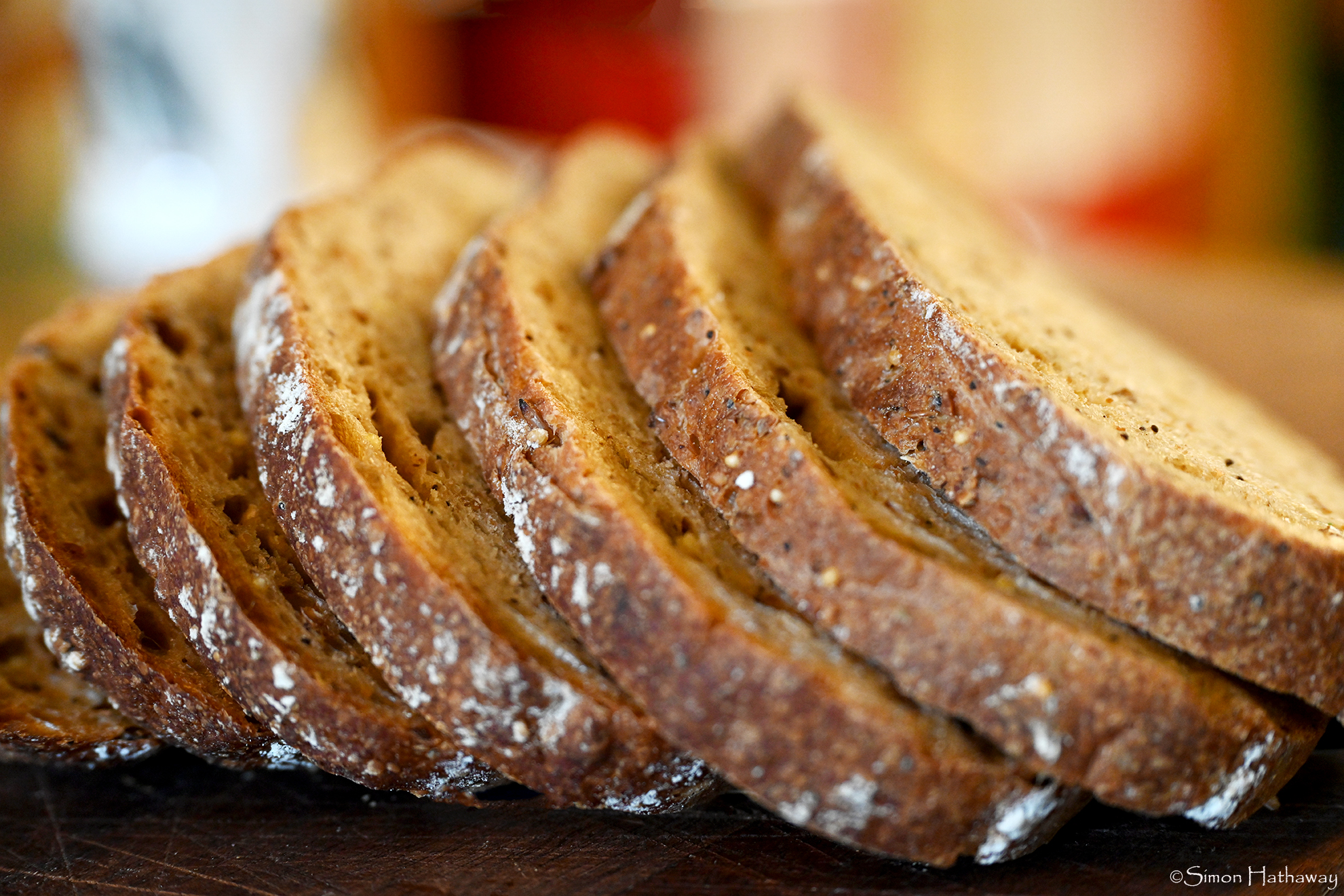
When we do not grasp at images—that is, when we see and hear all things as they truly are, without being deceived by forms or names—everything becomes the Buddha, and there is nothing that is not the Buddha. When we grasp at images while seeing and hearing, everything becomes Mara and illusion. But when we see things as they truly are, everything is enlightenment and the Buddha. Illusion and enlightenment, Mara and the Buddha, are not separate entities but one and the same. To abandon illusions in pursuit of enlightenment is like discarding flour to make bread. Thus, it is said that “illusion is the mother of enlightenment” and “illusion itself is enlightenment.”
When we see everything as it truly is, there is nothing, including ourselves, that is not the Buddha. Wherever I go, the Buddha follows me. But if I am deceived by images and chase after the Buddha, I am not following the Buddha but chasing after an illusion. The Buddha is non-duality, that is, He is everywhere, and there is no place without the Buddha present. To say that the Buddha in one temple is more efficacious than the Buddha in another is to say that there are multiple Buddhas who differ from one another. To say that one should go to a temple to see the Buddha is to suggest that the Buddha is only in the temple and not at home. This implies that the Buddha is not one but many. It follows after this that there is a distinction between places where the Buddha is and is not. Such thinking is not the Buddha’s teaching but being swayed by images, acting in opposition to the Buddha’s teachings while claiming to be His disciple, and in reality, chasing after delusion.
Just as when one image arises, all images arise simultaneously, if we hear or see even a single thing as empty, all things are seen as empty. When great masters say, “This staff transforms into a dragon and swallows the entire universe,” they mean that if this staff is seen as empty, the entire universe is seen as empty.
This text, too, should be read without grasping at the image of a ‘sutra’. Only then can you see the Buddha in every single word.
Disciple: “How should I receive the master’s words without grasping images?”
Master: “The problem is that I am not saying a word, yet you take my saying as words.”
Do not be deceived by the teaching to abandon images,
And do not strive to cast aside images.
To abandon images in pursuit of the true-Self Is like discarding flour to seek bread.
A. Don’t try to tame your mind. Instead, try to see what your mind is. The reason why you feel your mind is restless is that you don’t know what your mind is.
You always have a hard time trying in vain to tame your mind because you are struggling to tame what you don’t know. The state of enlightenment you are keen to reach is no other than seeing the mind.
A monk asked Master Joshu, “It is said that the perfect enlightenment is not difficult, and one should simply cease choosing. What does it mean to cease to choose?” Joshu replied, “In the heaven and on earth, I alone am the honoured one.” The monk said, “That, too, is still choosing.” Joshu responded, “You foolish monk! Where is the choosing in that?”
Student: “Why did Joshu say, ‘In the heaven and on earth, I alone am the honoured one’ when he was asked to explain about ceasing to choose?”
Master: “Because you failed to cease to choose.”
Commentary:
You can’t know whether Joshu ceased to choose or not until you can cease to choose.
Part 6-3 “Why? All these sentient beings have no more image of self, image of person, image of sentient being, or image of soul. They have no image of Dharma, and no image of non-Dharma, either.”
Commentary: The absence of the image of self, the image of a person, the image of sentient beings, the notion of a lifespan, the image of Dharma, and even the image of non-Dharma is the true nature of the Buddha’s formless reality. From the Buddha’s perspective, all sentient beings are fundamentally not different from the Buddha himself. As stated in the Avatamsaka Sutra, “I now observe all sentient beings and see that they all possess the wisdom and virtuous qualities of the true-Self (the Buddha), but due to deluded thoughts and attachments, they fail to realise it,” although we are all inherently Buddhas, we remain unaware of this truth because of the three poisons: ignorance, greed, and anger.
To briefly explain the three poisons, typically referred to as greed, anger, and ignorance, but reordered here as ignorance, greed, and anger:
Ignorance refers to the inability to see things as they truly are, i.e., as empty. The Buddha taught that everything, including his own physical body, is a creation of our imagination and should be seen as a dream. However, ignorance leads us to perceive things as real, which is the root of all suffering. The opposite of ignorance is wisdom, which means seeing things as they truly are.
Greed arises as a consequence of failing to see things as empty and dreamlike. Mistaking phenomena as real leads to desiring to possess, or draw near to what appears beautiful, or valuable and to push away what seems undesirable, or unpleasant. The opposite of greed is discipline (precept), and upholding discipline means skilfully controlling and managing such desires.
Anger arises when the things we desire to possess, or avoid, do not align with our wishes, resulting in frustration, pain, and unhappiness. The opposite of anger is stillness (samadhi), which leads to a state of calm or nirvana.
Thus, the three poisons—ignorance, greed, and anger—are countered by the three trainings (learning): wisdom, discipline (precept), and stillness (samadhi). Transforming the three poisons into the three trainings (learning) is the purpose of Buddhist practice, leading to enlightenment.
As mentioned, all problems ultimately stem from the inability to see things as they truly are. The images of self, person, sentient beings, lifespan, and Dharma are all illusions that arise from failing to see reality clearly. Though we are inherently Buddhas endowed with immeasurable virtues, we remain sentient beings because we are trapped in these illusions.
Disciple: “How can I uphold discipline well?”
Master: “When there is no image of self, there is no ‘I’ to uphold discipline, and when there is no image of Dharma, there is no discipline to uphold. This is the true way to uphold discipline.”
The images of self, person, sentient beings, lifespan, and dharma— Do not say they are absent. For there can’t be even the word ‘absent’ for what is truly absent.
A. Don’t try in vain to enter the state free from thought. You are already there. The state free from thought in Buddhism doesn’t mean the state in which there arises no thought, no matter what you may see and hear, but the state in which you are not deluded by the thoughts coming to you when you see and hear things, through the realisation that everything, including your thoughts, is not real but empty, or illusionary.
The state of enjoying your thoughts without being deluded by them is referred to as the state free from thought.


 Zen Fools