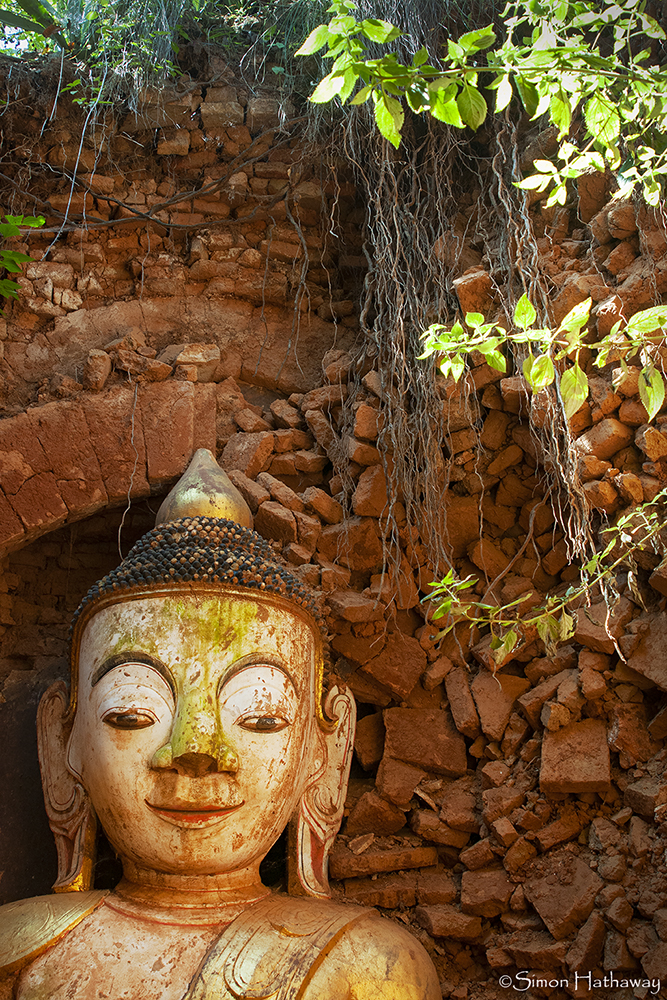
Joshu said, “A clay Buddha cannot cross water because it collapses. A steel Buddha cannot cross a forge because it melts down. A wooden Buddha cannot cross fire because it burns. What is the true Buddha?”
Student: “What is the true Buddha?”
Master: “Joshu showed it.”
Commentary:
The Buddha never moves, but there is nowhere that He doesn’t reach.
Rinzai asked Takuho, “Hitherto, one used the stick, another the Katsu. Which one is nearer the truth?” Rakuho said, “Neither is near.” Rinzai said, “What is it to be near?” Rakuho gave a Katsu. Rinzai hit him.
Commentary:
Rinzai’s question is ‘if one used the stick to reveal the true-Self and another the Katsu, which revealed the true-Self better?’ Actually, he asked, “Can you see the true-Self that I am revealing now, without being deluded by words?” Rakuho’s answer ‘Neither is near’ means that he is not deluded by either choice since he is aware that both are wrong if he follows the words, but that both options are right because they are the same if he sees them as they truly are. Rinzai asked one more time, “Then, what is the true-Self?” by saying, “What is it to be near?” Rakuho responded by giving a Katsu, and Rinzai approved by hitting him.
Student: “If one uses the stick, and another the Katsu, which one is nearer the truth?”
Master: “What is near the truth is still far away from the truth.”
A. Worshipping some imaginary being, without knowing what it is, is referred to as superstition, or blind faith. The difference between a religion and a superstition is that the former helps people to realise what the object of their faith is, while the latter induces people into blind faith.
Truth is not truth until you realise it, just as a meal becomes a meal only when you eat it. Intellectual understanding of Buddhism is to appreciating a picture of food as enlightenment is to eating food. The purpose of practice is to demystify the divine into something realistic that can be visible and tangible, that is, to turn something imaginary into reality through personal experience.
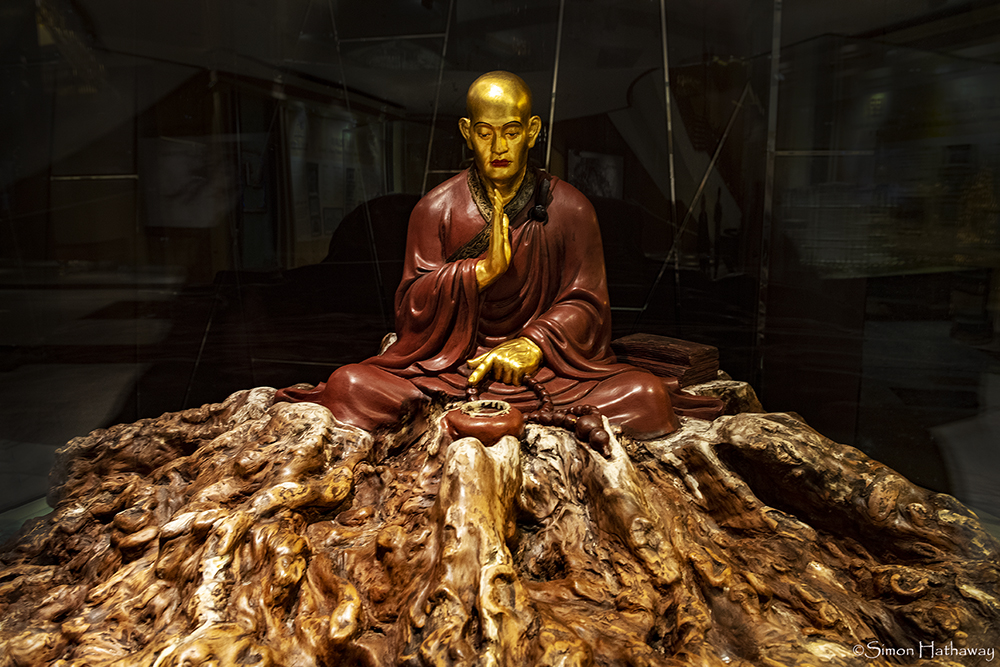
On Buddha’s Birthday Master Yaksan saw one of his students bathing the statue of baby Buddha, and asked him, “You can wash this Buddha as you please, but can you bath the true Buddha?” Then, the student answered, “Bring it to me.”
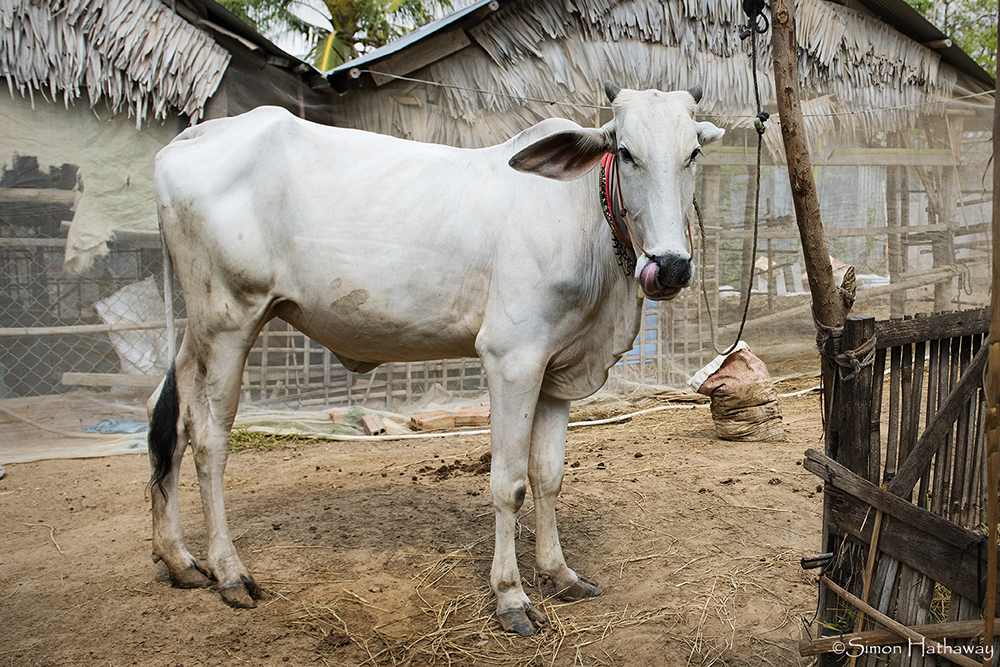
Rinzai asked Anzan, “What is the white bull on the open ground?” Anzan said, “Moo, moo!” Rinzai asked, “Are you dumb?” Anzan said, “How about the worthy elder?” Rinzai said, “This beast.”
Commentary:
Rinzai tested if Anzan knew the true-Self by asking him what the white bull on the open ground was since the white bull on the open ground symbolises the true-Self. Anzan responded by saying, “Moo, moo” which is the sound that a bull makes. This answer can be a nice answer, but Rinzai seemed to suspect that Anzan was clinging to the illusion of a bull, and he said, “Are you dumb?” This implies, “Why don’t you answer my question with words? If you don’t use words because of the saying that the true-Self cannot be expressed with words, you are still being deluded by the words ‘the true-Self cannot be expressed with words’.” If Anzan had known Rinzai’s intention, he would have countered Rinzai’s ‘Are you dumb?’. However, missing Rinzai’s point, Anzan asked him for his perspective. Rinzai had the kindness to reveal the white bull on the open ground, the true-Self by saying, “This beast!”
Student: “What would you have said if you had been asked, ‘Are you dumb?’?”
A. Your question is similar to ‘What is Emptiness like?’. The Heart Sutra says that form is Emptiness and Emptiness is form. This means that Emptiness is like form. In the Avatamsaka Sutra the Buddha said, “My body appears all around the universe in various different shapes of all sentient beings and sounds like various words of all sentient beings and has various names of all sentient beings.” This means that all various shapes of all things are the way the Buddha appears. Seeing things as being different and separate from one another, just like seeing each wave in the ocean as being different according to its size and shape, is seeing things. Seeing all things as one, just like looking upon all waves as being the same oneness as water, is seeing the Buddha.
Student: “How can I see this mug as the Buddha?”
Master: “Seeing what can be broken is seeing the mug, and seeing what cannot be broken is seeing the Buddha.”
When a monastic asked Majo, “What Dharma do all the Buddhas talk about?” he answered, “All the Buddhas talk about only one Dharma. Thus, the Buddha transmitted it to Mahakasyapa by with a hint. This Dharma is filling the whole universe. This cannot be understood through language and words.”
Student: “What is one Dharma?”
Master: “This cannot be understood through language and words.”
Student: “How can it be understood if not through language and words?”
Master: “‘This cannot be understood through language and words’ is also language and words.”
Commentary:
Language and words are not language and words unless you regard them as such.
One day, Governor Wang came to visit Rinzai. When they happened to pass the monk’s hall, he asked Rinzai, “Do the monks in this monastery all study the Sutras?” “No, they don’t.” “Do they then learn meditation?” “No, they don’t.” “If they neither study the Sutras nor learn meditation, what then do they do?” Rinzai said, “All are training to become Buddhas or patriarchs.” The Governor said, “It is said that though gold dust is precious, in the eyes it becomes an eye disease. What do you think?” Rinzai remarked, “I almost took you for a common fellow!”
Commentary:
Rinzai’s answer ‘All are training to become Buddhas or patriarchs’ means that all of them were trying to attain enlightenment. The governor countered his answer beautifully by remarking, “Though gold dust is precious, in the eyes it becomes an eye disease.” This purports that no matter how precious it is to become Buddhas and patriarchs, clinging to the images of them prevents you from seeing things as they are, namely keeps you from becoming enlightened. Hearing this unexpected response, Rinzai praised him for his good view by commenting that he had taken Wang as a common layman who didn’t know what it symbolised to become Buddhas or patriarchs and found him beyond his expectation.
A. The core of Buddhism is non-duality. Illusions are neither separate nor different from the Buddha. They are no other than the function of the Buddha. Because you are deluded by words and forms, you mistake the Buddha for illusions.
If you happen to expect the Buddha to appear as a holy and graceful form, you, misunderstanding Buddhism, are chasing after the illusion of the Buddha. This is why an ancient master remarked that being attached to the Buddha whilst hating illusions is as foolish as liking your palm while hating the back of your hand.
When a monastic asked Majo, “What Dharma do all the Buddhas talk about?” he answered, “All the Buddhas talk about only one Dharma. Thus, the Buddha transmitted it to Mahakasyapa with a hint. This Dharma is filling the whole universe. It cannot be understood through language and words.”









 Zen Fools