Zen

Rinzai 190

Rinzai heard that the second Tokusan used to instruct his monks saying, “Whether you can speak or not, either way thirty blows.” Rinzai told Rakuho, “Go and ask him ‘Why does the one who understands get thirty blows?’, wait until he beats you, then grab the stick, hit him back, and see what he will do.” Rakuho went and did as bid. On being asked, Tokusan at once struck out. Rakuho hit him back. Tokusan then returned to his quarters. Rakuho came back and told Rinzai, who said, “So far, I have suspected that fellow; but since it has happened like this, did you for yourself now see Tokusan?” Rakuho hesitated. The master hit him.
Commentary:

We should know what the second Tokusan meant by his question. He meant that we should be able to say words that cannot be done and do what cannot be said, namely, we should be able to recognise the Buddha, perform His acts and speak His words. The purpose of Rinzai sending Rakuho to him seems more to give Rakuho an opportunity to learn something from the second Tokusan rather than to test the second Tokusan. When Rakuho returned and told Rinzai how the second Tokusan had responded, Rinzai, sensing that Rakuho had failed to grasp the second Tokusan’s meaning of returning to his quarters, said words that cannot be done by saying, “So far I have suspected that fellow.” Aware that Rakuho was still lost, Rinzai asked him again more directly if he had seen Tokusan. What Rinzai really wanted to know was whether Rakuho had seen the true-Self of Tokusan. When Rakuho, missing Rinzai’s point, was at a loss for words, Rinzai showed the true-Self of Tokusan by hitting him.

Student: “What is the meaning of the second Tokusan’s returning to his quarters?”

Master: “He ran away scared of being hit again.”

Student: “You are kidding me, aren’t you?”

Master: “I am as serious as the second Tokusan was when he returned to his quarters.”

©Boo Ahm

All writing ©Boo Ahm. All images ©Simon Hathaway

#zen #meditation #zenmeditation #enlightened #enlightenment #zenfools #photography
Zen

Q. Why does Buddhism say that unknowingly committing sin is worse than knowingly committing sin?

A. This idea can be very confusing since it seems to contradict our worldly concept of justice that a sin committed unconsciously, or by mistake is thought to be less serious than one committed consciously with intention. I am going to interpret this in two ways; a mundane one and a Buddhist one.

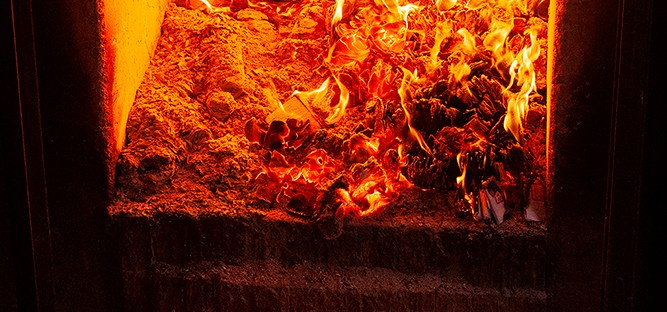
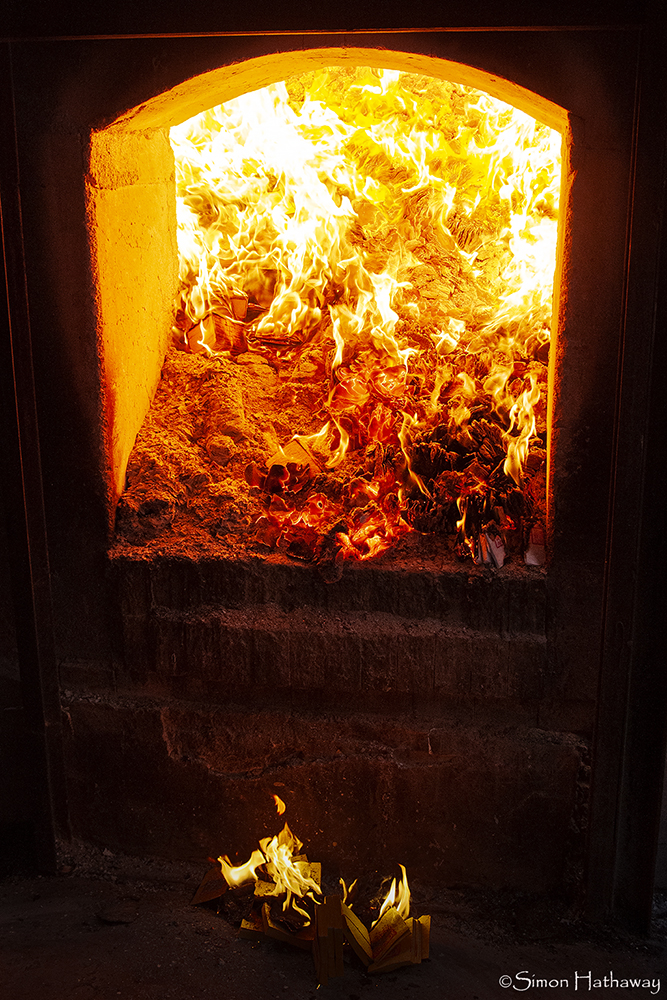
From a mundane perspective, let’s suppose that there is a red-hot iron ball from a furnace in front of a two or three-year-old child. He, attracted by its beautiful colour, is likely to grab it because he doesn’t know that this colour signifies fire. However, grown-ups would not think of touching it with their bare hands since they know it is dangerous. As a result, children get more injured than grown-ups because they act unknowingly.

From a Buddhist perspective, knowing implies the realisation that everything is empty. So, committing sin whilst knowing implies committing sin while knowing that sin is empty. To those who can see everything as empty, sin is empty as well. They don’t feel the same about committing sin as the unenlightened do. This is why Bodhidharma said that even a butcher whose job is to kill living things can escape from causation if he realises that everything is empty, that is, if he is enlightened.

©Boo Ahm

All writing ©Boo Ahm. All images ©Simon Hathaway

#zen #meditation #zenmeditation #enlightened #enlightenment #zenfools #photography
Zen

Families Use It Daily (2)

Master Chen asked a scholar who studied the Buddhist Sutras, “In a Sutra it is said, ‘Families use it daily and yet do not understand it.’ What is it that they do not understand?” The scholar said, “They do not understand the Way.” Chen said, “How do you understand the Way?” The scholar couldn’t respond.

Student: “What is it that we don’t understand while using it daily?”

Master: “The scholar called it the Way.”

Student: “However, he didn’t understand the Way.”

Master: “He was using it even when he didn’t understand the Way.”

Commentary:

Using it has nothing to do with understanding it or not.

©Boo Ahm

All writing ©Boo Ahm. All images ©Simon Hathaway

#zen #meditation #zenmeditation #enlightened #enlightenment #zenfools #photography

Zen

Rinzai 189

A scripture teacher came to see Rinzai. After exchanging pleasantries, Rinzai asked him, “What Sutras and Treatises do you lecture on?” The scripture teacher answered, “I have roughly learned the Treatise of The Hundred Dharmas.” Rinzai said, “One has mastered the Three Vehicles and the Twelve Divisions of the Teachings and the other has not; are they the same or do they differ?” The scripture teacher said, “For the one who has mastered, they are the same; for the one who has not, they differ.” Rakuho, who was standing behind Rinzai as his attendant, said to the scripture teacher, “What place is this to speak of sameness and difference here?” Rinzai turned around and said to the attendant, “And how do you understand it?” The attendant gave a Katsu. Rinzai went with the scripture teacher to see him off. On returning, he asked the attendant, “Did you do a Katsu at me a little earlier?” The attendant said, “Yes” — then the master hit him.

Commentary:

Bodhidharma said that if we couldn’t see the true-Self, we couldn’t escape from the reincarnation of birth and death and the suffering of the three worlds even though we could explain all the Sutras. For the same reason, Rinzai asked, “One has mastered the Three Vehicles and the Twelve Divisions of the Teachings and the other has not; are they the same or do they differ?” just to see whether or not the scripture teacher could see the true-Self. Unfortunately, the scripture teacher, failing to grasp Rinzai’s point, followed his words. The scripture teacher’s answer showed that he couldn’t recognise the true-Self hidden in words.

Then, Rakuho, sensing Rinzai’s meaning, lost no time in saying to the scripture teacher, “What place is this to speak of sameness and difference here?” Rinzai asked the attendant how he understood it to see if he really knew the point, and the attendant properly responded by giving a Katsu. After seeing off the scripture teacher, Rinzai tested his attendant again with the question ‘Did you do a Katsu at me a little earlier?’. This was a very tricky question although it appeared to be very commonplace, with which Rinzai took Rakuho by surprise. The attendant didn’t hesitate to respond by answering, “Yes”, by which he didn’t mean to affirm the question but just revealed the true-Self. Rinzai approved by hitting him.

©Boo Ahm

All writing ©Boo Ahm. All images ©Simon Hathaway

#zen #meditation #zenmeditation #enlightened #enlightenment #zenfools #photography

Zen

Q. My master’s talk is always excellent and he teaches us very well, but I hear that he sometimes behaves immorally. Should I continue to learn from him?

A. Let’s suppose that you are suffering from a fatal illness. Fortunately, you found a doctor who can cure you of the illness. He is really skilled and talented in saving people from the illness you have, but has a bad reputation as a human: He is a cheat and playboy. You have no evidence for this and have never personally seen him behaving badly. What do you think you should do; refuse to see him because of his immoral reputation thereby losing your life, or be cured by him despite it? I think that you should be helped by him. When you go to see the doctor, you don’t go to see him to evaluate his morality but to be cured by him. What you need from him now is his ability to save you from your challenge and not his perfect morality.

In the same way, you should continue to see your master if he can teach you something that you need. The purpose of your going to him is not to respect him for his exemplary morality but to learn, or get what you need. What is more important here is the Buddha’s teaching, which says that we should not be deluded by words and form. When we see things as they are without being deluded by them, there is nothing that is not the Buddha.

©Boo Ahm

All writing ©Boo Ahm. All images ©Simon Hathaway

#zen #meditation #zenmeditation #enlightened #enlightenment #zenfools #photography
Zen

Families Use It Daily (1)

Master Chen asked a scholar who studied the Buddhist Sutras, “In a Sutra it is said, ‘Families use it daily and yet do not understand it.’ What is it that they do not understand?” The scholar said, “They do not understand the Way.” Chen said, “How do you understand the Way?” The scholar couldn’t respond.

Student: “What is the Way?”

Master: “You are using it at this moment?”

Student: “Why don’t I know it?”

Master: “That’s it.”

Commentary:

The Way is not the Way but the Way.

©Boo Ahm

All writing ©Boo Ahm. All images ©Simon Hathaway

#zen #meditation #zenmeditation #enlightened #enlightenment #zenfools #photography
Zen

Rinzai 188

When the cook approached, Rinzai related what had just happened. The cook said, “The head monk did not understand you.” The master asked, “And how do you understand it?” The cook bowed. The master hit him, too.

Commentary:

When Rinzai tested the cook by relating what had just happened, the cook responded very wittily and sophisticatedly by remarking, “The head monk did not understand you.” By this, the cook didn’t mean that the head monk had not understood Rinzai but just revealed ‘this’ that Rinzai had asked the head monk if he could sell. He meant, “My answering is the very ‘this’ you presented to the head monk.” Rinzai asked him again so that he might confirm the cook’s answer. He made a proper answer by bowing, and Rinzai approved his answer through hitting him.

©Boo Ahm

All writing ©Boo Ahm. All images ©Simon Hathaway

#zen #meditation #zenmeditation #enlightened #enlightenment #zenfools #photography

Zen

Q. Would you please interpret ‘The Buddha Land is dirty when there are three poisons in our mind, and it is pure when there are not three poisons’?

A. When it is said that everything is empty, or when we see everything as it is without being deluded by illusions, imaginary lines, everything is the Buddha. If everything around us is the Buddha, where we are at this moment must be the Buddha Land. However, when our minds are contaminated with three poisons; greed, anger and ignorance, we cannot see the Buddha Land as pure as it really is because they cause us to be deluded by illusions. This leads us to fail to recognise the Buddha Land whilst already being there and to wander about in search of it possessed with an image of a pure and perfect place although we have never left it. It is not because the Buddha Land is really dirty but because we cannot see the Buddha Land as it is due to the illusions caused by the three poisons in our minds that it appears to be dirty.

Student: “How can I remove the three poisons?”

Master: “They are the Buddha as well.”

©Boo Ahm

All writing ©Boo Ahm. All images ©Simon Hathaway

#zen #meditation #zenmeditation #enlightened #enlightenment #zenfools #photography

Zen

Deshan’s ‘Assembly on Vulture Peak’ (2)

Deshan was once asked by a monastic, “Who was able to hear Shakyamuni Buddha’s talk at the assembly on Vulture Peak?” Deshan said, “The enlightened heard it.” The monastic said, “I wonder what was spoken at the assembly on Vulture Peak?” Deshan said, “The enlightened understand it.”

Student: “What did the enlightened hear?”

Master: “It is still heard.”

Student: “Why can’t I hear it?”

Master: “Because your ears are stuffed with words.”

Commentary:

Not a word did the Buddha say.

©Boo Ahm

All writing ©Boo Ahm. All images ©Simon Hathaway

#zen #meditation #zenmeditation #enlightened #enlightenment #zenfools #photography

Zen

Rinzai 187

One day Rinzai asked the head monk, “Where are you coming from?” The head monk said, “I have just returned from the prefecture where I sold rice.” The master asked, “Did you sell the lot?” The head monk said, “Yes, all of it.” The master drew a line before him with his stick, and said, “Can you sell this, too?” The head monk gave a Katsu — the master hit him.

Commentary:

When Rinzai asked the head monk where he was coming from, he tested whether he knew the true-Self that is the root of his being. The head monk, failing to grasp Rinzai’s intention, made an ordinary answer. Then, Rinzai, drawing a line before him with his stick, posed another question ‘Can you sell this, too?’. The key point here is to know what the ‘this’ Rinzai mentioned is. If you happen to think that it meant the line he drew, you are being deluded by the illusion Rinzai created as an expedient so that he might show the true-Self. Rinzai meant not the line but the function of drawing the line. The head monk, sensing Rinzai’s intention, responded by giving a Katsu, by which he implied, “Your drawing the line is not different from my giving a Katsu.” Rinzai hit him as an approval.

Student: “What would you say if you were asked, ‘Can you sell this?’?”

Master: “People cannot take it even if I give it away for nothing.”

©Boo Ahm

All writing ©Boo Ahm. All images ©Simon Hathaway

#zen #meditation #zenmeditation #enlightened #enlightenment #zenfools #photography