A. This scripture can sound a little confusing because the final goal that all Buddhists want to reach is to see the Buddha. Once upon a time a monastic asked his master, “We live on the offerings which laypeople make to the Buddha. Why do you tell us to kill the Buddha?” The master answered, “Because that is the way you can see the Buddha in person.” The Buddha is Emptiness that is the state without any illusion.
Seeing the Buddha means realising Emptiness. When you realise that everything is empty, there is nothing except Emptiness, which is also referred to as Oneness. Then, you yourself are also empty and part of Emptiness, which implies that you are the Buddha itself. The Buddha is Oneness and you are the Buddha. If you happen to see another Buddha other than yourself, that is not the Buddha but an illusion of the Buddha. This is why one who knows the real Buddha is never attracted or allured by the illusion of the Buddha.
When Solbong was a kitchen steward, Master Dongshan asked him, “You always serve meals at the same time every day. What divine power have you got?” Solbong answered, “I take a look at the moon and stars.” Master Dongshan said, “How do you know the time if it is cloudy and rainy all of a sudden?” Solbong couldn’t say anything.
Student: “How would you answer Dongshan’s question if you were in Solbong’s shoes?”
Master: “I would say, ‘I take a look at the moon and stars’.”
Commentary:
The problem is not in seeing it but in not recognising it while seeing it.
Fuke always used to roam about in the street markets, ringing a bell and shouting, “When it comes in brightness, I hit it with brightness. When it approaches in darkness, I hit it with darkness. When it comes from all directions, I hit it like a whirlwind, and if it comes out of the empty sky, I thrash it like a flail.” Master Rinzai made one of his attendants go there, instructing him to grab Fuke while speaking and ask him, “If it does not come in any of these ways, what then?” When he did as he was told to, Fuke freed himself from the grasp of the attendant and said, “Tomorrow there is a vegetarian banquet in the monastery of Great Compassion.” The attendant returned and told Rinzai, who remarked, “I have always been doubtful of this fellow.”
Commentary:
Fuke’s unusual behaviour was an expedient to attract people’s concerns toward Buddhism and Zen. To rephrase his words, he meant, “The true-Self appears in countless forms such as brightness, and darkness, everywhere in all directions, even out of the empty sky. However, I know that they are all the functions of the true-Self and I am not deluded by them. When it comes in brightness, I know that brightness is the shape of the true-Self. In whatever forms it may come, I am never deluded by them but see them as the same as the true-Self.” Rinzai tested Fuke by getting one of his attendants to ask him, “If it does not come in any of these ways, what then?” Through this question Rinzai asked Fuke, “What is the true-Self like, that is, what form does it take on when it doesn’t appear in the forms that you narrated?” Fuke demonstrated how it appears otherwise by saying, “Tomorrow there is a vegetarian banquet in the monastery of Great Compassion.” When Rinzai was told about Fuke’s response by his attendant, he said that he had been doubtful of Fuke, which may sound as if he didn’t approve Fuke’s enlightenment, but he actually approved it. Rinzai used the distorted expression to see if his attendant could recognise the true-Self without being deluded by his distorted words.
Student: “How would you have answered Rinzai’s question ‘If it does not come in any of these ways, what then?’ if you had been in Fuke’s shoes?”
Master: “I would have said, ‘I don’t respond in any of these ways’.”
A. When everything is empty just as the Buddha said, not only the nature of the Buddha but that of sentient beings is also empty. Both of them are from the same root, Emptiness. In essence, they are identical rather the same since being the same or different is a concept used for separate things.
The difference between them is that one knows the root, and the other doesn’t. In fact, irrespective of whether we know the root or not, it is true that we are the same as Emptiness. This is why ancient masters said that the Buddha is a sentient being who knows the root and a sentient being is the Buddha who doesn’t know it.
When the Buddha was alive, there was a monk whose name was Ananda. He as the Buddha’s assistant, listened to the Buddha’s Dharma talks more than any other monastic. However, he was scolded for clinging to words by the Buddha, who said, “Clinging to words for a thousand days is not as good as practising for a day.” After the Buddha passed away, some of his disciples congregated to make a book of the Buddha’s Dharma talks. Ananda thought that he should attend the meeting because he, the Buddha’s assistant, had listened to the Buddha’s Dharma talks more than anyone else. However, he was not allowed to join the meeting since he was not enlightened. Then, he went to Mahakasyapa who was the successor to the Buddha and asked him, “I know you received the Buddha’s garment and alms bowl. What else did you take from the Buddha other than them?” Mahakasyapa called him by his name, “Ananda.” Ananda answered, “Yes.” Mahakasyapa said, “Get out and break the flagpole in front of this building.” Ananda couldn’t grasp what Mahakasyapa meant in the beginning but after twenty-one days of practice he attained enlightenment and could join the meeting.
Student: “What else did Mahakasyapa receive from the Buddha other than the Buddha’s garment and alms bowl?”
Master: “He showed it to Ananda.”
Commentary:
What can be given and taken is the shadow of what cannot be given and taken.
One day Fuke was eating raw cabbage in front of the meditation hall. Master Rinzai saw him and said, “You have quite the air of an ass.” Fuke began to bray. Rinzai said, “This robber.” Fuke went away, shouting “robber, robber.”
Commentary:
Considering that monasteries make it a rule to have meals in a given place at a given time, Fuke seemed to be eating raw cabbage in front of the meditation hall in order to test other monastics. Then, Rinzai tested him by saying, “You have quite the air of an ass”, which means, “I see through your behaviour. Can you recognise the true-Self I am revealing now without being deluded by words?” Fuke responded without hesitation by braying like an ass. He meant, “My braying is the function of the same true-Self that you are showing me.” Rinzai approved him by calling him a robber.
A. ‘A branch of a tree’ symbolises plausible words by the Buddha and ancient masters. ‘Cliff’ implies our lives that are doomed to end sooner or later. Most people who are anxious to escape from birth and death through Buddhism tend to cling to plausible words thinking of them as lifelines which can save them. Being attached to such words is not grasping the meaning of them but being deluded by them.
This is why ancient masters would say that plausible words are rather a stake to tether people who want to go enlightenment. Only he who is not deceived by such words can attain enlightenment. The Buddha said that everything is empty. When everything is empty, not only the Buddha but His words ‘everything is empty’ are also empty.
One day the Buddha was coming back from a long teaching journey. Many monks, nuns and laypeople went to meet him. Then, a nun named Lotus-colour was determined to meet him ahead of the others, including old monastics and so found her way through the congregated people by using her divine power. She was the first to see the Buddha before the others just as she had wanted. As soon as the Buddha noticed her behave in such an impolite way, he scolded her, “Why do you jump ahead of the old monastics to see me earlier than they do? Although you saw my physical body, you didn’t see my Dharma body. Rather Subhuti saw my Dharma body while sitting silently in his cave now.”
Student: “What is the Buddha’s Dharma body?”
Master: “The Buddha showed it.”
Commentary:
Disaster happens when we look for what we cannot stop seeing and hearing even for a moment.
One day master Rinzai and the two old teachers Kayo and Mokuto were sitting in the hearth pit of the meditation hall. Rinzai remarked, “Every day Fuke plays the fool in the street markets. Does anyone know whether he is a vulgar fellow or a sage?” Before he had finished speaking, Fuke came in. Rinzai asked him, “Are you a vulgar fellow or a sage?” Fuke replied, “Say it yourself whether I am a vulgar fellow or a sage.” Rinzai gave a Katsu. Fuke, indicating each with his pointing finger, said, “Kajo’s the Zen of the newlywed bride, Mokuto’s grandmotherly Zen, and yet little boy Rinzai’s equipped with the single eye.” Rinzai remarked, “This robber.” Fuke left, shouting, “Robber, robber.”
Commentary:
Rinzai seemed to present the two old masters Kayo and Mokuto with a question ‘Every day Fuke plays the fool in the street markets. Does anyone know whether he is a vulgar fellow or a sage?’ with the aim of getting them to share their views of the Dharma. To interpret Rinzai’s question, he meant, “Do you know what Fuke’s essence of being is when he plays the fool in the street markets?”
Anyway, just then, as Fuke came in before Rinzai had finished speaking, Rinzai asked the question of Fuke directly, “Are you a vulgar fellow or a sage?” Fuke lost no time in responding beautifully, “Say it yourself whether I am a vulgar fellow or a sage.” He revealed the essence of his being by asking back, “Say it yourself whether I am a vulgar fellow or a sage”, which means, “Ok, I am showing you the essence of my being in this way since it cannot be described with words. Can you recognise me? If you are enlightened, you can recognise me. Tell me how I look to you.” Rinzai responded to Fuke’s request ‘Tell me how I look to you’ by giving a Katsu, which meant, ‘This is how you look’.
Fuke’s remark ‘Kajo’s the Zen of the newlywed bride, Mokuto’s grandmotherly Zen, and yet little boy Rinzai’s equipped with the single eye’ didn’t mean to either belittle, or compare them, but meant to respond to Rinzai’s Katsu. Furthermore, ‘Rinzai is equipped with the single eye’ implies that Rinzai attained enlightenment since the single eye symbolises the eye of wisdom that can see everything as it really is. So, Fuke meant “I know that Rinzai is enlightened and what he means with a Katsu.” Rinzai also approved Fuke’s enlightenment by calling him a robber since a thief, or a robber, implies an enlightened man because he is thought to have attained the whole universe for nothing.
Student: “If you had been one of the two old masters, how would you have answered Rinzai’s question?”
Master: “A sage is a sage only to one who can recognise him.”
Student: “How would you have responded to Rinzai’s question if you had been in Fuke’s shoes?”
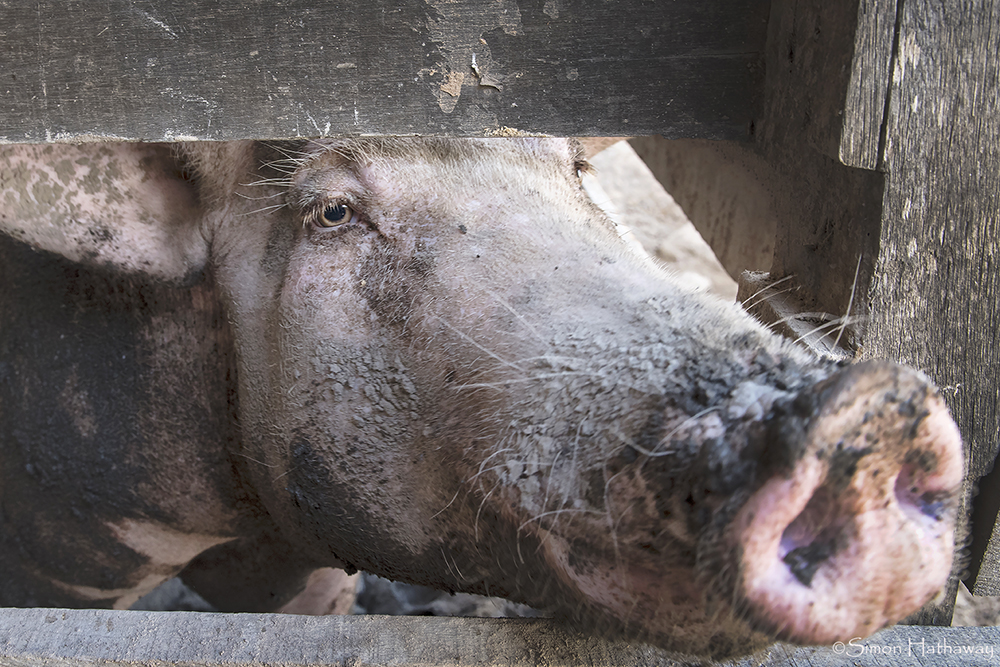
Master: “A precious pearl is not a precious pearl to a pig.”
A. Of course he is. He said that everything, including all of us, is the Buddha. When everything is the Buddha, there is no exception. The Diamond Sutra has the answer to your question, where the Buddha said, “One who tries to see me by my voice and forms cannot see me”, and where he said to his disciples on his deathbed, “Take a close look at me. Anyone who thinks that I perish is not my student, and anyone who thinks that I don’t perish is also not my student.”
He meant that because the essence of his being had never been born, there could be no concept such as ‘die’ and ‘not die’.” In other words, his teaching is that we cannot recognise not only him but also ourselves because we are deluded by the illusion of us. If you can recognise the Buddha who didn’t die about 2,500 years ago, you can also realise the essence of your being that transcends birth and death.
Student: “How can I see the Buddha who didn’t pass away 2,500 years ago?”










 Zen Fools