After Hyangum opened his temple, Weishan sent a monk to deliver a letter and a staff. Upon receiving them, Hyangum lamented crying out, “Alas, heavens! Alas, heavens!” The monk asked, “Master, why are you like this?” Hyangum replied, “It is because the weather feels like winter during my spring outing.”
Student: “What did the master mean by ‘the weather feels like winter during his spring outing’?”
Master: “One feels warm, and the other feels cold in the same place at the same time.”
Commentary:
Medicine, when wrongly used, can be poison, and poison, if well used, can be medicine.
“Subhuti, I, the Realised One know and see all. All these sentient beings will attain infinite blessing this way.”
Commentary:
Infinite merit is the true-Self itself; it is neither something given by the Buddha nor something that others can take away. We are already infinite merit itself and are surrounded by it at the same time. The key is whether we can recognise it or not. Therefore, obtaining infinite merit, as the Buddha taught in Part 6-1, means conceiving pure faith for even a single moment upon reading, hearing, or seeing the Buddha’s words, or anything else for even a moment and realising this infinite merit, the true-Self without seeking it externally.
Not seeking it externally means not looking for it beyond what our eyes see, and our ears hear. Everything, including ourselves, is the true-Self that is infinite merit.
As stated in the Avatamsaka Sutra, “The Buddha’s body pervades the entire Dharma realm, revealing himself before sentient beings as needed, teaching with various Dharma teachings, and freely awakening them to all truths,” even though infinite merit, the Buddha’s body, is always manifesting before us, we fail to see it truly because we are swayed by forms and words. This is why we wander in the cycle of birth and death, unable to enjoy infinite merit.
Ancient great monks likened this to “looking for a wild goose in the clouds while forgetting the goose in the cage,” referring to our failure to see the infinite merit, the true-Self right in front of us, being deceived by images, sounds, and words.
As the Avatamsaka Sutra states, “The suffering I experienced in the past, was due to not seeing the Buddha, you should purify the eye of the Dharma, and see what is to be seen,” we, too, must purify the eye of the Dharma and see everything as it truly is, like the Buddha, in order to see and realise what must be seen and thus enjoy infinite merit.
What we must engrave in our hearts is that not only the words we are reading now but also we ourselves, reading this sutra, are none other than the infinite merit (the true-Self) we seek to see.
Disciple: “What is infinite merit?”
Master: “What did you say?”
Disciple: “What is infinite merit?”
Master: “Why do you ask me when you’re already throwing it up like that?”
A. Listening to Dharma talks in the same way you listen to secular lectures may give you some momentary impact but is not good enough. Remembering the contents of the Dharma talks that you have listened to is of no use, no matter how much of it you have accumulated. You ought to try to see and hear what reaches your eyes and ears as they truly are.
For example, when you read Buddhist literature, or listen to Dharma talks, you should try to see and hear the true-Self beyond words and language that they are pointing to. Only when you are not deluded by them can you be free from being swayed and troubled by them.
After Hyangum opened his temple, Weishan sent a monk to deliver a letter and a staff. Upon receiving them, Hyangum lamented crying out, “Alas, heavens! Alas, heavens!” The monk asked, “Master, why are you like this?” Hyangum replied, “It is because the weather feels like winter during my spring outing.”
Student: “Why did the master lament crying out ‘Alas, heavens’?”
Master: “He expressed gratitude to Weishan for his compassion and to the monk for his long trip.”
Commentary:
A host and his servant give presents to a guest at the same time, but the foolish guest, dismissive of the host’s valuable present, only takes a poor gift from the servant.
Subhuti said to the Buddha, “World Honoured One, will any sentient beings develop genuine faith by hearing these words?”
The Buddha said to Subhuti, “Don’t talk in that way. In the last five hundred years after the death of me, the Realised One, there will be those who keep the precepts and do good deeds, conceive faith in these words and consider it to be true. You should know that because those people have planted roots of goodness, not with one, two, three, four, or five Buddhas, but with infinite thousands of myriads of Buddhas, they will conceive pure faith on hearing these words for even a moment.”
Commentary:
The statement “In the last five hundred years after the death of me, the Realised One, there will be those who keep the precepts and do good deeds, conceive faith in these words and consider it to be true” means that no matter how much time passes after Shakyamuni Buddha’s death, the true-Self that is the essence of not just Shakyamuni Buddha but us—what he sought to show us—remains unchanged, neither coming nor going. It signifies that there will be practitioners who cultivate merits and those who realise the true-Self.
Even after countless ages have passed since Shakyamuni Buddha’s time, those who, without seeing the living Buddha in person and only hearing his teachings, give rise to faith are individuals who, in their past lives, planted virtuous roots with countless millions of Buddhas. Due to the great merit accumulated in past lives, they encounter the Buddha’s teachings. Thus, those of you reading this Sutra at this very moment are the ones who, in past lives, planted virtuous roots with countless millions of Buddhas and have now obtained this rare and precious opportunity.
This hard-earned opportunity must not be wasted in vain.
Here, “they will conceive pure faith on hearing these words for even a moment” means hearing these words as they are for even a moment, without being swayed by forms or words, and realising the true-Self. The purpose of following the Buddha’s teachings and studying this Sutra is to give rise to pure faith in a single moment and realise the true-Self.
The purpose of the Buddha’s teaching was not to enable us to accumulate knowledge through a literal understanding of certain facts but to help us give rise to pure faith and realise the true-Self by seeing and hearing his words as they really are. In other words, the Buddha’s intention in giving sermons was not to convey facts but to reveal the true-Self.
Thus, as stated in the Avatamsaka Sutra, “When the Dharma explained in words is vainly discriminated with limited wisdom, obstacles arise, and one fails to know their own mind,” while reading the sutra, we must not stop at understanding it through words, as is our long-standing habit. Instead, we must transcend words to give rise to pure faith and realise the true-Self.
Disciple: “What is the true-Self?”
Master: “It is not words.”
Disciple: “If it is not words, how can I know it?”
A. Don’t try to find something to rely on. Thinking that there might be something to depend on and looking for it is being deluded by illusions. The aim of Buddhism is to realise that there is nothing to rely upon and no one who will rely, because not only all discriminations of right and wrong but everything else is also empty.
Even you who are looking for something to rely on are empty as well. Don’t seek something to depend on but try to realise that you are already perfection itself that needs nothing to rely on.
A monk asked Yunju, “What should a monastic ultimately be like?” Yunju replied, “It’s good to dwell in the mountains.” The monk immediately bowed, and Yunju said, “How do you understand this?” The monk answered, “A monastic should be unshaken like a mountain, even amidst the boundaries of good and bad, compliance and opposition, life and death.” The master immediately struck him and said, “You betray the ancient sages and ruin our descendants.”
Student: “Why did Yunju strike and criticise the monk for his answer?”
Master: “He showed compassion to pull the monk into the mountains.”
Commentary:
The best medicine kills people unless it is well used.
The Buddha said to Subhuti, “All forms are illusory; if you see that forms are not characteristics, then you will see the Realised One.”
Commentary:
Here, the Buddha provides a more specific method for recognising the true-Self (Tathagata). The statement “If you see that forms are not characteristics, then you will see the Realised One” means that when you see a flower, for instance, and understand that the flower is not merely a flower, or when you see a person and realise that the person is not merely a person—in other words, when you understand that what you see and hear is not what you have thought or believed it to be—then you can see the true Buddha, the true-Self.
As an ancient great monk said: “When you see form, do not be swayed by form; When you hear sound, it is not sound. In the place where form and sound do not cling, You directly reach the realm of the Buddha’s Kingdom,” when seeing and hearing, if you attach no words or concepts and perceive everything as it is, you can avoid being swayed by the illusion of the historical Buddha’s physical characteristics and see the true Buddha.
Just as the true Buddha is described in the Avatamsaka Sutra: “Before the World-Honoured One left Tusita Heaven, he was already born in the royal palace, and before emerging from his mother’s womb, he had already saved all beings in the world,” the true Buddha has no form, no name, neither is born nor dies. Identifying the Buddha with any form is idolatry, clinging to form and being deluded by illusion.
Let me introduce a story from the Sutra of Mutual Arising about the nun named Yeonhwasaek (Lotus Colour), who, deceived by form (physical body), failed to see the true-Self (Dharma-body, Tathagata) and was reprimanded by the Buddha for clinging to his physical form.
When the World-Honoured One (Buddha) was in Trayastrimsha Heaven for 90 days, preaching the Dharma for his mother, and then descended from the heavens, the fourfold assembly (laymen, laywomen, monks, and nuns) and the eight classes of beings all went into the sky to greet him. At that time, the nun Yeonhwasaek thought to herself, “As a nun, I must stand behind the great monks to see the Buddha. Instead, I will use my supernatural powers to transform into a Wheel-Turning Sage King, surrounded by a thousand princes, and approach to see the Buddha first.” She did as she intended, but the moment the World-Honoured One saw her, he rebuked her, saying, “Yeonhwasaek, how dare you bypass the order of the great monks to see me? Though you have seen my physical form, you have not seen my Dharma-body (true-Self). Subhuti, sitting quietly in a cave, has seen my Dharma-body.”
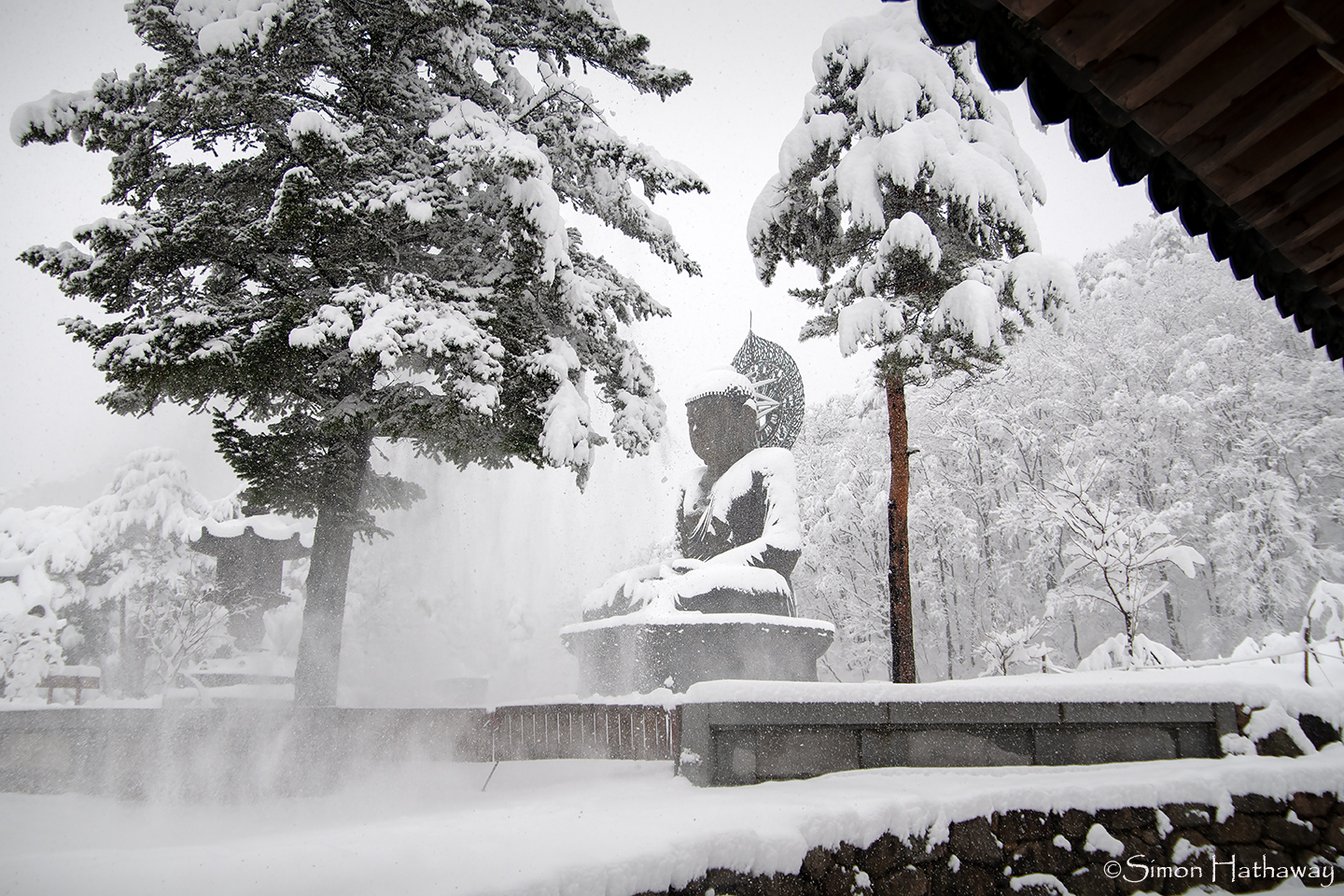
We, too, should not go to temples to see the Buddha but should strive to see, or at least attempt to see, what Subhuti saw while sitting quietly in a cave, within our own homes. The Buddha taught us not to be swayed even by his living physical form, so how could bowing to and worshipping lifeless Buddha statues not be idolatry? To prevent this, ancient great monks said that if you meet the Buddha, you must kill him.
The crucial point here is that the method of seeing the true Buddha, as explained above, is also the method of seeing ourselves. We must see ourselves in the same way we see the Buddha. The true Buddha (true-Self, Tathagata) is the essence of not only the historical Buddha but all things, including us. Being able to see the true Buddha means seeing everything, including ourselves, as the Buddha. In other words, it means realising the essence of our existence and awakening to the fact that we are eternal and perfect Buddhas. This is why Master Bodhidharma said, “Do not make a living Buddha bow to a dead Buddha.”
Disciple: “How can I see the Buddha?”
Master: “How can you not see the Buddha?”
Disciple: “What is the difference between the true Buddha and a Buddha idol?”
Master: “The Buddha you chase after is an idol; the Buddha that chases you is the true Buddha.”
Disciple: “What did Subhuti see?”
Master: “The Buddha showed it to the nun Yeonhwasaek.”
A. In Buddhism the mundane world is called the realm of form and the original home implies the realm of emptiness that is also referred to as the Pure Land, the Buddha Land, the true-Self. The former and the latter are not separate but identical just like winds and air.
The former is the function of the latter and is the way the latter is. However, we are unaware of this truth because we are deluded by illusions that are various images and words. In other words, we are not aware that we are in the original home whilst being actually there. So, returning to the original home means realising that we are already there.
A monk asked Yunju, “What should a monastic ultimately be like?” Yunju replied, “It’s good to dwell in the mountains.” The monk immediately bowed, and Yunju said, “How do you understand this?” The monk answered, “A monastic should be unshaken like a mountain, even amidst the boundaries of good and bad, compliance and opposition, life and death.” The master immediately struck him and said, “You betray the ancient sages and ruin our descendants.”
Student: “What is wrong with the monk’s answer?”
Master: “The monk is littering up the mountains with rubbish.”
Commentary:
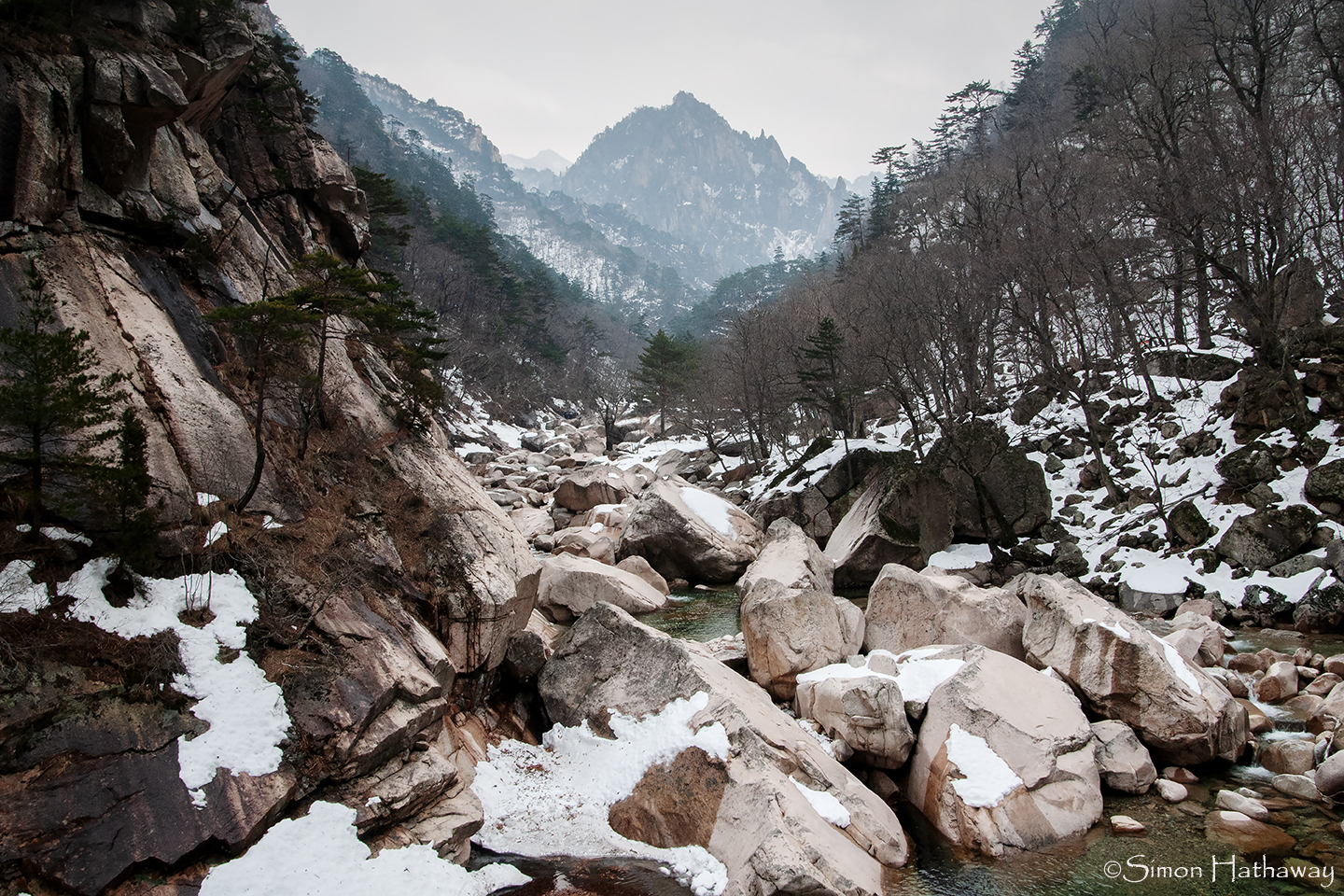
Life in the mountains is so simple that it is free from mundane things such as good and bad, life and death.




 Zen Fools