But, as I see it, the Dharmakaya cannot expound the Dharma. Thus, an old master said: “The Buddha’s bodies are set up with reference to meaning; The Buddha’s realms are differentiated with reference to the bodies.” The nature of the bodies and of the realms is clear; they are the temple of the Dharma, and so are only relative. Yellow leaves in an empty fist to entice unweaned children. By wringing a dry stick, or a dry bone what juice are you looking for?
Commentary:
Although three Buddhas; the Dharmakaya Buddha, the Sambhogakaya Buddha and the Nirmanakaya Buddha, are set up with reference to meaning and differentiated with reference to the bodies, they are, in fact, not apart from each other but just one; the temple of the Dharma, the true-Self. They are just names to explain the true-Self, no more than expedients used to teach ignorant sentient beings, in the same way that yellow leaves are used as money in order to stop children from crying. So, trying to attain enlightenment whilst following the three Buddhas is as vain as trying to get juice by wringing a dry stick or a dry bone.
A. We say that you can hear and see what you could not before. Buddhist scriptures, or the koans, Zen questions that previously sounded like nonsense can start to sound reasonable. Ordinary sounds you are used to hearing can sound quite different; positive, fresh and new. For example, your spouse’s calling you ‘Darling’, your dog’s barking, or a bird’s chirping sometimes sound so impressive that you can burst into tears. You can have similar experiences when you see things. With such changes, you can feel that your life is more stable than before.
However, you should not cling to new experiences but leave them alone, no matter how nice they are. Trying to have the same experience again is the last thing you should do since that would be to run counter to your practice. Just keep practising as usual.
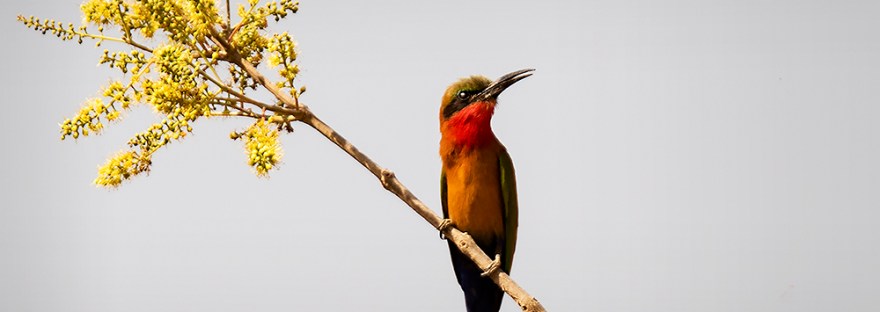
A student asked his master “What is the Buddha?” The master replied that he did not know. The student asked, “If you do not know this then what do you know?” The master replied, “I do not know what the Buddha is, but I know the flower in the garden.”
Student: “What did the master mean by this?”
Master: “He made a kind and detailed answer.”
Student: “Why did the master say that he didn’t know?”
Master: “Because you drink only water and leave milk alone.”
Commentary:
Do not mistake a large cheque that can change your life for a piece of toilet paper.
To explain it from the point of the Sutras and Treatises, the Dharmakaya is the fundamental. The Sambhogakaya and the Nirmanakaya are the functions.
Commentary:
It is said that the Buddha consists of the Dharmakaya Buddha, the Sambhogakaya Buddha and the Nirmanakaya Buddha. However, they are neither separate nor different from each other but just one, the Trinity.
For better understanding, let us compare the Buddha to the Earth. The Dharmakaya Buddha can be compared to the Earth, and the Sambhogakaya Buddha can be compared to actions, movement and the Nirmanakaya Buddha can be compared to forms such mountains, rivers, oceans, rain, air, trees, people, animals and so on, which keep appearing and disappearing endlessly in the middle of ceaseless changes and movements. In other words, the changes and movements of these things are the function of the Earth. That is why the Sambhogakaya and the Nirmanakaya are the functions of Dharmakaya.
The Buddha in Buddhism means a perfect being, an entity that contains everything, including the universe, without exception. Then, everything we see and hear is all the Buddha, and we can see and hear nothing else but the Buddha. Even we ourselves are the Buddha and what we say is the Buddha’s talk, how we look is the Buddha’s form and how we act is the Buddha’s function. However, we have not realised this truth because we are deluded by illusions.
A. It might sound unrealistic, but it is very realistic and is an essential attitude we Buddhists should take. There is a saying that if you attain enlightenment, all the universe also attains enlightenment along with you. This means that when you get enlightened, everything looks and sounds perfect and you realise that everything is the true-Self, the Buddha.
This is why ancient masters would say that if there is even a single tiny thing remaining as a sentient being, you are far from being enlightened. So, ‘to uphold a bodhisattva’s intention to support every sentient being to free themselves until the end of time’ should be interpreted as ‘to uphold your intention to attain enlightenment until the end of time’.
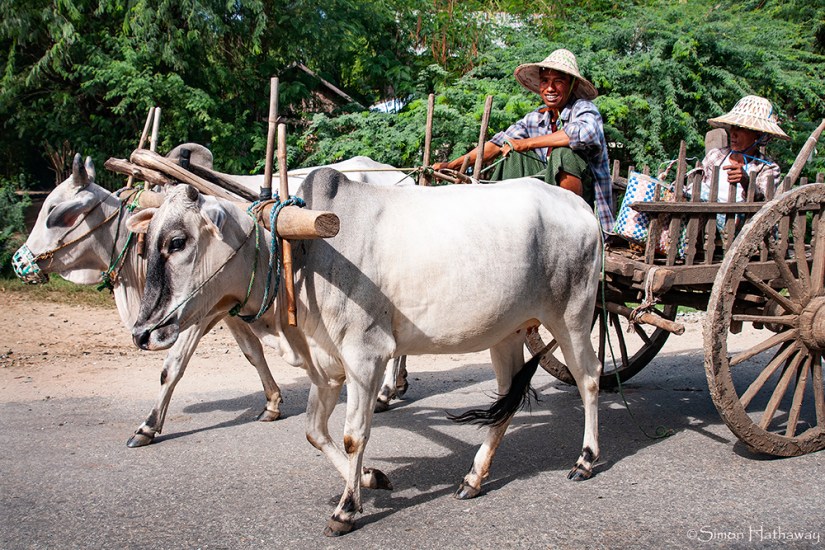
Nanquan said to the assembly, “I don’t know about the existence of all the buddhas in the three worlds, but I do know about the existence of badgers and white oxen.”
Student: “Nanquan is a master. Why doesn’t he know about the existence of all the Buddhas while knowing about the existence of badgers and white oxen?”
Master: “You are a practitioner. Why don’t you know me whilst knowing badgers and white oxen?”
Commentary:
Seeing a single thing right before you is seeing everything right.
The master said: “I enter with you the realm of utter purity, wear the robe of purity and expound the Dharmakaya Buddha. Or, we enter the realm of non-differentiation and expound the Sambhogakaya Buddha. Or again, we enter the realm of deliverance, wear the robe of radiance and speak of the Nirmanakaya Buddha. The Land of Three Eyes depends on changes.”
Commentary:
‘Enter the realm of utter purity’ means to enter the Pure Land, or become the Buddha. ‘Wear the robe of purity’ means to live free from illusions. ‘Enter the realm of non-differentiation’ means to stop discriminating. ‘Enter the realm of deliverance’ implies to attain enlightenment, ‘Wear the robe of radiance’ means to act without being deluded by illusions, or without clinging to any illusions.
By saying the Land of Three Eyes, Master Rinzai meant the three Buddhas: the Dharmakaya Buddha, the Sambhogakaya Buddha, and the Nirmanakaya Buddha. Although there are various explanations and names, they are, in fact, just one and what it is referred to as depends on your view. That is why the master said that the Land of Three Eyes depends on changes, by which he meant our changing perspectives.
Therefore, his point is that we can attain enlightenment, or become the Buddha by ceasing to be deluded by illusions through stopping our discrimination. Then, where we are is the Pure Land, and our speech expounds the Buddha, and our action is the radiance of the Buddha.
A. Do not be confused into thinking that there is nothing at all. If there were nothing at all, what would it be that is asking this question now? Can you say that there is no you, while you are typing this question? If there is nothing and no one, then who is asking, or typing this question? The purpose of Zen meditation is to realise what is asking this question. To realise it is no other than to attain Nirvana and to be liberated.
In order to realise it, you should not be deluded by words such as ‘soul’, ‘God’, ‘Nirvana’ and so on. They are just imaginary labels and not real. That is why masters would say that there is no soul, even no Buddha and that we should kill the Buddha if we see him. When you are free from being fooled by words, you can realise what Nirvana is through experiencing it in person.









 Zen Fools