Zen

Rinzai 86

A thought gives rise to the Three Worlds and turns into six illusions according to casual conditions. What is functioning at this moment is lacking nothing. In a split second you are free to enter the Pure Land and the impure land, enter Maitreya’s castle and enter the Land of Three Eyes (see Rinzai 87), which are no more than empty names.

Commentary:

’A thought gives rise to the Three Worlds and turns into six illusions according to casual conditions’ means that if you make an illusion, it bears or turns into countless illusions in no time according to what you see and hear. However, once you have realised what is functioning at this moment, you come to know that there is nothing else but that and it appears to be many because it is divided into multiple forms by the names, imaginary lines created by you. Then, not only can you be free to enter the Pure Land and the impure land and enter Maitreya’s castle and the Land of Three Eyes without moving even a step in a split second, but also be free to destroy and build them in a split second without moving any of your fingers since they are all just names.

Student: “What is functioning at this moment?”

Master: “What is asking the question?”

Student: “What is the Pure Land?”

Master: “Take a close look beneath your feet.”

©Boo Ahm

All writing ©Boo Ahm. All images ©Simon Hathaway

#zen #meditation #zenmeditation #enlightened #enlightenment #zenfools #photography   

Zen

Q. If the fundamental premise of Buddhism is to remove all desire, why do Buddhists still harbour many desires?

A. You seem to misunderstand Buddhism. If the fundamental premise of Buddhism were to remove all desires as you said, how could Buddha have had the desire to devote himself to help sentient beings? Without desire, how could we participate in charity activities and raise funds to aid war victims? Whatever we may do, the purpose of our doing is to meet our desires regardless of whether they are moral or not. Going to see a doctor when we are not well is also a kind of desire to stay alive. How could we live our lives without desire?

The Fundamental premise of Buddhism is not to remove all desires but to realise that everything, including desire, is empty. When we have realised that our desires are empty, we do not have to be so attached to them that we will harm others to meet our desires. We are not so proud and arrogant that we look down on others even if we succeed in meeting our desires. We need not feel frustrated when we fail to meet them.

In other words, Buddhist teaching is not that we must not have any desire, but that we should not be enslaved by our desires by realising that not only all our desires, but the objects of our desires are also empty.

©Boo Ahm

All writing ©Boo Ahm. All images ©Simon Hathaway

#zen #meditation #zenmeditation #enlightened #enlightenment #zenfools #photography

Zen

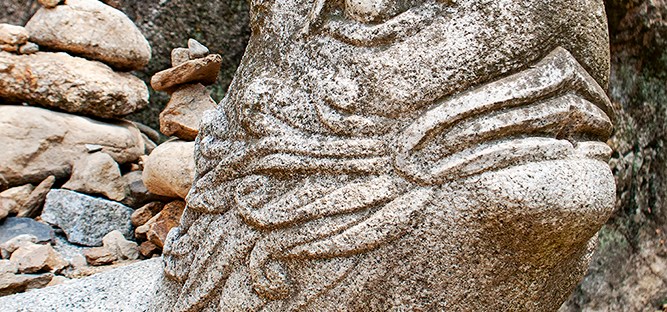
Longya’s Stone Tortoise (1)

Longya was once asked by a monastic, “What is the meaning of Bodhidharma’s coming from India?”

Longya said, “I will tell you when the stone tortoise speaks.”

Student: “When does the stone tortoise speak?”

Master: “When you can hear it speak.”

Commentary:

It is not when the Buddha appears that you can see Him but when you can see Him that He appears. 

©Boo Ahm

All writing ©Boo Ahm. All images ©Simon Hathaway

#zen #meditation #zenmeditation #enlightened #enlightenment #zenfools #photography
Zen

Rinzai 85

Do not take in everything. If your heart gives rise to the Three Worlds, you follow the causal conditions and – relating to circumstances – understand the six dusts. Even if someone comes to you, you should not accept anyone. As soon as your heart gives rise to doubt, Mara enters your heart. Mara of birth and death enters even a Bodhisattva’s heart if his heart gives rise to doubt. Put your heart at rest and seek nothing outside. Whatever may approach you, you should contemplate it. If you believe in what is functioning at this moment, there is nothing else.

Commentary:

‘Even if someone comes to you, you should not accept anyone’ means that whatever you see and hear, whoever you see and hear, you should not be deluded by their illusions but see and hear what is beyond their forms and sounds. ‘As soon as your heart gives rise to doubt, Mara enters your heart’ implies that as soon as you follow their forms and sounds, you are deluded by illusions. Even a Bodhisattva cannot avoid being deluded by illusions if he clings to forms and sounds. ‘Just put your heart at rest and seek nothing outside’ means, as mentioned before, that we should stop pursuing enlightenment in vain by discriminating or following words. ‘Whatever may approach you, you should contemplate it’ means that whatever reaches your eyes and ears, you should see it as it is, that is, see it without attaching names. ‘If you believe in what is functioning at this moment’ means that you should realise that what is functioning with you at this moment is no other than the true-Self you are looking for. Then, you come to realise that there is nothing else but the true-Self.

©Boo Ahm

All writing ©Boo Ahm. All images ©Simon Hathaway

#zen #meditation #zenmeditation #enlightened #enlightenment #zenfools #photography

Zen

Q. Do Buddhists believe in sin? If yes, then who keeps track of our sins, if there is no God.

A. According to Christianity, we can never escape from original sin, whatever good things we may do, if we do not believe in God. Buddhism says that we cannot escape from karma, whatever good things we may do, unless we have realised that everything is empty. Believing in God is to Christianity as realising that everything is empty is to Buddhism.

Buddhism says that, in essence, there is neither sin nor God who keeps track of our sins and that they are all empty illusions created by us. In other words, we are enslaved and ruled by the illusions created by our imagination. The core of Buddhist teaching is to control and rule all the illusions instead of being controlled by them through the realisation that everything is empty.

©Boo Ahm

All writing ©Boo Ahm. All images ©Simon Hathaway

#zen #meditation #zenmeditation #enlightened #enlightenment #zenfools #photography

Zen

Baofu’s “The Buddha’s Expression”

Changqing once said, “I would rather say that arhats have three types of poison than say that the Buddha has two kinds of expression. It is not that the Buddha has no expression. It is just that he does not have two kinds of expression.”

Baofu asked, “What is the Buddha’s expression?”

Changqing asked, “How can a deaf person hear it?”

Baofu said, “I knew you were speaking on a secondary level.”

Changqing said, “Then what is the Buddha’s expression?”

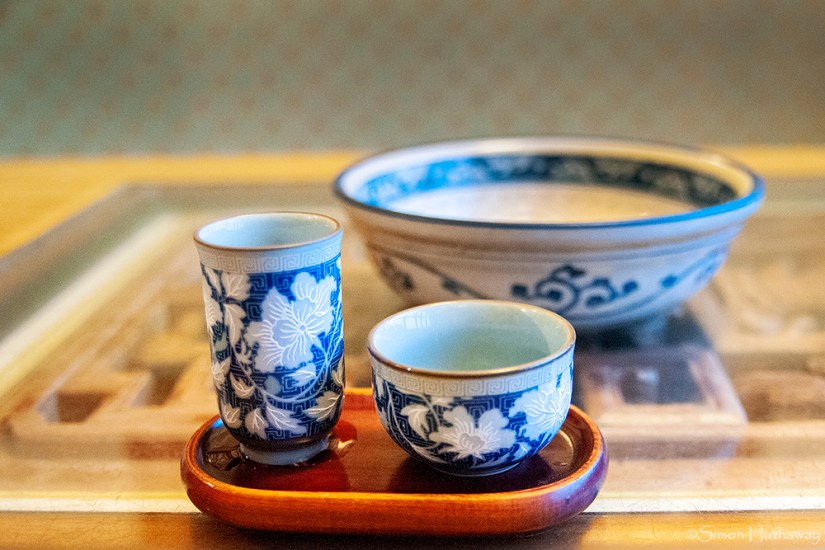
Baofu said, “Have a cup of tea.”

Student: “Why doesn’t Buddha have two kinds of expression?”

Master: “Because there is only one kind and nothing else.”

Student: “Why can’t I hear it?”

Master: “Because you are not deaf.”

Student: “Why do you say so? Master Changqing said that a deaf person cannot hear it.”

Master: “He also said that the Buddha never has two kinds of expression.”

Student: “What is the Buddha’s expression?”

Master: “Arhats have three types of poison and Buddha has two kinds of expression.”

Commentary:

Whatever vessels seawater is put in, it tastes salty.

©Boo Ahm

All writing ©Boo Ahm. All images ©Simon Hathaway #zen #meditation #zenmeditation #enlightened #enlightenment #zenfools #photography

Zen

Rinzai 84

Followers of the Way, you should be a manly man if you are to realise the true-Self. You should not be weak-minded and undetermined because even the best food cannot be kept in a cracked vessel. To become a great vessel, you should not be possessed by others but ought to be your own master wherever you may be. Then, the place where you stand will be the truth itself.

Commentary:

‘You should be  a manly man if you are to realise the true-Self’ means that in order to attain enlightenment, you should have a strong belief that you can become enlightened and firm determination to overcome any challenges to achieve your goal without fail. Such a person is compared to a great vessel for enlightenment. ‘You should not be possessed by others but ought to be your own master’ implies that you should not be deluded by words and forms but see them as illusions created by yourself.

Enlightenment is to not being deluded by illusions as the best food is to a great vessel. In the same way that the best food cannot stay intact in a cracked vessel because germs spoil the food by spreading into it through the cracks, enlightenment cannot be attained when we are deluded by illusions.

When you are not possessed by others then you are truth itself, which means that you are in the Pure Land.

©Boo Ahm

All writing ©Boo Ahm. All images ©Simon Hathaway

#zen #meditation #zenmeditation #enlightened #enlightenment #zenfools #photography

Zen

Q. Is Nirvana the same as heaven? Is that where Buddha is today?

A. Nirvana is to Buddhism as heaven is to Christianity. You should know that you are already in Nirvana all the time. The reason why you are not in Nirvana is not that it is far away from you but that you are not aware that you are there.

Regarding your second question, Nirvana is where Buddha is, that is, only Buddha, and no one else, can be in Nirvana. As mentioned above, if you are already in Nirvana, it means that you are already Buddha and that you need not seek any other Buddha since you are Buddha. The truth is that you are not Buddha, not because you are not Buddha but because you are ignorant of the fact that you are Buddha.

You have been and will be Buddha forever, and so you have been and will be in Nirvana forever. Whether you will be in Nirvana as Buddha or stay as a sentient being depends on whether or not you realise this truth.

©Boo Ahm

All writing ©Boo Ahm. All images ©Simon Hathaway

#zen #meditation #zenmeditation #enlightened #enlightenment #zenfools #photography

Zen

What is perfect?

Two young monks visited a well-known master in order to get his teaching. They asked the master “Sir, what is perfect?” The master replied “Both of you go out of this temple and bring me something within the next half an hour. Then I will show you what is perfect.” One monk quickly returned with a red flower, the other came back later with a stream-worn pebble. They showed the master their offerings and the master observed them, then he said, “One is perfect, the other is imperfect.”

Student: “Which one is perfect?”

Master: “The one who neither moved nor spoke is perfect.”

Commentary:

The ones who move and speak are all the servants of the one who does not.

©Boo Ahm

All writing ©Boo Ahm. All images ©Simon Hathaway

#zen #meditation #zenmeditation #enlightened #enlightenment #zenfools #photography

Zen

Rinzai 83

Just put your heart at rest and seek nothing outside. When things come towards you, look at them clearly. Have faith in the one who is functioning at this moment, and all things become empty by themselves. Followers of the Way, do you want to attain this Dharma? Then it is indeed necessary to become a man who has nothing further to seek.

Commentary:

‘Just put your heart at rest and seek nothing outside’ means that we should stop pursuing enlightenment in vain by discriminating or following words. Enlightenment is to realise that you are perfection itself and not to attain something perfect outside. ‘When things come towards you, look at them clearly’ implies that when seeing and hearing things, we should see and hear what is beyond the sounds and forms, which is to see and hear things without attaching any labels. ‘Have faith in the one who is functioning at this moment, and all things become empty by themselves’ implies that if you realise what is controlling your physical body at this moment, you can see all things as empty naturally, without extra effort. Then, you realise that you are perfection itself and eternity itself which has nothing further to seek.

©Boo Ahm

All writing ©Boo Ahm. All images ©Simon Hathaway

#zen #meditation #zenmeditation #enlightened #enlightenment #zenfools #photography