The World-Honoured One had already been born in the royal palace before leaving Tusita Heaven, and even before emerging from his mother’s womb, he had already delivered all sentient beings in the world.
Student: “Then, why was the Buddha born in India 2,500 years ago?”
Master: “In order to show that He was in the royal palace before leaving Tusita Heaven.”
Commentary: The Buddha never moves at all, but there is no place out of His reach.
Part 1-3 Thus did I hear. One time, the Buddha was staying in Jeta Grove in Sravasti, residing with 1,250 great monks.
Commentary: As mentioned in Chapter 1-1, “Thus have I heard” refers to hearing without being deluded by words or appearances, listening as it is, in its true nature. It means hearing all sounds as they are, or hearing them as empty. While we tend to categorise sounds into things such as “birdsong”, “thunder”, or “a child crying”, listening as it is means, as the saying goes, “even if the ears are full, there are no words”. This means hearing any sound without attaching words that distinguish or divide it.
This kind of hearing is also described as hearing the unheard, listening without being swayed by words, or regarding all sounds as the function of the true-Self—referred to in Chapter 1-2 as “Tathagata”, “the true-Self”, “Buddha”, “Emptiness”, or “Non-Duality”. In this state, the listener and the object of hearing become one, resulting in hearing without hearing.
This is how one listens to the Buddha’s dharma talks. If one can hear everything in this way, one can hear the Buddha’s dharma talks anytime, anywhere, and cannot stop hearing them even for a single moment. Such a state is said to be reaching the Pure Land, and once reached, one cannot escape from it.
Disciple: “What is it like when one hears in this way?” Master: “I can’t help but answer your question?” Disciple: “Why can’t you help but answer my question?” Master: “Because no one can deceive you.”
Hearing others’ words about it a hundred times—How could this compare to hearing it directly once?
Zen meditation is a kind of Buddhist practice to attain enlightenment. When we say that we practise Zen meditation, it is really difficult for us to know whether or not we are practising correctly because our practice is happening invisibly in our mind. Many people don’t know where they are heading and why they should go the way they are going
Practising correctly is much more important than practising hard because the harder you practise incorrectly the farther away you can become from your goal, enlightenment. You had better stop such practice since it can harm your life rather than benefit it.
Many people seem to be wandering aimlessly through the woods. To avoid such a common mistake, we should remember the following. Enlightenment is very clear and concrete, not vague like a wild-goose chase.
In order to reach the final goal, you should not believe blindly in what so-called masters say, but assume a critical attitude until you are persuaded logically. Buddha, while alive, used to say to his disciples, “Don’t believe blindly in what I say to you now, but contemplate it to see whether it makes sense to you. If it makes sense to you, accept it, but if it doesn’t, don’t accept it but bring it back to me and ask it of me again.”
Likewise, you should not blindly accept what masters say. When coming across what doesn’t make sense to you, you should go on to ask for further explanation until you find it understandable and acceptable.
If it happens that you can’t get a satisfactory answer, you don’t have to follow such a master. In fact, in many cases, masters say a few words that are difficult to understand, and pretend to make a very important and meaningful message (in reality, most of them even themselves don’t know what they say). Laymen treasure them and cling to them without knowing the meaning while just believing they are very valuable. They think themselves to be to blame for not being able to understand the message. The vaguer their message sounds, the more respectful they are of it while thinking its meaning is too deep for them to understand.
You should not accept Zen in that way. When a master delivers important words, he should explain to you in detail to the extent that you have sufficient intellectual understanding: why he says so and what viewpoint you should have to understand his words. If he doesn’t, he is of no help to you.
You should clearly know the reason why you should practise by asking yourself or masters.
When you undertake a certain kind of Zen practice, you also should know why you should choose it.
You should have your practice checked often since you are apt to go in the wrong direction, because it is not tangible, invisible and scentless. If you practise correctly, you progress step by step and you become more and more confident in your practice. You can feel yourself changed. Then, you can be sure that enlightenment is not vague but very clear.
Master Seok-sang said during a dharma talk, “One must know the single phrase transmitted separately outside the doctrinal teachings.” At that moment a monastic stepped forward and asked, “What is the single phrase?” Seok-sang replied, “It is not a phrase.”
Master Woonmoon said, “Only when it is not a phrase does it become a phrase.”
Student: “Who can recognise a phrase that is not a phrase?” Master: “A man without eyes and ears.”
Commentary: A phrase is not a phrase but a gate. Don’t read it but enter it.
Part 1-2 Thus did I hear. One time, the Buddha was staying in Jeta Grove in Sravasti, residing with 1,250 great monks.
Commentary: In Buddhism, the concept of “I” (self) is a profoundly significant term, for all things can only be perceived through “I” (the self). To see “in this way” (as they truly are), one must first and foremost see the “I” as it truly is. Only when the self is perceived as it is can all things be seen as they are. Therefore, to see the self as it truly is—that is, to realise the nature of the self is synonymous with attaining enlightenment.
What, then, is your “I”? When you say, “I want to be happy,” what does this “I” refer to? When you say, “My car is five years old,” the phrase “my car” does not mean that you are identical to the car or that you are the car itself. Rather, it implies that you own the car, or the car belongs to you. In other words, you are distinct from your car, not one with it.
Similarly, when you say, “My body is older than yours,” the phrase “my body” carries the same implication as “my car”—just as you are separate from your car, you are not your body but distinct from it.
If your body is not you, then what are you? This question originates from the historical Buddha’s words in the 26th section of this sutra (the Diamond Sutra): “Those who seek me through my voice or form cannot truly see me.”
When your body is not you, what are the boundaries of your existence? It is boundless and infinite. What is the nature of something that is boundless and infinite? It is formless and encompasses all things without exception.
What is the nature of something that is infinite, formless, and all-encompassing?
Firstly, as symbolised by the historical Buddha’s reputed words at his birth, “In heaven and on earth, I alone am the honoured one,” there is nothing apart from the self, and nothing exists that is not the self.
Secondly, being formless and without beginning, it has no edges or boundaries.
Thirdly, being formless and without beginning or end, it is changeless.
Fourthly, without beginning, form, or change, there is no birth or death to mark a start or end, nor is there sickness or ageing to signify transformation.
This is the essence of our existence, known as the true-Self, Buddha-nature, Tathāgata, the Buddha, emptiness, or non-duality. It is our true nature, and to know this true nature is the enlightenment that Buddhism seeks.
Disciple: “What does ‘I’ mean here?” Master: “‘I’ means ‘no I’, ‘no-self.’ In truth, since there is only ‘I’ and nothing to distinguish it from, the very word ‘I’ cannot exist. Thus, because ‘I’ cannot be called ‘I,’ it is referred to as ‘no I’, ‘no-self.’” Disciple: “What is the true-Self?” Master: “The moment you ask me, you are already mistaken, and the moment I answer, I too am mistaken.” Disciple: “Why?” Master: “Because by dividing the non-dual true-Self into ‘you’ and ‘me,’ we err.”
To ignore a person face-to-face creates karma—How much greater the karma of ignoring the Buddha right before you would be!
A. It is true that in reality it is not easy to find an enlightened man both because we can’t tell whether a man is enlightened or not and because we don’t know where he is.
However, there is a saying that if we practise hard in the right way with an ardent mind, an enlightened man comes to you and helps you unexpectedly.
According to the Sutras, this means that everything we see and hear is the Buddha who is leading us to enlightenment by preaching incessantly. You can come across a moment out of the blue when one of the common things in your life gives you a marvellous teaching that is beyond your imagination.
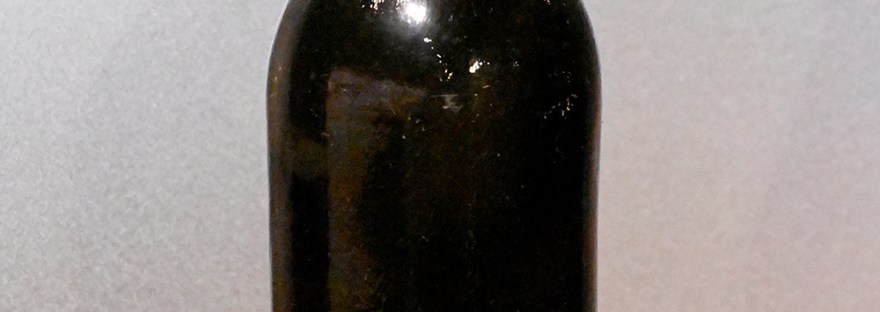
A monastic asked Master Seok-sang, “Does the true-Self appear in the world?” The master replied, “It doesn’t appear in the world.” The monastic said, “What can be done with the true-Self?” The master said, “It is the mouth of a glass bottle.”
Student: “If the true-Self doesn’t appear in the world, who sees it?”
Master: “There is no one who doesn’t see it in the world, but few recognise it.”
Commentary:
It is said to be hidden when we can’t see it and appear when we can see it.
Part 1 Thus did I hear. One time, the Buddha was staying in Jeta Grove in Sravasti, residing with 1,250 great monks.
Commentary: “The Thus Have I Heard” is the opening phrase of all Buddhist sutras, and the ancient masters considered understanding this single sentence to be equivalent to understanding the entire sutra. It is no exaggeration to say that the rest of the text is merely a detailed commentary on this line. Let us then examine each word in this phrase.
Here, “Thus” does not merely refer to the remaining content of the sutra. Rather, it describes the nature of the true-Self, or the Pure Land—the way things appear when they are seen exactly as they are, without being deluded by words or appearances. It points to a perfect, inexpressible state, so pure that the ancient Zen masters would say even uttering the word “thus” corrupts its meaning.
Disciple: “What does ‘thus’ mean?” Master: “It is a description of what is right in front of you.” Disciple: “What is that?” Master: “It’s also behind you.” Disciple: “What is it like?” Master: “It is the Buddha.” Disciple: “What is the Buddha like?” Master: “It is like all things. There is nothing that is not like the Buddha.” Disciple: “If the Buddha’s form is the same as all things, and all things exist in that form, why can’t I see the Buddha?” Master: “Because you do not see thus.”
There is nothing other than this. Whether your hand is open or closed, every finger points to this.
A. The true-Self is formless, boundless, changeless and nameless, but it is the source of everything. We should see what never moves through all actions and movements and see what is formless through forms such as our physical bodies. All forms and their actions come into existence based on the true-Self, just as all winds come into existence depending on air. This means that all forms differ from each other, but they are the same in essence.
This is why it is said that all things are different from each other and there is nothing that is the same as anything else. However, everything is the same and there is nothing that is different from anything else.
A monastic asked Master Seok-sang, “Does the true-Self appear in the world?” The master replied, “It doesn’t appear in the world.” The monastic said, “What can be done with the true-Self?” The master said, “It is the mouth of a glass bottle.”
Student: “Why doesn’t the true-Self appear in the world?”
Master: “Because it is neither hidden nor covered.”