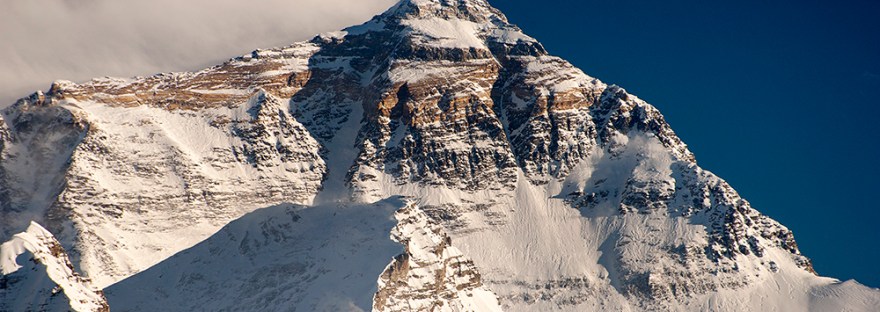
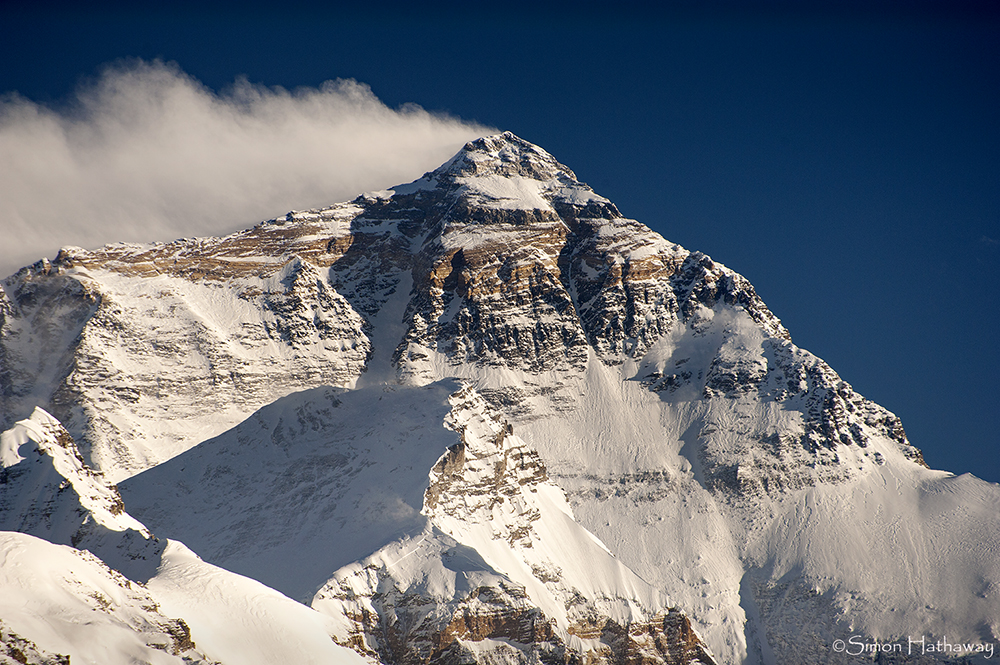
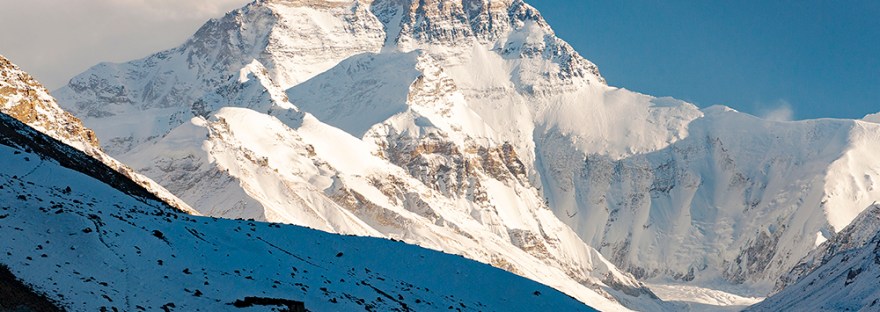
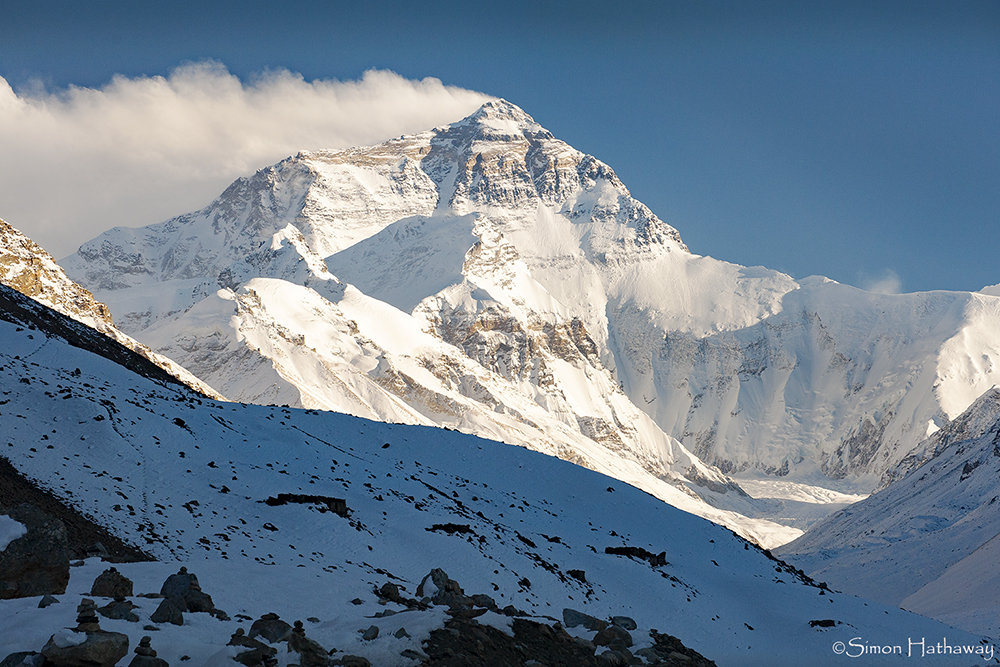
Dongshan asked a visiting monastic, “Where have you been?” The monastic said, “I have visited a mountain.” Dongshan said, “Did you get to the top of the mountain?” The monastic said, “Yes, I did.” Dongshan said, “Was there anyone on top of the mountain?” The monastic said, “There was no one there.” Dongshan said, “You did not get to the top of the mountain.” The monastic said, “If I hadn’t, how would I know that there was no one there?” Dongshan said, “Reverend, why don’t you stay here for a while?” The monastic said, “It’s not that I mind staying. It’s just that there is someone in India who may not approve it.” Dongshan said, “I have my suspicions about this fellow.”
Student: “Why did someone in India not approve the monastic’s staying?”
Master: “In order to save his life.”
Commentary:
If you move even a step or stay anywhere, you will be trapped by death.
As I see it nowadays, I do not differ from the patriarchs and Buddha. One who attains enlightenment at the first phrase will be a teacher of patriarchs and Buddhas; one who attains enlightenment at the second phrase will teach men and the heavenly world; and one who attains enlightenment at the third phrase cannot even save himself.
Commentary:
The first phrase is one of the expressions frequently used to indicate the true-Self in Zen. It looks so tricky that people are very likely to be fooled into trying in vain to distinguish it from the second phrase and the third phrase. To explain this literally, the first phrase means a phrase beyond words. Attaining enlightenment at the first phrase means attaining enlightenment before hearing a phrase. Attaining enlightenment at the second phrase means following words and attaining intellectual understanding after hearing a phrase. Attaining enlightenment at the third phrase means following words and attaining incorrect intellectual understanding after hearing a phrase. The final goal of Zen meditation is to attain enlightenment at the first phrase.
The point here is that there are no specific words for each phrase. Whatever word or whatever phrase you may hear, if you can grasp it as the function of the true-Self without being deluded by words, it is the first phrase. Any words, any sounds, and even rude names can be the first phrase if you can hear them as they really are. On the contrary, even sweet and plausible words and phrases are no better than the second and the third phrase if you just follow the literal meaning of them, which is to be deluded by words. This is why ancient masters would say that all the Sutras are just Mara’s talks if we follow words. Rinzai’s words ‘one who attains enlightenment at the second phrase will teach men and the heavenly world; and one who attains enlightenment at the third phrase cannot even save himself’ can be the first phrase, or the second and third phrases depending on how you accept them.
Student: “What is the first phrase?”
Master: “Before a word is spoken.”
Student: “What is the second phrase?”
Master: “It was already spoken.”
Student: “What is the third phrase?”
Master: “It is what the first phrase plus the second phrase is.”
A. You seem to have such an idea since you misunderstand the term ‘emptiness’, frequently used in Zen meditation, to mean nihilism. In fact, this is far from being correct. Zen meditation never tells people to avoid, or escape from reality but to see through it, or see it as just it is and therefore make wise decisions. Zen meditation teaches people how to lead their lives instead of being led by them.
Zen meditation helps people to realise that they are not the slaves of imaginary absolute beings such as Buddha, or Bodhisattvas but rather the master of them. It helps you to realise that you are happiness itself, eternity itself and perfection itself and that the world where you are living is the very Pure Land. It helps you to see and hear all the beauty that you have not been able to recognise so far, and to realise that your life is worth living much more than you think. Zen meditation encourages you to live a positive life rather than remain as a passive onlooker.
Dongshan asked a visiting monastic, “Where have you been?” The monastic said, “I have visited a mountain.” Dongshan said, “Did you get to the top of the mountain?” The monastic said, “Yes, I did.” Dongshan said, “Was there anyone on top of the mountain?” The monastic said, “There was no one there.” Dongshan said, “You did not get to the top of the mountain.” The monastic said, “If I hadn’t, how would I know that there was no one there?” Dongshan said, “Reverend, why don’t you stay here for a while?” The monastic said, “It’s not that I mind staying. It’s just that there is someone in India who may not approve it.” Dongshan said, “I have my suspicions about this fellow.”
Student: “Who was someone in India who might not approve the monastic’s staying?”
Master: “He is here now, too.”
Student: “Why isn’t he seen?”
Master: “You are to blame.”
Commentary:
It is not because he hides himself but because we don’t recognise him that we don’t see him.
One asked, “What is the true Buddha, the true Dharma, the true Way? Please explain.” The master said, “What you call the Buddha, that is your mind in its purity. What you call the Dharma, that is your mind in its radiance. What you call the Way, that is when in sheer light there is no obstruction anywhere. The three are one; but they are empty names and have no real existence. The man who truly travels the Way has no gap between one thought and another thought. Since Bodhidharma came from the West, he only looked for a man who would not let himself be deluded. Finally, he met the Second Patriarch, who at a single phrase attained enlightenment and realised the vanity of all the efforts that he had made so far.”
Commentary:
What is a mother, a wife, a teacher? A woman is a mother to her children, a wife to her husband and a teacher to her students at the school where she works. She can have additional names which identify her such as a daughter to her parents and a friend to her friends. No matter how many names she may be called by, the essence of her being never changes. Likewise, all the names used to express the true-Self are just imaginary labels, not reality, and this includes the label ‘true-Self’. This is why ancient masters would say to their students, “You are wrong if you open your mouth to express the true-Self”.
‘The man who truly travels the Way has no gap between one thought and another thought’ means that we should know everything we see and hear, not to mention all our thoughts, is one as emptiness. If we happen to think there is something that is not empty, the one as emptiness is divided into two; emptiness and what is not empty. Then, naturally gaps come into being between them. Furthermore, when we think that there are many things that are not empty, many gaps come into existence among them. The things that we think are not empty are no other than illusions, and so if there are any gaps between things or between thoughts, it means that we are deluded by illusions. That is why Bodhidharma only looked for a man who would not let himself be deluded.
Student: “How can we recognise the true-Self if it cannot be described with words?”
Master: “Nothing but it is seen when all words are removed.”
A. Buddhism has a similar scripture. The Avatamsaka Sutra says that the Buddha reveals himself through all the different forms of all sentient beings, all the different words of all sentient beings and all the various names of all sentient beings. Ancient masters would also say that all names are the names of the Buddha.
It means that all the things we see and hear in our daily lives are the shapes and the voices of God, and so all the names attached to them are God’s names. Using all names without realising this fact is misusing God’s name. If we don’t recognise God who is with us all the time, we cannot escape from the ocean of suffering, that is, we cannot enter the Kingdom of God. In other words, we should not make the error of forsaking God who is always with us while making futile effort to look somewhere else for Him.
Venerable ones, what are you chasing around after to the extent that the soles of your feet become callused as hard as a wooden board? There is no Buddha to seek, no Way to accomplish, no Dharma to be obtained. If you seek the Buddha with form from outside, he will not be like the true Buddha. Do you want to know your original heart? It is neither with nor separated from you. Followers of the Way, the true Buddha has no shape, the true Way has no foundation, the true Dharma has no form. These three blend together and harmonise into one. Who does not yet discern this is called a sentient being confused by Karma.
Commentary:
If you have an image of the Buddha and seek the Buddha in accordance with it, your effort is in vain because the true Buddha, being formless, is not like the Buddha you are seeking. Your mind that is not confined to your physical body, but boundless enough to leave room while holding the whole universe, is no other than the Buddha. In other words, there is nothing that is not the Buddha, and you are part of the Buddha. This is why it is neither with you nor separated from you. In fact, the Buddha, the Way and the Dharma are just different names of the true-Self and not separate from one another. So, the Avatamsaka Sutra says that the Buddha appears all around the universe in various different shapes of all sentient beings and sounds like various words of all sentient beings and has various names of all sentient beings. And in the same Sutra a Bodhisattva says, “If I want to see the Buddha, I can see Him any time. However, he never comes to me nor do I go to Him.” This implies that seeking the Buddha, whilst forsaking what you see and hear now, is making fruitless effort.
Student: “Why can’t I see the Buddha while everything is the Buddha?”
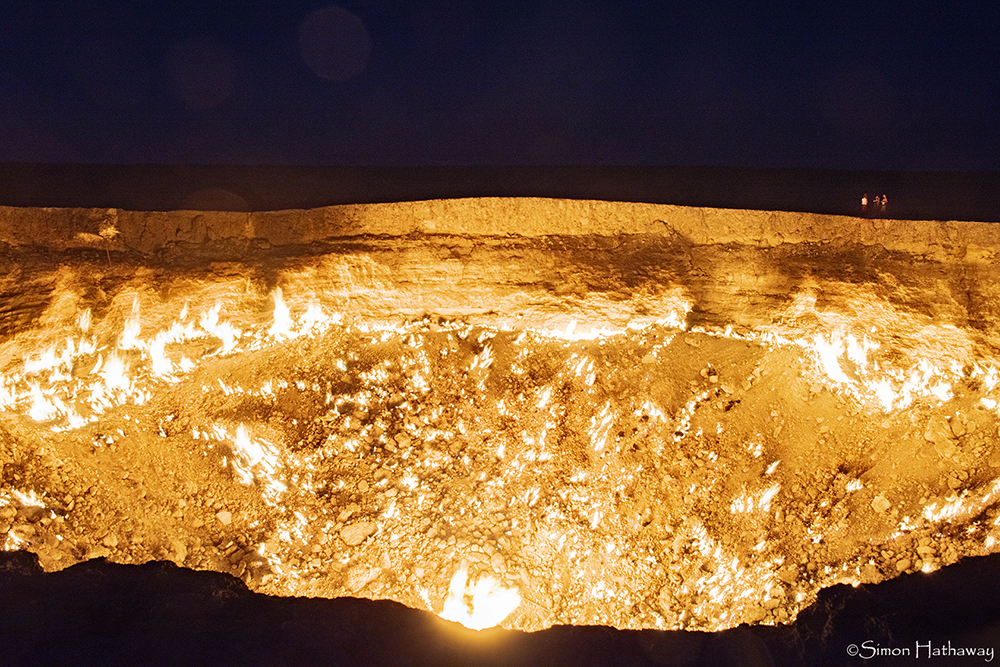
A. There is a nice dialogue between an ancient master and his student: “Where is the Buddha when people are suffering in the chaos of revolt?” “He hides himself amidst flames during the chaos of revolt”. This says that although he is always with us as usual and has never left us, we don’t recognise him since we are deluded by flames, our illusions. In other words, we don’t recognise him since we have our eyes and ears covered with the labels, illusions of our own creation.
That’s why we should try to see and hear things without attaching any labels to what reaches our eyes and ears. It is not because he hides himself, or forsakes us but because people don’t recognise him that people are not relieved by the Buddha, or God from the suffering of the chaos of revolt.
Guishan sat on the teaching seat. A monastic came up and said, “Master, please expound the dharma for the assembly.” Guishan said, “I have already exhausted myself for you.” The monastic bowed.
Student: “Why did Guishan say that he had already exhausted himself for them although he had done nothing other than sitting on the teaching seat?”
Master: “The monastic bowed.”
Student: “I still don’t understand why he bowed, either.”
Master: “Your asking questions is no less good than his bowing.”