Questions & Koans

Zen

Rinzai 40

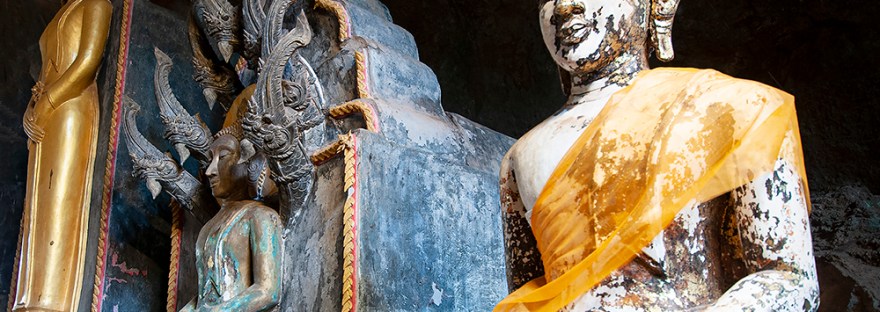
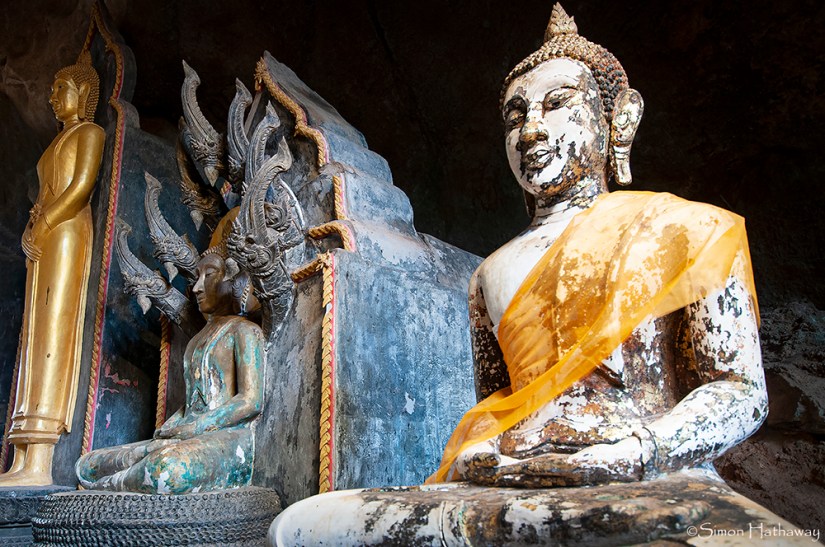
The scholars of the Sutras and Treatises take the Three Bodies as absolute. As I see it, this is not so. These Three Bodies are merely words, logical props. An old master said, “Even when we talk about the Buddha Bodies and the Pure Land based on their literal the meaning, we do this depending on the true-Self.” Thus, you should know that the Dharma Nature Bodies and the Pure Land are only shadows of light.


Commentary:

‘These Three Bodies are merely words, logical props’ means that the Three Bodies are only imaginary lines, labels used to explain and describe the Buddha, the true-Self, and are not the Buddha itself. Words and phrases employed to illustrate the Buddha, however beautiful and plausible they may sound, are not the essence of the Buddha but only fingers pointing to the Buddha. Clinging to those words is to be deluded by illusions of the Buddha. So, ancient masters would say, “If you cling to words, all Sutras become Mara’s talk.”  Buddha also said on his deathbed, “Not a word have I said” in order to prevent his students from clinging to his words.
_SRH4765a_thumb


‘Even when we talk about the Buddha Bodies and the Pure Land based on their literal meaning, we do this depending on the true-Self’ means that everything we do to express the Buddha, whether speaking or gesturing, is the function of the true-Self, the Buddha. In other words, the Dharma Nature Bodies and the Pure Land are only shadows of light, illusions. The ground from which these words come from is the true-Self.


Student: “What are the Three Bodies?”

Master: “Don’t be belied by such words.”

Student: “Then, what are the Three Bodies?”

Master: “The Three Bodies.”


©Boo Ahm


All writing ©Boo Ahm. All images ©Simon Hathaway


#zen #meditation #zenmeditation #enlightened #enlightenment #zenfools #photography

Zen

Q. What is the meaning of the following Parable of the Workers in the Vineyard (Matthew 20:1-16) from the Bible?

Jesus said: “Life in God’s Kingdom is Like this.  A man went to the marketplace to hire workers for his vineyard. He offered them a silver coin and they went off to work. At 9am, 12noon, 2pm and 4pm he went again and hired men at an agreed wage. At 6pm there were still grapes to be picked so he hired more men and agreed to pay them a fair wage.  At 8pm all the grapes were picked so he gathered all the men and paid them, starting with the ones hired at 6pm. All the workers got the same amount, a silver coin. The workers who had started at 9am were angry but the man said to them, ‘I paid you what we agreed, are you cross because I was generous to those who came later?’”

P1160578a_thumb


A. This paragraph implies that once you enter God’s Kingdom, there is no difference whatsoever with regard to how long you tried before entering the Kingdom. Some people meet Christianity at birth while others find it late in their lives. This parable implies that regardless of how early people start to follow Jesus’s teaching and how long they have followed it, once they enter the Kingdom, there is no difference at all there. Likewise, in Buddhism once you attain enlightenment, there is no difference whatsoever, regardless of how long you have practised prior to attaining enlightenment. Enlightenment attained after practising for 30 years is not different at all from the one attained as a result of practising for one year.


Student: “Why is there no difference after entering God’s Kingdom or attaining enlightenment?”

Master: “Because there is no discrimination there.”


©Boo Ahm


All writing ©Boo Ahm. All images ©Simon Hathaway


#zen #meditation #zenmeditation #enlightened #enlightenment #zenfools #photography

Zen

Guishan’s Water Buffalo

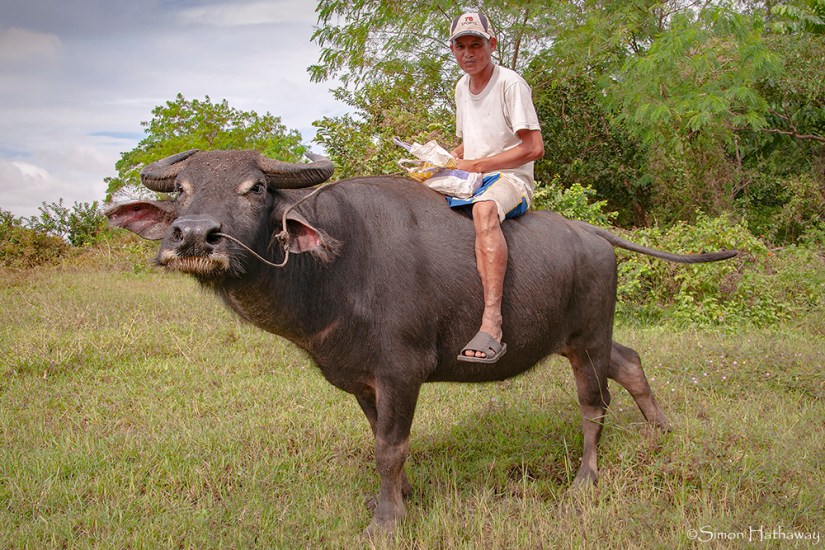
Guishan said to the assembly, “One hundred years from now I will be reborn as a water buffalo at the foot of this mountain. On the left side of the buffalo’s chest the characters, ‘I am a monastic of Guishan’ will be written. If you call it the monastic of Guishan, it will be a water buffalo. If you call it a water buffalo, it will be the monastic of Guishan. Tell me, what will you call it?”

Yangshan came forward from the assembly, bowed, and walked away.

File11672a_thumb


Student: “What will you call it?”

Master: “I will call it a water buffalo?”

Student: “How could you call the monastic of Guishan a water buffalo?”

Master: “Because I respect him.”


Commentary:

If you know the Buddha, every name is His name.

If you don’t know the Buddha, even Buddha is not his name.


©Boo Ahm


All writing ©Boo Ahm. All images ©Simon Hathaway


#zen #meditation #zenmeditation #enlightened #enlightenment #zenfools #photography

Zen

Rinzai 39

This trinity of the Buddha’s body is none other than he here before your eyes, listening to my expounding of the Dharma. You can come to this seeing only by not running and searching outside.


Commentary:

‘This trinity of the Buddha’s body is none other than he here before your eyes, listening to my expounding of the Dharma’ means that ‘the trinity of the Buddha’s body’ is no other than what is controlling your body now. Even your reading this writing is the function of the trinity of the Buddha’s body. That’s why I tell you to ask yourself what makes your body drink tea when drinking tea and what is leading your body to walk when walking.


‘You can come to this seeing only by not running and searching outside’ means that we can come to see this trinity by not chasing illusions, words and forms. Not chasing illusions, words and forms means not being deluded by them, which is ‘not discriminating and not differentiating’.

P1050414a_thumb


In brief, what is controlling your body at this moment is the trinity of the Buddha’s body, which is revealing itself clearly before you all the time. In order to realise it you should stop discriminating and differentiating, that is, you should not be deluded by illusions.


Student: “How can I avoid being deluded by illusions?”

Master: “Don’t be deceived by my words.”

Student: “How?”

Master: “Don’t miss what is beyond my words by clinging to them.”


©Boo Ahm


All writing ©Boo Ahm. All images ©Simon Hathaway


#zen #meditation #zenmeditation #enlightened #enlightenment #zenfools #photography
Zen

Q. How can we enter the place mentioned in Psalm 91 of the Bible which says, ‘Whoever dwells in the secret place of the most High will rest in the shadow of the Almighty.’

The secret place of the most High implies the Pure Land and the Almighty Buddha in Buddhism. Both are not separate and different from each other but the same as one. The Buddha is sometimes referred to as the Pure Land or the Buddha Land when it is described as a place we should reach.

The reason why it is called the secret place is not that it is hidden but that we can’t recognise it easily although we are actually in it all the time.

SRH_1133a_thumb_insta


Being enlightened means realising that everything is the Buddha. When you are enlightened, you come to know that everything, including you, is the Buddha and there is nothing that is not the Buddha. We can enter the place by realising that we are the very place itself that we yearn to enter. The purpose of Buddhism is to help people realise that they are the Pure Land itself.


Student: “How can we enter the secret place?”

Master: “You are wrong if you move even a step.”


©Boo Ahm


All writing ©Boo Ahm. All images ©Simon Hathaway


#zen #meditation #zenmeditation #enlightened #enlightenment #zenfools #photography
Zen

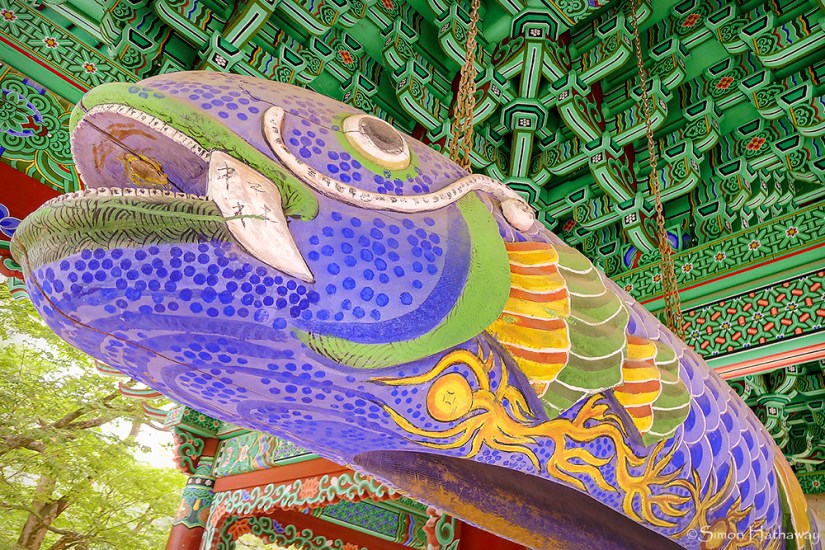
Hearing the Sound of the Wooden Fish

Guishan was sitting in the dharma hall one day. The head of the kitchen hit the wooden fish announcing the noon meal. The fire attendant threw a piece of wood he was holding into the fire, clapped his hands, and burst into laughter.

Guishan said, “Someone in the assembly should get him here and ask him what’s going on.”

The fire attendant said, “I did not have the morning meal, so I was hungry. That’s why I was happy to hear the sound of the wooden fish.” Guishan nodded.

P1100804a_thumb


Student: “Considering the fire attendant’s words, is he enlightened or not?”

Master: “What do you think of his words ‘I didn’t have the morning meal, so I was hungry’?”

Student: “I think he was hungry.”

Master: “You missed what he showed by clinging to his words.”


Commentary:

What matters is not what others say but whether you grasp it or not.


©Boo Ahm


All writing ©Boo Ahm. All images ©Simon Hathaway


#zen #meditation #zenmeditation #enlightened #enlightenment #zenfools #photography

Zen

Rinzai 38

Do you wish to be not different from the Buddhas and patriarchs? Then just do not look for anything outside. The pure light of your heart at this instant is the Dharmakaya Buddha in your own house. The non-differentiating light of your heart at this instant is the Sambhogakaya Buddha in your own house. The non-discriminating light of your own heart at this instant is the Nirmanakaya Buddha in your own house.


Commentary:

‘To be not different from the Buddhas and patriarchs’ means to attain enlightenment, since enlightenment is to realise that we are the Buddha. ‘Look for anything outside’ means to follow words and to believe that there is something else other than your mind. The union of Dharmakaya, Sambhogakaya, and Nirmanakaya in one Buddha is the holy Trinity in Buddhism. The first implies the essence of the Buddha, the second the action of it and the third the form of it. ‘Your own house’ implies the true-Self.

SRH_6087a_thumb_insta


‘The pure light of your heart’, ‘the non-differentiating light of your heart’, and ‘the non-discriminating light of your own heart’ that imply the function of the true-Self are oneness, not separate from each other. ‘The pure light’ is ‘non-differentiating light’, which is ‘the non-discriminating light’. They all mean that the function of the true-Self is pure because it is non-differentiating light and non-discriminating.


Whatever you do, it is the function of the true-Self, the holy Trinity. Even saying, “Dharmakaya” is also the function of the holy Trinity.


Student: “What is Dharmakaya?”

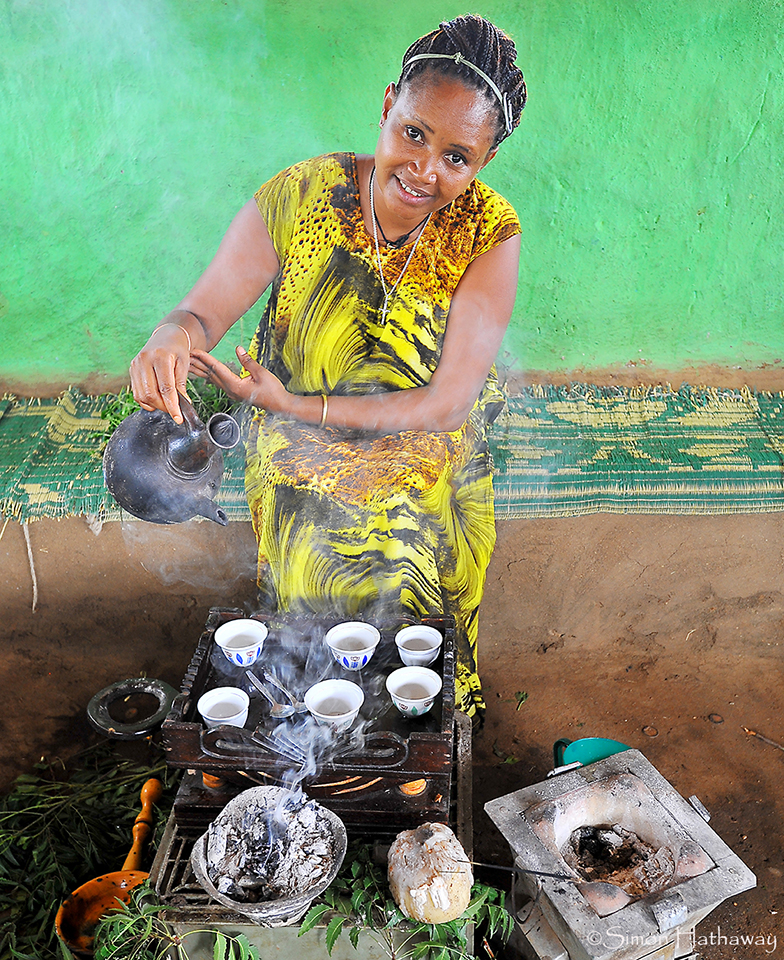
Master: “A cup of coffee.”

Student: “What is Sambhogakaya?”

Master: “A cup of coffee.”

Student: “What is Nirmanakaya?”

Master: “A cup of coffee.”


©Boo Ahm


All writing ©Boo Ahm. All images ©Simon Hathaway


#zen #meditation #zenmeditation #enlightened #enlightenment #zenfools #photography
Zen

Q. Is it possible to learn enlightenment like an academic subject?

I have never heard of or read about anyone who attained enlightenment in this way. If it were possible, many of the scholars of Buddhism would be enlightened. Academic learning is like trying to know what kimchi, one of the typical Korean foods is by studying the recipe for kimchi, whereas Zen meditation is like eating kimchi in person. Getting knowledge of kimchi is one thing and eating it in person is another.

017_2306a_thumb


Academic learning is a process of teaching and learning through language, namely words. From the viewpoint of Zen meditation, trying to get enlightened through academic learning is like trying to extinguish flames by spreading gasoline, instead of water over fire, because academic learning provides people with words or labels, whereas enlightenment is to see and hear everything without any labels.

So, masters would say that trying to attain enlightenment through academic learning is like striving to burn a huge mountain with the glow of a firefly.


©Boo Ahm


All writing ©Boo Ahm. All images ©Simon Hathaway


#zen #meditation #zenmeditation #enlightened #enlightenment #zenfools #photography
Zen

Nanquan Kills a Cat (3)

Once Nanquan saw the monastics of the eastern and western halls arguing over a cat.

He held up the cat and said to the monastics, “If you can say a turning word, I will not kill it.”

No one in the assembly could answer. So Nanquan cut the cat in two. Later he told the story to Zhaozhou. Zhaozhou took off his straw sandals, put them on his head, and walked away.

019_0196a_thumb


Student: “Why did Nanquan cut the cat in two?”

Master: “Because you saw it.”

Student: “Why did Zhaozhou take off his straw sandals, put them on his head and walk away?”

Master: “Because you didn’t see him.”


Commentary:

It’s because you killed the cat that mice are swarming here and there.


©Boo Ahm


All writing ©Boo Ahm. All images ©Simon Hathaway


#zen #meditation #zenmeditation #enlightened #enlightenment #zenfools #photography
Zen

Rinzai 37

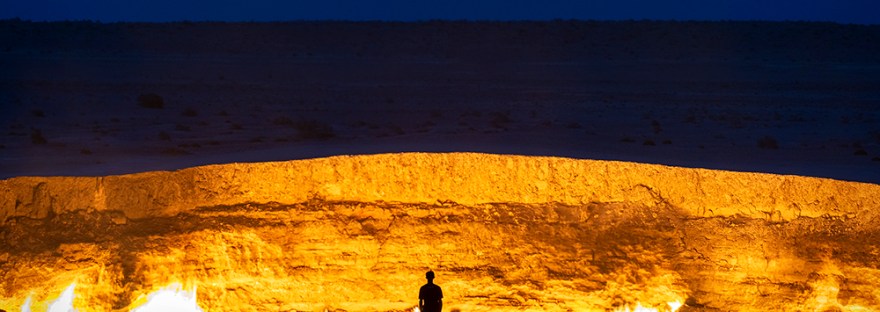
Venerable Ones, there is no place of rest in the Three Worlds; it is like a house on fire. This is not a place for you to stay long. The murderous demon of impermanence strikes in a single instant, without choosing between high and low, old and young.


Commentary:

‘The Three Worlds’ which are the World of Desire, the Visible World, and the Invisible World implies the World of Forms, the world of illusions where we sentient beings reside. ‘The Three Worlds’ is also compared to a burning house which is bound to collapse sooner or later. This symbolises our lives that are doomed to end before long. We sentient beings are compared to those who are struggling to stay alive for as long as possible there. ‘The murderous demon of impermanence’ implies ‘collapse of the burning house’ or ‘death’. This is not a place for you to stay long because no one can avoid death which comes to us in a single moment, without previous notice regardless of whether we are old or young, high or low and rich or poor.

019_8012a_thumb


The only way to survive the fire is to escape from the house because there is no place of rest as long as we are in the Three Worlds. The purpose of Zen practice is to help people to escape from the Three Worlds, the burning house.


Student: “How can I get out of the burning house?”

Master: “Get out of there quickly.”


©Boo Ahm


All writing ©Boo Ahm. All images ©Simon Hathaway


#zen #meditation #zenmeditation #enlightened #enlightenment #zenfools #photography