Questions & Koans

Uncategorized

Daowu’s “Alive or Dead”

Daowu’s “Alive or Dead”

Daowu visited a family with Jianyuan for a condolence call. Jianyuan tapped the coffin three times and said, “Alive or dead?”
Daowu said, “I won’t say alive. I won’t say dead.”
Jianyuan said, “Why won’t you say?”
Daowu said, “I won’t say. I won’t say.”
Jianyuan could not understand at the time.

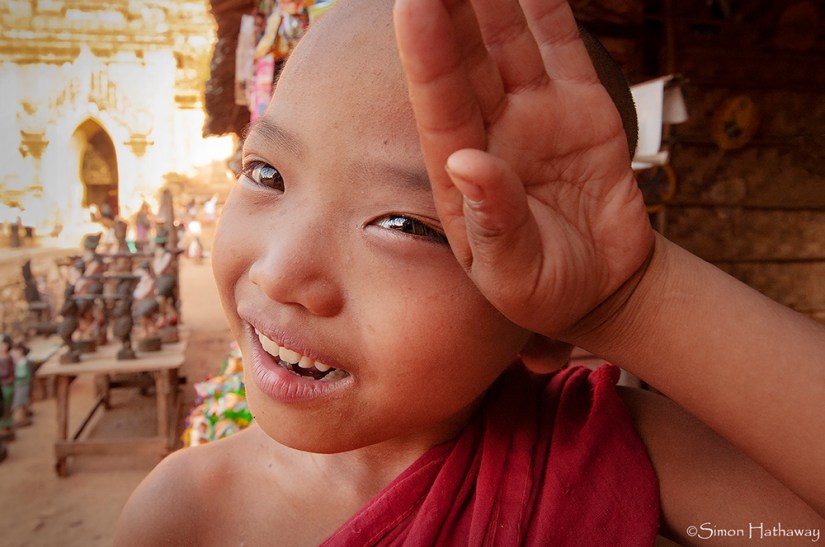
SRH_8135a_thumb


Student: “Why did Master Daowu not say an answer even though his student entreated him for an answer to his question?”
Master: “Whatever you may be offered, it is not yours until you take it.”

Commentary:
Concealing it is much more difficult than revealing it.
Not answering the question is more difficult than answering it.

©Boo Ahm

All writing ©Boo Ahm. All images ©Simon Hathaway

#zen #meditation #zenmeditation #enlightened #enlightenment #zenfools #photography http://ow.ly/i/LjNGN

Uncategorized

Rinzai 7

Rinzai 7

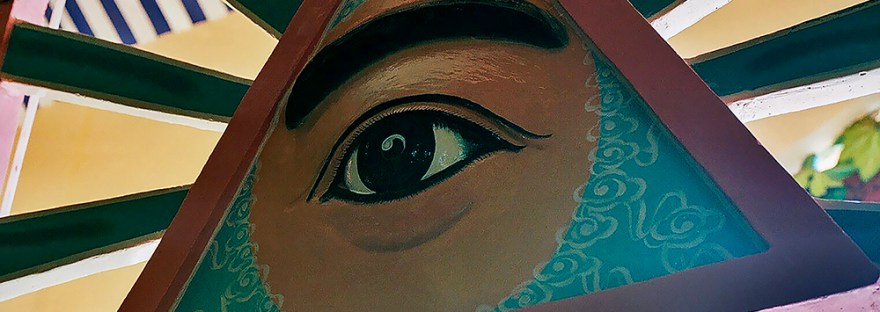
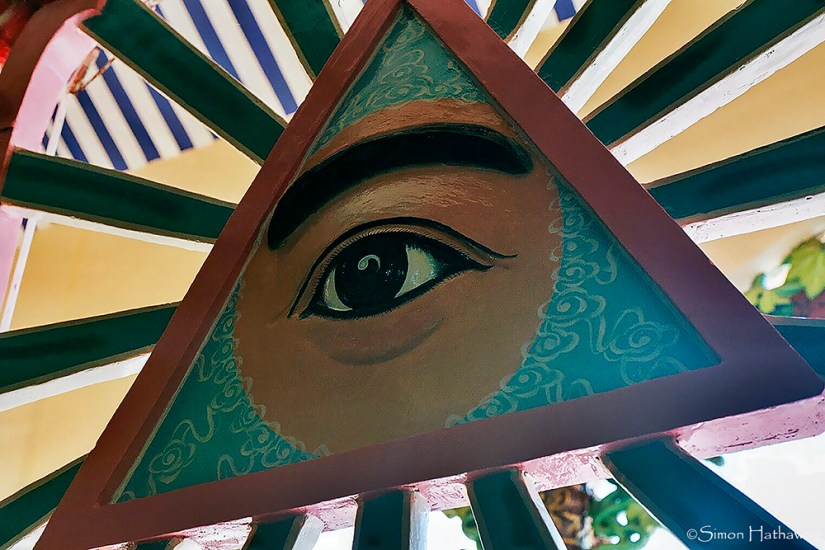
One day the master went to the provincial capital. The governor, 0 Joji, invited him to take the High Seat. Then Magok came forward and asked: “The Great Compassionate Bodhisattva, Avalokitesvara has a thousand hands and a thousand eyes. Which eye is the true one?

Commentary:
Magok was also one of famous masters at that time. This question by Magok was a very well-known koan among monks who practised Zen meditation and is still popular with Zen practitioners. Avalokitesvara, a symbol of compassion, is said to have a thousand hands and a thousand eyes and save any sentient beings from suffering who call his name. A thousand hands implies that he can help anyone, and a thousand eyes implies that he can see anyone.

Many people have the wrong idea that Avalokitesvara and Buddha are different and separate from each other and that Avalokitesvara is one of Buddha’s students, or a being a little lower than Buddha. This misunderstanding is due to being deluded by words.

In fact, the core idea of Buddhism is that everything is empty. When everything is empty, everything is one as Emptiness, which is called non-Duality, Oneness, or Emptiness. So, it is said that the main idea of Buddhism is the idea of non-Duality, or the idea of Emptiness.

Emptiness is referred to as Buddha, or the true-Self, and the personified name of the function of Buddha is Bodhisattva. There are many Bodhisattvas with different names according to the functions. Avalokitesvara is one of them. In fact, there is no action that is not Bodhisattva because every action is the function of Emptiness. It follows that no matter how many Bodhisattvas there may be, they are just one as Buddha, the true- Self. This means that all the eyes of Avalokitesvara are just one as Buddha, Emptiness. So, realising the true-Self, Emptiness is referred to as opening the eye of wisdom, and the true-Self is also called the single eye.
Although Magok seems to try to check Rinzai with this question, he is actually asking the assembly if they know what Emptiness, the root of Avalokitesvara is by asking which eye is the true one.

Student: “What is Avalokitesvara true eye?”
Master: “How could you see without it?”
Student: “What is it like?”
Master: “It can’t be closed.”

©Boo Ahm

All writing ©Boo Ahm. All images ©Simon Hathaway

#zen #meditation #zenmeditation #enlightened #enlightenment #zenfools #photography http://ow.ly/i/Lm94Q

Uncategorized

Q. How did we come to be in this situation where we do not know what we are?

Q. How did we come to be in this situation where we do not know what we are?

A. Buddhism says that this situation is from a discrimination from time immemorial. According to the Bible, this situation started when Adam and Eve ate the fruit of the Tree of Good and Evil in the beginning of time. Anyway, both say that a discrimination was the source of this situation.

Buddha gave us a very nice answer by using a metaphor when he was asked this question by one of his students. He said, “Let’s suppose that you, hit by a poisonous arrow, are dying with the poison spreading in your body. Which is more critical at this moment, pulling out the arrow from you and saving your life, or trying to find out where and whom the arrow is from?” We should know better than to lose our lives whilst trying in vain to find out the source of the arrow.

Try to see everything as it is now, which is to get rid of the poisoned arrow from you and save your life. When you come to see everything as it is, you can not only save your life but also clearly know the answer to your question. That is, you can understand what is mentioned in the first paragraph.

©Boo Ahm

All writing ©Boo Ahm. All images ©Simon Hathaway

#zen #meditation #zenmeditation #enlightened #enlightenment #zenfools #photography http://ow.ly/i/LjM5b

Uncategorized

Zhaozhou’s “Indestructible Nature”

Zhaozhou’s “Indestructible Nature”

Zhaozhou was once asked by a monastic, “Before the world existed, there was already the original nature. When the world is destroyed, true nature is not destroyed. What is this indestructible nature?”
Zhaozhou said, “Four great elements and five skandhas.”
The monastic said, “They are destroyed. What is this indestructible nature?”
Zhaozhou said, “Four great elements and five skandhas.”

SRH_8859a_thumb


Student: “The Sutras say that four great elements and five skandhas are destroyed without fail. Why did the master say that they are indestructible nature, the true-Self?”
Master: “In order to show the indestructible nature.”
Student: “I am still lost.”
Master: “The Sutras say that every name is its name.”

Commentary:
The indestructible nature and the destructible nature are not separate from each other. The former is hidden in the latter.

©Boo Ahm

All writing ©Boo Ahm. All images ©Simon Hathaway

#zen #meditation #zenmeditation #enlightened #enlightenment #zenfools #photography http://ow.ly/i/LhrgE

Uncategorized

Rinzai 6

Rinzai 6

“Because you have no faith in this, you are entangled and tied into knots. I fear that even the Governor and his staff may get entangled and their Buddha Nature obscured. I had better retire.”
He then gave a Katsu and said, “You of little faith, you never have rest. I have kept you standing a long time. Take care of yourselves!”

Commentary:
‘You have no faith in this’ means ‘you have not attained enlightenment’. ‘You are entangled and tied into knots’ means ‘you are deluded by illusions’. ‘I fear that even the Governor and his staff may get entangled and their Buddha Nature obscured’ shows his worry that the Governor and his staff may be deluded by his words without grasping what is beyond his words. When they are deceived by his words, his words become the blinds preventing them from seeing their Buddha Nature, which is to make their Buddha Nature obscured. ‘I had better retire’ means ‘I had better stop talking now since you seem to be deluded by my words’. ‘He then gave a Katsu’ is just like saying, “All I have talked about now is very simple and clear. Don’t be deceived by my words. I will express one more time what I mean that is beyond my words. That is ‘Katsu’. Do you get it?” We should know that Katsu is a summary of what he talked about so far. ‘You of little faith, you never have rest’ shows Rinzai’s pity on the assembly and implies ‘How tired you are from being deluded by illusions since you are not enlightened!’.

SRH_5954a_thumb


Student: “How can we not be entangled and tied into knots when hearing masters’ dharma talks?”
Master: “Their words are only vessels for their teaching, not teaching itself.”
Student: “What does Katsu mean?”
Master: “It contains all.”
Student: “How can I know whether or not I am entangled and tied into knots?”
Master: “What am I doing now?”
Student: “You are explaining Rinzai’s dharma talk to me.”
Master: “You are still seeing only the vessels.”
Student: “What is it in the vessels?”

©Boo Ahm

All writing ©Boo Ahm. All images ©Simon Hathaway

#zen #meditation #zenmeditation #enlightened #enlightenment #zenfools #photography

Uncategorized

Q. How can I let go of my anger towards past bitter experience and live in peace?

Q. How can I let go of my anger towards past bitter experience and live in peace?

A. The third Patriarch also had a similar thought to that which you have now and said to the second Patriarch, his master, “I am suffering from the sin I committed. What shall I do to be free from it?” The second Patriarch answered, “Bring me the sin you committed, and I’ll eliminate it.” The third Patriarch responded, “I cannot find it even though I look for it.” The second Patriarch said, “Why are you suffering from the sin that you can’t even find?” On hearing that, he attained enlightenment by realising that his sin was empty.

In the same way, can you bring your past bitter experience if you are told to bring it? If you can’t bring it, it means that it is not real and that you are struggling with the illusions of your past. That is like fighting with your own echo. The louder you shout to it to be quiet, the louder it resounds. The harder you struggle, the deeper you are stuck. This is the last game you should play. So, the best way to let go of your anger towards past bitter experience is to realise that not only your anger but also your past bitter experience is empty.

©Boo Ahm

All writing ©Boo Ahm. All images ©Simon Hathaway

#zen #meditation #zenmeditation #enlightened #enlightenment #zenfools #photography

Uncategorized

Xuansha Draws a Circle

Xuansha Draws a Circle

Xuansha saw Gushan coming and drew a circle on the ground.
Gushan said, “People cannot get out of this place.”
Xuansha said, “I think that you do things in a donkey’s womb and horse’s belly.”
Gushan said, “Master, what about yourself?”
Xuansha said, “People cannot get out of this place.”
Gushan said, “You said so and I said so. So, what’s wrong with me?” Xuansha said, “I have got it, but you haven’t.”

Student: “Both of them said the same. What’s wrong with Gushan?”
Master: “He didn’t know that punishment is not different from praise.”
Student: “What is it that Xuansha has but Gushan doesn’t have?”
Master: “Gushan has what Xuansha doesn’t have.”

Commentary:
Having a good thing is not as good as having nothing.

©Boo Ahm

All writing ©Boo Ahm. All images ©Simon Hathaway

#zen #meditation #zenmeditation #enlightened #enlightenment #zenfools #photography

Uncategorized

Rinzai 5

Rinzai 5

And he added, “It is for the one Great Matter that we hold this session today. Are there any more questioners? Let them step forward quickly and ask! But, when you as much as open your mouth, you are already off the point. Why is that so? Do you not know that Buddha said, ‘The Dharma is other than words; it neither belongs to cause nor resides in effect.’”

Commentary:
‘The Dharma’ means the Great Matter, the true-Self and ‘The Dharma is other than words; it neither belongs to cause nor resides in effect’ means that as the Dharma can’t be explained in words, it can’t be described even in the words that indicate ’cause and effect’, Buddha’s teaching. So, ‘When you as much as open your mouth, you are already off the point’ and ‘The Dharma is other than words’ signify that you are wrong if you just open your mouth with intention to describe the Dharma, the true-Self in words since it can’t be explained in words which are the products of discriminations which prevents us from realising the Dharma.

In order not to open your mouth, you should not open your eyes and ears as well because your words are the expressions of what you see and hear. In other words, only when we don’t make discriminations when seeing and hearing can we cease to make discriminations with our mouths. So, ancient masters would say, “You should be able to see with eyes closed and hear with ears covered. Once you open your eyes or ears, you are already off the point.” The key point is that you should be able to grasp what is beyond forms when seeing, just as you should be able to grasp what is beyond words when hearing. Then can you speak what is beyond words. In summary, only when you can see with your eyes closed and hear with your ears covered can you speak with your mouth closed.

Student: “What is the Dharma when it is other than words?”
Master: “Words.”
Student: “You said that it is other than words. Why do you say so?”
Master: “Didn’t I tell you to hear with your ears closed?”

©Boo Ahm

All writing ©Boo Ahm. All images ©Simon Hathaway

#zen #meditation #zenmeditation #enlightened #enlightenment #zenfools #photography

Uncategorized

Q. What does ‘Dead words are living words to the enlightened whilst living words are dead words to the unenlightened’ mean?

Q. What does ‘Dead words are living words to the enlightened whilst living words are dead words to the unenlightened’ mean?

A. The enlightened see everything as the true-Self, the Buddha and hear every sound as the sound of the Buddha. To them all words, whether good words, bad words, or even names, sound as dharma talks, the Buddha’s words. Then, even dead words are living words to them.

However, the unenlightened always chase after words literally without grasping what is beyond words. They, missing what the words point to, wrestle with the words themselves. Then, to them, all words, however good words they may be, are barriers that prevent them from seeing the true-Self. So, ancient masters would say, “If you follow only words, all the Sutras are Mara’s talk.” In the end, every word is neutral, not living, not dead. Whether it is living, or dead depends on how you hear.

Student: “Would you please say a living word for me?”
Master: “Hey, you thief. Why did you steal my money last night?”
Student: “No, Sir. What are you talking about? I never stole your money.”
Master: “What a shame! Why do you make my living word into a dead word?”

©Boo Ahm

All writing ©Boo Ahm. All images ©Simon Hathaway

#zen #meditation #zenmeditation #enlightened #enlightenment #zenfools #photography

Uncategorized

Guishan Brings a Mirror

Guishan Brings a Mirror

When Yangshan was abbot of a monastery at Donping, Guishan sent a letter and a mirror to him. During his talk in the dharma hall, Yangshan received the letter, held up the mirror, and said to the assembly, “Guishan has sent a mirror. Tell me, is this Guishan’s mirror or Yangshan’s mirror? If you say it’s Yangshan’s mirror, I say Guishan sent it. If you say it’s Guishan’s mirror, I say it’s in Yangshan’s hand. If you can say a word, I will keep it. If you can’t say a word, I will destroy it.”
Yangshan said this three times. No one in the assembly responded, and Yangshan struck the mirror.

Student: “Why did Yangshan destroy the mirror?”
Master: “In order to let the assembly know the owner of the mirror.”
Student: “Which did the mirror belong to, Guishan or Yangshan?”
Master: “Neither of them.”
Student: “Who in the world is the owner?”
Master: “Both of them also belong to him.”

Commentary:
A king never makes or destroys his things but has them made or destroyed by his servants.

©Boo Ahm

All writing ©Boo Ahm. All images ©Simon Hathaway

#zen #meditation #zenmeditation #enlightened #enlightenment #zenfools #photography http://ow.ly/i/LalYB