Questions & Koans

Uncategorized

Q. I have attended church for over thirty years since starting to go to from the age of seven. When do I have to attend church until?

Q. I have attended church for over thirty years since starting to go to from the age of seven. When do I have to attend church until?

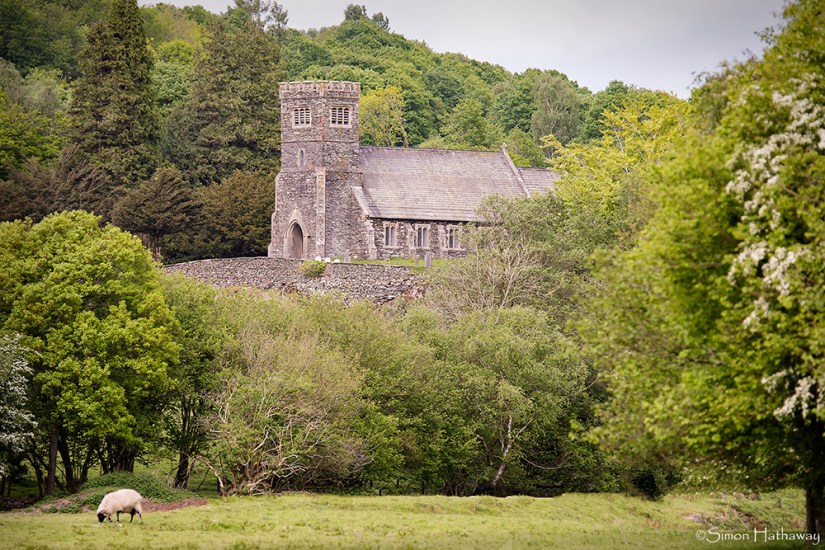
A. I’d like to ask you two questions: Why do you go to church? What do you think a church is? If you, thinking of a church as a place for praying to God, go to church in order to pray, then why do you have to pray only in a church? Is God only in churches and not at home? The Bible says that God is everywhere all the time and that there is no place without God.

You should know that going to church is not different from going to school where you can learn arithmetic rules. A church is to a school as a minister is to a teacher. A minister is to God as a teacher is to arithmetic. We go to church so that we may learn what God is just as we go to school in order to learn arithmetic.
SRH_0685a_thumb


When we become so good at arithmetic that we can freely apply it to our daily life, making it incomparably easier and more convenient than when we didn’t know it, we don’t have to go to school any more for the purpose of learning arithmetic. Likewise, when we, having realised what God is, can see him anywhere, anytime in our daily life and live a life driven by him all the time, we don’t have to go to church any more.

However, if your teacher entices you into worshipping arithmetic while only empathising the importance of it without teaching its principle, you should not go to such a school any more since the school doesn’t serve its role as a school.

©Boo Ahm

All writing ©Boo Ahm. All images ©Simon Hathaway

#zen #meditation #zenmeditation #enlightened #enlightenment #zenfools #photography http://ow.ly/i/J5New
Uncategorized

Dongshan’s Illness

Dongshan’s Illness

When Dongshan was not feeling well, a monastic said, “Master, you are not feeling well. Is there anyone who doesn’t get sick?” Dongshan said, “Yes, there is.” The monastic said, “Does the person who doesn’t get sick take care of you?” Dongshan said, “I have the opportunity to take care of the person.” The monastic said, “What happens when you take care of that person?” Dongshan said, “At that time, I don’t see the sickness.”

_SRH8341a_thumb_insta


Student: “Who is the person who doesn’t get sick?”
Master: “I don’t feel well.”
Student: “Dongshan said that when taking care of the person who doesn’t get sick, he didn’t see the sickness. Why don’t you take care of him as well in order not to see the sickness?”
Master: “Because I am busy taking care of a stupid fellow now.”

Commentary:
When a master takes care of the person who doesn’t get sick, he doesn’t see not only the sickness but also his student.

©Boo Ahm

All writing ©Boo Ahm. All images ©Simon Hathaway

#zen #meditation #zenmeditation #enlightened #enlightenment #zenfools #photography http://ow.ly/i/J3eE3

Uncategorized

Hsin Shin Ming: “58. Here thinking, feeling, knowledge, and imagination are of no value.”

Hsin Shin Ming: “58. Here thinking, feeling, knowledge, and imagination are of no value.”

‘Here’ in the beginning of this scripture means ‘in realising the true-Self or Emptiness’. ‘Thinking, feeling, knowledge, and imagination are of no value’ means that these don’t help us to realise the true-Self at all since the true-Self is beyond them. The true-Self can be realised only when all illusions are removed. Thinking, feeling, knowledge, and imagination are all illusions.

018_8153a_thumb


What we try to realise is the root from which all these come from. If you struggle with them, you may get a doctorate about the true-Self but you are far from getting enlightened. This is why Buddha, on his deathbed, said that he had never said a single word even though he had actually delivered a lot of talks, and why ancient masters would say that all Sutras become Mara’s speech if we follow the words literally.

Student: “What is the true-Self?”
Master: “Don’t ask me such a foolish question.”

©Boo Ahm

All writing ©Boo Ahm. All images ©Simon Hathaway

#zen #meditation #zenmeditation #enlightened #enlightenment #zenfools #photography http://ow.ly/i/IC6mo

Uncategorized

Q. Why does Buddhism say that there is not death?

Q. Why does Buddhism say that there is neither birth nor death?

Do you think that there are right and left? What is right? What is left? There is no fixed right and no fixed left. Right and left are not real but just imaginary lines that we create. Anything can be right or left according to your perspective. What is right to you can be left to someone else. This means that nothing is right, and nothing is left, unless we assign imaginary labels.

Let me ask you some similar questions. How old are you? Where are you living? When were you born? My answers to these questions are that I am 65 years old, I am living live in Seoul, Korea and that I was born 65 years ago, or in 1953. These are very common questions and answers that we can have in our daily life.

However, if we give a little more thought to these questions and answers, we can see that ‘I am 65 years old’ means ‘I have been dying for 65 years’, that ‘I was born 65 years ago’ means ‘I started to die 65 years ago’ and that ‘I am living in Seoul Korea’ means ‘I am dying in Seoul Korea’. Do you think that I am wrong, if I answer, ‘I have been dying for 65 years’, instead of ‘I am 65 years old’? Then, are we living or dying? This question is like ‘Are we right or left?’.

©Boo Ahm

All writing ©Boo Ahm. All images ©Simon Hathaway

#zen #meditation #zenmeditation #enlightened #enlightenment #zenfools #photography http://ow.ly/i/IA7TB

Uncategorized

An Outsider Questions the Buddha

An Outsider Questions the Buddha

An outsider asked the World-Honoured One, “I am not asking you about the spoken. I am not asking you about the unspoken.”

The World-Honoured One remained silent.

The outsider said in admiration, “The greatly compassionate World-Honoured One has cleared the cloud of doubt and let me enter the Way.” He bowed and left. Ananda said to the Buddha, “What point did he realise that he admired you?” The World-Honoured One said, “He was like a fine horse that starts running upon seeing the shadow of the whip.”

Student: “What was the shadow of the whip the World-Honoured One said the outsider had seen?”
Master: “The World-Honoured One had shown not only the shadow of the whip but also the whip to Ananda numerous times before.”
Student: “Why didn’t Ananda see it even though he was together with the outsider?”
Master: “Ananda’s not seeing is none of your business. Why don’t you see it now?”

Commentary:
How could one who can’t see even the whip in his hand see the whip swished by others?

©Boo Ahm

All writing ©Boo Ahm. All images ©Simon Hathaway

#zen #meditation #zenmeditation #enlightened #enlightenment #zenfools #photography http://ow.ly/i/Izk1i

Uncategorized

Hsin Shin Ming: “57. All is void, clear, and self-illuminating, with no need to exert the mind.”

Hsin Shin Ming: “57. All is void, clear, and self-illuminating, with no need to exert the mind.”

‘All is void, clear and self-illuminating’ means that all things, or all forms are revealing the true-Self clearly by themselves. ‘With no need to exert the mind’ means that we don’t need to make an effort to realise the fact because true-Self is already showing itself before you. However, it doesn’t mean that we don’t have to practise. It means that we should not try to find Emptiness in anything else and anywhere else in other than what we see and hear.

The true-Self is often referred to as a secret for the reason that it is far from easy to find. However, it is actually an open secret because the reason why we don’t see it is not that it is hiding itself but that we don’t recognise it while seeing and hearing it all the time.

Student: “Why can’t I see things as they are even though they are self-illuminating?”
Master: “Because ‘they are self-illuminating’ is blocking your sight.”

©Boo Ahm

All writing ©Boo Ahm. All images ©Simon Hathaway

#zen #meditation #zenmeditation #enlightened #enlightenment #zenfools #photography http://ow.ly/i/IC69y

Uncategorized

Q. They say that a secret remark has been transmitted from masters to their students. What is the secret remark?

Q. They say that a secret remark has been transmitted from masters to their students. What is the secret remark?

A. ‘A secret remark’ means a critical word or phrase that represents the true-Self. Ancient masters would say that all names are the Buddha’s name, which means that all words are the description of the true-Self. This is because everything is part of the true-Self, Emptiness and because there is nothing else other than the true-Self.

When there is nothing that doesn’t belong to the true-Self, all that we see and hear, including ourselves, is the true-Self. It follows that every sound is the sound of the true-Self and that there is no sound that doesn’t represent the true-Self. This means that every sound, whatever sound it may be; the sound of the wind, the bark of a puppy, a baby’s cry and so forth, is the sound of the true-Self. When all names are the names of the true-Self and when all sounds are the sounds of the true-Self, what is not a secret remark?

The reason why we don’t hear the secret remark is that we are deluded by illusions. So, an ancient master would say that when not deluded by illusions, that is, when we can see and hear things as they are, every word we speak is a secret remark.

Student: “What is the secret remark transmitted from master to master?”
Master: “You already said it.”

©Boo Ahm

All writing ©Boo Ahm. All images ©Simon Hathaway

#zen #meditation #zenmeditation #enlightened #enlightenment #zenfools #photography http://ow.ly/i/IMIDF

Uncategorized

Shishuang’s “This Side and That Side”

Shishuang’s “This Side and That Side”

One day, Shishuang Chuyuan said to his attendant monastic, “Daowu once said to a monastic, ‘Do not discard that side to get to this side.’ How do you understand this?”
The attendant monastic said, “It’s the same as your understanding, Master.”
Shishuang said, “What is my understanding?”
The attendant monastic walked from west to east and stood there.
Shishuang said, “You have just discarded that side to get to this side.”

SRH_1811a_thumb


Student: “How can I not discard that side to get to this side?”
Master: “Don’t make that side and this side.”
Student: “How can I not make them?”
Master: “Stop making them now.”
Student: “I am not making them now. How can I stop it?”
Master: “Asking is making them.”

Commentary:
Don’t try in vain to realise what air is by forsaking wind.

©Boo Ahm

All writing ©Boo Ahm. All images ©Simon Hathaway

#zen #meditation #zenmeditation #enlightened #enlightenment #zenfools #photography http://ow.ly/i/ILmPw

Uncategorized

Hsin Shin Ming: “56. With a single stroke you are freed from bondage; nothing clings to you and you hold onto nothing.”

Hsin Shin Ming: “56. With a single stroke you are freed from bondage; nothing clings to you and you hold onto nothing.”

‘Single stroke’ means enlightenment. The reason why enlightenment is expressed as a single stroke is that enlightenment is usually experienced through a momentary visual or auditory stimulus. For instance, one ancient master attained enlightenment at the moment of seeing peach blossoms, and another got enlightened at the moment of hearing a piece of broken tile hit some bamboo while sweeping a yard with a broom. Most masters got enlightened by the impact of a word, or a phrase, during a Dharma talk or a conversation with their masters. That is why I always say that you can get enlightened if you can hear just a single word, out of all the words you hear or speak, just as it is, or if you can see only a single thing, no matter what it is, as it is.

_SRH4864a_thumb


‘Bondage’ means karma. ‘Nothing clings to you and you hold onto nothing’ means that there is nothing that clings to you and nothing that you will cling to because everything is empty. So, this scripture says that once you get enlightened, or realise that everything is empty, you can enjoy freedom from karma.

Student: “How can I get a single stroke?”
Master: “Take it.”
Student: “I still don’t know.”
Master: “Take one more.”

©Boo Ahm

All writing ©Boo Ahm. All images ©Simon Hathaway

#zen #meditation #zenmeditation #enlightened #enlightenment #zenfools #photography http://ow.ly/i/II7Sm

Uncategorized

Q. Reading the old koans may lead one to believe that the old masters lost their minds. Why is this?

Q. Reading the old koans may lead one to believe that the old masters lost their minds. Why is this?

A. An old koan is to the unenlightened as a text for a doctorate course is to kindergarten children. To give another metaphor, if you hand a one-million-dollar cheque to a three-year-old child who is crying for sweets, he will be sure to think that you have lost your mind, because what he is anxious for is not a piece of paper but something sweet.

018_8161a_thumb


The reason why the old masters seem to have lost their minds is not that they lost their minds but that you don’t have the wisdom to have an insight into the old koans. So, ancient masters didn’t tell koans to all the people who came to them for teaching. They always presented them only to those who were ready to cope with them. Even after presenting koans, masters never failed to give students a lot of teaching to help them solve these koans.

If you feel excited and curious, when you read koans, you are above a certain level in Zen practice. If the ancient masters who created the koans seem to have lost their minds and you feel at a loss, you had better delay reading them and first build a basic foundation.

©Boo Ahm

All writing ©Boo Ahm. All images ©Simon Hathaway

#zen #meditation #zenmeditation #enlightened #enlightenment #zenfools #photography http://ow.ly/i/IEKfD