Questions & Koans

zen

The Diamond Sutra (54)

Part 14-12

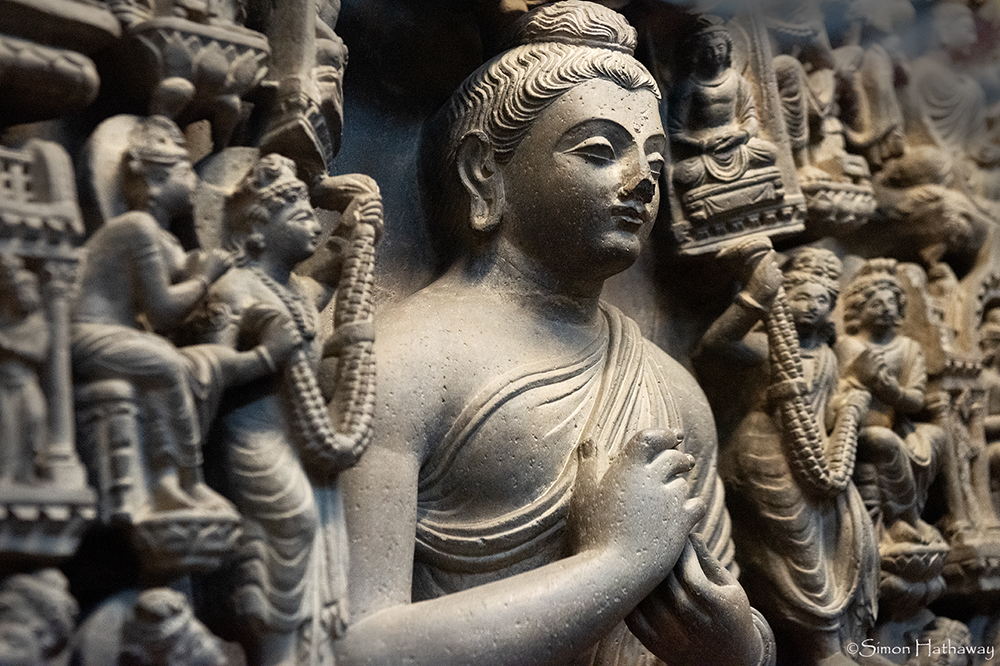
“All images that the Realised One mentioned are not images, and all sentient beings the Realised One mentioned are not sentient beings.”
Commentary:

Here the Buddha reminds his students one more time not to dwell on things by saying that the images and the sentient beings, which he mentioned frequently are not images and not sentient beings, but just called as such as an expedient means. Strictly speaking, if we grasp the Buddha’s words perfectly and see and hear everything in the way we were told to, we should not dwell on the words ‘All images that the Realised One mentioned are not images, and all sentient beings the Realised One mentioned are not sentient beings’ as well. This is why the Buddha said on his deathbed, “Not a word did I say.”

Student: “If sentient beings are not sentient beings, what are they?”

Master: “If sentient beings are not sentient beings, the Buddha is not the Buddha, either.”

Student: “If the Buddha is not the Buddha, who preached this Sutra?”

Master: “The Buddha tried all his life just to show him to us.”

©Boo Ahm

All writing ©Boo Ahm. All images ©Simon Hathaway

zen

Master Boo’s ‘No Gap’

Master Boo said, “There is no gap as slight as a hair between it and you, because it is never separate from you. It is like a shadow following you. Do you know what the Buddha is? The one who is speaking aloud now is he.”

Student: “How can I recognise the Buddha when I speak?”

Master: “You can’t speak without depending on him, but he never speaks.”

Commentary:

A king has his words announced by his servants.

©Boo Ahm

All writing ©Boo Ahm. All images ©Simon Hathaway
zen

The Diamond Sutra (53)

Part 14-11

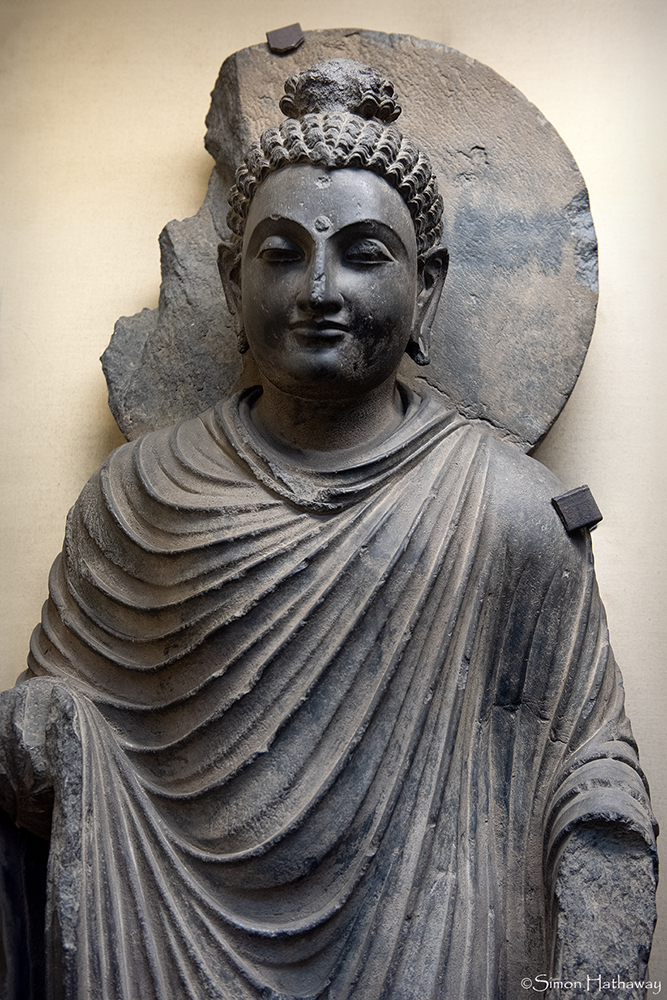
“They should not have the mind dwelling on form, they should not have the mind dwelling on sound, scent, flavour, feeling, or phenomena. They should have the mind that does not dwell on anything.” “If the mind dwells anywhere, this is not a righteous life.” “This is why Buddha says the minds of Bodhisattvas should not dwell on matter as they give charity. Subhuti, Bodhisattvas should give in this way so as to benefit all beings.”

Commentary:

As mentioned previously, dwelling on things means being deluded by the illusions of things, which is the source of our unhappiness and suffering. That is why the Buddha said that dwelling on things is not a righteous life and told us not to dwell on anything.

Not dwelling on matter as Bodhisattvas give charity implies seeing one who gives charity, goods, or services used for charity and the beneficiary as one as the true-Self. Acting in this way is referred to as doing without doing, or the behaviour of the true-Self.

When we cannot see the three; giver, charity, and beneficiary as one, trying to see them as one is practice.

Student: “Why should we try to see the three as one?”

Master: “Because that is the way to see the Buddha.”

©Boo Ahm

All writing ©Boo Ahm. All images ©Simon Hathaway

zen

Q. If we should not read books including the Sutras, why are there so many books on Buddhism and enlightenment?

A. We should remember that all the Sutras, no matter how many they are, say that we should not be deluded by images and words. The fact that there are numerous Sutras signifies that it is difficult not to be deluded by images and words.

“We should not read books” doesn’t mean that we shouldn’t read books but means that we should not be deluded by forms and words when reading literature on Buddhism and enlightenment. In fact, if we read the Sutras without being deluded by images and words, just as they tell us to, we could see the Buddha in each word and be aware of the reason why it is said that the Sutra is another name of the Sutra.

©Boo Ahm

All writing ©Boo Ahm. All images ©Simon Hathaway

zen

Angsan’s ‘the Owner of a Mirror’ (2)

When Master Angsan was a head monk, he received a letter and a mirror delivered from his master Wisan. Angsan, showing the mirror to the assembly, said, “Tell me whether this mirror belongs to me Angsan, or my master Wisan? If you say that this is Wisan’s, this is in my hand now. If you say that this is mine, this is what Wisan had delivered to me. If you can say, I’ll leave them alone, but if you can’t, I will break it.” No one could say the answer, and Angsan broke it by throwing it on the floor.

Student: “Why did Angsan break the mirror?”

Master: “He returned it to its original owner.”

Commentary:

Each piece of the broken mirror reflects its owner.

©Boo Ahm

All writing ©Boo Ahm. All images ©Simon Hathaway

zen

The Diamond Sutra (52)

Part 14-10

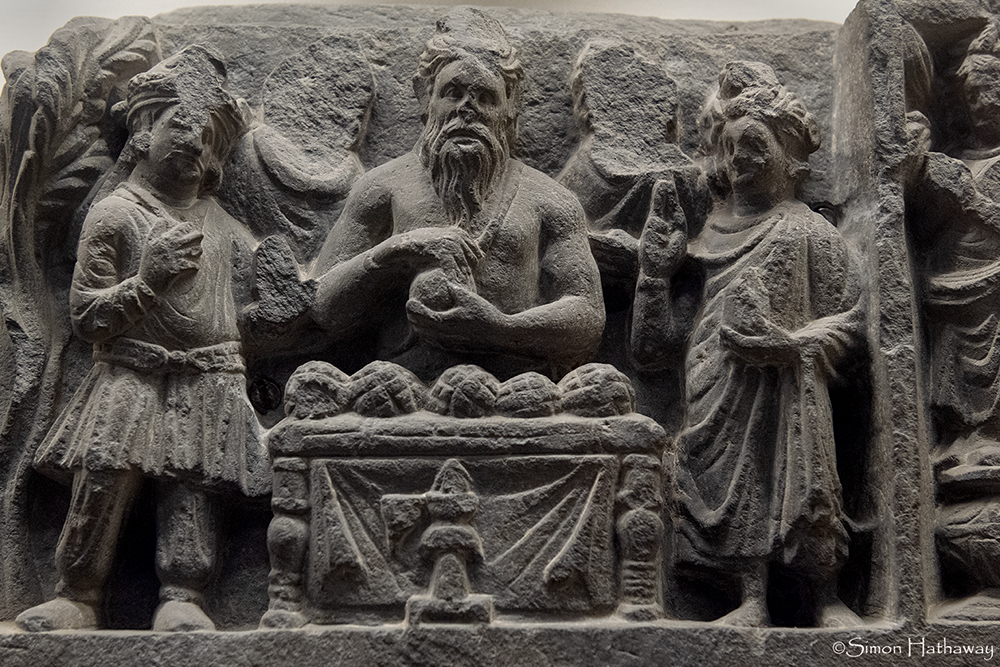
‘Therefore, Subhuti, Bodhisattvas should aspire to attain enlightenment detached from all images.

Commentary:

As mentioned repeatedly, the core of the Buddha’s teaching is not to be deluded by words and images. However, the Buddha couldn’t help but use temporal words as an expedient means so that he might explain his teaching. It might appear ironic that he used words whilst dissuading his students from being deluded by words, but indeed, everything will turn out to be the true-Self when we are altogether detached from images. This is why we should not read, or listen to the Sutras and Dharma talks in the same way we read, or listen to worldly literature, or lectures. Then, we can see the true-Self in each word and each phrase.

This is why the Buddha himself said, “Not a word have I said” and ancient masters would say that trying to attain enlightenment by following words is as futile as trying to block winds with a net.

Student: “How can we aspire to attain enlightenment with the image of enlightenment?”

Master: “Enlightenment is the state free of images.”

©Boo Ahm

All writing ©Boo Ahm. All images ©Simon Hathaway
zen

Angsan’s ‘the Owner of a Mirror’ (1)

When Master Angsan was a head monk, he received a letter and a mirror delivered from his master Wisan. Angsan, showing the mirror to the assembly, said, “Tell me whether this mirror belongs to me Angsan, or my master Wisan? If you say that this is Wisan’s, this is in my hand now. If you say that this is mine, this is what Wisan had delivered to me. If you can say, I’ll leave them alone, but if you can’t, I will break it.” No one could say the answer, and Angsan broke it by throwing it on the floor.

Student: “Who does the mirror belong to?”

Master: “Angsan showed him.”

Commentary:

Its owner has no concerns about appearance.

©Boo Ahm

All writing ©Boo Ahm. All images ©Simon Hathaway

zen

The Diamond Sutra (51)

Part 14-9

“Subhuti, when I also recall the past when I was a wizard of patience for five hundred lives, I had no image of self, no image of person, no image of sentient being, no image of a liver of life during all that time as well.”

Commentary:

That when the Buddha was a wizard of patience, he had no image at all means that he didn’t have a difficult time bearing any suffering whatsoever because there was nothing to endure, since everything was empty to him.

Here the Buddha is telling us how to withstand the suffering, difficulties we are faced with in our daily lives.

The mundane way to withstand suffering is to put up with it and wait until it is resolved, or fades away with time. This implies that we cannot avoid difficulties until they ease. This is why we sometimes say that time heals all wounds. However, when they happen to overwhelm us due to our failure to control them, we can be faced with a lot of unexpected side effects.

However, the Buddhist way is not to put up with suffering but to realise that there is no suffering to withstand and that there is no one to bear any suffering by seeing both as empty.

Student: “If suffering is empty, then shouldn’t we see a doctor, or take medicine when we have physical problems?”

Master: “It’s up to you because all your choices are empty when everything is empty. The Buddha had food although hunger is empty.”

©Boo Ahm

All writing ©Boo Ahm. All images ©Simon Hathaway