Zen Master Sengmi of Shenshan crossed a river with his dharma brother Dongshan. Dongshan said, “Don’t make a mistake with your steps and slip into the current.” Shenshan said, “If I make a mistake with my steps, then I won’t live to cross the river.” Dongshan said, “What is the state without mistakes?” Shenshan said, “Crossing the river with the elder.”
Student: “What does ‘making a mistake with one’s steps and slipping into the current’ mean?”
Master: “Take a close look.”
Student: “What is the state without mistakes?”
Master: “You can walk on the water without your shoes getting wet.”
Commentary:
Looking down at your shoes and the current is to slip into the current.
The Buddha asked Subhuti, “Subhuti, what do you think—has the Realised One attained unexcelled complete perfect enlightenment? Has the Realised One preached any Dharma?” Subhuti said. “As I understand the principles expounded by you, the Realised One, there is no fixed Dharma called unexcelled complete perfect enlightenment, and there is no fixed Dharma worth mentioning that the Realised One preached.”
Commentary:
‘Dharma’ has multiple meanings; the true-Self, things, and the Buddha’s teaching. The Dharma’ in ‘there is no fixed Dharma called unexcelled complete perfect enlightenment’ means ‘a thing’, and so this sentence signifies ‘there is no fixed thing called unexcelled complete perfect enlightenment’. The ‘Dharma’ in ‘there is no fixed Dharma worth mentioning that the Realised One preached’ means the Buddha’s teaching, therefore this sentence implies ‘there is no fixed Buddha’s teaching worth mentioning that the Realised One preached’.
This shows what enlightenment is and what Dharma talk is. Enlightenment means the capability to see and hear everything as it is without being deluded by any words and forms, which is also referred to as seeing everything as empty. When we see everything as empty, everything, including us, is one as Emptiness, and there is nothing but Emptiness. Emptiness is the state free from words and forms, which is referred to as the true-Self, Nirvana, Oneness, the Buddha, non-I, the Pure Land, and the middle-Path. This is the essence of everything and this is why it is said in Buddhism that everything is equal as the Buddha. In the state of Emptiness, that is, when we see everything as empty, there is nothing to see or hear other than Emptiness and there is not just nothing to gain or lose but also no gainer or loser.
In this state even the word ‘the Buddha’ is no more than grime to taint the Pure Land, because it is no more than an imaginary label used as an expedient for the sake of convenience to express the state. This is why it is said that there is no Buddha in the Pure Land. In the state of Emptiness there is neither enlightenment nor one who attained it, nor is there not only the Dharma but also one who preached the Dharma.
This is why ancient masters would say that before enlightenment, there are Dharma teaching to learn, enlightenment to attain and the Buddha to see but that after enlightenment, there is no Dharma teaching to learn, no enlightenment to attain and no Buddha to see.
Student: “If the Buddha didn’t preach any Dharma, what are all the Buddhist Sutras we read?”
Master: “They are not the Sutras.”
Student: “If they are not the Sutras, what is the Sutra?”
A. With the true principle meaning the true-Self, relying on the true principle means seeing, or realising the true-Self. This scripture tells us to not to mistake the historical Buddha for the Buddha that the historical Buddha tried to show to us. The historical Buddha said, “Those who seek me by seeing my figure and hearing my voice cannot see me.” This means that his physical body with birth and death is not the essence of his being, the Buddha, because the Buddha he meant is formless and eternal without birth and death. We should recognise the true Buddha that is always before us, that the historical Buddha showed through his physical body and that we are also always revealing ceaselessly.
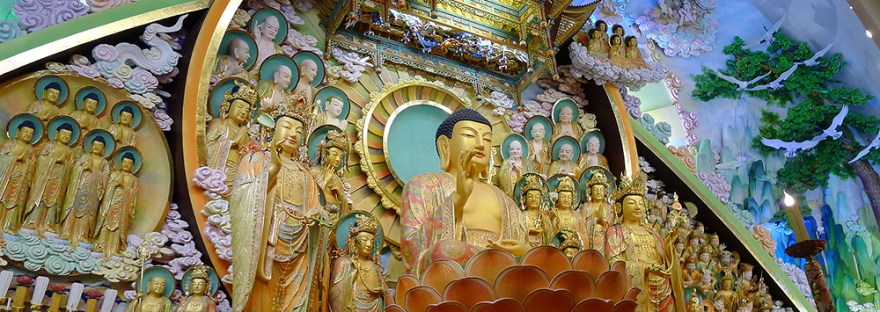
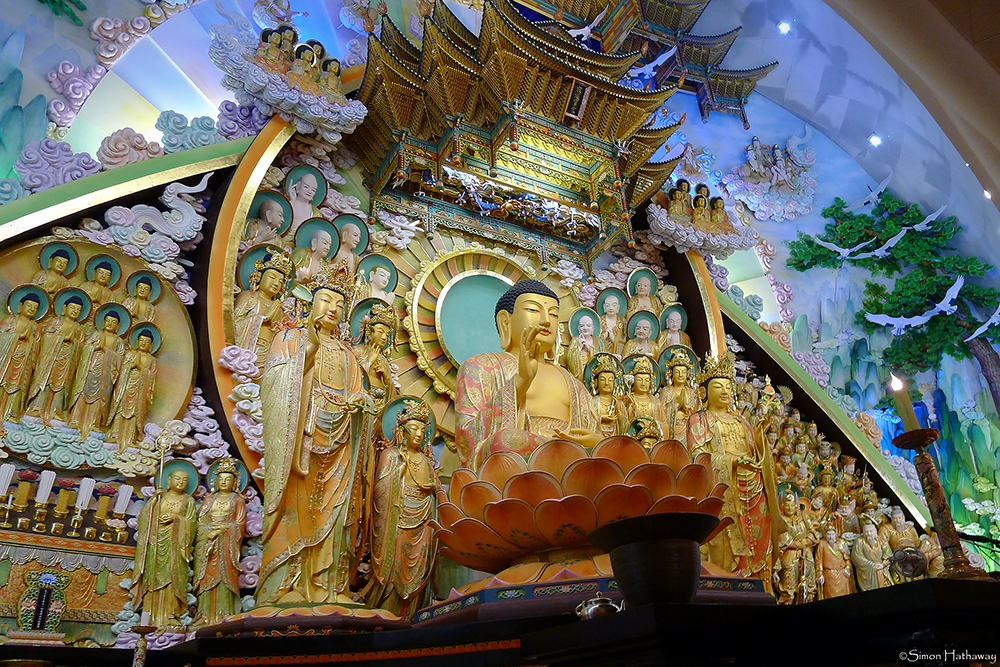
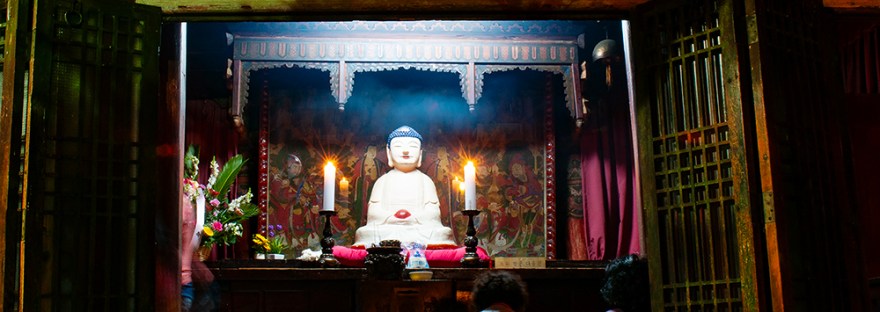
Patriarch Bodhidharma also said that we should not make the mistake of making the living Buddha bow to the dead Buddha. He meant that we, realising that we are the Buddha itself, should not allow ourselves to worship and bow to an image of Buddha, such as Buddha statue.
Master Dongshan said, “The Way becomes one with a man and a man becomes one with the Way. Do you want to know the meaning of this? One gets aged and the other doesn’t.”
Student: “What happens when the one who gets aged dies?”
Master: “The other doesn’t mind it.”
Commentary:
Even though the wind disappears, air is still there as usual.
For this reason, I, the Realised One always say you should know that my Dharma teaching is like a raft. Even the Dharma should be discarded, not to mention the non-Dharma.
Commentary:
The Buddha is saying that we should not be attached to even his Dharma teaching not to mention the non-Dharma, both because it is also empty and because it is just an expedient means which the Buddha used to show the true-Self to sentient beings, like a raft which is discarded when its use of helping people to cross a river is over. The reality, however, is that we, instead of seeing what the Buddha means to show to us with his Dharma teaching, tend to treat his Dharma teaching itself as a precious treasure. This is just like cherishing a raft, looking at it and keeping it well without using it to cross the river. Ancient masters would liken this situation to only seeing the finger pointing to the moon instead of seeing the moon.
No matter how plausible certain words may sound, no matter how holy an image may appear, we should not be deluded by them. This is why ancient masters would say that we should kill the Buddha if we encounter him and regard the Buddha’s and patriarchs’ words as an enemy. This implies that we shouldn’t be deluded even by the image of the Buddha and his Dharma talk, let alone the non-Dharma.
Student: “What should we accept if we should discard the Buddha’s Dharma talks?”
Master: “What can be accepted or discarded is not what is truly valuable.”
Student: “What is it that can be neither accepted nor discarded?”
Master: “It is what is left behind when all that can be discarded is discarded.”
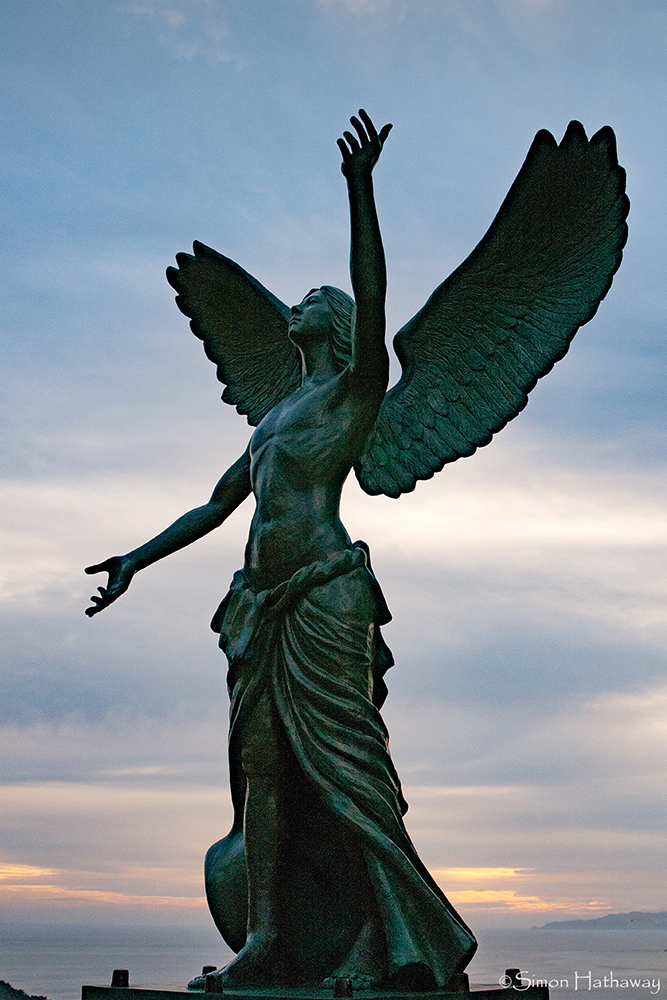
A. For a thing to be perfect is one thing, and seeing it as perfect is another. Although God saw it as good and perfect, you cannot see it as such unless you have the same eye to appreciate it as well as God does. You may mistake an angel created by God for the snake, or God may have created the snake as a means to make everything good.
If God created everything out of nothing, all his creations are also nothing in essence whether good or bad, whether an angel, or a snake. What is the difference between good and bad if they are nothing in substance?
One day Master Baizhang, addressing his assembly, said, “Plough the rice field for me, and I’ll instruct you in the fundamental principle of the great matter.” After the monastics had ploughed the rice field for the master, they said, “Now Master, please instruct us in the fundamental principles of the great matter.” The master spread open his arms.
Student: “What did the master mean by spreading open his arms?”
Master: “He paid for the monastics’ labour one more time although he had paid in advance.”
Commentary:
The master slipped the fundamental principle of the great matter into the monastics’ hands, but the monastics, fumbling it when ploughing the rice field, couldn’t recognise it.
“Why? If all these sentient beings’ minds grasped at forms, they would be attached to the image of self, the image of person, the image of sentient being, and the image of soul. Why? It is because even grasping at an image of Dharma would be to be attached to the image of self, the image of person, the image of sentient being, and the image of soul, not to mention that grasping at an image of non-Dharma would be to be attached to the image of self, the image of person, the image of sentient being, and the image of soul. Therefore, you should not grasp at not only the Dharma but also non-Dharma.
Commentary:
Grasping at forms means being unable to see things as they are, or being unable to see things as empty, and being attached to images means not merely being anxious to possess, or to be with them but also being eager to avoid, or to be far away from them as a result of grasping at them. Grasping at forms and being attached to images is referred to as being deluded by illusions.
All forms, images are not substantive but just illusionary no matter how sacred or hideous they may appear, and the true-Self, the Buddha, is formless.
So, ancient masters would say that even if ten thousand Buddhas tempt us, we shouldn’t follow them, because they are illusions we want to avoid, and that even if ten thousand Maras approach us, we shouldn’t avoid them, because they are the Buddha we are anxious to see. Put simply, if we are attracted even by the image of the Buddha, it is to be deluded by an illusion. If we see even Mara as empty, it is to see the Buddha. When we see everything as empty, there is no difference between the Buddha and Mara since both are also empty, and there is nothing to follow, or avoid.
Therefore, when we can’t see things as they are, we, deluded by illusions, can’t be with the Buddha no matter how hard we may struggle to follow the Buddha, but once we come to see everything as it is, our attachment to images fades away spontaneously without effort because we know they are empty and illusory, and the Buddha follows us all the time.
More directly speaking, we should be able to read even this writing without grasping at forms and see the Buddha.
A. Brightness in Zen meditation means the state free of discrimination. This is also called the wisdom to see things as they are. In the state without any discrimination, there cannot be any difference between brightness and darkness, far and near, right and wrong, large and small, alive and dead, and things like that.
This is why ancient masters would say that true brightness is as dark as midnight, when they were asked what true brightness is. So, it is said that the wise can see what is thousands of miles away as easily as they can see what is just before their eyes.
An ancient master named Doh-oh would ordinarily say, “Fine! Fine!” But on his deathbed he cried, “Ouch! Ouch! I feel awful. Bring me meat to eat and wine to drink. The King of Hell is coming to catch me.” His assistant monk asked him, “You would say ‘Fine! Fine!’ all the time before. Why do you cry that you feel awful now?” The master responded, “Tell me whether I was right then, or now?” The monk said nothing, and the master, pushing his pillow away, passed away.”
Student: “Why did the master cried on his deathbed, ‘Ouch! Ouch! I feel awful’ although he would ordinarily say, ‘Fine! Fine!’?”
Master: “To show off his pillow.”
Commentary:
Don’t mistake your foolishness for the master’s dementia.













 Zen Fools