The ocean of birth and death is so deep and wide that it is boundless. Sentient beings are drifting on the tides. The Buddha, making a huge ship of the truth, ferries them across the ocean of birth and death without anyone left behind.
Student: “What is the ship that the Buddha makes?”
Master: “It is waiting for you to board in front of you.”
Student: “I cannot see it. Where is it?”
Master: “It has just passed by.”
Commentary:
The ship always departs the moment you start looking for it.
The Buddha said to Subhuti, “The Bodhisattvas should surrender their minds thus: All kinds of sentient beings — be they born from eggs, born from wombs, born from moisture, or born from transmutation, be they material, immaterial, thinking or non-thinking, or neither thinking nor non-thinking — I shall have them all enter perfect nirvana without remainder and thus liberate them all. Although I liberate innumerable, countless, infinite sentient beings, not a single sentient being is in fact liberated.”
“Why not? Subhuti, if the Bodhisattvas have images of self, images of person, images of a being, images of a liver of life, they are not Bodhisattvas.”
Commentary:
‘Have images’ means to be deluded by images, illusions. The Bodhisattvas here implies the enlightened who are not deluded by any images. So, ‘if the Bodhisattvas have images, they are not Bodhisattvas’ means that if the Bodhisattvas are deluded by illusions, they are not Bodhisattvas.
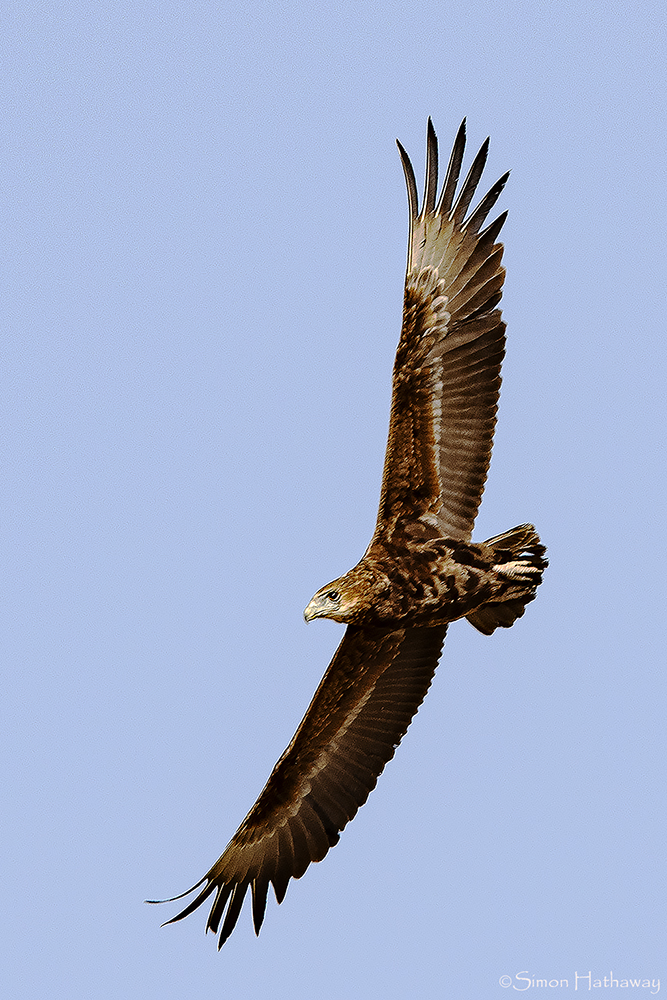
This signifies that the Bodhisattvas, the enlightened do everything without doing. That is, they don’t think that they have done something, no matter how many good things they may do, because they know that everything is empty. So, ancient masters would say that the enlightened should behave without any trace left behind, just as a bird flies leaving no trace in the air.
In everyday life, we sentient beings tend to remember and feel proud of our behaviours that we think are good and righteous. The enlightened, the Bodhisattvas neither remember nor feel proud of them because they don’t think they did them since they see all of them as empty. They never let even the right hand know what the right hand does.
Even if they are unfairly spoken ill of, or blamed for what they didn’t do, they neither feel chagrined nor lose their temper since they are not deluded by words, illusions.
Student: “How would the Bodhisattvas read this Sutra?”
Master: “They would not be deluded by the illusions of words.”
A. The Buddha’s mind implies the true-Self, Emptiness. All sentient beings are essentially part of the Buddha. There is nothing that is not the true-Self. We are not aware that we are part of the Buddha because we cannot see ourselves as we are. In other words, all various kinds of forms of all things are those of the true-Self, the Buddha in essence, but they appear to be illusionary forms of sentient beings since we can’t see them as they are. That is, we are mistaking the Buddha for sentient beings.
Student: “How can I see the Buddha in illusionary forms?”
Master: “Illusionary forms are always in the middle of changing. You should see what never changes in them.”
The ocean of birth and death is so deep and wide that it is boundless. Sentient beings are drifting on the tides. The Buddha, making a huge ship of the truth, ferries them across the ocean of birth and death without anyone left behind.
Student: “What is the ship that the Buddha makes?”
The Buddha said to Subhuti, “The Bodhisattvas should surrender their minds thus: All kinds of sentient beings — be they born from eggs, born from wombs, born from moisture, or born from transmutation, be they material, immaterial, thinking or non-thinking, or neither thinking nor non-thinking — I shall have them all enter perfect nirvana without remainder and thus liberate them all. Although I liberate innumerable, countless, infinite sentient beings, not a single sentient being is in fact liberated.”
“Why not? Subhuti, if the Bodhisattvas have images of self, images of person, images of a being, images of a liver of life, they are not Bodhisattvas.”
Commentary:
‘All kinds of sentient beings’ here means not only the living sentient beings narrated above but also non-living things such as stone and wood. There is nothing that is beyond the realm of sentient beings except the Buddha. People may wonder how it is possible to liberate such sentient beings that we cannot communicate with, whilst saying that even human beings who can have mutual understanding with us are difficult to liberate.
We have the phrase ‘If you attain enlightenment, all the rest of the universe also attains enlightenment along with you’. Attaining enlightenment means to stop being deluded by forms and words, which is to see everything just as it is. This is to see and hear everything as empty. It should be kept in mind that ‘empty’ doesn’t mean ‘void’ but means ‘perfect’. So, Emptiness is another name of the Buddha, nirvana, or the true-Self, and seeing everything as empty is referred to as seeing the true-Self, the Buddha, or entering nirvana. So, when you attain enlightenment, all the universe as well as all the sentient beings mentioned above are liberated. Simply put, once you become enlightened, you come to the realisation that all the sentient beings, including all of us, are already liberated, that is, they are already in nirvana and that even though all things without exception are essentially the Buddha, we have mistaken them as sentient beings because we cannot see them as they are.
To have all sentient beings enter nirvana and liberate them doesn’t mean to have them altered but means to change our way of seeing them. This is why the Buddha said that we should think that there is not a single sentient being we liberate, no matter how many sentient beings we may liberate. This signifies that when you are not enlightened, even the Buddha can’t help but appear to be just a sentient being.
Master: “What did you do?”
Student: “I read the Diamond Sutra.”
Master: “What did the Buddha say?
Student: “He said that we never in fact liberate any sentient beings even though we liberate countless sentient beings.”
Master: “You shouldn’t defame and degrade the Buddha. The Buddha never said any words.”
A. We can’t grasp the Buddha’s intention, his teaching, by following the superficial meaning of his words, because his intention is beyond the words. The purpose of his words is to save people from the illusions of words, or to help them to stop being deluded by words, and so he wanted people not to be deluded by his words as well. This is why we should not be attached to intellectual understanding of his words.
The purpose of all words spoken by the Buddha is just like that of the songs sung by a blind person who wants to save people who are lost in the dark. The use of the songs is not to show off how beautiful they are but to help people to discern where the singer is and follow him to a light place. The foolish, instead of following the singer, are involved in evaluating and interpreting the lyrics of the songs.
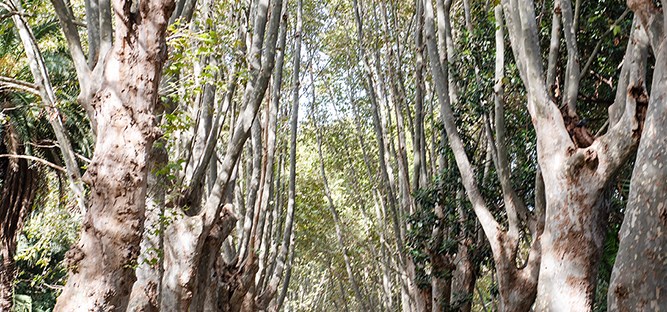
Qingping asked his teacher, Cuiwei, “What is the exact meaning of the Bodhidharma’s coming from India?” Cuiwei said, “I will tell you when no one is around.” After a while Qingping said, “There is no one now. Please tell me, Master.” Cuiwei got down from the meditation platform and took Qingping into a bamboo garden. Qingping said again, “There is no one here. Please tell me.” Pointing to the bamboos, Cuiwei said, “This bamboo is tall just as it is. That bamboo is short just as it is.”
Student: “What did Cuiwei mean by ‘This bamboo is tall just as it is. That bamboo is short just as it is’?”
Master: “I can’t tell you until no one is with you.”
Commentary:
Whatever we do, or say is the function of the universe because nothing else is with it.
The Buddha said, “Good, Subhuti! As you say, I always have the bodhisattvas in mind well, protect them well and entrust them well with the propagation of Buddhist Dharma. Listen carefully now; I will expound to you. When good men and good women have made up their minds to attain supreme enlightenment, they should live and surrender their minds thus.” “Yes indeed, World-Honoured One, we look forward to listening.’’
Commentary:
In Part 13 of this Sutra the Buddha says to Subhuti, “What do you think Subhuti, do I have a doctrine to preach?” Subhuti says to the Buddha, “You, World-Honoured One, have no doctrine.” The Buddha says, “Subhuti, what do you think? Is there any such dharma spoken by me, the Tathagata?” Subhuti says, “No, indeed, Sir. There is no such dharma spoken by the Tathagata.” This indicates that we should appreciate what is beyond the Buddha’s words to grasp the core of his teaching. This is why they say that the Buddha’s teaching is transmitted separately beyond doctrine.
In other words, we, instead of clinging to the text of this Sutra, should be able to recognise, by grasping what is beyond the words, how the Buddha has the bodhisattvas in mind well, protects them well and entrusts them well with the propagation of Buddhist Dharma.
Q: “If we should not be deluded by words, why are there so many Sutras?”
A: “All of them tell people not to be deluded by words.”
A. It means to see what we cannot stop seeing even for a moment. Put in other words, this means to see the true-Self because we can’t stop seeing it even for a second.
Usually, when we say that we see something, it means that we can stop seeing it if we want to, by closing our eyes, or looking away. This is the way we see what can be seen. However, when we suppose that we see the universe, it is impossible to stop seeing it even for a moment because we, surrounded by it, cannot ever escape from it because we are also the universe itself. Seeing the trees in the street is seeing the universe, and seeing our family members is also seeing the universe since all of them are part of the universe as well.
When we close our eyes, even what appears to be dark is also part of the universe. Likewise, when we can’t help but see something regardless of our intentions, and when it is impossible to stop seeing it, seeing it is not seeing it anymore because the concept of seeing is only possible based on that of not seeing, just as being on the right side is possible only when being on the left side is.
This is why ancient masters would say that we don’t recognise the true-Self while facing it all the time.
Changqing asked Baofu, “Seeing form is no other than seeing mind. Do you see the boat?” Baofu said, “Yes, I do.” Changqing said, “Putting the boat aside, what is mind?” Baofu pointed at the boat.
Student: “Why did Baofu point at the boat when he was asked what mind was, putting the boat aside?”
Master: “Because you don’t see mind but the boat.”
Commentary:
Don’t mistake pointing to the sky for pointing to the clouds there.












 Zen Fools