Questions & Koans

zen

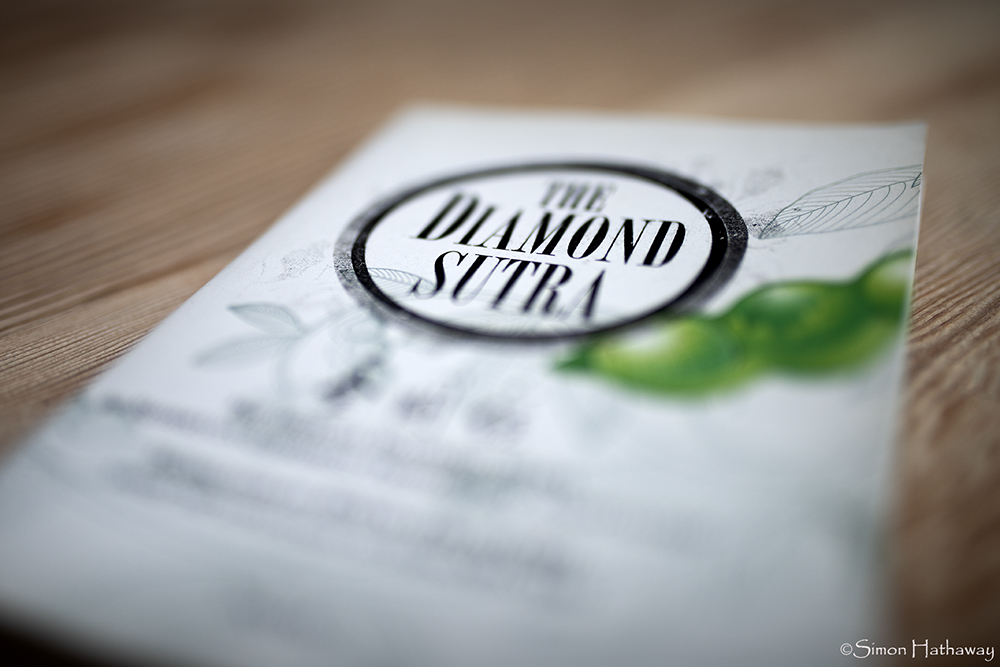
The Diamond Sutra (24)

Part 8-1

“Subhuti, what do you think—if someone gives seven kinds of treasures in charity that are sufficient to fill a billion-world universe, would this person gain many blessings?”

Subhuti said, “Very many, World Honoured One. Why? These blessings are not of the nature of blessing; therefore the Realised One says the blessings are many.”

The Buddha said, “If anyone accepts and holds even a single four-line verse from this Sutra, and tells it to others, the blessing exceeds the aforementioned.”
Commentary:

No matter how much valuable treasure we may give in charity, it is no better than making good karma unless we are aware that it is empty. Good karma, no matter how much it may be, is supposed not only to come to an end but also to be accompanied by bad karma since there cannot be good karma without bad karma.

We should know that ‘this Sutra’ doesn’t imply the text that is printed on paper or on silk, or carved on wood or on rock but the true-Self, Emptiness that is the essence of our being and that a four-line verse from this Sutra signifies the function of the true-Self whether it is a movement, or a sound.

As mentioned in earlier parts, everything, ourselves included, is the true-Self, the Buddha, and every movement and every sound of it is the function of the true-Self. It follows from this that not just everything we see and hear but all actions and sounds we make as well are a four-line verse.

So, ‘accepting and holding even a single four-line verse from this Sutra and telling it to others’ doesn’t mean to accept and hold even a literal verse from the material Sutra and tell it to others. Rather, just as the Lotus Sutra says that once we realise the true-Self, no matter what words we may read, or speak such as mundane books, political discourses, wealth, or careers, they will be a Dharma talk, we, aware that everything we see and hear is the Buddha’s Dharma talk, should know that all actions and sounds made by us are no other than four-line verses.

Student: “What is a four-line verse?”

Master: “It can’t be dictated.”

©Boo Ahm

All writing ©Boo Ahm. All images ©Simon Hathaway

zen

Q. What is the meaning of ‘What you can send back is not you, and what else other than you is what you can’t send back?’ in the Shurangama Sutra?

A. ‘What you can send back’ implies all words, labels such as person, male, female, Korean, Briton, father, mother, son, daughter, tall, short, young, old and so on that define your identity because they are not innate but artificial, or attached to you after your birth. ‘Send back’ here means to remove, or to detach.

Detaching all the words, imaginary labels from you that define your identity means removing all boundaries that confine your being within your physical body. The boundless state is referred to as the true-Self, Emptiness, or the Buddha, the boundless state is formless, the formless state is unchangeable, and the unchangeable state has no beginning and no end, which is no other than the essence of your being. 

©Boo Ahm

All writing ©Boo Ahm. All images ©Simon Hathaway

zen

Dongshan and Shenshan Cross the River (4)

Zen master Sengmi of Shenshan crossed a river with his dharma brother Dongshan. Dongshan said, “Don’t make a mistake with your steps and slip into the current.” Shenshan said, “If I make a mistake with my steps, then I won’t live to cross the river.” Dongshan said, “What is the state without mistakes?” Shenshan said, “Crossing the river with the elder.”

Student: “What is the state without mistakes?”

Master: “You can walk through the current without your shoes getting wet.”

Student: “Do you mean that you can walk across a deep river without a raft, or a boat?” 

Master: “Why are you getting farther into the current?”

Commentary:

Sentient beings are drowned in the current of their own creation.

©Boo Ahm

All writing ©Boo Ahm. All images ©Simon Hathaway

zen

The Diamond Sutra (23)

Part 7-3

“What is the reason? Because all things appear diverse and separate based on the eternal unchangeable Dharma.

Commentary:

All things mean forms, and the eternal unchangeable Dharma means the true-Self. All things are from the same root, the true-Self and they are essentially one and the same as the true-Self although each of them appears different from one another. All forms are the way that the true-Self is. Forms are to the true-Self as winds are to the air.  To explain forms and the true-Self, an ancient master would say, “Everything is different from one another, and there are no two identical things in the world. However, at the same time, everything is the same as one another, and there are not two different things. The former is known to everyone, but the latter is difficult for even a saint to know.”

From this perspective, although each word and each phrase of the Buddha’s Dharma talks appear and sound different from one another, they are essentially the same as the function of the true-Self. Ancient masters would compare those who clung to the literal meaning of the Buddha’s teaching to a dog, and those who recognised the true-Self to a lion, when they read or heard it.

Every form changes all the time and has a beginning and an end, but the true-Self is formless, never changes and has no beginning and no end. No matter what we may see, we should be able to see it in both ways; as a form and as the true-Self at the same time. This is referred to as seeing the Buddha in everything, or seeing everything as the Buddha. Seeing oneself as the true-Self is called transcending birth and death in Buddhism.

Student: “How can I distinguish the true-Self from a form when I see a flower?”

Master: “Seeing what never withers in a flower is seeing the true-Self.”

©Boo Ahm

All writing ©Boo Ahm. All images ©Simon Hathaway

zen

Q. What does ‘when your eyes are pure, what is seen is also pure’ mean?

A. ‘When your eyes are pure’ means that you see everything as it is without being deluded by illusions. When you are deluded by illusions and can’t see things as they are, it is said that your eyes have disease. ‘What is seen is also pure’ implies that what is seen appears empty.

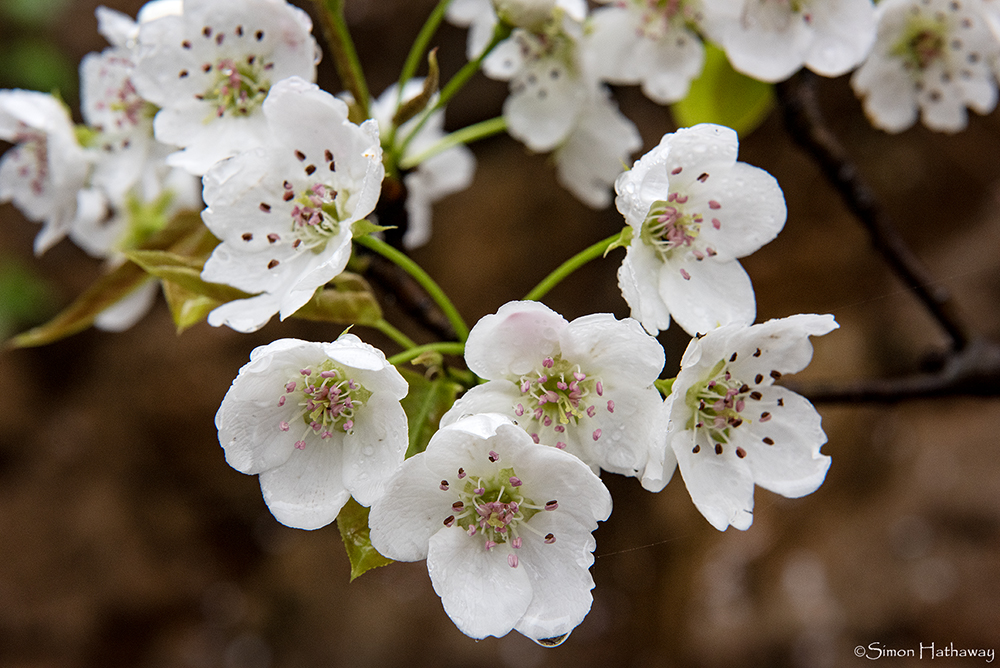
For instance, if your eyes are not pure, when you see a flower, you see it just as a flower which has its beginning and end from budding to withering. This is the way of seeing things that you are addicted to, but if your eyes are pure, you can see the true-Self in the flower without budding and withering. This is referred to as seeing the treasure hidden in things.

©Boo Ahm

All writing ©Boo Ahm. All images ©Simon Hathaway
zen

Dongshan and Shenshan Cross the River (3)

Zen master Sengmi of Shenshan crossed a river with his dharma brother Dongshan. Dongshan said, “Don’t make a mistake with your steps and slip into the current.” Shenshan said, “If I make a mistake with my steps, then I won’t live to cross the river.” Dongshan said, “What is the state without mistakes?” Shenshan said, “Crossing the river with the elder.”

Student: “What does ‘making a mistake with one’s steps and slipping into the current’ mean?”

Master: “Listen closely.”

Student: “How can you save the one who slipped into the current?”

Master: “I am sorry he is clinging to the current although I am trying my best to pull him out of it now.”

Commentary:

Regard the Buddha’s and patriarchs’ words as an enemy.

©Boo Ahm

All writing ©Boo Ahm. All images ©Simon Hathaway
zen

The Diamond Sutra (22)

Part 7-2

“Why? Because the Dharma preached by the Realised One can neither be obtained nor be spoken; it is neither the Dharma nor the non-Dharma.”

Commentary:

The Dharma, the true-Self that the historical Buddha talked about can neither be obtained nor be explained. The true-Self is formless and boundless and contains everything, ourselves included. It not only cannot be obtained but also cannot be discarded because we are also part of it and because there is nothing but the Dharma as mentioned previously. We can no more obtain, or discard the Dharma than winds can the air.

The Dharma is beyond description because it is formless, nameless and boundless. This is why the Buddha said that the Dharma preached by him is neither the Dharma nor the non-Dharma. Ancient masters would say that even saying ‘holy’ for the purpose of describing the Dharma is like spitting upon a face washed with perfume.

Then, the key is how we should accept the Dharma talks preached for about forty years by the historical Buddha. We, to grasp the core of his talks, shouldn’t try to realise the Dharma by accepting his words in the same way we do when getting mundane knowledge through literal understanding. An ancient master named Hwang-po would say to his students, “You are fellows who pretend to have drunk pure wine after taking only lees” to scold them for clinging to literal, intellectual understanding. His remark implies that we should grasp what is beyond words and what they are pointing to when we read, or hear the Sutras.

Student: “If the Dharma preached by the Realised One is neither the Dharma nor the non-Dharma, what is it then?”

Master: “Neither the Dharma nor the non-Dharma.”

©Boo Ahm

All writing ©Boo Ahm. All images ©Simon Hathaway
zen

Q. What does ‘the greatest obstacle to enlightenment is not ignorance, it is the illusion of knowledge’ mean?

A. Attaining enlightenment means to become free from being deluded by illusions. Typical illusions are words, and we acquire knowledge through words and keep it as a form of words. Having a lot of knowledge about enlightenment refers to having a lot of words, which can imply having a host of illusions. We sentient beings are so addicted to words that we tend to identify words to things, or facts. The more plausible words are, the stronger our such tendency is. We are likely to believe that the greater our knowledge about enlightenment is, the nearer we are to enlightenment.

However, in reality knowledge becomes more of a headwind rather than a tailwind on the voyage to enlightenment. For example, ‘everything is empty’ is one of the phrases that almost all Buddhists accept as the core of the Buddha’s teaching, and it really is. Nevertheless, paradoxically, few of them attain enlightenment through the phrase, which means that most people, captivated by the literal meaning of the phrase, fail to see what it points to. In the same way, knowledge, when we are deluded by its literal meaning, can become not a teaching but another illusion that keeps us from seeing things as empty. This is why the Buddha said on his deathbed, “Never have I said a word” in order that he might prevent people from being deluded by his words.

©Boo Ahm

All writing ©Boo Ahm. All images ©Simon Hathaway
zen

Dongshan and Shenshan Cross the River (2)

Zen Master Sengmi of Shenshan crossed a river with his dharma brother Dongshan. Dongshan said, “Don’t make a mistake with your steps and slip into the current.” Shenshan said, “If I make a mistake with my steps, then I won’t live to cross the river.” Dongshan said, “What is the state without mistakes?” Shenshan said, “Crossing the river with the elder.”

Student: “What does ‘making a mistake with one’s steps and slipping into the current’ mean?”

Master: “Take a close look.”

Student: “What is the state without mistakes?”

Master: “You can walk on the water without your shoes getting wet.”

Commentary:

Looking down at your shoes and the current is to slip into the current.

©Boo Ahm

All writing ©Boo Ahm. All images ©Simon Hathaway

zen

The Diamond Sutra (21)

Part 7-1

The Buddha asked Subhuti, “Subhuti, what do you think—has the Realised One attained unexcelled complete perfect enlightenment? Has the Realised One preached any Dharma?” Subhuti said. “As I understand the principles expounded by you, the Realised One, there is no fixed Dharma called unexcelled complete perfect enlightenment, and there is no fixed Dharma worth mentioning that the Realised One preached.”

Commentary:

‘Dharma’ has multiple meanings; the true-Self, things, and the Buddha’s teaching. The Dharma’ in ‘there is no fixed Dharma called unexcelled complete perfect enlightenment’ means ‘a thing’, and so this sentence signifies ‘there is no fixed thing called unexcelled complete perfect enlightenment’. The ‘Dharma’ in ‘there is no fixed Dharma worth mentioning that the Realised One preached’ means the Buddha’s teaching, therefore this sentence implies ‘there is no fixed Buddha’s teaching worth mentioning that the Realised One preached’.

This shows what enlightenment is and what Dharma talk is. Enlightenment means the capability to see and hear everything as it is without being deluded by any words and forms, which is also referred to as seeing everything as empty. When we see everything as empty, everything, including us, is one as Emptiness, and there is nothing but Emptiness. Emptiness is the state free from words and forms, which is referred to as the true-Self, Nirvana, Oneness, the Buddha, non-I, the Pure Land, and the middle-Path. This is the essence of everything and this is why it is said in Buddhism that everything is equal as the Buddha. In the state of Emptiness, that is, when we see everything as empty, there is nothing to see or hear other than Emptiness and there is not just nothing to gain or lose but also no gainer or loser.

In this state even the word ‘the Buddha’ is no more than grime to taint the Pure Land, because it is no more than an imaginary label used as an expedient for the sake of convenience to express the state. This is why it is said that there is no Buddha in the Pure Land. In the state of Emptiness there is neither enlightenment nor one who attained it, nor is there not only the Dharma but also one who preached the Dharma.

This is why ancient masters would say that before enlightenment, there are Dharma teaching to learn, enlightenment to attain and the Buddha to see but that after enlightenment, there is no Dharma teaching to learn, no enlightenment to attain and no Buddha to see.

Student: “If the Buddha didn’t preach any Dharma, what are all the Buddhist Sutras we read?”

Master: “They are not the Sutras.”

Student: “If they are not the Sutras, what is the Sutra?”

Master: “The Sutra is without pages and words.”

©Boo Ahm

All writing ©Boo Ahm. All images ©Simon Hathaway