Questions & Koans

Zen

Rinzai 213

Rinzai and all the monks were out hoeing. When Rinzai saw Obaku approach, he stopped working and propped himself up on his hoe. Obaku said, “Would this fellow be tired?” Rinzai replied, “I have as yet not even lifted my hoe. Why should I be tired?” Obaku hit him. Rinzai grabbed the stick, gave Obaku a good blow and knocked him over. Obaku called the superintendent to help him up. The superintendent, doing so, remonstrated, “Venerable, how can you permit the impudence of this madman?” Obaku was hardly on his feet when he hit the superintendent. Rinzai, having started to hoe, remarked, “Cremation is the custom everywhere, but here, I bury everything alive with a single stroke!”
Commentary:

When Obaku said, “Would this fellow be tired?” he meant the true-Self by this fellow. Rinzai meant that the true-Self cannot be tired since there is nothing such as a hoe to lift in the state of the true-Self by saying, “I have as yet not even lifted my hoe. Why should I be tired?” Obaku tested Rinzai again to see if he could recognize the true-Self by hitting him, and Rinzai meant, “This is the true-Self you showed to me by hitting me” by grabbing the stick, giving a good blow and knocking him down. Unaware of the deep meaning exchanged between Obaku and Rinzai, the superintendent remonstrated, “Venerable, how can you permit the impudence of this madman?” Obaku, sensing that he had not grasped his intention, revealed the true-Self by hitting him as soon as he was on his feet. Rinzai’s remark ‘Cremation is the custom everywhere, but here, I bury everything alive with a single stroke!’ implied that he could make everything disappear, that is, make everything into the true-Self with a single stroke.

Student: “How is it possible to make everything into the true-Self with a single stroke?”

Master: “A drop of seawater is enough to know that all the seawater in the world is salty.”

©Boo Ahm

All writing ©Boo Ahm. All images ©Simon Hathaway
Zen

Q. What happens to an enlightened person after death? Do they remain in undifferentiated oneness forever and never become an individual again?

A. An individual body is to the true-Self as a wave is to the sea and as wind is to air. What happens to a wave in the sea after its death? What happens to wind after its death? After a wave loses its form, that is, after it dies, the sea, the essence of the wave is still there. We don’t think that the sea dies or is destroyed when a wave disappears. After death, everyone, regardless of whether he or she is enlightened or not, still remains where he or she has been. You should know that the essence of our being is the true-Self, Oneness, and that everything we see and hear, including our individual bodies, is just part of, or the function of the true-Self, just as all waves of all shapes and all sizes are merely part of, or the function of the sea.

The difference between an enlightened person and an unenlightened person is that the former is aware of this fact while the latter is not. The former knows that death is not the end of our being but only a tiny part of the endless change of the everlasting true-Self. So, it is said that to the enlightened there is no death, whilst the unenlightened are haunted by a ghost of death that doesn’t exist.

©Boo Ahm

All writing ©Boo Ahm. All images ©Simon Hathaway

Zen

The Buddha is sitting in his place

The Avatamsaka Sutra says, “The Buddha is sitting in his place, which is like one thousand suns shining upon all space.”

Student: “Where is his place?”

Master: “Where are you now?”

Student: “How is it when it is bright like one thousand suns shining?”

Master: “It is as dark as midnight.”

Commentary:

Not being deluded by forms is to see the Buddha.

©Boo Ahm

All writing ©Boo Ahm. All images ©Simon Hathaway

Zen

Rinzai 212

When Rinzai was standing by Tokusan as his attendant, Tokusan remarked, “Today I am tired.” Rinzai said, “What is this old fellow mumbling in his sleep?” Tokusan hit him. Rinzai upended Tokusan’s seat cushion. Tokusan retired.

Commentary:

Tokusan tested Rinzai to see whether he could recognise the true-Self without being deluded by words by remarking, “Today I am tired.” Rinzai lost no time in responding by saying, “What is this old fellow mumbling in his sleep?”, which means, “My saying is the very true-Self you meant by saying, ‘Today I am tired’. Being deluded by forms and words is like mumbling during sleep.” Tokusan tested Rinzai again by hitting him, who responded to Tokusan’s hitting by upending Tokusan’s seat cushion.

Student: “I sometimes say, ‘I am tired’. What is the difference between my words and Tokusan’s?”

Master: “He was aware of the one who is not tired while you only know the one who is tired.”

©Boo Ahm

All writing ©Boo Ahm. All images ©Simon Hathaway

Zen

Q. Why should ignorance, a non-deliberate lack of knowledge or understanding, be regarded as a sin? If someone is unaware of the Buddha – such as many uneducated people living in remote parts of the world – then can we consider this as a sin?

A. Buddhism never says that ignorance is sin but says that it is the seed of wisdom because it can turn into wisdom through practice. According to Buddhism, there is neither sin nor any almighty being who punishes us for our sin. It says that sentient beings struggle to escape from the many kinds of imaginary ropes that they tied themselves with, one of which is a rope of sin.

To make matters worse, ignorant people worship and pray to the imaginary Buddha that doesn’t exist to free them from the ropes, which is rather to add another rope to existing ones. That is, the ignorant are haunted by the illusion of sin. This is why Bodhidharma said that there is sin when we are ignorant but that there is no sin when we can see things as they are. The purpose of Buddhism is to help people to escape from the ropes by realising that they are not real but just illusionary.

©Boo Ahm

All writing ©Boo Ahm. All images ©Simon Hathaway

Zen

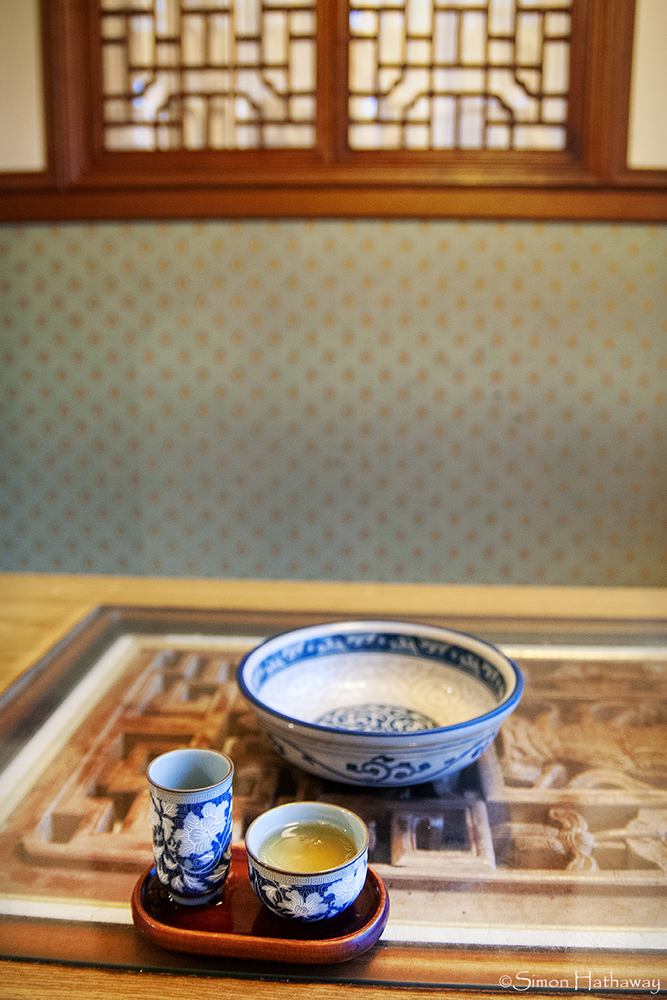
Joshu’s ‘Drink a cup of tea’

Joshu asked a monk, “Have you been here?” The monk answered, “Yes, I have.” Joshu responded, “Drink a cup of tea.” Joshu asked another monk, “Have you been here?” The monk said, “No, I’ve not.”  Joshu said to him, “Drink a cup of tea.”

Student: “Why did Joshu only say, ‘Drink a cup of tea’?”

Master: “Because he had nothing else to say.”

Commentary:

Trying to understand what is beyond words through words is making medicine into illness.  

©Boo Ahm

All writing ©Boo Ahm. All images ©Simon Hathaway

Zen

Rinzai 211

Later, Issan mentioned this story to Gyosan and asked, “Did Obaku at that time entrust the transmission to Rinzai alone, or did he have someone else in mind?” Gyosan answered, “Yes, he had; only I do not want to tell you as it is still far ahead in the future.” Issan said, “Although this may be so, I’d still like to know. Please tell me.” Gyosan said, “A man will head South, where his orders will be put into force in Go and Etsu (old Chinese provinces). There he will meet a great wind, and then he will stop.” (This is said to be a prophesy concerning Fuketsu, ‘Wind-Cave’ — a master in the fourth generation after Rinzai.)

Commentary:

Later, Issan mentioned this story to Gyosan, one of his disciples and asked, “Did Obaku at that time entrust the transmission to Rinzai alone, or did he have someone else in mind?” Issan is asking Gyosan if he knew that it is impossible to transmit the true-Self to someone in the same way as we do things. When Gyosan answered, “Yes, he had; only I do not want to tell you as it is still far ahead in the future” he meant, “Whatever I say is only the function of the true-Self, and it can neither be divided nor transmitted, or transferred.” When Issan said, “Although this may be so, I’d still like to know. Please tell me” he was testing Gyosan to see whether or not he could reveal the true-Self by saying what is beyond words. Sensing his master’s intention, Gyosan made a long statement, by which he meant that he was not deluded by words, no matter what he said.

Student: “How can I say what is beyond words?”

Master: “Hear what is beyond words.”

©Boo Ahm

All writing ©Boo Ahm. All images ©Simon Hathaway
Zen

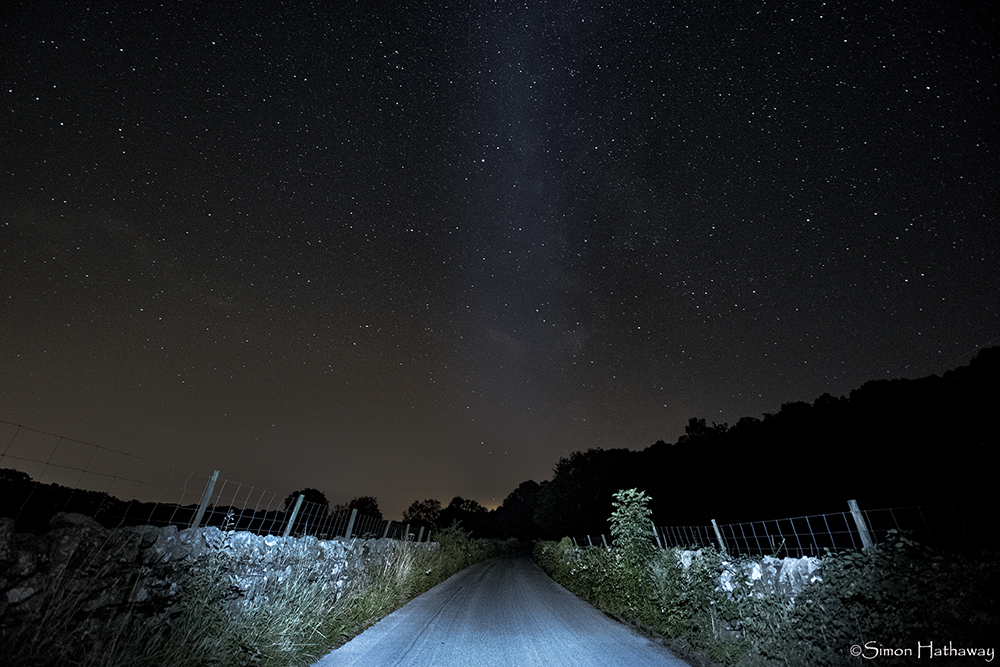
Q. In the evening we can see the most powerful star and in the morning we can see the same star. Or is it the same star?

A. Well no, because one is the evening star, and one is the morning star. Buddhism says that we should not be deluded by words, names because they are no more than imaginary labels used to classify things, not the essence of the things. In the same way, the evening star and the morning star are merely names. More strictly speaking, even if scientists, after studying and analysing the star, describe it with a lot of chemical and astronomical terms, all the terms used to identity the star are nothing but imaginary labels created by human beings.

The star has never itself said that it is a star, or that it consists of any such chemical elements. The star, whether the morning star or the evening star, is a star not because it is a star in essence, but because we human beings think of it as a star and call it as such. This is why the Buddha said, “Although I’ve attained enlightenment due to the star, it is not a star any longer after enlightenment.”

©Boo Ahm

All writing ©Boo Ahm. All images ©Simon Hathaway

Zen

A Heretic’s Question

A heretic asked the Buddha, “What dharma did you say yesterday?” The Buddha answered, “I said fixed dharma yesterday.” The heretic said, “What dharma did you say today?” The Buddha said, “I said unfixed dharma today.” The heretic said, “You preached fixed dharma yesterday. Why did you preach unfixed dharma today?” The Buddha said, “Yesterday I said fixed dharma and unfixed dharma today.”

Student: “What is the fixed dharma?”

Master: “Everything is empty.”

Student: “What is the unfixed dharma?”

Master: “Everything is empty.”

Commentary:

Unfixed dharma is to fixed dharma as salt is to sea water.

©Boo Ahm

All writing ©Boo Ahm. All images ©Simon Hathaway

Zen

Rinzai 210

Rinzai was planting pine trees. Obaku asked him, “Why do you plant so many pines in this remote mountain monastery?” Rinzai answered, “Firstly, they provide good scenery around the monastery gate, and then they are for the benefit of those who come after us,” and struck the ground three times with his hoe. Obaku said, “Although this may be so, I’ll still give you thirty blows of my stick to taste.” Again, Rinzai struck the ground three times with his hoe, sighing deeply. Obaku said, “Through you, our school will flourish throughout the world.”

Commentary:

When Obaku asked Rinzai why he planted so many pines in this remote mountain monastery, he was asking him if he knew that not only the act of planting trees, but also the trees he was planting were the function of the true-Self. Rinzai told Obaku the reason why he was planting trees and made a final answer to Obaku’s question by striking the ground three times with his hoe, by which he meant that everything, including the conversation between them and the act of planting trees, was part of the true-Self, just as striking the ground with his hoe was. Seeing this, Obaku asked for another answer by saying, “Although this may be so, I’ll still give you thirty blows of my stick to taste.” Rinzai didn’t hesitate to respond again by striking the ground three times with his hoe, sighing deeply. Obaku approved his enlightenment.

Student: “Why did Rinzai strike the ground three times?”

Master: “Because you don’t see what he really did.”

Student: “What did he really do?”

Master: “I am showing it now.”

©Boo Ahm

All writing ©Boo Ahm. All images ©Simon Hathaway