Questions & Koans

Zen

Q. Where is the Buddha when illusions arise?

A. The Buddha is not different from illusions. All illusions are the forms and functions of the Buddha. People are prone to think that the Buddha is friendly and holy whilst illusions appear to be hostile, ugly and malicious. In fact, it is impossible to distinguish the Buddha from illusions by appearances because the Buddha is formless and so doesn’t have any fixed form. That is, you actually see the Buddha all the time, but you don’t recognise him because he takes on different appearances each time you see him.

When you are faced with a phenomenon, whether it is the Buddha or an illusion depends on your perspective, that is, whether or not you see it as it truly is. If you are deluded by illusions of the phenomenon, you take the Buddha for an illusion. If you see the phenomenon as it is, you recognise the Buddha. My answer to your question is that the Buddha is hidden in the illusions when illusions arise.

©Boo Ahm

All writing ©Boo Ahm. All images ©Simon Hathaway

#zen #meditation #zenmeditation #enlightened #enlightenment #zenfools #photography
Zen

The Buddha’s Words (2)

The Diamond Sutra says, “The Buddha is one who speaks true words, who speaks words that are not a lie, and who doesn’t say different words.”

Student: “The Buddha said on his deathbed that he had never said a word. What are the Buddha’s true words?”

Master: “How did he teach then?”

Commentary:

Don’t mistake your deafness for the Buddha’s dumbness.

©Boo Ahm

All writing ©Boo Ahm. All images ©Simon Hathaway

#zen #meditation #zenmeditation #enlightened #enlightenment #zenfools #photography
Zen

Rinzai 199

Rinzai asked a monk, “Sometimes a Katsu is like the precious sword of the Vajra king; sometimes a Katsu is like a golden-maned lion crouching on the ground; sometimes a Katsu is like a probing pole for fishing to which a grass bushel is fastened to cast shade; and sometimes a Katsu is not used as a Katsu. How do you understand that?” When the monk was on the point of answering. Rinzai gave a Katsu.

Commentary:

The key point of Rinzai’s question is “All things are different from each other, and nothing is the same as anything else. However, everything is the same in essence and nothing is different from anything else. In the same way, a Katsu can seem to have diverse appearances and uses, but the essence of it is the same. Do you know this principle?” When the monk, failing to respond to the question immediately, was about to say the answer he had figured out with his best effort, Rinzai showed him a right answer by giving a Katsu.

©Boo Ahm

All writing ©Boo Ahm. All images ©Simon Hathaway

#zen #meditation #zenmeditation #enlightened #enlightenment #zenfools #photography

Zen

Q. How do we feel when we see the true-Self for the first time?

A. An ancient master described the moment he saw the true-Self as follows; “I have wandered about in search for you for decades since I heard that I have to see you so far. However, seeing you now at long last, I can see that you are not you.” Prior seeing the true-Self, we try to see it. However, once we have seen it, it turns out that we ourselves are none other than the true-Self we are looking for and that we have merely struggled to see ourselves.

This is why ancient masters would say that after enlightenment we realise that all the efforts we made were of no use at all. The purpose of Buddhism is not to find the Buddha hidden somewhere far away out of reach but to realise that you are the Buddha.

©Boo Ahm

All writing ©Boo Ahm. All images ©Simon Hathaway

#zen #meditation #zenmeditation #enlightened #enlightenment #zenfools #photography

Zen

The Buddha’s Words (1)

The Diamond Sutra says, “The Buddha is one who speaks true words, who speaks words that are not a lie, and who doesn’t say different words.”

Student: “What are the Buddha’s true words?”

Master: “He never said a word.”

Commentary:

The Buddha’s words cannot be dictated but can be said again, without effort, anytime.

©Boo Ahm

All writing ©Boo Ahm. All images ©Simon Hathaway

#zen #meditation #zenmeditation #enlightened #enlightenment #zenfools #photography

Zen

Rinzai 198

Mogog came for an interview. Spreading out his prostration mat, he asked, “Of the twelve faces of Avalokiteshvara, which is the true one?” Rinzai came down from his seat, took up the prostration mat with one hand, with the other grabbed Mogog, and said, “Where has the twelve faced Avalokiteshvara gone now?” Mogog twisted his body and moved as if to climb Rinzai’s seat. Rinzai lifted his stick and hit him. Mogog grabbed the stick, and both went together to the master’s quarters.

Commentary:

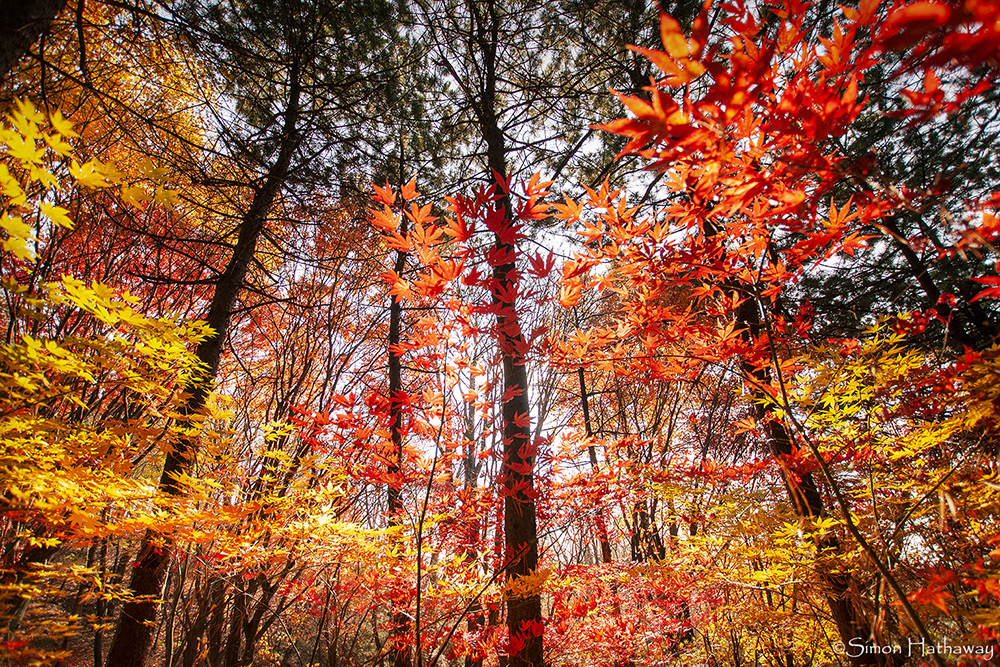
Mogog’s question may seem to ask about the twelve faces of Avalokiteshvara, but it actually meant means, “What is the true-Self?”. Rinzai’s response to Mogog’s question may sound eccentric and illogical but this is a perfect answer to Magog’s question. You should be able to recognise the true-Self that Rinzai showed, just as you can recognise the invisible wind by seeing leaves moving, and the invisible autumn by seeing leaves turning red and yellow. (Refer to Rinzai 7, 8 about Avalokiteshvara).

Then, Mogog, admitting Rinzai’s answer, raised another question by twisting his body and moving as if to climb Rinzai’s seat. This action included both approval and another question: “I know that you mean just this as your answer to my question. Then, what is this? Tell me another answer.” Rinzai made an immediate answer by lifting his stick and hitting him. ‘Mogog grabbed the stick, and both went together to the master’s quarters’ means that both of them approved each other’s enlightenment.

You should know that however leaves may flutter and sound, it’s all just the function of the wind.

©Boo Ahm

All writing ©Boo Ahm. All images ©Simon Hathaway

#zen #meditation #zenmeditation #enlightened #enlightenment #zenfools #photography
Zen

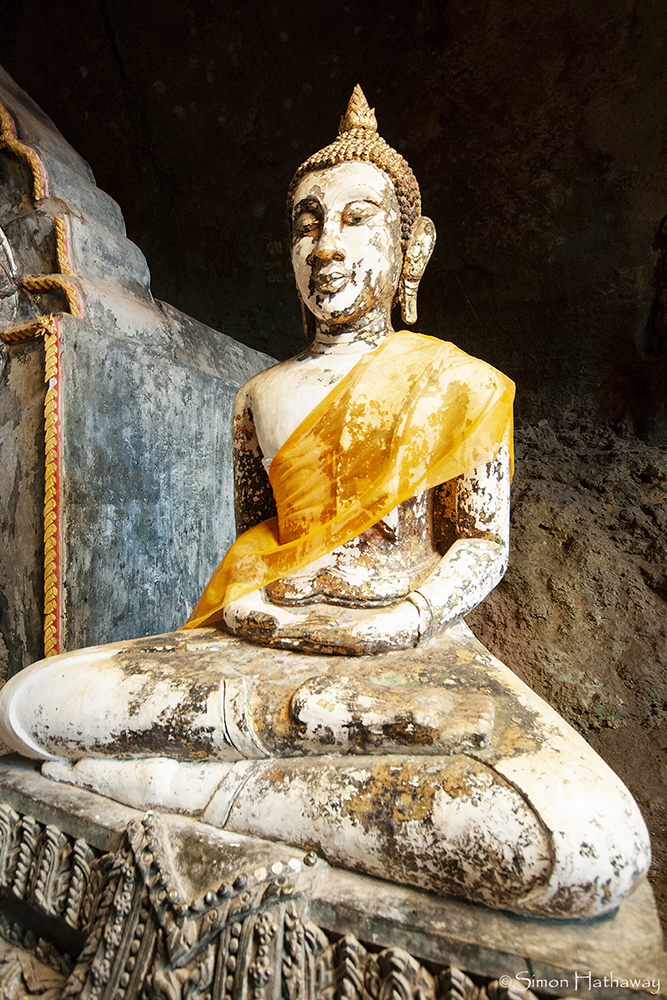
Q. What do you think of the idea that Buddhism is philosophy?

A. It can be treated as an academic discipline. However, Buddhism as a subject of academy is one thing and Buddhism as a religion is another. The former is based on literature, but the latter on practice. The latter pursues enlightenment, but I have never heard that a Buddhist scholar has attained enlightenment.

Let me offer a glimpse into the difference between Buddhism and philosophy by comparing Buddhist masters with philosophers. Philosophers seem to adhere to their unique opinions that are different from those of their predecessors, or their contemporaries, although sometimes being partially in accord with them. They pursue new thought whilst disputing, or negating, or finding fault with existing theories by others.

However, all Buddhist masters who have realised the true-Self, or the Buddha that they believe is the essence of everything have the same opinion concerning it throughout history; what it is like and what its characteristics are, even though their ways of describing and expressing it are diverse from each other. Masters who have realised the true-Self can tell whether a person is enlightened or not by testing him with koans, Zen questions in the same way as elementary school teachers test their students with arithmetic questions to see whether they have mastered arithmetic rules.

Accordingly, Buddhism as a religion is quite different from philosophy.

©Boo Ahm

All writing ©Boo Ahm. All images ©Simon Hathaway

#zen #meditation #zenmeditation #enlightened #enlightenment #zenfools #photography
Zen

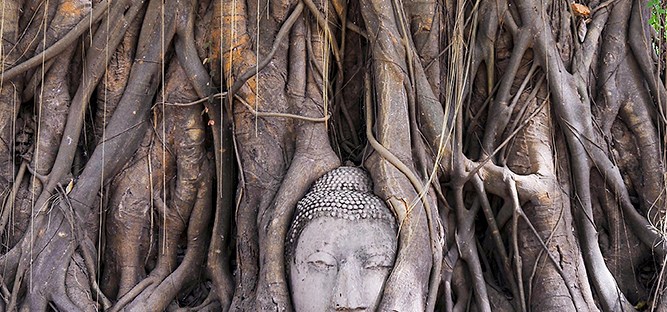
One who doesn’t say that there is enlightenment

One day Chungwon said to Sukdo, “People say that there is enlightenment.” Sukdo said, “There is one who doesn’t say that there is enlightenment.” Chungwon said, “Who is it?” Sukdo answered, “Not only all the Sutras but also everything comes out from him.”

Student: “Who is the one that all the Sutras and everything come out from?”

Master: “Everything is coming out from him now.”

Commentary:

He is always in sight, but invisible when you look for him.

©Boo Ahm

All writing ©Boo Ahm. All images ©Simon Hathaway

#zen #meditation #zenmeditation #enlightened #enlightenment #zenfools #photography
Zen

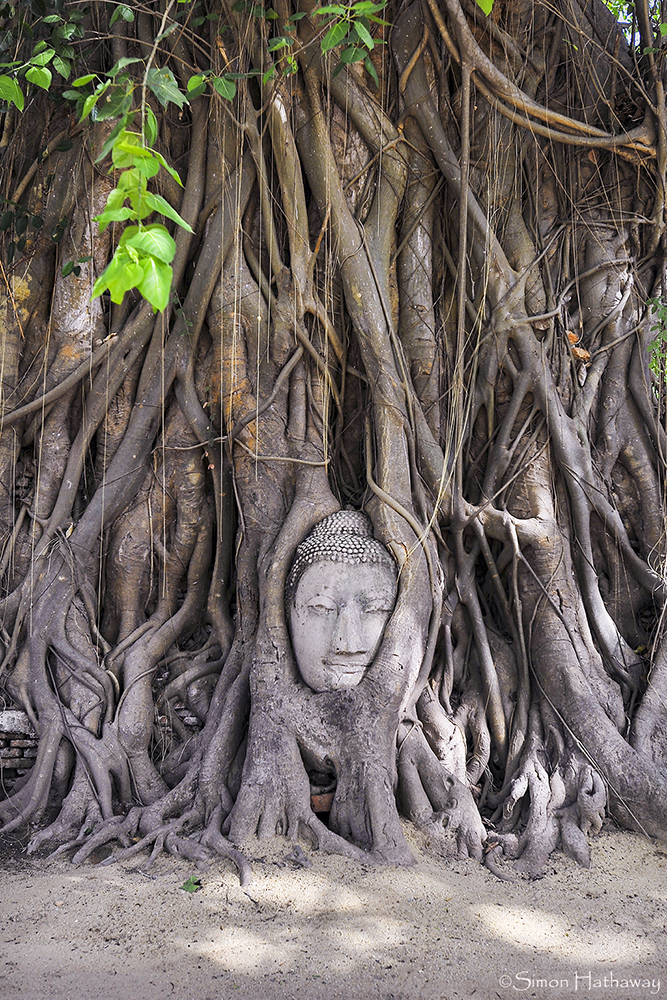
Rinzai 197

Monastic Jo came to have an interview with Rinzai. He asked, “What is the essence of the Buddha-Dharma?” Rinzai came down from his seat, grabbed him, gave him a slap, and then let go of him. Jo remained motionless blankly. A monk said, “Jo, why do you not bow?” On the point of bowing, Jo suddenly had a great awakening.

Commentary:

We should appreciate Rinzai’s answer, which he made by coming down from his seat, grabbing Jo, giving him a slap, and then letting go of him. However, Jo, failing to grasp Rinzai’s answer, was at a loss. The monk nearby gave him a hint by saying, “Why do you not bow?”. He meant, “Why don’t you express your gratitude by bowing to Rinzai because he had the kindness to give you such a nice answer?” Even when Jo was told to bow by the monk, he seemed to be doubtful why he should be grateful to Rinzai because he was not aware of Rinzai’s answer. Nevertheless, he had the good fortune to realise Rinzai’s intention thanks to the monk.

©Boo Ahm

All writing ©Boo Ahm. All images ©Simon Hathaway

#zen #meditation #zenmeditation #enlightened #enlightenment #zenfools #photography
Zen

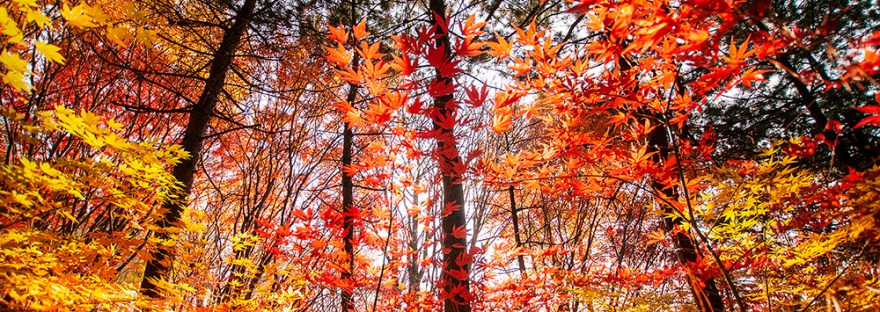
Q. What is the meaning of troublesome events in our lives, which leave us with more questions than answers and make no sense at all?

A. Haven’t you ever thought that your troublesome events can be beneficial events to someone else? Everything and every event itself is neutral in essence. It has no meaning unless you grant meaning to it.

The meaning you give to it varies depending on what you are and the context of your viewing. For example, when you return to a farm village where you spent your childhood, you feel that the barn which looked so large when you were young appears very small. The same barn looks smaller than before more because you are not what you used to be and because your perspective has changed, rather than because the size of the barn has changed with time. This means that all the troublesome events you think of as troublesome appear to be so not because they are troublesome by nature but because you see them as troublesome.

©Boo Ahm

All writing ©Boo Ahm. All images ©Simon Hathaway

#zen #meditation #zenmeditation #enlightened #enlightenment #zenfools #photography