Questions & Koans

zen

Rinzai 100

Followers of the Way, they say that there is talk of the Way to be practised and the Dharma to be realised. Tell me, then, what Dharma is to be realised, what Way is to be practised. At this moment, what do you lack for your functioning? And what do you need to complement by your training?

Young students, not understanding anything, put their faith in wild fox sprites and so get entangled in their random talk and fancies such as ‘Buddhahood can be attained only when theory coincides with practice and when we guard against the three karmic actions’. Those who make such discourses are as many as April drizzling rains.

Commentary:

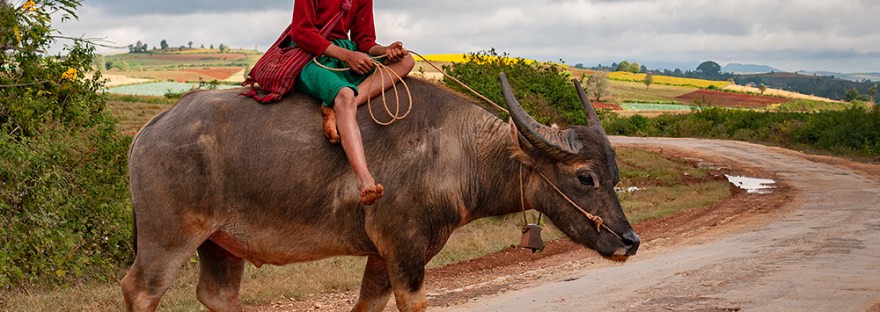
Practitioners should not be attached to the illusions of the Way and the Dharma, just as they should not be attached to the illusion of the Buddha. When we follow each of the words ‘the Way’ and ‘the Dharma’, they look different and separate from each other, but they are just one. The one who is trying to practise the Way and realise the Dharma at this moment is no other than the Way, the Dharma itself. All its movements are the functions of the Way and the Dharma. Rinzai is saying that we should not make futile efforts to look for them outside. Ancient masters would compare this situation to a man who is looking for his ox whilst riding on it.

‘Put their faith in wild fox sprites’ means to be attached to misleading talks by fake masters that look sacred and sound plausible, such as ‘Buddhahood can be attained only when theory coincides with practice and when we guard against the three karmic actions’. The phrase ‘so get entangled in their random talk and fancies’ means to be deluded by talks such as those mentioned. To realise that Buddhahood as well as theory, practice and karmic actions is empty, is truly to attain Buddhahood, enlightenment. This is why the Buddha said that what can be attained is not Buddhahood. ‘Those who make such discourses are as many as April drizzling rains’ implies that there are a lot of fake masters who mislead people with such illusions.

©Boo Ahm

All writing ©Boo Ahm. All images ©Simon Hathaway

#zen #meditation #zenmeditation #enlightened #enlightenment #zenfools #photography

zen

Q. What is the future Buddha and when will he come?

A. The core idea of Buddhism is non-duality, which means that there is only Emptiness that is referred to as the Buddha, the true-Self, or Oneness and nothing else. This means that there is only one Buddha, and not multiple; past, present and future Buddhas.

If you can recognise the Buddha now, it is your present Buddha. However, if you still don’t recognise the Buddha, he is not the Buddha to you although he is always with you now, until you can recognise him in the future. Then, he is no other than the future Buddha to you now. So, the future Buddha is not another Buddha separate from the Buddha but just another name attached to the Buddha for the people who cannot recognise the Buddha now.

©Boo Ahm

All writing ©Boo Ahm. All images ©Simon Hathaway

#zen #meditation #zenmeditation #enlightened #enlightenment #zenfools #photography

zen

Jinfeng’s ‘Frost on Top of Snow’

Jinfeng said to a monastic who stood beside him, “I will give you a koan. First of all, you should not be confused by it.”

The monastic said, “Master, please give it to me.”

Jinfeng held up his whisk.

The monastic was silent for a while.

Jinfeng said, “I know that you are confused.”

The monastic looked toward the east, then the west.

Jinfeng said, “You have added frost on top of snow.”

Student: “Why was the monastic silent for a while when Jinfeng held up his whisk?”

Master: “Because you are deaf,”

Student: “Why did Jinfeng say that the monastic was confused?”

Master: “Because you are confused.”

Student: “Why did the monastic look toward the east, then the west?”

Master: “Because you are blind.”

Student: “Why did Jinfeng say that the monastic had added frost on top of snow?”

Master: “Because you have added frost on top of snow.”

Commentary:

Don’t think that what is precious is rare. It is too common for your eyes and ears to avoid.

©Boo Ahm

All writing ©Boo Ahm. All images ©Simon Hathaway

#zen #meditation #zenmeditation #enlightened #enlightenment #zenfools #photography

zen

Rinzai 99

For a dozen years I have been looking for one who is suitable, but have not been able to find as much as a mustard seed. I am afraid those Zen teachers are rather like newly-wed brides, uneasy and worried about being chased out of their homes and starving to death.

Since olden times people have not believed the old masters, and only after they had been driven away did their greatness become known. He who is approved by everyone, what good is he? “The lion’s roar shatters the brain of the jackal.”

Commentary:

‘For a dozen years I have been looking for one who is suitable, but have not been able to find as much as a mustard seed’ is a statement showing that the enlightened were quite rare at that time as well.

‘Those Zen teachers are rather like newly-wed brides, uneasy and worried about being chased out of their homes and starving to death’ says how poorly the enlightened were treated before they were acknowledged as enlightened, since it was not easy for the unenlightened to distinguish whether a man was enlightened or not.

‘Since olden times people have not believed the old masters, and only after they had been driven away did their greatness become known’ implies the example of Bodhidharma: When he met Emperor Yang Wu, he couldn’t recognise his enlightenment although Bodhidharma answered his questions perfectly. After that, Bodhidharma crossed the Yangtze River and went to the kingdom of Wei. Only after Bodhidharma left for the kingdom of Wei did Emperor Yang Wu lament that he had failed to realise his greatness.

‘The lion’s roar shatters the brain of the jackal’ means that if Emperor Yang Wu had grasped Bodhidharma’s answer, the lion’s roar, his discriminating mind, the brain of jackal would have been shattered, that is, he would have attained enlightenment.

©Boo Ahm

All writing ©Boo Ahm. All images ©Simon Hathaway

#zen #meditation #zenmeditation #enlightened #enlightenment #zenfools #photography

zen

Q. Is there a reason why things happen to us?

A. Why are you asking this question? If you realise why this question came to you, you can grasp why things happen to us because your asking this question is also a kind of happening. Because of your curiosity? Then, where is it from? Why did it come to you?

To keep asking yourself this question is Zen practice itself. If you find the answer to this, you can realise why the most important things; birth, ageing, illness and death, happen to us.

©Boo Ahm

All writing ©Boo Ahm. All images ©Simon Hathaway

#zen #meditation #zenmeditation #enlightened #enlightenment #zenfools #photography

zen

‘Pull a person out of a well’

Once a monk asked a master what the true-Self is. The master answered, “I will answer your question if you pull a person out of a hundred-foot well without using any ropes, or ladders.” The monk didn’t know what to say.

Student: “How is it possible to get the person out of a well without using anything at all?”

Master: “Why are you in the well?”

Student: “How can I get out of it?”

Master: “Your body is already out, but your clothing is caught on the edge of the well.”

Commentary:

Getting a well out of you is much more difficult than getting you out of a well.

©Boo Ahm

All writing ©Boo Ahm. All images ©Simon Hathaway

#zen #meditation #zenmeditation #enlightened #enlightenment #zenfools #photography

zen

Rinzai 98

Followers of the Way, only a great teacher dares to disparage the Buddhas and patriarchs, dares to criticise everything, to defy the Teachings of the Three Baskets, and abuse immature students, and so, finds the man within the straight or the crooked.

Commentary:

‘Only a great teacher dares to disparage the Buddhas and patriarchs’ means that a great teacher is never deluded by the illusions of the Buddhas and patriarchs. ‘Dares to criticise everything, to defy the Teachings of the Three Baskets’ implies that a great master grasps the core meaning of the Buddha’s teaching without following the literal meaning of the Teachings of the Three Baskets which symbolises all Buddhist teaching. Master Rinzai once said that all the Sutras are just Mara’s talk, which is a good example of defying the Teachings of the Three Baskets. However, this doesn’t mean that all the Sutras are of no account but that we should not miss the core teaching by clinging to literal interpretation. That is why ancient masters said that all the dead words in the Sutras come to life when we grasp the core of them. ‘Finds the man within the straight or the crooked’ means that he sees the true-Self within diverse forms such as straight or crooked since he is not deluded by the illusions of the Buddhas and patriarchs and the Teachings of the Three Baskets.

©Boo Ahm

All writing ©Boo Ahm. All images ©Simon Hathaway

#zen #meditation #zenmeditation #enlightened #enlightenment #zenfools #photography

zen

Q. I don’t think Zen meditation will help me to solve koans because I believe that such questions are unanswerable.

A. Koans are used to express what cannot be explained in words, which is why people who struggle to solve koans with words in the same way they solve academic questions are likely to regard koans as unanswerable. 

Every koan has an exact answer. The answer can be expressed in countless ways, just as ‘two plus three is five’ can be expressed in numerous ways such as ‘six minus one’, ‘seven minus two’, ‘ten divided by two’ and so on.

Koans are also used to check whether we have clear-cut understanding of the Buddha’s teaching. If we cannot answer koans correctly, it testifies that we have only superficial understanding of Buddhism and still have not grasped the core of Buddhism. Koans look unanswerable not because they are really unanswerable but because we have not grasped Buddhist teaching.

The key point is that you don’t know the answer to such questions whilst you are answering them perfectly.

©Boo Ahm

All writing ©Boo Ahm. All images ©Simon Hathaway

#zen #meditation #zenmeditation #enlightened #enlightenment #zenfools #photography

zen

Shushan’s ‘Edge of the Dharma Body’

Yunmen came out from the assembly and said, “What is the edge of Dharma body?”

Shushan said, “A dead camellia.”

Yunmen said, “What is going beyond Dharma body?”

Shushan said, “Not a dead camellia.”

Yunmen said, “Would you allow your student to speak about it?”

Shushan said, “Yes, I would.”

Yunmen said, “Does a dead camellia clarify the edge of Dharma body?”

Shushan said, “Yes, it does.”

Yunmen said, “Does something that is not a dead camellia clarify going beyond Dharma body?”

Shushan said, “No, it doesn’t.”

Student: “Why did Shushan say ‘No’ when he was asked if something that is not a dead camellia clarifies going beyond Dharma body although he had said ‘Not a dead camellia’ when asked what is going beyond Dharma body?”

Master: “Because the questioner didn’t go beyond a dead camellia.”

Student: “What is going beyond a dead camellia?”

Master: “Still a dead camellia.”

Commentary:

Whether ‘Dharma body’ is Dharma body, or the edge of it, is up to you.

©Boo Ahm

All writing ©Boo Ahm. All images ©Simon Hathaway

#zen #meditation #zenmeditation #enlightened #enlightenment #zenfools #photography

zen

Rinzai 97

Followers of the Way, you take the words that issued from the mouths of old teachers, saying “This is the true Way, this old sage is wonderful; I am but an ordinary fellow and dare not compare myself with such great masters.” Blind fools! Your whole life you hold such views, going against your two intact eyes, trembling like asses on ice, your teeth clenched with fear. I am not afraid of producing karma by speaking ill of masters.

Commentary:

You should not cling to the shapes of masters and their words however plausible they may sound. The historical Buddha, to prevent people from attaching themselves to his form and his words, taught them to kill him when they met him and, on his deathbed, he said that he had never spoken even a single word. Believing that you are inferior to the Buddha and great masters, clinging to their forms and words is going against the Buddha’s teaching that you are no less great than the Buddha and ancient great masters. ‘Going against your two intact eyes’ means failing to see things as they are, and ‘trembling like asses on ice, your teeth clenched with fear’ implies to be deluded by illusions. ‘I am not afraid of producing karma by speaking ill of masters’ means that master Rinzai himself is free from being deluded by the illusions of ‘masters’ and ‘karma’. In the same sense, many ancient masters would say to their students, “You should be able to scold and blame the Buddha and patriarchs.”

©Boo Ahm

All writing ©Boo Ahm. All images ©Simon Hathaway

#zen #meditation #zenmeditation #enlightened #enlightenment #zenfools #photography