Questions & Koans

Zen

Rinzai 66

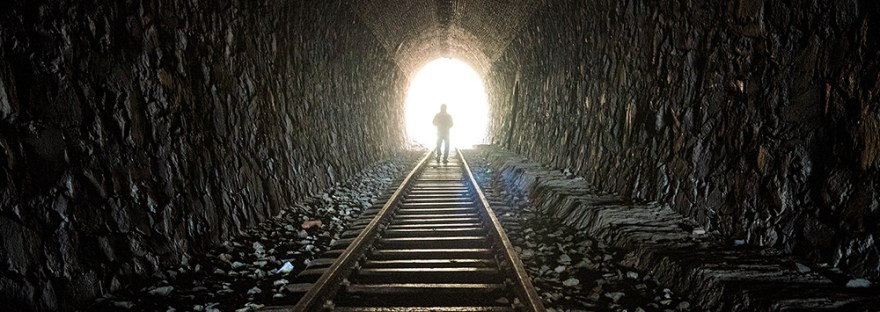
Whatever land he may visit, he tries to relieve sentient beings during his stay there whilst roaming through the kingdoms. Yet, he never strays for a single thought from his shining purity. Penetrating the ten directions, the ten thousand things are of one Suchness.


Commentary:

Whatever land he may visit’ means ‘whatever situation he may be faced with’. ‘His shining purity’ implies the true-Self. In other words, once you get enlightened, you can’t stray from the true-Self even for a moment whatever situation you may be placed in.

Penetrating the ten directions, the ten thousand things are as one Suchness’ means that even if you face ten different situations and see ten thousand different things, you are aware that they are all the functions of one Suchness which is Emptiness, the true-Self.

019_4025a_thumb


Student: “What is the shining purity?”

Master: “Thank you for showing it.”


©Boo Ahm

All writing ©Boo Ahm. All images ©Simon Hathaway

#zen #meditation #zenmeditation #enlightened #enlightenment #zenfools #photography

Zen

Q. How can I see the current pandemic situation as being empty rather than harmful when there are so many people experiencing inconvenience and suffering?

A. To see things as empty is, in other words, to see things as being neutral. This is to say that all the characteristics pertaining to anything, or to any situation, are not intrinsic in their own right but are instead determined and defined by the view of the beholder according to circumstances. Put in another way, everything is meaningless and neutral, in essence, unless we give it meaning and put labels on it. If something is good, it is not because it is intrinsically good but only because we regard it as such. That is why what is the best to one person can be the worst to another and vice versa, and what is the best today can be the worst tomorrow.


Let’s consider the following story as an example. Once upon a time, there lived an old farmer named Saehong in China. One day his horse ran away, and he lost it. Then, his neighbours said to him, “How unlucky you are to lose your horse!” He responded, “Who knows whether it is fortune or misfortune?” Sometime later his lost horse unexpectedly returned together with a very handsome horse. His neighbours, this time, congratulated him on obtaining a nice horse for nothing. He said, “Who knows whether it is fortune or misfortune?” Sometime later his son fell off the horse and broke one of his legs. This time his neighbours said, “How unlucky you are that your son had his leg broken because of the new horse!” He said without any emotion, “Who knows whether it is fortune or misfortune?” Not long after that, a war broke out in the country. When many young people, drafted for military service, lost their lives, his son escaped being drafted for the war because of his broken leg.

P1110775a_thumb


To those who are undergoing suffering from the negative effects of the current situation; being infected, losing loved ones, losing their livelihood and so on, coronavirus is harmful and perilous. However, it is also true that the current situation has positive effects such as decreasing air pollution, creating ceasefires between warring countries, etcetera. To the people who suffer from respiratory disease caused by air pollution and who are now enjoying breathing cleaner air, the coronavirus can feel helpful.


Those who are undergoing negative effects because of the current circumstances can be compared to being in the situation in which the farmer lost his horse from the neighbours’ perspective. Those who are enjoying positive effects due to the current events can be likened to being in the situation in which the farmer’s horse returned with another nice horse from the neighbours’ point of view.


Which perspective will you take, the farmer’s or his neighbours’? It’s up to you.


©Boo Ahm


All writing ©Boo Ahm. All images ©Simon Hathaway


#zen #meditation #zenmeditation #enlightened #enlightenment #zenfools #photography

Zen

Master Daejoo questions a monk who lectured on the Sutras

Master Daejoo asked a monk who lectured on the Sutras, “What Sutra are you lecturing on these days?” He answered, “I am lecturing on the Diamond Sutra.” Daejoo said, “Saying that the Buddha spoke is finding fault with the Buddha. Saying that the Sutras are not the Buddha’s speech is finding fault with the Sutras. What would you say apart from these two comments?” The monk couldn’t answer the question.

20200304_133807a_thumb

Student: “What should I say in order to avoid finding fault with both comments?”

Master: “The Diamond Sutra says there is no Buddha and the Buddha said that he had never spoken even a single word.”


Commentary:

What can be found fault with is neither the Buddha nor the Sutras.


©Boo Ahm


All writing ©Boo Ahm. All images ©Simon Hathaway


#zen #meditation #zenmeditation #enlightened #enlightenment #zenfools #photography
Zen

Rinzai 65

Followers of the Way, the one who at this moment stands alone, clearly and lively right before the eyes and is listening, this one is nowhere obstructed; unhindered he penetrates everywhere and moves freely in the Three Worlds. Entering all kinds of situations, he is never affected by them. In the fraction of a moment he goes to the bottom of the scheme of things. Meeting Buddha, he talks to Buddha; meeting patriarchs, he talks to patriarchs; meeting Arhats, he talks to Arhats; meeting hungry ghosts, he talks to hungry ghosts.


Commentary:

‘The one who at this moment stands alone, clearly and lively right before the eyes and is listening’ implies the true-Self. ‘This one is nowhere obstructed; unhindered he penetrates everywhere and moves freely in the Three Worlds’ doesn’t mean that the true-Self moves here and there freely but means that everything, including the Three Worlds, is just the function of the true-Self without exception.

20200304_141059a_thumb

In ‘entering all kinds of situation, he is never affected by them’ ‘he’ is an enlightened person who has realised that he is one with the true-Self and that all kinds of situations are just the function of the true-Self. That’s why he is never affected by the situations he enters. Then, it is very clear to him that Buddha, patriarchs, Arhats (figures who have attained genuine insight in Southern Buddhism) and hungry ghosts are all, in essence, just the same since they are no more than the functions of the true-Self. So, he can handle them freely. Thinking of them as different from one another, according to their names and forms, is being deluded by their illusions.


Student: “How should we meet and talk to Buddha and the patriarchs and handle hungry ghosts?”

Master: “When you meet Buddha and the patriarchs, they turn into Maras if you are attracted by and follow them. When you meet Maras, they turn into Buddha if you are indifferent to them and don’t run away.”


©Boo Ahm


All writing ©Boo Ahm. All images ©Simon Hathaway


#zen #meditation #zenmeditation #enlightened #enlightenment #zenfools #photography
Zen

Q. As Zen practitioners, how should we react to the current pandemic situation in which we find ourselves?

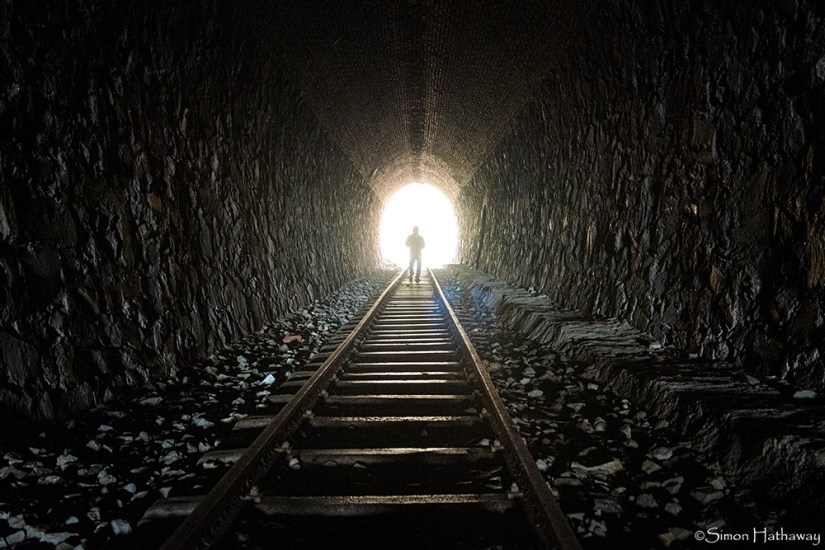
A. There is a significant conversation between an ancient master and his student that is relevant for the current situation: “How can I avoid heat and cold when they come?” “Why don’t you go where there is neither heat nor cold?”.


‘Go where there is neither heat nor cold’ means to see everything as empty, which, as often previously mentioned, is seeing everything with all the labels describing it detached from it. When there are no labels, imaginary lines that distinguish all things from one another, there are no human beings, no plants, no birth and no death. The state without any labels is referred to as the Buddha, or the Pure Land. To experience this state is to see the Buddha, or to enter the Pure Land that is without heat and cold.

_SRH7998a_thumb


When we see everything as empty, that is, when there are no labels at all, there is neither corona virus to infect human beings nor human beings to be infected by it. When we can see the current situation in this way, we can enjoy our lives as usual as if there were no virus. This, however, doesn’t mean that we don’t have to be watchful about corona virus but means that we are sufficiently vigilant though not so seized with fear that we lose our reason and become so selfish as to stockpile daily necessities. When we remain calm as usual, we can not only be cautious and more effectively prepared for danger but also make wiser decisions than when we are at a loss being captivated by fear.


So, the attitude that Zen practitioners should take in the current pandemic situation is to live as calmly as if there were no corona virus whilst being vigilant enough and to take care of, or comfort those who are in trouble mentally, or materially, due to the current circumstances.


©Boo Ahm


All writing ©Boo Ahm. All images ©Simon Hathaway


#zen #meditation #zenmeditation #enlightened #enlightenment #zenfools #photography
Zen

Fayan’s “Non-abiding Origin”

Fayan was once asked by a monastic, “I learned in the sutras that all dharmas are based on the non-abiding origin. What is the non-abiding origin?”

Fayan said, “Form is born from formlessness and name comes from the unnameable.”


Student: “What is formlessness?”

Master: “Form.”

Student: “What is the unnameable?”

Master: “Name.”

019_3867a_thumb


Commentary:

If you are not deluded by words, form is formlessness, but if you are, the unnameable is a name.


©Boo Ahm


All writing ©Boo Ahm. All images ©Simon Hathaway


#zen #meditation #zenmeditation #enlightened #enlightenment #zenfools #photography

Zen

Rinzai 64

Those who can realise this, do so at once, without training or testimonial, without gain or loss. There is no other Dharma. Were there a special one, I say it is like a phantom and a dream. This is all that I teach.


Commentary:

‘Those who can realise this’ means those who can see and hear things as they are without being deluded by their names, that is, those who can attain enlightenment. ‘Do so at once, without training or testimonial’ implies that enlightenment comes suddenly, not gradually in the way knowledge is acquired through academic training, or by testimonial.

‘Without gain or loss’ means that enlightenment is not to gain good things and lose bad things but to realise that we are already so perfect that there is nothing to be gained to compensate for our deficiency, and nothing wrong to be removed for our perfection. So, Buddha, according to the Diamond Sutra, said, “I’ve never gained anything at all, even the smallest thing. My highest enlightenment is just a name.”

20200304_133111a_thumb


‘Were there a special one, I say it is like a phantom and a dream’ means that we should be able to see everything as empty without any exception, including Buddha, which is more often than not compared to seeing things as a dream. According to the Diamond Sutra, Buddha said, “If you see things as a dream, you will see the true-Self.”


Student: “How can we see Buddha if you ask us to see even Buddha as an illusion?”

Master: “That’s the way you can see Buddha?”


©Boo Ahm


All writing ©Boo Ahm. All images ©Simon Hathaway


#zen #meditation #zenmeditation #enlightened #enlightenment #zenfools #photography
Zen

Q. How do I stay in the present moment when it feels unbearable?

A. When you say that your trying to stay in the present moment feels unbearable, do you mean that you are thrown into the future or the past against your will? How miraculous it would be if it were really possible! How many old people are anxious to return to their past, their youth, and how many young people long to see what their futures will be like?

To stay in the present moment generally means to focus your attention on the work you are doing at this moment without wasting your time and effort struggling with your irreversible memories of the past, or worries about the future which has not yet come.

020_6614a_thumb

However, if you, following the words literally, try to stay in the present moment, what is the present moment you seek to stay in when everything changes every moment without respite? You should know better than to be dazzled and deluded by such plausible sounding rhetoric. Trying to stay in the present moment is not different from trying to obtain the horn of a rabbit because there is, in reality, no present moment. This is namely to be deluded by the illusion of ‘present moment’.

Buddhist teaching doesn’t tell you to stay in the present moment but teaches you to realise that present, future and past are empty since they are all imaginary lines.

©Boo Ahm

All writing ©Boo Ahm. All images ©Simon Hathaway

#zen #meditation #zenmeditation #enlightened #enlightenment #zenfools #photography

Zen

Buddha once said, “I transmit the true Dharma to Mahakasyapa.”

According to the Sutras, Buddha once said, “I transmit the true Dharma that I have, to my student, Mahakasyapa.” before the congregation one day. Regarding this, a monk asked Master Heung-hwa, “What did Buddha transmit to Mahakasyapa then?” The master answered, “One person transmitted falsely, and ten thousand people transmitted truly.”

20200304_133149a_thumb


Student: “What’s the difference between what was truly transmitted and what was falsely transmitted?”

Master: “I transmit the true Dharma to you now. I hope you are quick to take it.”

Student: “Thank you, but I don’t know how to take it.”

Master: “Why do you try to take truly what I falsely transmitted?”


Commentary:

What can be transmitted or taken is not the true Dharma.


©Boo Ahm


All writing ©Boo Ahm. All images ©Simon Hathaway

Zen

Rinzai 63

A monk asked: “What are Buddha and Mara?”

The master said: A moment of doubt in your heart is Mara. But if you can grasp that the ten thousand things are unborn and that the heart is like an illusionary fantasy, then nothing even of the size of a speck of dust exists — everywhere is purity — this is Buddha. It may be said that Buddha and Mara present the pure and the tainted state; yet as I see it there is no Buddha, no living being, no past, no present.

20200304_125005a_thumb

Commentary:

‘A moment of doubt in your heart’ means to identify all things with their names and mistakenly regard these names as the essence of the things, that is, to be deluded by words. ‘The ten thousand things are unborn’ implies that nothing comes into existence on its own and that everything is of our own imaginary creation. ‘The mind is like an illusionary fantasy’ means that the ‘mind’ regarded as the true-Self by practitioners is also a kind of name, an imaginary label created by us and that it is originally nameless. If you can see everything in this way, you realise that nothing even of the size of a speck of dust exists on its own and that everything is empty. ‘As I see it there is no Buddha, no living being, no past, no present’ means that although Buddha and Mara are said to present the pure and the tainted states respectively, Master Rinzai himself is aware that there is no Buddha, no living being, no past, no present since he can see everything as empty without being deluded by their illusions, names.


Student: “What is the difference between Buddha and Mara?”

Master: “What changes is Mara and what never changes is Buddha.”


©Boo Ahm


All writing ©Boo Ahm. All images ©Simon Hathaway


#zen #meditation #zenmeditation #enlightened #enlightenment #zenfools #photography