
Part 14-2
“World Honoured One, if there is anyone who, on hearing this sutra, conceives pure faith, he will realise the true form of everything. One should know that such a person has accomplished the rarest merit.”
“World Honoured One, this true form of everything is not a form: therefore, the Realised One says it is called the true form of everything.”
Commentary:
Here, the phrase ‘pure faith’ means seeing and hearing everything as it truly is. The phrase ‘realise the true form of everything’ means that the Emptiness (the true-Self, Buddha-nature), which is the true nature of all things, is revealed—signifying the enlightenment to the true-Self.
While mentioning that realising the true-Self is the achievement of the rarest merit, the Buddha also warned against falling into the trap of the concept of the true-Self. To prevent sentient beings from being deceived by the word ‘true-Self,’ imagining a specific form and seeking it externally, he stated: “The true-Self is precisely not a form; therefore, the Buddha called it the true-Self.”
As mentioned several times, the true-Self, the essence of all things—much like how the reality of wind is air, which includes all winds—has no fixed form yet contains every wind. It is not rare or difficult to obtain; rather, it is so abundant and pervasive that we ourselves are part of it. There is nothing that is not ‘It’, and we cannot escape it for even a moment. The difficulty arises because we ignore what is seen, heard, and felt in every moment, and instead try to find a phantom created by our imagination. The Buddha’s teachings are merely an expedient means to point to the true-Self. We must see it within his words without being deceived by the words themselves.
Regarding those who are still deceived by words and forms, it is said: “The ignorance of sentient beings turns the lush forest of the True Dharma Realm into a thicket of thorns and weeds.” If one seeks the true-Self through forms and words, one will not find it even if the ‘Year of the Donkey’ (a time that never comes) arrives.
We must keep in mind that the essence of everything, down to a single grain of dust, is the true-Self (Emptiness), and we ourselves are the very true-Self. If you worship and rely on a Buddha as a being greater than yourself because you think you are not a Buddha, that is idolatry—no different from serving a thief as your parent.
Thus, Master Bodhidharma said:
“If you know that your own mind is the Buddha,
You will not seek the Buddha outside the mind;
A Buddha does not expect or seek another Buddha.
If you use your mind to seek a Buddha externally,
you do not know the Buddha.”
“Those who seek the Buddha outside the mind
Do not realise that their own mind is the Buddha.
Furthermore, you should not get the Buddha to bow to a Buddha,
Nor should you use the mind to think of another Buddha.”
As the Buddha said in the Avatamsaka Sutra: “I now see all sentient beings everywhere, and they all possess the wisdom and virtuous appearance of the Buddha. It is only because of their deluded thoughts and attachments that they do not realise it.” The core of Buddhism is not worshipping a virtual Buddha imagined to be somewhere beyond the clouds or inside a temple, but realising the fact that ‘I am the Buddha itself.’
Disciple: “What is the essence of everything?”
Master: “What is it not?”
Disciple: “Please be more specific.”
Master: “You.”
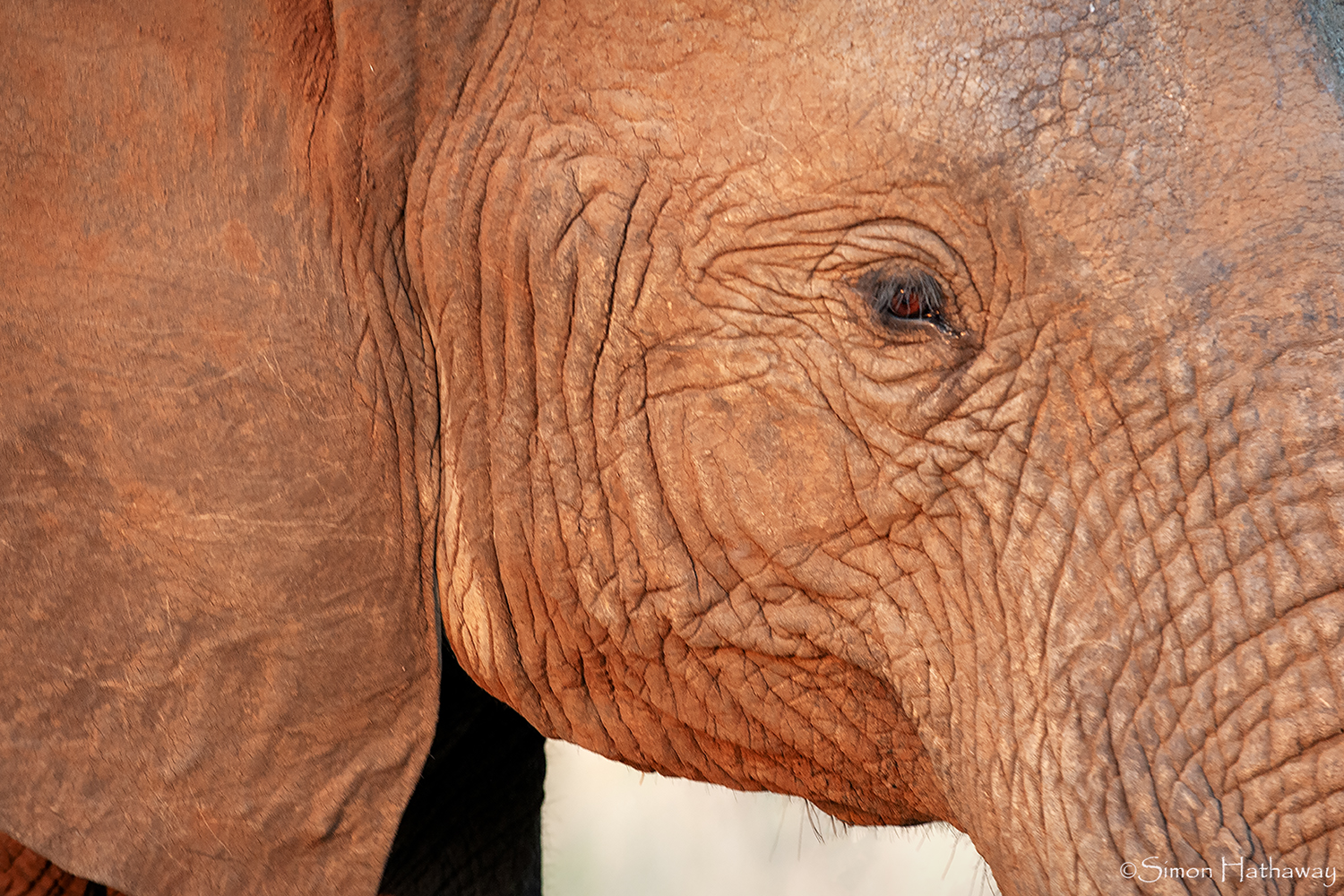
Seeing a flea on an elephant’s body,
One fails to see the elephant.
Hearing the buzz of a mosquito,
One fails to hear the thunder.
It cannot be hidden or covered;
It is always revealed before one’s face.
Yet, because it cannot be seen,
It is called an ‘open secret’.
Koan:
Sosan asked Youngchun, “It is said that only when flowers bloom on a withered tree does one harmonise with ‘That’. Is this a phrase of ‘this side’ (Form) or ‘that side’ (Emptiness)?”
Youngchun replied, “It is still a phrase of this side.”
Sosan asked again, “Then what is a phrase of that side?”
Question 1: What is the meaning of Youngchun’s reply, “It is still a phrase of this side”?
Question 2: How would you answer Sosan’s question, “What is a phrase of that side?”
©Boo Ahm
All writing ©Boo Ahm. All images ©Simon Hathaway


