
Part 14-5
“Why? This person will have no image of self, no image of person, no image of a being, no image of a liver of life. Why? The image of self is not a characteristic; the image of person, the image of a being, and the image of a liver of life are not characteristics. Why? Being freed from all images, he is called the Buddha.”
Commentary:
In this context, this person refers to one who listens to, believes, understands, and upholds the scriptures correctly, according to the Buddha’s teachings, without being deceived by words or external appearances. Such a person has transcended all forms and realises that everything seen and heard—including themselves—is the Buddha-nature and the scripture itself.
The Avatamsaka Sutra states:
“It is not a body, yet a body is spoken of;
It is not an arising, yet an arising is manifested.
Only when there is no body and no arising
Is this called the Supreme Body of the Buddha.”
Just as this verse suggests, the ‘body’ is not a body but is merely called a ‘body’, and ‘arising’ is not an arising but is merely called ‘arising’. The true nature of everything, including ourselves, is that there is neither a physical body nor a point of origin; this emptiness is the true appearance of everything. This is referred to as the appearance of the Buddha (the true-Self).
When one views everything in this light, as the Avatamsaka Sutra says:
“The act of seeing, the object seen,
And even the seer must all be eliminated.
Only then does one not destroy the True Dharma;
Only such a person shall truly know the Buddha”
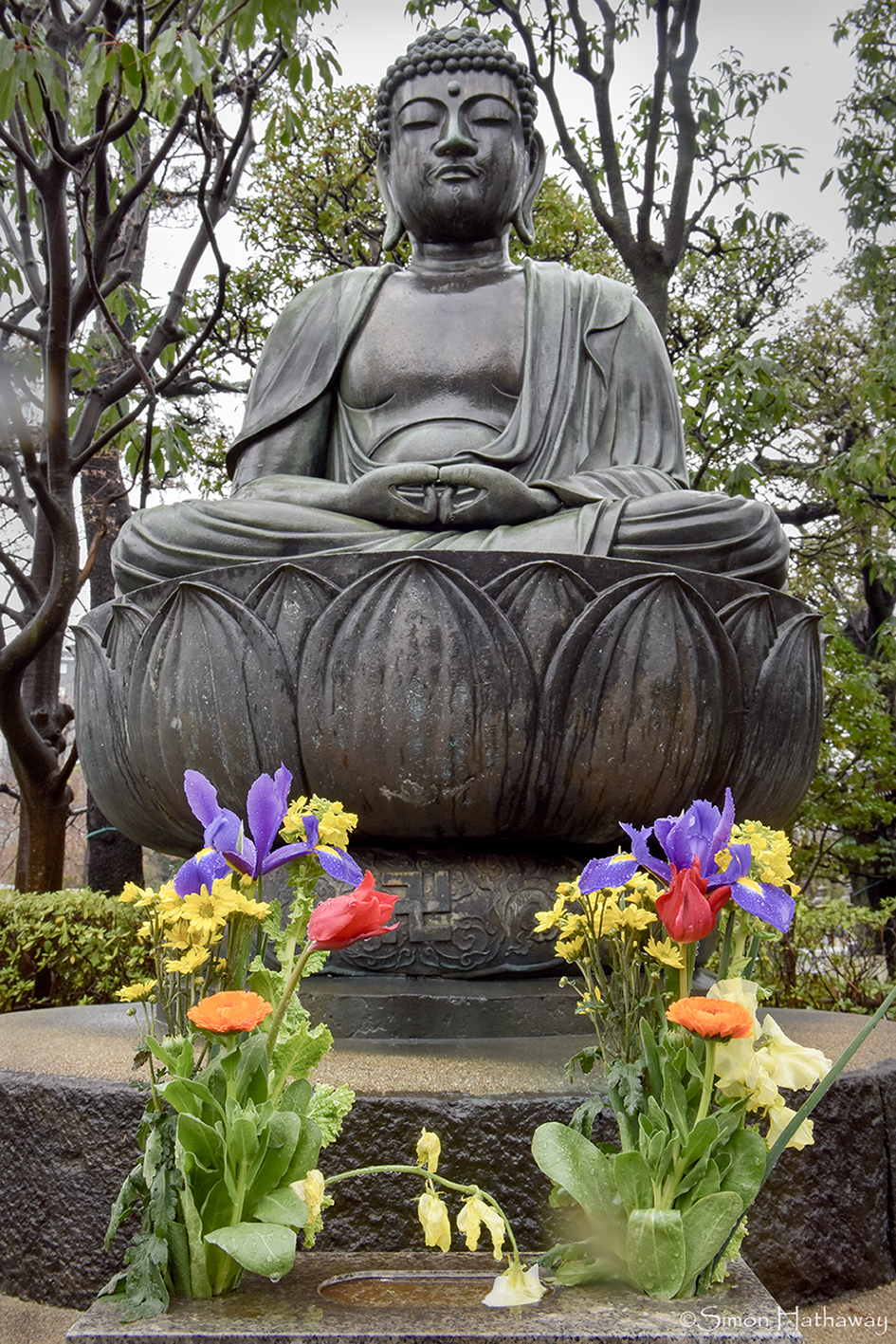
By seeing everything as it truly is without being deceived by forms or sounds, the distinction between the observed object and the observing self vanishes. Seeing everything as a non-dual, unified Buddha-nature is what it means to truly see the Buddha and to correctly hear, believe, and uphold the Sutras.
As the Buddha stated in the Avatamsaka Sutra, “I now see all sentient beings everywhere, and behold, they all possess the wisdom and virtuous marks of the Buddha. It is only because of their delusions and attachments that they fail to realise it” we are inherently Buddhas, but like a king dreaming he is a beggar on the street, we are lost in a sea of afflictions, delusions, and attachments, forgetting our true identity. This state is called being a sentient being. Just as a king wakes up to realise he was never a beggar, the purpose of this scripture—and of Buddhism itself—is to see everything clearly, realising that the sea of suffering is the Pure Land and that we ourselves are the Buddha.
Disciple: “If being free from all forms and names is what we call Buddha, how then can I recognise the Buddha?”
Master: “Your own eyes and ears must first leave form and name behind.”
Only when you know
That the Buddha is not the Buddha,
Will you truly see the Buddha.
The Koan:
Master Dazhu said, “When the body, speech, and mind are pure, it is said that the Buddha has appeared in the world. When the body, speech, and mind are impure, it is said that the Buddha has perished.”
Question: When the body, speech, and mind are pure and the Buddha has appeared in the world, what is it like?
©Boo Ahm
All writing ©Boo Ahm. All images ©Simon Hathaway


