
Part 14-7
“Why? Subhuti, the utmost practice the Realised One expounds is not the utmost practice; this is called the utmost practice.”
Commentary:
The utmost practice refers to the practice methods taught by the Buddha to reach enlightenment. There are the six practice methods—Generosity, Precepts, Patience, Diligence, Meditation, and Wisdom—and sometimes four more are added to speak of the ten practice methods.
The ultimate goal of Buddhism is to realise that all things are empty. Thus, the six practice methods taught by the Buddha are merely expedient means to realise this Emptiness. Furthermore, when we say all things are empty, there are no exceptions. In part 13-1, 2 the Buddha himself stated that the practice methods are not practice methods, but merely called practice methods. In part 3-3, he even went as far as to say he has never preached the Dharma.
Here, he reinforces this by saying that the utmost practice is not the utmost practice, but is simply named so. Although all things in this world appear different because they are divided and classified by names, a name is merely a virtual construct, not the essence, just as saying the word ‘fire’ ten thousand times will not burn your mouth, and saying ‘ice’ a thousand times will not freeze it. Therefore, we should see be able to see the nameless, formless essence instead of mistaking the name for the essence. The ancient masters’ saying, ‘If you meet the Buddha, kill the Buddha’ is a sharp warning not to be deceived by the name and form of Buddha, for the Buddha is not Buddha—it is merely a name.
Accordingly, the Avatamsaka Sutra says:
“Inside this, there is nothing at all;
There are only names. If you are deceived by names
And cling to the idea of self and other,
You will surely fall into a perilous path.”
This teaches that all things in existence share one identical essence and differ only in name. Seeing them as different because of these names is the very root of suffering.
If we see and hear without being deceived by names or forms, then every name is the Buddha’s name, and all forms are nothing but the Buddha’s form, as the Avatamsaka Sutra says:
“Countless names throughout the world
Appear just as the Buddha’s name appears,
Causing sentient beings to leave their ignorance behind.”
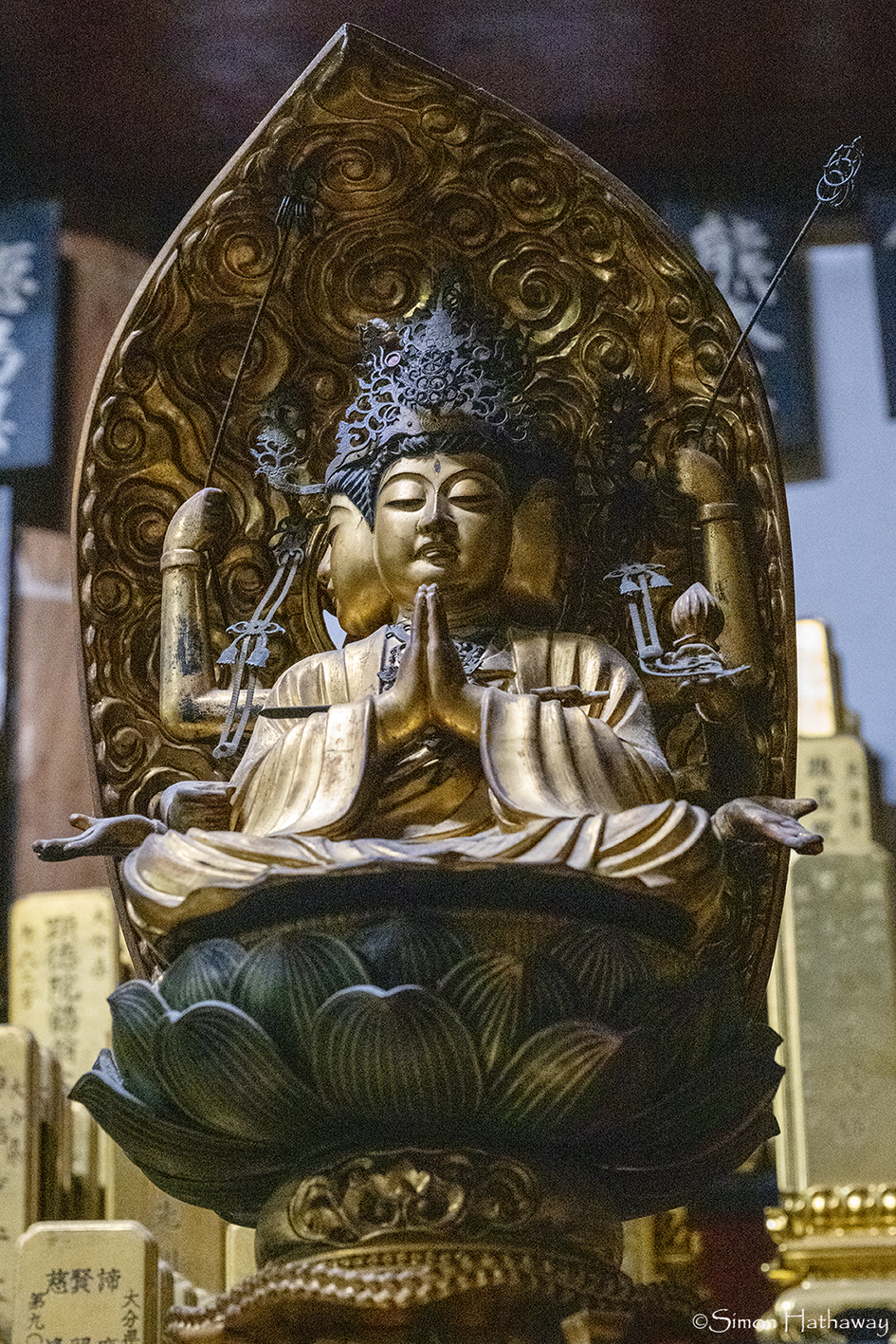
The first practice, the six practice, utmost practice, mountains, seas, trees, people, flowers, the sky, and clouds—all words and movements are like waves on the ocean. While no two waves share the exact same shape, their essence is the one ocean. Similarly, though the forms and sounds we perceive differ, their essence is the functioning of the true-Self. Just as every wave is the appearance of the sea, every diverse form in the universe is the appearance of the Buddha, and their names are ultimately the Buddha’s name. This is why it is said that every name is the Buddha’s name.
Striving to see and hear in this way is the true practice. When one truly sees and hears this way, just as practice is not practice, all forms and sounds are no longer merely forms and sounds. Words are no longer just words; they are seen and heard as the singular functioning of the true-Self. When the ten thousand things are seen as One (Non-duality) and words are no longer mere words, then every word is the Dharma. And if every word is the Dharma, there is not a hair’s breadth of difference between any things in the universe.
Disciple: “If the prime practice is not the prime practice, why must we practise it?”
Master: “If you take medicine correctly, the medicine vanishes along with the illness. It is no longer medicine.”
Disciple: “If the prime practice is not the prime practice, then what is it?”
Master: “It is the prime practice.”
Practice is not practice but practice;
The former is distant, while the latter is nearby.
The Koan:
Shariputra asked Subhuti: “Is preaching the six utmost practices in a dream the same as or different from preaching them while awake?”
Subhuti replied: “This meaning is so deep and profound that I cannot speak of it. The Great Master Maitreya is in this assembly; go and ask him.”
When Shariputra eventually asked Maitreya, Maitreya answered: “Who is called ‘Maitreya,’ and who is ‘Maitreya’?”
Question 1: What is the meaning of Maitreya saying, “Who is called ‘Maitreya,’ and who is ‘Maitreya’?”
Question 2: If you were Maitreya, how would you answer?
©Boo Ahm
All writing ©Boo Ahm. All images ©Simon Hathaway


