A. Enlightenment is nothing to do with whether one has goals and desires. How would the historical Buddha have devoted himself to leading sentient beings to enlightenment had he not had a goal to relieve them from suffering? The enlightened have goals and desires just as the unenlightened do.
However, the difference between the enlightened and the unenlightened is that the former are not swayed by the results of their efforts to pursue their goals of benefitting others and themselves whilst the latter are, because they see all of them as empty and illusionary, just as if they were seeing a movie.
One day Guishan called the monastery director. The director came, and Guishan said to him, “I called for the monastery director. Why have you come here?” The monastery director did not give a response. Guishan asked the attendant monastic to get the head monastic. The head monastic came, and Guishan said to him, “I called for the head monastic. Why have you come here?” The head monastic did not give a response.
Student: “If you had been the monastery director, what would you have said then?”
Master: “I’d have said, ‘Because the monastic director cannot be separated from me’.”
Student: “How would you have responded to Guishan if you had been in the head monastic’s shoes?”
Master: “I’d have said, ‘The head monastic sent me because he cannot move’.”
Commentary:
Seeing and hearing the straight amid the curved is seeing the Buddha.
How pitiful the blind monastics are! Men who have no eye mistake the robes I am wearing for blue, yellow, red or white. When I take them off and enter the phenomena of purity, students take a glance and rejoice in what they see. When I take it off, they are stupefied, run about frantically beside themselves and say that I am naked. So, I say to them: “Do you know at all the one who puts on all of these robes?” And suddenly they turn their heads and recognise me.
Commentary:
‘Men who have no eye mistake the robes I am wearing for blue, yellow, red or white’ means that people follow Rinzai’s words and actions, that is, they are fooled by the illusions of him when he reveals the true-Self with plausible words, or ordinary actions. ‘When I take them off and enter the phenomena of purity, students take a glance and rejoice in what they see’ means that Rinzai shows stillness by stopping speaking and moving for a while, and the students, deluded by the illusion of the stillness Rinzai showed, believe they have grasped his meaning and feel overjoyed. ‘When I take it off, they are stupefied, run about frantically beside themselves and say that I am naked’ implies that when Rinzai takes off the illusion of the stillness and reveals the true-Self in another way, the students, covered with confusion again, talk nonsense following the illusions he makes. Then, Rinzai says, “Do you know at all the one who puts on all of these robes?”, and then they realise that they have been deluded by the illusions Rinzai made.
A. Thoughtlessness is one of the most misunderstood or misinterpreted words in Buddhism. It can be classified into two different types; one before enlightenment and one after enlightenment. The first type, before enlightenment, can be experienced when we are lost in concentration during practise. As you said, it is true that during thoughtlessness we cannot realise this, because recognising it as thoughtlessness is no other than a thought itself. When we look back upon this afterwards, we can realise that it was thoughtlessness.
However, such thoughtlessness is not the ultimate state of thoughtlessness symbolising enlightenment. Mistaking this for true thoughtlessness and clinging to it is referred to as staying in a den of ghosts. True thoughtlessness is not such an unconscious state free from thoughts but means that you are free to think whilst not being deluded or swayed by thoughts since you see them as empty. This is possible only when you can see and hear things as they are.
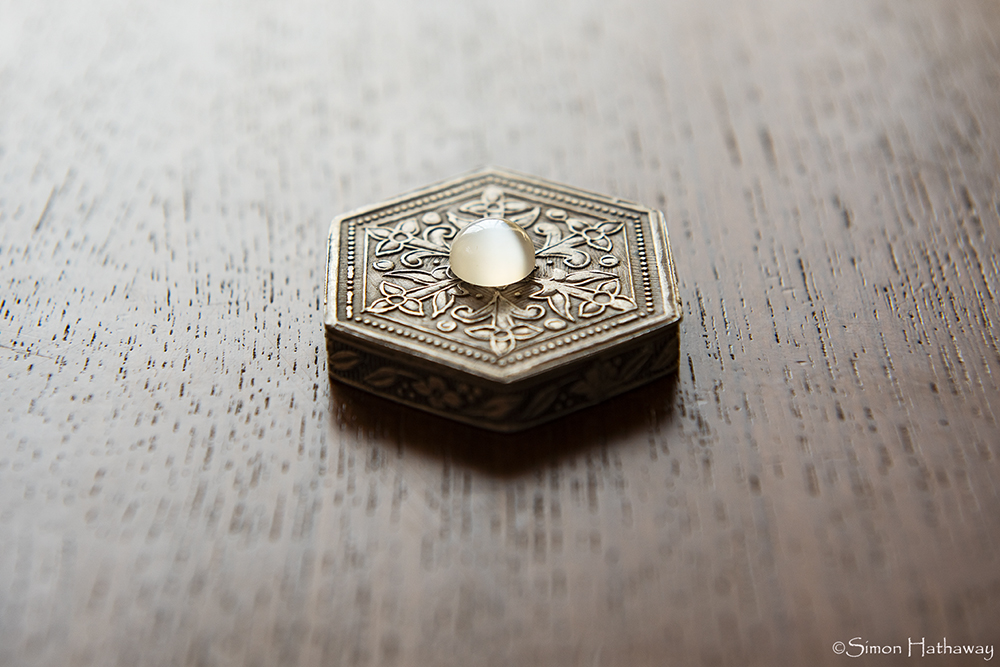
Master Suldoo said, “A guest came to see me from far away and gave me a bead with a one-inch diameter, which has four words in the centre of it. There is no one who can read them.”
Student: “What words are there in the bead?”
Master: “Everything is an illusion.”
Student: “So easy. Why can’t people read such easy words?”
Master: “What did you hear me read?”
Student: “Everything is an illusion.”
Master: “You misheard. I didn’t read it that way.”
Student: “What did you read?”
Master: “I read, ‘You should listen carefully’.”
Commentary:
What is the difference between ‘Everything is an illusion’ and ‘You should listen carefully’?
When it comes to my teaching these days, it is truly creative and destructive through miraculous transformations. Whatever phenomena I may enter, nothing happens to me. Phenomena never change me. If students come to seek, I go out and look at them. They do not recognise me, so I reveal myself by putting on different kinds of robes. Students try to understand them through their knowledge and get caught up in my words.
Commentary:
‘It is truly creative and destructive through miraculous transformations’ means that he is so proficient at using expedients that he can reveal Emptiness and form without much effort. ‘Whatever phenomena I may enter, nothing happens to me. Phenomena never change me’ implies that whatever phenomena he may encounter, he is above being deluded or influenced by them since he knows that all phenomena are just illusionary.
‘If students come to seek, I go out and look at them’ means that Rinzai sees clearly how ripe their practice is and sees through the questions they ask when they come to him for teaching. ‘They do not recognise me, so I reveal myself by putting on different kinds of robes’ means that the students don’t recognise the true-Self, so he reveals the true-Self through various words and actions, which are referred to as expedients. His students, however, got caught in his words because they strived to understand them according to his words and actions. We should remember that masters say what cannot be done when speaking and do what cannot be said when doing.
A. There is a saying that we can attain enlightenment if we can grasp only a single word, that is, if we hear a single word as it is, whatever word it may be. In that respect, it can be safely said that you can attain enlightenment if only you can hear either of the two words, correct and incorrect as it is.
What is correct and what is incorrect? What is correct to you can be what is incorrect to others and vice versa. What is correct today can be what is incorrect tomorrow and the other way around. Correct is to incorrect as right is to left. One cannot exist without the other because both of them exist depending on each other. This is why ancient masters would say that correct contains incorrect and vice versa and that realising that there is no difference whatsoever between correct and incorrect is enlightenment.
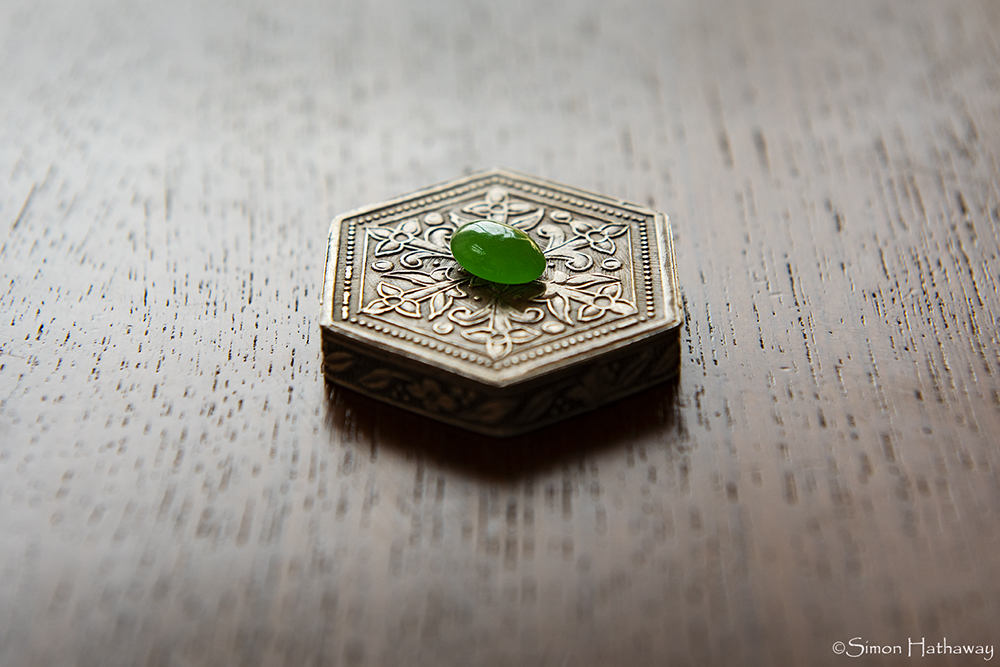
Master Suldoo said, “A guest came to see me from far away and gave me a bead with a one-inch diameter, which has four words in the centre of it. There is no one who can read them.”
Student: “What words are there in the bead?”
Master: “Why don’t you read them in person?”
Student: “Show me the bead first of all so that I may read them.”
Master: “Come again tomorrow and I will show it to you.”
Commentary:
The worst error we make is to struggle to gain what doesn’t exist, ignoring what is before our eyes.
Mayoku’s teaching was as bitter as Obaku’s; nobody dared to approach it. Sekikyo’s teaching was to search for the man on the point of an arrow. All who came were afraid of it.
Commentary:
‘Mayoku’s teaching was as bitter as Obaku’s; nobody dared to approach it’ means that his teaching was so subtle and deep like his master Obaku’s that no one could approach it through intellectual understanding. There is a story that shows how subtle his teaching was. Once a monastic asked Mayoku during a Dharma talk, “I know Buddhist doctrines roughly, but what is it that is transmitted beyond the doctrinal teaching?” Mayoku descended from the high seat, moved his cane around himself, stood on tiptoe and said, “Do you know?” The monastic couldn’t answer, and Mayoku hit him with his cane. Although Mayoku gave him a perfect answer, the monastic couldn’t digest it. So, ancient masters would say that the best food is of no use to him who cannot digest it.
Obaku, who was Rinzai’s master, also gave Rinzai thirty blows without any words whenever he was asked what the Dharma is whilst Rinzai visited him on three separate occasions. This has become a well-known anecdote that symbolises the teaching beyond words in the Zen community. This is why Rinzai said that Mayoku’s teaching was as bitter as Obaku’s.
‘Sekikyo’s teaching was to search for the man on the point of an arrow. All who came were afraid of it’ originated from the fact that he would draw an empty bow saying, “Take a look at the arrow” whenever students came to him for his teaching. Such an unusual way of teaching, people thought, was too difficult to approach easily.
Student: “Why did Sekikyo draw an empty bow saying, ‘Take a look at the arrow’?”
A. The fact is that you are possessed with the illusion that you know it. If you were sure that everything in your life is created by you, you should know that not only your feeling exhausted but also the question ‘What am I doing wrong?’ is of your own creating. That is, if you really knew that you create everything in your life, you would not be challenged by the problem you have now since that is also part of the drama.
You are not aware of the fact that you are being deluded by illusions. Your question is not different from saying, “I know that I am on dry land, but please help me, I am drowning now.” This means that even though you say you know that you are on dry land, you are actually feeling exhausted by floundering in the water. The best way to escape the situation is to realise that you are really on dry land.
Try to realise what you are and what your reality is. If everything, including you, is drama just as you said, it should be under the control of the creator. If it is beyond your control, it is not a drama to you. How can an image of a drama on a screen be exhausted?















 Zen Fools