Uncategorized

Disclosing Is Not as Good as Practice

Disclosing Is Not as Good as Practice

Zen master Huanzhong of Mount Daci said to the assembly, “To speak about ten feet is not as good as to practise one foot. To speak about one foot is not as good as to practise one inch.”

Dongshan Liangjie said, “Speak what cannot be practised. Practise what cannot be spoken.”

Student: “How can I speak what can’t be practised?”
Master: “Make what you speak become what you practise.”
Student: “How can I practise what can’t be spoken.”
Master: “Make what you practise become what you speak.”
Student: “Why can’t I do this?”
Master: “Because you don’t see and hear what you do and speak.”
Commentary:
When you hear with your eyes, what you speak becomes what you practice.
When you see with your ears, what you practise becomes what you speak.

©Boo Ahm

All writing ©Boo Ahm. All images ©Simon Hathaway

#zen #meditation #zenfools http://ow.ly/i/EzdmS

Uncategorized

Hsin Shin Ming: “31. If you doubt based on limited views like a fox’s, the more you hurry, the slower you go.”

Hsin Shin Ming: “31. If you doubt based on limited views like a fox’s, the more you hurry, the slower you go.”

‘Doubt based on limited views like a fox’s’ means to try to attain enlightenment by figuring out what it is through knowledge. Enlightenment is the capability to see things as they are. Put simply, we are not enlightened because we can’t see things as they are. To see things as they are means to see things without any imaginary lines which are labels, words. It is because our views are clouded by words which are just imaginary lines that we can’t see things as they are. So, enlightenment can be described as escaping from the net of imaginary lines.

Trying to work out what enlightenment is through knowledge is trying to attain enlightenment by making use of words that are only imaginary lines. The more knowledge we want for better understanding, the more words we need. This is contrary to our intention to see things without any imaginary lines. So, if we try to attain enlightenment through knowledge, the more we hurry, the slower we go.

Student: “Why can’t I attain enlightenment even though I have heard a lot about it?”
Master: “Because you have not heard what can’t be spoken.”
Student: “How can I hear what can’t be spoken?”
Master: “It is hidden in what is spoken.”
#zen #meditation #zenfools

©Boo Ahm

All writing ©Boo Ahm. All images ©Simon Hathaway

#zen #meditation #zenfools http://ow.ly/i/EuFIR

Uncategorized

Q. I had a new experience during a week-long Zen retreat under a master’s guidance and was approved as being enlightened by him. However, I still don’t know what I attained or what enlightenment is. Am I really enlightened?

Q. I had a new experience during a week-long Zen retreat under a master’s guidance and was approved as being enlightened by him. However, I still don’t know what I attained or what enlightenment is. Am I really enlightened?

A. No matter what your eye doctor says, you still have a problem with your eyes if you can’t see things clearly, or if you have some pain in them. If you believe that you are enlightened while not knowing what enlightenment is, only just because a master said that you were enlightened, it is like leaving your diseased eyes uncured while believing that they are fine only because a quack doctor says so.

018_7357a_thumb


Enlightenment is not a vague and obscure experience. Ancient masters would say that it is as clear as if you awaken from a dream, or as if you feel full after eating enough food. So, my answer to your question is “No”.

©Boo Ahm

All writing ©Boo Ahm. All images ©Simon Hathaway

#zen #meditation #zenfools http://ow.ly/i/EqEq6

Uncategorized

Zhaozhou’s Brightness and Darkness

Zhaozhou’s Brightness and Darkness

Zhaozhou asked Nanquan, “Does brightness accord, or does darkness accord?” Nanquan got off his seat and went back to the abbot’s room.
Zhaozhou said, “That old priest is always talking, and yet he couldn’t say a word when I asked a question today.” The head monk said, “Don’t say the abbot could not say a word. It’s only that you didn’t get it.”
Zhaozhou slapped him and said, “This slap is for the abbot.” The head monk was silenced.

SRH_8971a_thumb


Student: “Why was the head monk slapped by Zhaozhou?”
Master: “Because he understood Nanquan, but misunderstood Zhaozhou.”
Student: “Why did Zhaozhou say, ‘This slap is for the abbot’?”
Master: “He did two things; taught the head monk and thanked Nanquan again for his good teaching.”

Commentary:
The poor head monk got a slap for mistaking words of gratitude as criticism.
That was Zhaozhou’s compassion.

©Boo Ahm

All writing ©Boo Ahm. All images ©Simon Hathaway

#zen #meditation #zenfools http://ow.ly/i/EmEVJ

Uncategorized

Hsin Shin Ming: “30. The Great Way is all-embracing, not easy, not difficult.”

Hsin Shin Ming: “30. The Great Way is all-embracing, not easy, not difficult.”

The Great Way that means the true-Self, or Emptiness, is the essence of our being. ‘The Great Way is all-embracing’ means the Oneness of the Great Way, which implies that there is only the Great Way and nothing else that doesn’t belong to the Great Way. Here ‘easy’ and ‘difficult’ means that the Great Way is neutral in its essence as Emptiness; not easy, not difficult, not beautiful and not ugly.

The reason why there are ‘easy’ and ‘difficult’ is not that the Great way is easy, or difficult, but rather that we draw the imaginary lines ‘easy’ and ‘difficult’ on it depending upon our views. Everything is neutral, and there is nothing fixed as ‘easy’ or ‘difficult’. Everything can be easy and difficult at the same time according to the beholder’s view. For example, the maths question ‘What is two plus three?’ is very easy to grownups but can be very difficult to three-year-old children. Therefore, not only ‘easy’ and ‘difficult’, but other labels such as ‘beautiful’ and ‘ugly’ are also just illusionary, not real.

Student: “Why is it still so difficult for me to see the Great Way?”
Master: “Because you think that it should be easy.”
Student: “Why can’t I see the Great Way?”
Master: “Because you separate yourself from the Great Way.”

©Boo Ahm

All writing ©Boo Ahm. All images ©Simon Hathaway

#zen #meditation #zenfools http://ow.ly/i/Ega4B

Uncategorized

Q. Great artisans and artists are said to become one with their work when they are engaged in it. Is their becoming one with their work the same as becoming one with the question when we practise Zen?

Q. Great artisans and artists are said to become one with their work when they are engaged in it. Is their becoming one with their work the same as becoming one with the question when we practise Zen?

A. Both might seem to be the same in that they have strong concentration. However, they are different in that artisans and artists focus on creating new illusions, new imaginary lines, whereas Zen practitioners concentrate on removing them.

The former tries to discriminate as much as possible, but the latter strives to stop discriminating. The former’s job is to make illusions or strengthen them, but the latter’s job is to remove them. The former is evaluated by how many illusions they have and how beautiful these illusions are, but the latter is evaluated by how destitute he is of illusions.

Ancient masters would say, “No matter how beautiful the illusions you may have are, it is not as good as having no illusions.” So, it can be said that both are the same in that they are running hard. However, they are different because they are running in opposite directions to each other.

©Boo Ahm

All writing ©Boo Ahm. All images ©Simon Hathaway

#zen #meditation #zenfools http://ow.ly/i/EdGOu

Uncategorized

Mind is not Buddha. Knowledge is not the Way.

Mind is not Buddha. Knowledge is not the Way.

Nansen said, “Mind is not Buddha. Knowledge is not the Way.”

Student: “What is Buddha and what is the Way if mind is not Buddha and knowledge is not the Way?”
Master: “Nansen already said all.”

Commentary:
A glass is to water as a word is to contents. Don’t mistake a vessel for its contents.

©Boo Ahm

All writing ©Boo Ahm. All images ©Simon Hathaway

#zen #meditation #zenfools http://ow.ly/i/E8FbD

Uncategorized

Hsin Shin Ming: “29. When you don’t see fineness and roughness, how could you prefer one to another?”

Hsin Shin Ming: “29. When you don’t see fineness and roughness, how could you prefer one to another?”

‘Not see fineness and roughness’ means to remove all labels such as ‘fineness’ and ‘roughness’ when you see things. Let’s suppose there are two things; a white round ceramic mug and a brown square wooden plate. Strip the two things of all the labels such as ‘white’, ‘brown’, ‘round’, ‘square’, ‘ceramic’, ‘wooden’, ‘mug’ and ‘plate’ that are attached to them. What is left now? They are not a mug and not a plate any longer. Then, is there any difference between them? Seeing things like this is making no discrimination, which is to see things as they are, or to see things as empty.

018_7335a_thumb


Therefore, this scripture means that when you see things as they are, there is no difference between them. There can’t be superiority and inferiority when there is no difference. When there is neither superiority nor inferiority, you can be free from the suffering that comes from the desire to achieve what you prefer.

©Boo Ahm

All writing ©Boo Ahm. All images ©Simon Hathaway

#zen #meditation #zenfools http://ow.ly/i/E6WtP

Uncategorized

I really regret not being good to my parents when they were alive.

I really regret not being good to my parents when they were alive.

That is one of the most common emotions we have after our parents pass away. Show your love that you would give to your dead parents if they were alive to the old people you can see around you.

Loving them is not different from loving your dead parents. Seeing the smiles on their faces is seeing your parents’ smiles, and hearing their laughs is hearing your parents’ laughter because, as I have said, we are all oneness regardless of whether visible or invisible.

©Boo Ahm

All writing ©Boo Ahm. All images ©Simon Hathaway

#zen #meditation #zenfools http://ow.ly/i/E0uY2

Uncategorized

Yangshan’s interpretation of his master’s dream

Yangshan’s interpretation of his master’s dream

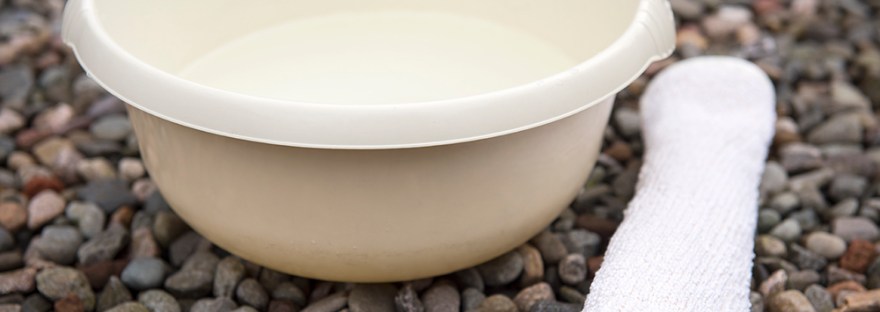
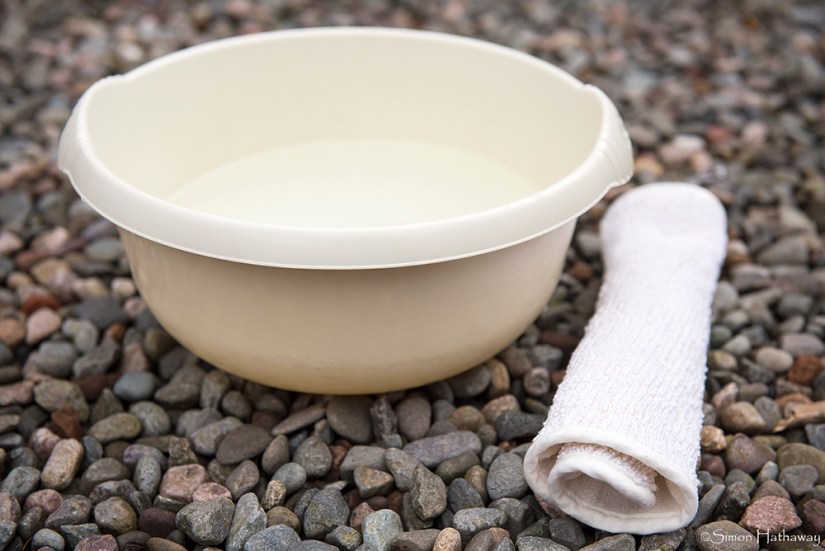
One day Guishan was lying down when his student Yangshan Huiji came in. Guishan turned over and lay facing the wall. Yangshan said, “I am your student. You don’t need to be formal.” Guishan sat up and Yangshan started to leave. Guishan called Yangshan, “Huiji.” Yangshan turned his head. Guishan said, “Listen to this old monastic’s dream.” Yangshan lowered his head and was ready to listen. Guishan just said, “Interpret my dream for me. Let me see how you do it.” Yangshan brought a basin of water and a towel. Guishan washed his face and became seated.

Student: “Why did Yangshan bring a basin of water and a towel when he was asked to interpret his master’s dream?”
Master: “You are dreaming as well if you think he brought a basin of water and a towel.”

Commentary:
Dreamers mistake illusions for reality and mistake reality for a dream.

©Boo Ahm

All writing ©Boo Ahm. All images ©Simon Hathaway

#zen #meditation #zenfools http://ow.ly/i/DWzlq