
Uncategorized

Q. What is the original purpose of the human mind?

Q. What is the original purpose of the human mind?

A. In the realm of form there are a lot of different purposes, but there is no purpose in the realm of emptiness.

SRH_3416c_thumb


In the realm of form there is always something insufficient or imperfect, and we have intentions to improve it towards a perfect state. Then, we come to have what we call a purpose. Living only in the realm of form without realising the realm of emptiness, is being deluded by illusions. When deluded by illusions, we regard the illusion of our mind as our mind, and each of us has a different mind and a different purpose along with it, because we can’t see the perfection of everything. The most common purpose of the mind is to lengthen its perceived life span for as long as possible.

However, in the realm of emptiness which is also called the true-Self, there is no purpose at all because it is already perfection itself and eternity itself. It is so perfect that you don’t have to try to maintain its perfection, nor can you destroy it.

©Boo Ahm
All writing ©Boo Ahm. All images ©Simon Hathaway http://ow.ly/i/vB43V

Uncategorized

A student monk asked Master Kempo, “I understand that all Buddhas of the whole universe enter the one road into Nirvana. Where is this one road?”

A student monk asked Master Kempo, “I understand that all Buddhas of the whole universe enter the one road into Nirvana. Where is this one road?”

Kempo raised his walking stick, drew the figure “one” and said, “Here it is.”
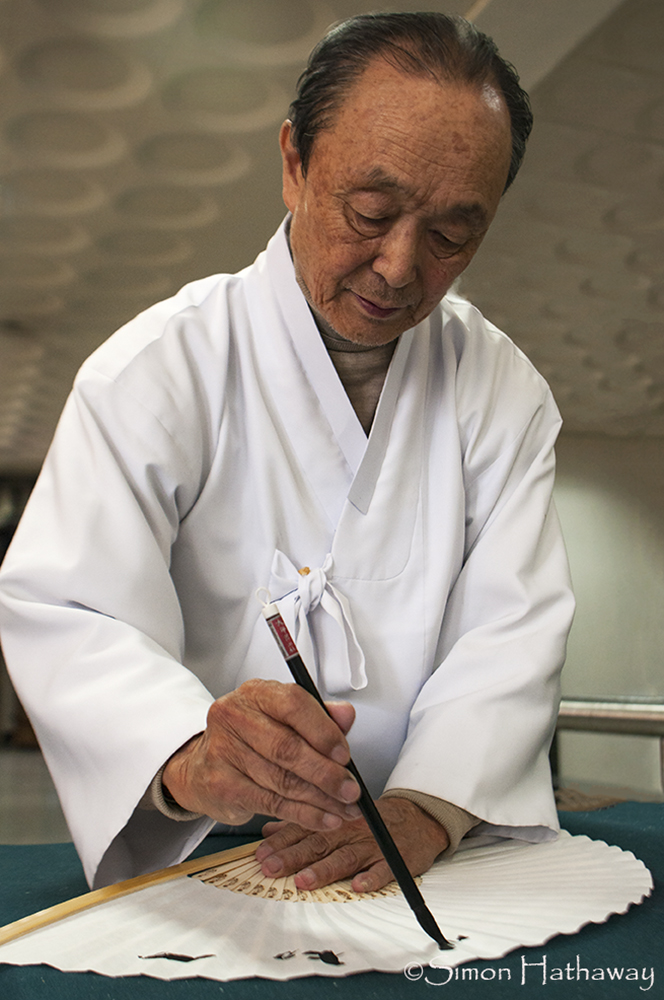
Later, this monk went to Umon to ask the question. Umon, picking up his fan, said, “This fan reaches the thirty-third heaven, hits the nose of Sakra Devendra, the highest deity in these heavens, and gives a blow to the giant carp of the Eastern Sea, which tips over a rain cloud with its tail causing rain to pour down.”

_SRH2434a_thumb


Student: “Where is the one road into Nirvana?”
Master: “There is no way at all.”
Student: “Why not?”
Master: “Because you are already there.”
Student: “Why did Umon say that his fan reached the thirty-third heaven and hit the nose of Sakra Devendra, the highest deity in those heavens?”
Master: “Did you see his fan then?”
Student: “Of course, I did.”
Master: “Did you also see the fan hit the nose of the highest deity in those heavens?”
Student: “No, I didn’t.”
Master: “Don’t say that you saw his fan. You didn’t see even Umon.”

Commentary:
Try to see clearly what is just before your eyes.
How dare you hope to see Nirvana while not being able to see the fan before your eyes?

©Boo Ahm
All writing ©Boo Ahm. All images ©Simon Hathaway http://ow.ly/i/xpdCi

Uncategorized

Q. I am more than 70 years old. Am I too old to attain enlightenment?

Q. I am more than 70 years old. Am I too old to attain enlightenment?

A. Don’t let your age hold you back. No one knows when you will attain enlightenment. As I’ve always said, everything is neutral. Being 70 years old is not too late any more for Zen meditation than being 30 years old is early enough. Whether your age is disadvantageous to you, or in in your favour depends upon your view. If the idea that your death is not far away can inspire you to get more involved in practice, you can be said to have advantage over young people in their 30’s who are lazy in practising while thinking that they still have a lot of time left for practice. You, in fact, have more free time than the young since they have to spend most of their time working for a living. Your age can rather work to your advantage.

File14273a_thumb


Zen meditation is not an exercise for training your physical body but just to keep curiosity about what the essence of your being is. It doesn’t require any special act or posture that makes your body more tired than your usual activities do. You are often advised to sit upright and still, but it is not essential. Provided that you can keep the curiosity, any posture is fine, sitting, standing, lying or walking. Therefore, what you should be concerned about is not your age but your negative idea that you cannot attain enlightenment due to your age. You are never too old to attain enlightenment.

©Boo Ahm
All writing ©Boo Ahm. All images ©Simon Hathaway http://ow.ly/i/xmHJv

Uncategorized

Q. Why did the whale cease to be hungry and thirsty after eating himself?

Q. Why did the whale cease to be hungry and thirsty after eating himself?

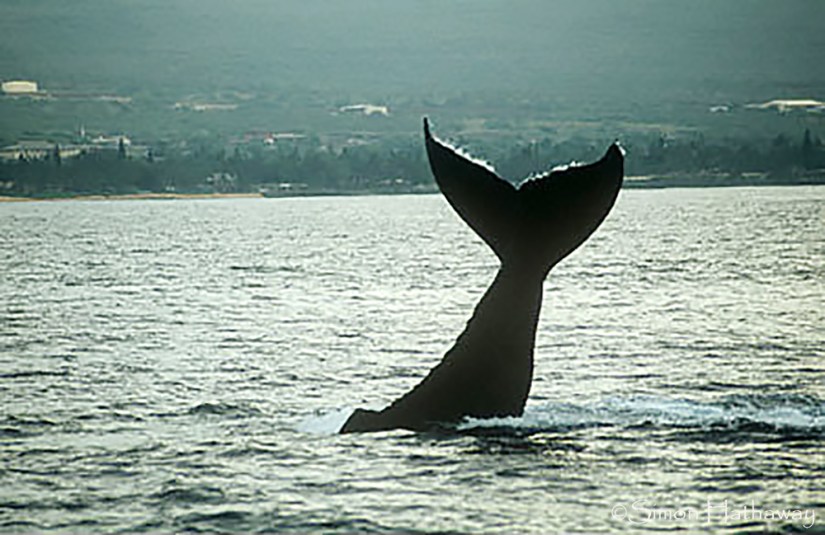
Once upon a time there was a huge whale who was very hungry and thirsty. So, he decided to drink all the water in the world first. He drank the oceans and the lakes, every drop of water in the world. However, he was still hungry and thirsty, so he ate all the coral and the seabed and all the land and everything on it. He then ate the sun and the moon, the clouds and the sky. In the end, he ate the whole world. Then there was nothing left except himself, so he ate himself, too.
Then, he became the universe.

AF0NENa_thumb


Student: “Why was the whale still hungry and thirsty even after eating the whole world including the sun and the moon?”
Master: “Because he still had himself.”
Student: “Why did he cease to be hungry and thirsty after eating himself?”
Master: “There was no one left who was hungry and thirsty.”
Student: “How did he eat the whole world?”
Master: “He didn’t eat the whole world until he ate himself even though he thought he had eaten it.”
Student: “What happened when he ate himself?”
Master: “The whole world became him, and he was lacking in nothing.”

©Boo Ahm
All writing ©Boo Ahm. All images ©Simon Hathaway http://ow.ly/i/xce3m

Uncategorized

Q. How can I take one step further from the top of the 100-foot-high pole?

Q. How can I take one step further from the top of the 100-foot-high pole?

Master Sekiso said, “You are at the top of the 100-foot-high pole. How will you take one step further?” Another Zen Master of ancient times said, “One who sits on top of the 100-foot pole has not quite attained true enlightenment. Take another step forward from the top of the pole and your body will reveal itself in the 100,000 universes.”

Student: “Why has one who sits on top of the 100-foot pole not quite attained enlightenment?”
Master: “Because he still has somewhere) to sit.”
Student: “How can I take one step further from the top of the 100-foot-high pole?”
Master: “Know what you are standing on now.”
Student: “What am I like when my own body reveals itself in the 100,000 universes?”
Master: “You will have no one to ask this question.”

SRH_8081a_thumb


Commentary:
The true Self never needs anything to depend on, sit on, stand on, or lie down upon because it never stays anywhere.
It never stays anywhere because it is everywhere.

©Boo Ahm
All writing ©Boo Ahm. All images ©Simon Hathaway http://ow.ly/i/xdbQ4

Uncategorized

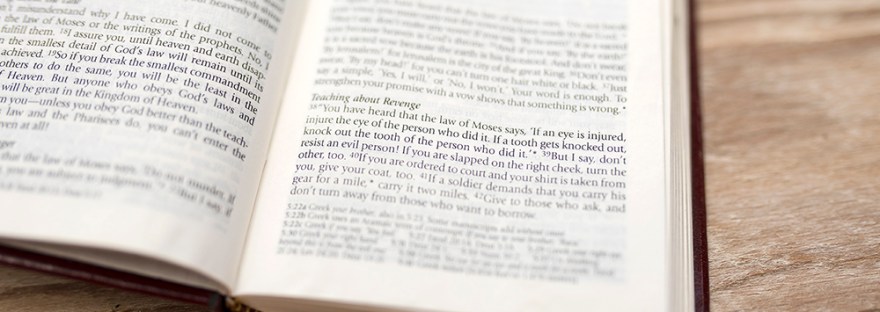
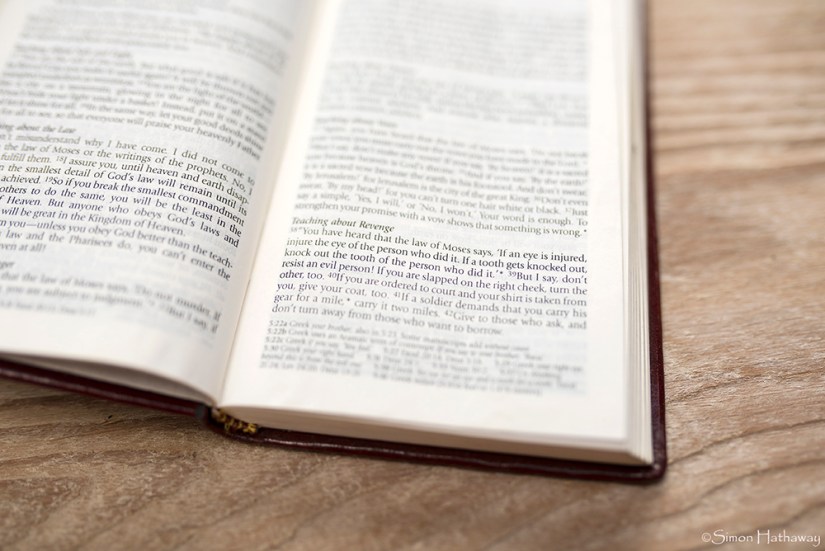
Q. The Bible says, “If anyone slaps you on the right cheek, let him slap your left cheek, too.” How could we live in this way in the world where injustice is prevalent?

Q. The Bible says, “If anyone slaps you on the right cheek, let him slap your left cheek, too.” How could we live in this way in the world where injustice is prevalent?

A. This scripture doesn’t imply that we should tolerate and surrender to injustice or unrighteousness unconditionally, by doing exactly as these words say. This means that we should not struggle against illusions by using other illusions, but rather leave them alone and trace them back to their root.

017_0016a_thumb


The most common way that we cope with illusions, especially when faced with negative ones, is to strive to get rid of them by means of other illusions. ‘An eye for an eye, and a tooth for a tooth’ is a good metaphor that shows how we react to illusions. This is like ‘An illusion for an illusion’. In this way, you can’t win the fight against illusions. You will further strengthen and multiply rather than remove them because an illusion bears yet more illusions. Put in another way, this simply means that you are deluded by illusions.

On the contrary, the scripture ‘If anyone slaps you on the right cheek, let him slap your left cheek, too’ is a metaphor that teaches us not to be fooled by illusions but to leave them alone and trace them back to their root, instead of fighting against them by making other illusions. In this way, we can make use of illusions as a gate to enlightenment or heaven and realise that all illusions are part of heaven, or the true Self in Buddhism.

©Boo Ahm
All writing ©Boo Ahm. All images ©Simon Hathaway http://ow.ly/i/x9vC5

Uncategorized

Q. What is the difference between the understanding of enlightenment through books and the attaining of it?

Q. What is the difference between the understanding of enlightenment through books and the attaining of it?

A. Suppose that you have never seen or eaten an apple, but have known, through reading books about apples, that they are a type of hard round fruit that has red, light green, or yellow skin and a white inside, and that they taste sweet, slightly sour and juicy.

However, how would you feel at the moment of biting an apple for the very first time someday? You will be sure to realise how unsatisfactory your knowledge about apples is to explain correctly what an apple is, even though it is not wrong. Reading hundreds of books about apples is not as good as eating even a single bite of one.

017_0015a_thumb


If you attain enlightenment, you will even feel as though you were reborn after death. Therefore, ancient masters would say to their students, “You must be reborn after a great death”, thus comparing enlightenment to a great death.

Some ancient masters even burnt their books on enlightenment after attaining it, since they were so shocked by how far their understanding of enlightenment was from actual enlightenment.

©Boo Ahm
All writing ©Boo Ahm. All images ©Simon Hathaway http://ow.ly/i/x4NL6

Uncategorized

Q. What else did he give you?

Q. What else did he give you?

Ananda asked Maha Kashapa, “Buddha gave you the golden woven robe of successorship. What else did he give you?”
Kashapa said, “Ananda!”
“Yes!” answered Ananda.
“Knock down the flagpole at the gate!” said Kashapa.

SRH_6165a_thumb


Student: “Why did Kashapa say, ‘Ananda’ when he was asked by Ananda?”
Master: “He answered Ananda’s question.”
Student: “Why did Kashapa tell Ananda to knock down the flagpole at the gate?”
Master: “He rephrased his first answer in detail.”

Commentary:
‘Knock down the flagpole at the gate’ is so detailed that it is rather confusing.

©Boo Ahm
All writing ©Boo Ahm. All images ©Simon Hathaway http://ow.ly/i/x0SGl

Uncategorized

Q. My husband becomes violent whenever he is drunk. Should I see his violence as empty and stay married, or get divorced?

Q. My husband becomes violent whenever he is drunk. Should I see his violence as empty and stay married, or get divorced?

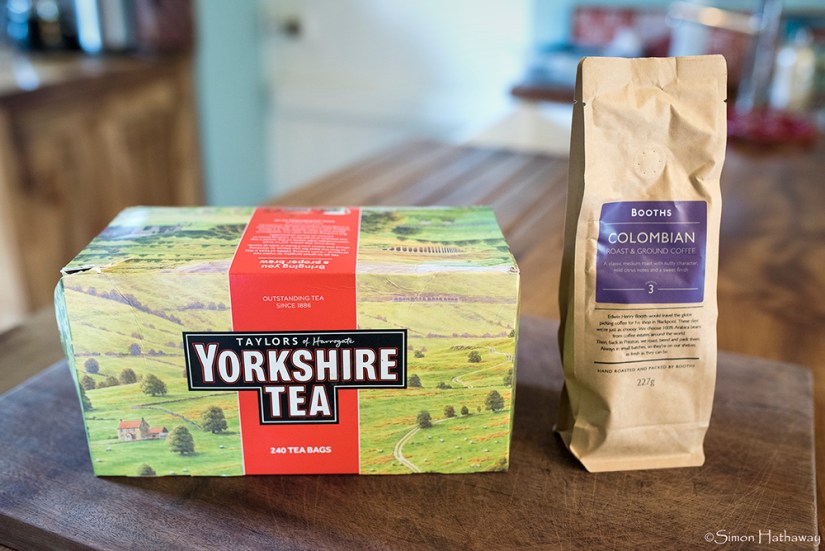
A. You seem to think that he who sees everything as empty ought to act or live in a set way such as ‘never divorce’. Your question is like ‘Which should he who sees everything as empty like better, coffee or tea?’ To see things as empty is one thing and whether to get divorced or not is another.

017_9999a_thumb


When everything is empty, both staying married and getting divorced are empty and neutral. Then, one is never preferable to the other. Which is preferable depends on your view. Seeing things as empty means to be free to make a choice and willing to accept the result of the choice without any regret because you know that not only your choice, but also the result of your choice is empty.

Whatever decision you may make, each moment of your life is a finish and a new start at the same time. Making a beautiful finish is making a nice start. You should not damage the beautiful moment of love that you had with him.

©Boo Ahm
All writing ©Boo Ahm. All images ©Simon Hathaway http://ow.ly/i/wELFM

Uncategorized

Q. Why did ancient masters say, “There should be nothing you know.”?

Q. Why did ancient masters say, “There should be nothing you know.”?

A. You are wrong when there is something you know, and also wrong when there is something you don’t know. This is a saying that expresses the state of enlightenment. Reaching the final goal means that you become non-dual, oneness with everything. Then, you become oneness with the whole universe, feeling that there is nothing else that is not you. In other words, if you know or don’t know something, it means that you are divided into two, the subject and the object: you and what you know or what you don’t know. Therefore, in the perfect state there is nothing you don’t know, and nothing you know as well.

_SRH3822a_thumb

There is a similar saying, “If an ordinary man knows what he is when his body is not him, he becomes a saint, but if a saint knows it, he becomes an ordinary man.” Once you reach there, everything is so perfectly one with you that there is nothing but yourself to compare with. Even the idea that you know what you are when your body is not you is an illusion then. How could you explain oneness or non-duality when there is nothing to compare with or any standard to apply to. Just as red is not red any more when everything is red, so when everything is you, you are not you anymore. Then there can be said to be nothing you know.

Student: “Sir, what is the Buddha?”
Master: “If I answer your question, I become menial.”

©Boo Ahm
All writing ©Boo Ahm. All images ©Simon Hathaway http://ow.ly/i/wEKuL